How to Fix Low Nitrogen in Vegetable Garden Soil
If vegetable plants are pale, growing slowly, and leaves are yellowing from the bottom up, low nitrogen is the likely problem. Confirm it with a soil test, then correct it with a fast-acting source such as diluted fish emulsion or blood meal for the current crop. Ignore it and yield drops fast, while heavy quick-fix feeding can burn roots or push leafy growth at the expense of fruit and roots. This guide shows how to spot nitrogen deficiency, choose the right short-term correction, and rebuild soil for next season.
What you’ll need


- A soil test from a county extension office or soil lab
- Fish emulsion labeled around 5-1-1
- Blood meal
- Alfalfa meal
- Composted manure, not fresh manure
- Untreated grass clippings
- Mulch or compost for bed cover
- Gloves and a small hand trowel
- Watering can or hose nozzle for applying liquid feed
- Cover crop seed such as clover, vetch, field peas, or fava beans
How low nitrogen shows up
Low nitrogen usually shows up first on older lower leaves, because the plant moves nitrogen to new growth. Expect slower growth, smaller leaves and flowers, weak fruit set, or fruit that stays small and poor in quality. The symptom pattern matters more than any single yellow leaf.
Common deficiency signs in vegetable beds
In leafy crops, pale color and slow leaf expansion are often the first clues. In fruiting crops, the plant may look leafy enough at the top but set fewer flowers or hold fruit poorly. Nitrogen is one of the three primary nutrients plants need in steady supply for normal growth.
If a tomato bed has yellowing leaves mainly at the bottom while the top stays green and the stems are thin, the pattern may fit nitrogen shortage better. That pattern fits nitrogen shortage better than a random discoloration problem, especially if the plants have also stalled in height.
Look-alikes that can fool you
Cold soil, inconsistent watering, root damage, and general poor fertility can look similar. A plant that stays stunted after transplant shock may not need nitrogen at all. Check whether the whole bed is affected, whether the newest leaves are also pale, and whether the soil stays soggy or bone dry.
Is it really low nitrogen?
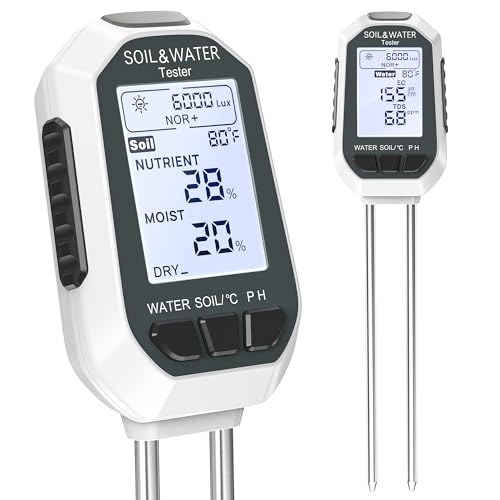
Use a lab soil test before adding nitrogen. A county extension office or soil lab gives the most useful read; home kits can help only as a rough guide. If the test shows low nitrogen and other nutrients are acceptable, you can feed for the crop in front of you instead of guessing.
-
Collect a real soil sample.
Take samples from several spots in the bed and send them to an extension office or soil lab. Do this before you add fertilizer so you do not mask the problem or overfeed the bed. -
Read the nitrogen line first.
If the report shows low nitrate or low available nitrogen, that supports a nitrogen fix. If phosphorus, potassium, or pH also look off, do not treat nitrogen as the only issue. -
Match the fix to the crop.
Leafy greens can take a stronger nitrogen push than tomatoes, peppers, beans, or carrots. Fruiting crops often need some nitrogen, but too much can drive leaves instead of flowers and roots.
A practical read on extension results: a low nitrogen result with decent phosphorus and potassium points to a nitrogen-only correction first. A result that shows several nutrients low means the bed needs broader rebuilding, not just another nitrogen source.
Which nitrogen fix should you use?
Pick the fastest safe fix for the crop that is already growing, then choose slower soil-building materials for the bed itself. A 10-10-10 fertilizer ratio means equal amounts of nitrogen, phosphorus, and potassium, while a 20-5-5 fertilizer provides four times more nitrogen than phosphorus and potassium. Higher first numbers supply more nitrogen.
Fast in-season fixes for active crops
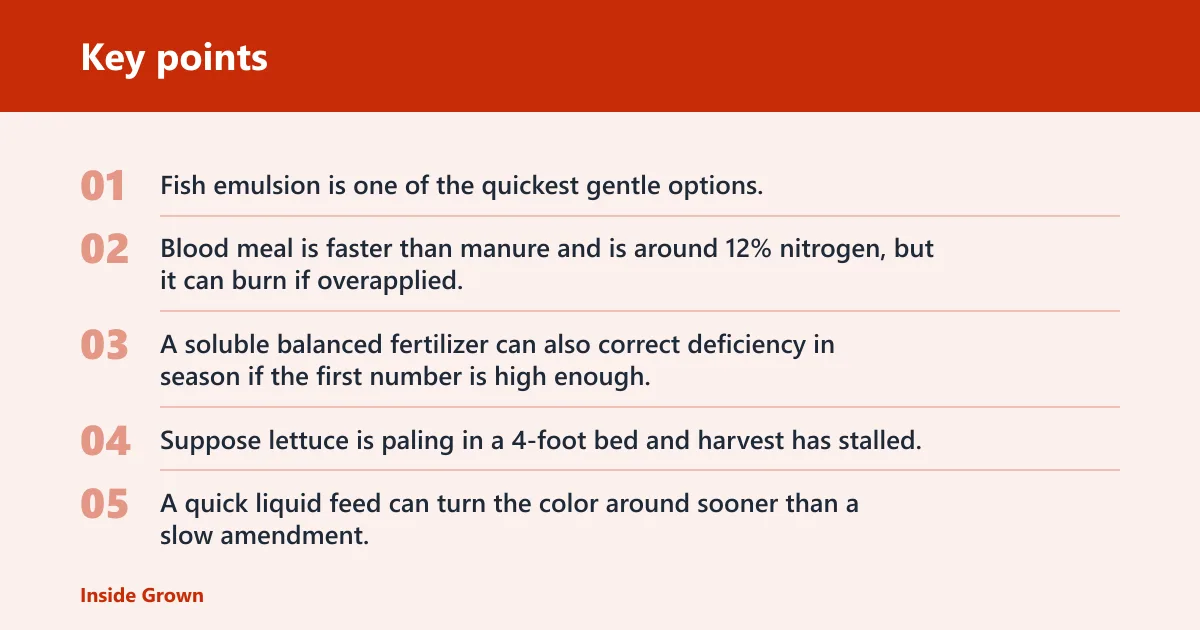
Fish emulsion is one of the quickest gentle options. It commonly has an NPK around 5-1-1 and is mixed at roughly 2 to 3 tablespoons per gallon of water. Blood meal is faster than manure and is around 12% nitrogen, but it can burn if overapplied. A soluble balanced fertilizer can also correct deficiency in season if the first number is high enough.
Suppose lettuce is paling in a 4-foot bed and harvest has stalled. A quick liquid feed can turn the color around sooner than a slow amendment. If the crop is fruiting, use a lighter hand so you do not trade flowers for foliage.
Slower soil-building options for next season
Composted manure can work as a slow-release nitrogen source and may also help improve soil structure, as long as it is fully composted first. Fresh manure can burn plants and is not the same thing. Grass clippings can also help if they are untreated and spread as a thin layer, because a thin mulch breaks down gradually; a thick wet mat does not.
Alfalfa meal is a gentler plant-based nitrogen option and a middle-ground organic boost. It feeds soil life without the sharp hit of a concentrated product. For the off-season, legumes such as clover, vetch, field peas, and fava beans can add nitrogen after they are cut down and worked into the soil.
Nitrogen fix decision table
| Scenario | Symptom pattern | Crop type | Urgency | Best amendment | Approximate time to improvement | Main misuse risk |
|---|---|---|---|---|---|---|
| Leafy greens turning pale from the bottom up | Older leaves yellow first; new growth slows | Lettuce, spinach, kale | High | Fish emulsion or a higher-first-number soluble fertilizer | Often visible in a few days to about 1 week. | Overfeeding can make leaves soft and watery |
| Tomatoes or peppers stalled before flowering | Weak growth, small leaves, limited bloom | Fruiting crops | Medium | Blood meal or diluted fish emulsion | Color and vigor may shift in about 1 to 2 weeks. | Too much nitrogen can reduce flowering |
| Bed needs rebuilding before planting | General low fertility, weak soil structure | Any vegetable bed | Low to medium | Composted manure or alfalfa meal | Weeks to months, depending on weather and soil biology | Using fresh manure or applying too close to harvest |
| Off-season bed planning | Soil left bare after harvest | Future bed | Low | Clover, vetch, field peas, or fava beans | Benefit arrives after cutting and incorporation | Expecting instant nitrogen while the cover crop is still growing |
| Low-cost top dressing between crops | Mild yellowing and slow recovery | Mixed vegetable beds | Medium | Untreated grass-clipping mulch in a thin layer | Gradual, over several weeks | A wet mat can smother soil and slow breakdown |
How do you rebuild the bed?
Rebuild the bed after the crop is stable, or before planting the next round. That means pairing a quick correction now with a longer soil-building plan later. Legumes, composted manure, grass clippings, and alfalfa meal all work best when you give them time.
-
Top up the active crop.
Apply fish emulsion at 2 to 3 tablespoons per gallon of water, or use another nitrogen source that fits the crop. Recheck plant color and growth after about 1 to 2 weeks, and add more only if the plant is still pale. -
Build the bed gradually.
Spread composted manure after harvest, not on tender transplants, and keep fresh manure out of edible beds. Use alfalfa meal as a milder boost when you want to feed soil life as well as the crop. -
Plan the off-season cover crop.
Seed clover, vetch, field peas, or fava beans before the off-season. Their nitrogen benefit arrives after you cut them down and work them into the soil, so they are a future fix, not a rescue treatment.
For beds that will hold high nitrogen, squash can be used as a mop-up crop. Summer squash can ripen in about eight to 10 weeks after planting, so it can fit into a short cleanup window when the bed needs a fast, hungry crop.
Prevention is simple: test before planting each season, rotate heavy feeders with lighter feeders, and keep a cover crop on open ground when you can.
Common mistakes
Most failures come from moving too fast or using the wrong material at the wrong time. Fresh manure in a vegetable bed can burn plants and create timing problems for food crops. Thick grass clipping piles can mat down and slow oxygen exchange instead of feeding the soil.
- Adding a quick nitrogen source before checking the soil test
- Using fresh manure instead of properly composted manure
- Expecting a cover crop to fix an in-season deficiency
- Overapplying blood meal and burning roots
- Feeding fruiting crops so hard that flowers and fruit suffer
- Using home test kits as if they were lab results
If that did not work, step back and recheck for the non-nitrogen causes. Waterlogged roots, cold soil, or damaged roots can keep plants yellow even after a feed. If the soil test shows nitrogen is fine, stop adding more and correct the real limit instead.
What plants fix nitrogen in the soil? Clover, vetch, field peas, and fava beans are commonly used choices for garden beds. Their benefit comes from the symbiosis in their roots, and the gain becomes useful after the plants are cut down and incorporated.
How do you lower nitrogen in garden soil? Stop adding nitrogen fertilizer, remove or thin heavy feed sources, and use a crop that takes up nitrogen, such as squash, while you wait for the bed to rebalance. Do not try to “flush” a bed with heavy watering; that can leach nitrate deeper or leave roots in poor shape.
Frequently asked questions
What plants fix nitrogen in the soil?
Clover, vetch, field peas, and fava beans are common garden choices. The nitrogen payoff comes after you cut them down and work the biomass into the soil, so they fit best as a planned bed-building crop rather than a rescue for a yellow plant.