How to Spread Topsoil Evenly Across a Yard
Spread topsoil in 1/4- to 1/2-inch layers for topdressing, and use a leveling rake or drag mat to feather it across the lawn. Thick piles smother grass, leave bumps, and can block water from reaching roots. This guide shows how to choose the right tool, set the layer depth, and spread it without hurting drainage.
Topsoil spreading basics

- Spreads topsoil, sand, dirt, or compost
- Wide metal head covers more ground per pass
- Adjustable handle helps reduce bending
Topsoil is the upper soil layer, but lawns need screened, weed-free, compost-enriched material that moves easily and settles fine. Most lawns do best with a balanced loam. If the soil is heavy in clay or sand, use it only when that texture is actually needed.
Use topsoil for thin topdressing, spot repair, and shallow low spots. Use compost when you want more organic matter near the surface. Use fill dirt when the problem is deeper than a lawn layer can fix, or when you need bulk volume for grading. That distinction matters before you spread anything.
Early spring or early fall are the best windows for applying topsoil, and both work well. Apply it when turf is actively growing and the surface is not muddy. Mow shorter than usual first, to about 1.5 to 2 inches, so the soil reaches the surface instead of matting into the grass.
For screened topsoil, volume planning matters before you buy. If you are estimating how much material a bed or lawn patch needs, use the same calculator approach you would use for screened topsoil so the layer stays thin instead of turning into a mound.
How much topsoil do I need?
Measure length × width × desired depth, then convert that depth into the same unit used by the supplier. For lawn topdressing, the target stays thin, so small changes add up quickly. Buying a little extra is safer than dumping too much, because excess topsoil can bury turf and create settling ridges.
Which spreading method fits your yard?
Choose the method by the problem, not by habit. A thin topdressing over turf needs a different tool and depth than a patch repair or a shallow low spot. If the area needs real regrading, stop using topsoil and switch to fill dirt or grading instead.
| Use case | Recommended layer depth | Best tool | Risk if overapplied | When to stop and switch to fill dirt or grading |
|---|---|---|---|---|
| Patch repair | Up to 1/2 inch over bare or thin spots | Shovel, then hand spread with a lawn rake | Buries crowns and leaves a soft, settling mound | Stop if the dip is deeper than a surface layer can cover evenly |
| Full-lawn topdressing | 1/4 to 1/2 inch | Drop spreader or topdresser / compost spreader | Smothers grass and slows drainage if it is piled too thick | Stop if you are trying to change grade across the whole yard |
| Shallow leveling | 1/2 inch to build in thin passes, then recheck | Wheelbarrow to move material, then lawn rake or lawn leveler | Creates waves, buried blades, and uneven settling | Stop if the low spot needs enough material to alter slope or runoff |
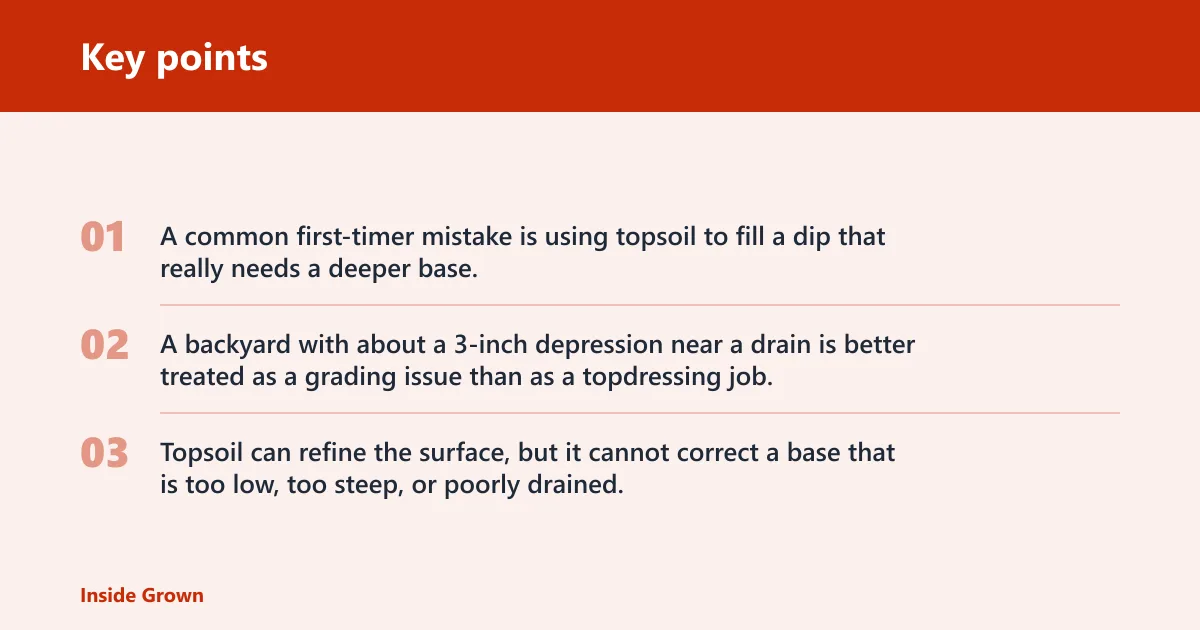
A common first-timer mistake is using topsoil to fill a dip that really needs a deeper base. A backyard with about a 3-inch depression near a drain is better treated as a grading issue than as a topdressing job. That is a grading problem, not a topdressing job, because a 1/2-inch lawn layer will settle unevenly and still leave the hollow.
If the yard has a broader slope problem, soft edges, or water that already runs the wrong way, use fill dirt or a professional grading approach instead of adding more topsoil. Topsoil can refine the surface, but it cannot correct a base that is too low, too steep, or poorly drained.
What you’ll need
- ☐ Screened, weed-free topsoil sold by the yard or in bulk bags
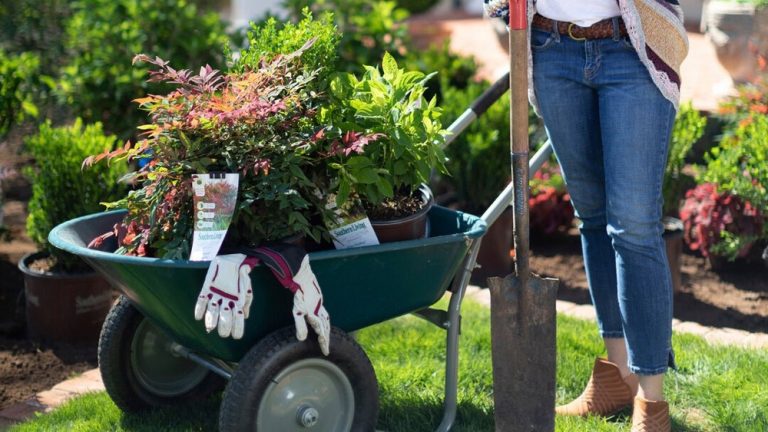
- ☐ Wheelbarrow for moving bulk topsoil across the yard
- ☐ Shovel for loading, dumping, and placing soil in small areas
- ☐ Lawn rake for leveling, smoothing, and breaking clumps
- ☐ Drop spreader for even application on larger lawns
- ☐ Topdresser or compost spreader with a rolling cage style if you are covering a broader lawn
- ☐ Lawn leveler or stiff rake for final smoothing
- ☐ Optional overseeding supplies if the turf is thin or bare in spots
- ☐ Garden hose or sprinkler for a light watering after application
A rolling cage topdresser or compost spreader can save time on larger lawns because it lays soil in a more even pass than hand spreading. A drop spreader gives more control than throwing soil by hand, especially on open turf where you want a consistent layer.
How to spread topsoil on a lawn
- Measure the problem area. Decide whether you are patching, topdressing, or leveling a shallow low spot. Match the area to the depth target before you open the bag or start moving bulk soil.
- Mow and clear the surface. Cut the lawn shorter than usual, about 1.5 to 2 inches, then rake off leaves, sticks, and loose thatch. A cleaner surface helps the soil contact the ground instead of sitting on top of debris.
- Stage the soil in small piles. Use a wheelbarrow to move bulk topsoil around the yard, then place small piles across the area rather than dumping one large mound. Smaller piles are easier to feather into a thin layer.
- Spread with the right tool. Use a drop spreader for broad turf, a topdresser for larger lawns, or a shovel for tight spots. Keep the pass light and even; the goal is a thin coat, not a blanket that hides the grass.
- Feather the layer thinly. Pull the soil with a lawn rake or lawn leveler until blades are just visible through the top layer. Keep the application within 1/4 to 1/2 inch over existing turf so crowns stay exposed.
- Top up only as needed. If a spot still sits low, add about another 1/4 inch and recheck after raking. Do not try to fix the whole depression in one pass; uneven settling is more likely when the layer gets too thick.
A 200-square-foot patch can be used as the example area for topdressing after thinning out over winter. A thin pass with a spreader, followed by a light rake, usually works better than dumping a deep pile in the center and dragging it outward. The first method keeps the layer uniform; the second leaves ridges that settle later.
How to smooth and level the surface
Use a stiff rake or lawn leveler right after spreading so the material fills low areas without burying the grass. The aim is a flat surface with blades still exposed. If the area is slightly dry, a light watering can help the soil settle into gaps.
For shallow leveling, make one pass, step back, and check the surface from several angles. If you can still see a low line, add another thin pass. Do not keep piling soil into the same spot; that is how crowns get buried and drainage gets choked off.
How to seed after topsoil
Overseeding is optional, but it is often worth doing after topdressing if the lawn is thin or has bare spots. Scatter seed after the soil is spread and smoothed, then water lightly so seed has contact with the moist surface. Topdressing can help fill gaps, but it works best when new grass is part of the plan.
If the lawn already has decent density, you may skip seed and use topsoil only to correct the surface. If the turf is sparse, pair the soil with overseeding in the same season, especially in spring or fall when growth is active.
For timing, keep overseeding aligned with active growth and follow extension guidance for your grass type and region. The main goal is simple: seed needs soil contact, steady moisture, and enough recovery time to fill in before stress increases.
Common mistakes to avoid
Too much topsoil is the main failure. A thick layer can bury grass crowns, slow air exchange, and create puddles where water used to move through. Keep the layer thin and stop as soon as the grass is still visible through the soil.
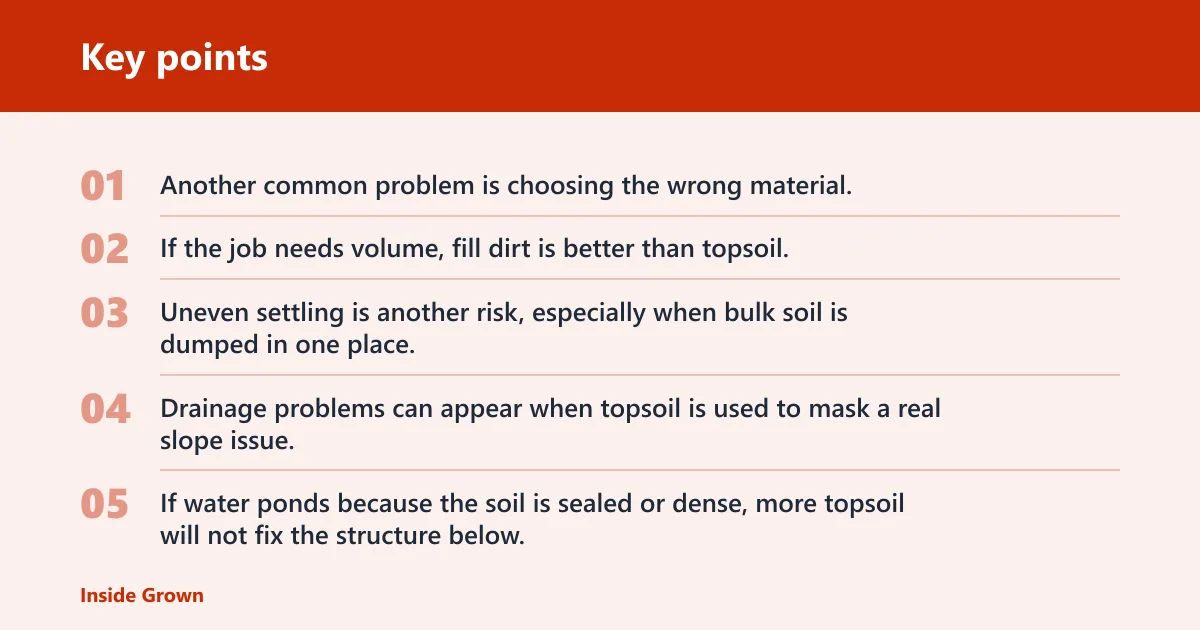
Another common problem is choosing the wrong material. If the job needs volume, fill dirt is better than topsoil. If the goal is surface improvement, use screened, compost-enriched topsoil instead of coarse soil that leaves clods or drains poorly.
Uneven settling is another risk, especially when bulk soil is dumped in one place. Spread it in passes, not mounds. Then recheck after watering, because a shallow layer can settle enough to expose a low spot that needs one more thin pass.
Drainage problems can appear when topsoil is used to mask a real slope issue. Topsoil can refine the surface. It cannot correct a yard that needs grading.
Compaction relief is a separate job as well. If water ponds because the soil is sealed or dense, more topsoil will not fix the structure below. That situation usually calls for aeration, better drainage, or a broader soil improvement plan instead of another surface layer.
Frequently asked questions
How to spread topsoil over existing lawn
Use a thin topdressing, not a dump-and-rake method. Move the soil with a wheelbarrow, place it in small piles, and spread it with a topdresser or rake. Keep the layer thin enough that the grass still shows through after smoothing, or the lawn can thin out instead of improving.
Can you use topsoil to level yard?
Yes, but only for shallow low spots. A 1/2-inch pass can correct small dips, while deeper hollows need fill dirt or grading. If the area changes drainage or slope, topsoil is the wrong material for the whole job, even if the surface looks smoother at first.
What is the easiest way to spread topsoil?
For larger lawns, a rolling cage topdresser or compost spreader is commonly a controlled option. For small patches, a shovel and lawn rake are enough. The easiest method is the one that matches the area size and keeps the layer thin, even, and visible through the turf.
Fill dirt vs topsoil for leveling yard?
Use fill dirt for volume, shape, and deeper leveling. Use topsoil for the finished surface layer over turf. If you need both, build the shape with fill dirt first, then finish with a thin topsoil layer for the lawn surface so drainage and grade stay stable.
How to topsoil and seed lawn
Spread a thin layer of screened topsoil first, smooth it, then overseed immediately if the lawn is thin. Water lightly so seed stays in contact with the soil. Early spring and early fall work best because turf is already active and can fill in faster.
How to use topsoil in garden
Use topsoil as a base layer for raised beds, planting areas, or surface repair where you need bulk soil volume. It works best when mixed with compost or another organic amendment instead of used alone, because that improves structure, moisture holding, and root growth in the garden.
How to turn topsoil into garden soil
Blend topsoil with compost to improve texture, nutrient content, and water retention. The goal is a looser, more workable mix than plain topsoil. For most gardens, building the soil in layers and mixing in organic matter is more effective than trying to rely on topsoil by itself.