How Many Gallons Per Hour for Drip Irrigation on Tomatoes
Simply put, most gardeners need about 1 gallon per hour per tomato plant. You can deliver this with one 1 GPH emitter per plant or two 0.5 GPH emitters. For a 100-foot row with emitters spaced 12 inches apart, that works out to roughly 50 gallons per hour for the whole row.

As an Amazon Associate I earn from qualifying purchases.
Key Takeaways
- Drip irrigation on tomatoes typically uses 0.5 GPH or 1 GPH emitters, depending on plant spacing and soil type.
- Total gallons per hour equals the number of emitters multiplied by the flow rate of each emitter.
- For drip irrigation on tomatoes, run times of 40 to 90 minutes per session during hot weather keep plants hydrated without water waste.
- Pressure regulators and clean water are essential because fluctuating pressure changes emitter output.
- Always test your system with catch cups before trusting the stated GPH rating on the label.
Standard Flow Rates for Drip Irrigation on Tomatoes
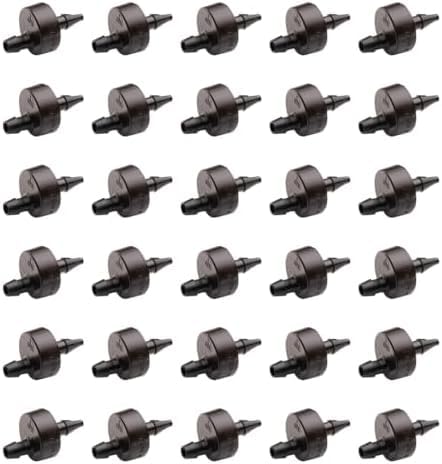
Most drip irrigation systems for tomatoes use emitters rated at 0.5, 1, or 2 gallons per hour. The 1 GPH emitter is the most popular choice for small and medium gardens because it matches the water needs of a single mature tomato plant during peak summer growth.
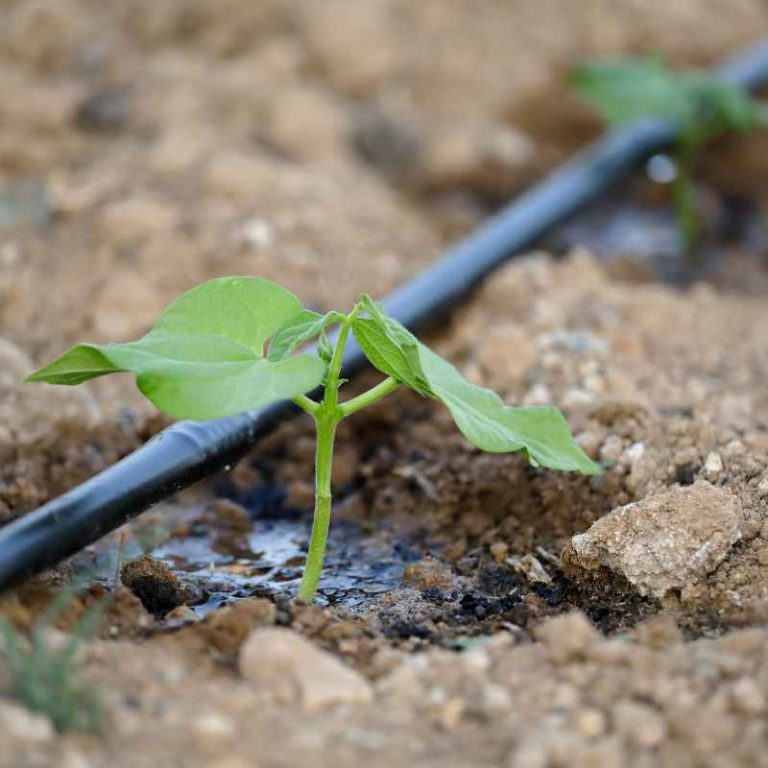
Drip tape, which is common in larger vegetable beds, has built-in emitters spaced every 8 to 12 inches. Each built-in emitter delivers about 0.5 GPH, meaning a 100-foot tape section puts out roughly 50 to 66 gallons per hour in total.
| Emitter Type | Flow Rate | Best For |
|---|---|---|
| Individual emitter | 0.5 GPH | Two per plant, paired on either side |
| Individual emitter | 1 GPH | One per plant for most home gardens |
| Individual emitter | 2 GPH | Large plants, sandy soil, or long run times |
| Drip tape emitter | 0.5 GPH per outlet | Rows of closely spaced tomatoes |
If you grow tomatoes in rows using drip tape, choose tape with emitter spacing that matches your planting distance. Tomatoes planted 18 to 24 inches apart work well with drip tape that has emitters every 12 inches. The overlapping wetting zones keep the entire root zone evenly moist.
Individual emitters give you more control for raised beds and containers. You can place one emitter at the base of each plant and easily adjust the setup when you rotate crops next season.
What Is Gallons Per Hour (GPH) in Drip Irrigation?
Gallons per hour measures how much water a single emitter delivers over the course of one hour at a specific operating pressure. Drip emitters are pressure-compensating or non-compensating, and that difference affects accuracy.
Pressure-compensating emitters deliver the same GPH across a range of pressures, so a 1 GPH emitter still outputs about 1 GPH whether your line runs at 10 PSI or 25 PSI. Non-compensating emitters fluctuate with water pressure, which means a long line or a change in elevation can produce uneven watering.
- 0.5 GPH: Slow but steady. Great for clay soil where water spreads slowly.
- 1 GPH: The middle ground. Ideal for loamy garden soil and most tomato plants.
- 2 GPH: Fast delivery. Best for sandy soil that drains quickly.
- 4 GPH: Used for trees and large perennials, rarely needed for tomatoes.
- Drip tape: Built-in 0.5 GPH outlets spaced evenly along the tape length.
According to the University of California Agriculture and Natural Resources, drip irrigation can deliver water with 90 percent efficiency or higher, compared to roughly 65 percent for overhead sprinklers. That efficiency comes from placing water exactly where roots need it and eliminating runoff.
Important: Emitter flow ratings assume a clean system. Sediment, mineral buildup, and debris can reduce actual output by 20 to 40 percent over a season. Use a 150-mesh or finer filter at the hose connection.
Knowing your GPH matters because it directly drives your watering schedule. If you know each emitter delivers 1 gallon per hour and your tomato needs about 1.5 gallons of water per day in peak heat, you know to run the system for roughly 90 minutes.
How the Number of Emitters Affects Total Water Output
Total gallons per hour is simple multiplication. Count every emitter in the zone and multiply by the rated flow rate. This gives you the gross output before any pressure loss or clogging.
For a raised bed with 6 tomato plants and one 1 GPH emitter per plant, the math is 6 emitters times 1 GPH, which equals 6 gallons per hour. If you run that bed for one hour, you have applied 6 gallons of water. If all of that water wets only the root zone without runoff, you have effectively irrigated 6 plants with a single gallon each.
- Count the total number of individual emitters in the zone.
- Multiply that number by the GPH rating on each emitter.
- Add the multiplier for drip tape separately based on tape length and emitter spacing.
- Subtract an estimated 10 percent loss for pressure fluctuations and minor clogging.
- Use the final number to calculate how many minutes to run the system.
| Setup | Emitters | Flow Per Emitter | Total GPH |
|---|---|---|---|
| 10 tomato plants, 1 emitter each | 10 | 1 GPH | 10 GPH |
| 10 tomato plants, 2 emitters each | 20 | 0.5 GPH | 10 GPH |
| 100-foot drip tape, emitters every 12 inches | 100 | 0.5 GPH | 50 GPH |
Notice that two different setups can produce the same total GPH. Ten plants with one 1 GPH emitter each equals ten plants with two 0.5 GPH emitters each. Both deliver 1 gallon per hour per plant, but the two-emitter setup spreads water over a wider root area.
Tip: For young tomato plants, a single 1 GPH emitter is fine. Once plants reach 3 feet tall and start fruiting, add a second 0.5 GPH emitter on the opposite side of the stem to expand the wetting zone.
Calculating Total GPH for Your Tomato Bed
Accurate calculation starts with knowing your planting layout. Measure the row length, count the plants, and identify the spacing between emitters on your drip tape. Then apply the basic multiplication formula.
A bed that is 20 feet long with tomatoes every 2 feet holds 10 plants. If you use one 1 GPH emitter per plant, the total flow rate is 10 GPH. Running that system for one hour applies 10 gallons of water or 1 gallon per plant.
For drip tape, the calculation changes because the tape runs continuously along the row. A 100-foot tape with emitters spaced 8 inches apart has roughly 150 emitters at 0.5 GPH each, which adds up to 75 GPH for that single row. That high volume spread over a long row still works perfectly because each plant receives water from multiple emitters along the line.
- Measure your total row length in feet.
- Divide row length by your plant spacing to find plant count.
- Multiply plant count by emitter GPH for individual emitters.
- For drip tape, divide tape length by emitter spacing, then multiply by 0.5 GPH.
- Add a 10 percent buffer for pressure loss at the far end of long runs.
Keep a simple record of each bed. Note the number of emitters, the GPH rating, and the total zone flow. That record becomes your reference for scheduling irrigation and troubleshooting when a bed dries out unexpectedly.
According to Oregon State University Extension, tomatoes require roughly 1 to 1.5 inches of water per week. One inch of water over a 2-foot by 2-foot root zone equals about 5 gallons. So a single mature tomato plant needs around 5 to 7.5 gallons per week during active growth.
Tip: Choose 1 GPH emitters for direct planting and 0.5 GPH for long drip tape runs. Lower flow rates allow longer run times, which gives clay soil more time to absorb water without surface pooling.
Factors That Change Your Ideal GPH
One GPH works as a general default, but your soil and climate may demand a different rate. Sandy soil drains fast and cannot hold moisture, so a 2 GPH emitter for a short burst, 20 minutes at a time, often performs better than a slow drip that loses water to deep percolation. Clay soil holds moisture for long periods, which means 0.5 GPH emitters and longer run times, 2 hours or more, prevent runoff.
Plant size also shifts the ideal. A transplanted seedling only needs a fraction of a gallon per day. Once the plant flowers and sets fruit, water demand climbs sharply.
Mature indeterminate tomato vines can pull 2 gallons per day in 95-degree heat, which requires either longer run times or higher-flow emitters.
- Soil texture: Sandy soil needs faster flow; clay soil needs slower flow.
- Plant maturity: Seedlings need 0.25 to 0.5 gallons daily; mature plants need 1.5 to 2 gallons.
- Weather: Hot, dry, or windy conditions increase transpiration and water loss.
- Container vs. ground: Containers drain fast and need more frequent watering with lower GPH.
- Row spacing: Wider spacing lets you use more emitters per plant without overlap.
- Elevation changes: Sloped beds cause pressure differences that change effective GPH.
- Water quality: Hard water can clog orifices, reducing effective flow.
The University of Florida IFAS Extension reports that tomatoes need the most water during fruit set and fruit enlargement. Irregular moisture during this window causes blossom-end rot and cracked fruit. A consistent drip schedule with a fixed GPH prevents those stress-related problems.
| Condition | Recommended GPH | Run Time |
|---|---|---|
| Clay soil, established plants | 0.5 GPH | 120 to 180 minutes |
| Loamy soil, established plants | 1 GPH | 60 to 90 minutes |
| Sandy soil, established plants | 2 GPH | 30 to 45 minutes |
| Containers | 0.5 to 1 GPH | 20 to 40 minutes daily |
Match your emitter flow to your ability to schedule watering. If you use a smart timer and water daily, low-flow emitters with longer run times produce steady soil moisture. If you water manually and sporadically, higher flow rates in shorter bursts prevent plants from drying out between sessions.
How Long to Run Drip Irrigation for Tomatoes Each Day
Run time depends on total GPH, plant water demand, and soil type. The most common mistake is running a drip system for only 15 minutes, which delivers barely 0.25 gallons per plant with a 1 GPH emitter. That is not enough for a mature tomato plant on a hot day.
A good starting point is 60 to 90 minutes per session with 1 GPH emitters. That delivers 1 to 1.5 gallons per plant per session. In peak summer heat, run the system daily or every other day, depending on rainfall.
During cooler spring weather, cut back to 30 to 40 minutes every 2 to 3 days.
- Start with the formula: plant water need in gallons divided by emitter GPH equals run hours.
- For a plant needing 1.5 gallons with a 1 GPH emitter, run time is 1.5 hours.
- For clay soil, split that time into two sessions on the same day.
- For sandy soil, use shorter, more frequent sessions to keep moisture in the root zone.
- Check soil moisture at 6 inches deep after each run and adjust by 15-minute increments.
The USDA notes that drip irrigation reduces outdoor water use by up to 30 to 50 percent compared to sprinklers because water stays at the soil surface near the roots instead of drifting in the wind or evaporating from foliage. That efficiency means you can irrigate longer without wasting water.
Warning: Do not run drip irrigation every day on clay soil unless you have checked drainage. Saturated soil starves roots of oxygen and leads to root rot. Dig down 6 inches before each watering to confirm the soil is dry enough to accept more water.
Raised beds drain faster than in-ground gardens, so they usually need more frequent irrigation. A 12-inch deep raised bed heats up quickly in summer and loses moisture through all sides. Check those beds first when deciding whether to run the system an extra cycle.
Mulching over the drip line reduces evaporation dramatically. A 2 to 3 inch layer of straw, shredded leaves, or compost keeps soil cool and cuts water demand by roughly 25 percent in hot climates.
Common Mistakes With Drip Irrigation GPH
The most common mistake is buying emitters with different GPH ratings for the same zone. Mixing 0.5 GPH and 2 GPH emitters causes uneven water distribution because pressure drops vary across the line. Keep each irrigation zone uniform so every plant receives the same volume.
Another frequent error is skipping the pressure regulator. Household water pressure often runs between 40 and 80 PSI, while drip emitters are designed for 10 to 25 PSI. Without a regulator, emitters push out far more than their rated GPH and the line can burst at the fittings.
- Using emitters rated for high pressure without a regulator. This doubles or triples actual GPH.
- Running the system too briefly. Fifteen minutes rarely delivers enough water for mature plants.
- Ignoring emitter spacing on drip tape. Tape rated for 8-inch spacing has 50 percent more emitters than 12-inch spacing.
- Positioning emitters far from the stem. Roots grow outward, but young plants need water near the root ball.
- Forgetting to flush the line. Dirt and debris settle in the tape and block outlets.
- Overwatering in cool weather. Tomatoes need less water during overcast periods; adjust your timer accordingly.
- Skipping the filter. Even city water carries sediment that clogs small emitter orifices.
Tomato growers also underestimate how much water a large productive plant pulls from the soil during fruit development. According to the University of California, a mature tomato plant in full production may require more than 2 gallons per day in hot inland conditions. If your system only delivers 1 GPH per plant, you need to run it for at least 2 hours in those conditions.
Important: Blossom end rot is often a watering problem, not a calcium problem. Fluctuating soil moisture prevents roots from absorbing calcium. A steady drip schedule with a matched GPH is the best preventive treatment.
Seasonal changes also affect GPH needs. Early-season tomatoes in mild weather may only need a 30-minute run every three days. By mid-July, the same bed may need 90 minutes daily.
Review your schedule monthly and adjust as temperatures climb.
How to Test and Adjust Your Drip System
Testing your actual output is the only way to know if your emitters are delivering the rated GPH. Use small catch cups, plastic containers, or rain gauges placed under several different emitters along the line. Run the system for exactly 10 minutes and measure the collected water.
Multiply the 10-minute volume by 6 to estimate the hourly rate. If an emitter collects 0.16 gallons in 10 minutes, the real output is roughly 1 GPH. If you collected only 0.08 gallons, the emitter is clogged or the pressure is too low.
- Flush the drip line before testing by removing the end cap and running clean water for 2 minutes.
- Install a pressure regulator and a 150-mesh filter if you have not done so already.
- Place catch cups under each of the first, middle, and last emitters.
- Run the system for 10 minutes on a flat, stable surface.
- Compare the collected volumes and check for consistency across the zone.
- Clean or replace any emitter that delivers less than 80 percent of its rated flow.
Adjustments depend on what the test reveals. If all emitters run low, the pressure regulator setting is too low or the filter is clogged. If emitters at the far end of the row run high, pressure is too high.
If one emitter is dry while neighbors work normally, that single emitter needs cleaning or replacement.
| Test Result | Likely Cause | Fix |
|---|---|---|
| All emitters deliver low volume | Low pressure or clogged filter | Clean filter and increase pressure |
| Far-end emitters run weak | Line too long or too many emitters | Split into two zones or shorten line |
| One emitter dead | Clogged orifice | Clean or replace that emitter |
| Water pooling at emitter | Soil too dry or emitter flow too high | Add mulch or switch to lower GPH |
Testing twice a season keeps your system accurate. Do one test at planting time and another at the start of fruit set, which is when water demand peaks. A clean, well-regulated system with the correct GPH will produce vigorous vines and heavy fruit all summer long.
Frequently Asked Questions
Is 1 GPH enough for tomatoes?
Yes, 1 GPH per plant is enough for most home gardens when you run the system for 60 to 90 minutes per session. That delivers 1 to 1.5 gallons per plant, which meets the needs of a mature tomato plant in moderate summer weather. Sandy soil and extreme heat may require a higher flow rate or longer run time.
How long should I run drip irrigation for tomatoes?
Run drip irrigation for tomatoes for 40 to 90 minutes per session with 1 GPH emitters, depending on weather and soil. During peak summer heat, run it daily. In cooler spring weather, every 2 to 3 days is enough.
Always check soil moisture at 6 inches deep to fine-tune your schedule.
How many gallons of water does a tomato plant need per day?
A mature tomato plant needs about 1.5 to 2 gallons of water per day during active fruit production. In cooler weather, that drops to under 1 gallon. Tomato plants in sandy soil or containers may need more frequent watering because the soil cannot hold moisture as long.
Should I use drip tape or individual emitters for tomatoes?
Use drip tape for long, closely spaced rows and individual emitters for raised beds, containers, or wide plant spacing. Drip tape covers large areas efficiently, while individual emitters give you precise control per plant. Both work well when matched to your planting layout and total GPH requirements.
Can I use 2 GPH emitters for tomatoes?
Yes, 2 GPH emitters work well for tomatoes in sandy soil or for plants that need more water in intense heat. Run the system for shorter periods, about 30 to 45 minutes, to avoid water waste. For clay soil, 2 GPH is usually too fast and causes runoff.
Final Thoughts
The right answer for how many gallons per hour for drip irrigation on tomatoes comes down to 1 GPH per plant as a reliable starting point. Adjust higher for sandy soil, lower for clay, and always match your run time to the actual weather. Test your emitters once or twice per season to confirm the system is delivering the flow you expect.
With the correct GPH and a steady schedule, your tomato plants will stay deeply hydrated and produce abundant fruit all season.
Related pick: Check today's price on Amazon