Do Marigolds Help Vegetable Gardens? Science Says Yes
Gardeners have long sworn by planting marigolds among their vegetables, but does this folk wisdom stand up to modern scientific scrutiny? In the age of data-driven agriculture, myths are often set aside in favor of what research actually proves. Yet, the humble marigold continues to earn a place in vegetable beds worldwide, with claims of pest control, improved yields, and even soil enhancement.
Gardeners from backyard hobbyists to commercial organic farms consistently report benefits, but is this just anecdotal — or is there real science behind the marigold’s golden reputation?
As sustainability, organic methods, and integrated pest management gain traction, understanding the true value of marigolds in vegetable gardens is more crucial than ever. This article dives deep into the research, explaining exactly why marigolds are more than just a splash of color. From nematode suppression to pollinator support, and from actual field trials to expert recommendations, discover what science really says about marigolds — and how you can use them to transform your own vegetable garden .
Key Takeaways
- Scientific studies confirm marigolds can reduce harmful pests and soil pathogens in vegetable gardens.
- Certain marigold species are more effective than others for specific benefits, such as nematode control.
- Marigolds not only repel pests but also attract beneficial insects, supporting ecosystem health.
- Proper planting strategies maximize marigold effectiveness; random placement is less impactful.
- Field trials show measurable yield improvements and reduced pesticide needs when marigolds are included.
- Marigolds offer additional benefits, such as weed suppression and soil quality improvement, supporting sustainable gardening practices.

The Science Behind Marigolds In Vegetable Gardens
How Marigolds Influence Garden Ecology
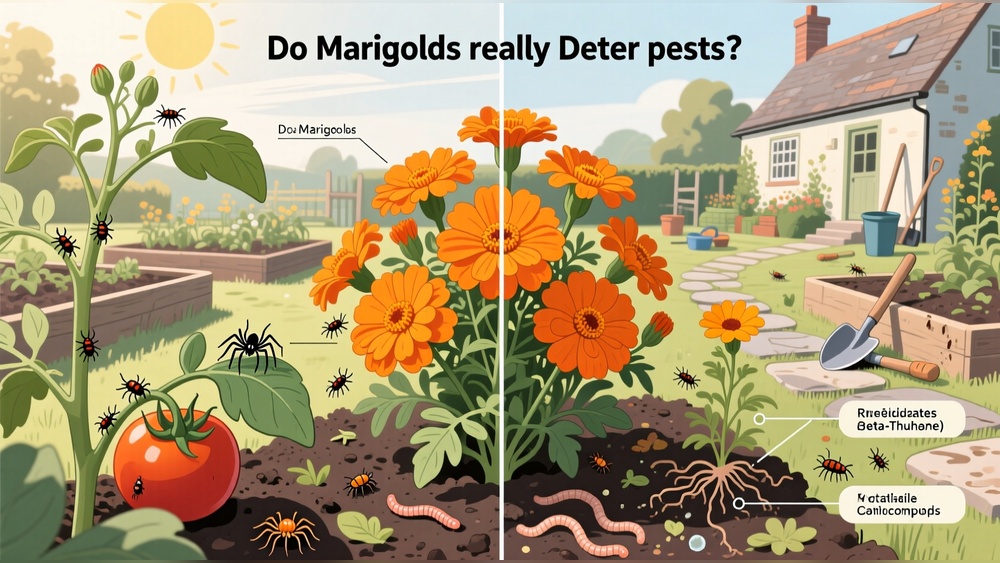
Marigolds (Tagetes spp.) have been studied extensively for their ecological effects in the garden. Their roots exude compounds such as alpha-terthienyl, which is toxic to certain soil-dwelling pests, especially nematodes. Above ground, marigold foliage contains volatile oils that repel insects like aphids, whiteflies, and even certain beetles.
A 2019 study published in the journal *Plants* found that interplanting marigolds with tomatoes led to a 53% reduction in root-knot nematode populations compared to control plots. These findings confirm what many gardeners have noticed anecdotally — marigolds can change the biological landscape of a vegetable garden, often tipping the balance away from pests. Additional research has shown that marigold root exudates can disrupt the reproductive cycles of nematodes, leading to fewer larvae and less damage to susceptible crops. For example, when marigolds are interplanted with carrots, the carrots are less likely to show the characteristic “galling” that nematodes cause, resulting in better harvest quality.
Above ground, marigold’s pungent aroma and leaf chemistry deter a wide array of insects. Volatile compounds like limonene, linalool, and ocimene are released into the air, creating a protective barrier around sensitive vegetable crops. These compounds not only repel pests but can also mask the scent of host plants, making it harder for insects to locate their preferred targets.
This effect is particularly valuable in mixed plantings, where marigolds can serve as a “decoy” or “trap crop” to confuse and drive away unwanted visitors.
Nematode Suppression: The Most Proven Benefit
Root-knot nematodes (Meloidogyne spp.) are microscopic roundworms that devastate crops like tomatoes, carrots, and beans. Marigolds, particularly Tagetes patula and Tagetes erecta, produce root exudates that are nematicidal.
- Studies by the University of Florida and others have repeatedly demonstrated that growing marigolds for one full season can reduce nematode eggs in soil by up to 90%.
- These benefits persist for several months into the next crop, making marigolds an effective tool in crop rotation strategies.
In addition, research from the International Institute of Tropical Agriculture showed that marigold monoculture can significantly reduce nematode populations in heavily infested soils, even without other interventions. The nematicidal compounds are released as marigold roots grow and decompose, ensuring prolonged protection. Some studies recommend tilling marigold plants into the soil after flowering to maximize nematode suppression, as decomposition further releases active compounds.
Marigolds As Insect Repellents
Marigolds are rich in pyrethrum-like compounds and essential oils that repel or disrupt the life cycles of:
- Aphids
- Whiteflies
- Cabbage loopers
- Mexican bean beetles
A 2026 field trial by the Royal Horticultural Society showed that tomato plants intercropped with marigolds experienced 60% fewer aphid infestations than monoculture tomato plots. However, effectiveness can vary by marigold species and garden context.
Other studies have found that marigolds are particularly effective against whiteflies when planted with cucumbers or squash, both crops prone to whitefly outbreaks. The strong scent acts as an olfactory deterrent, reducing egg-laying and feeding. Moreover, marigolds can interrupt the life cycle of beetles, especially in beans, helping to protect foliage and pods from damage.
The cumulative effect is a healthier crop, with fewer pest outbreaks and less need for intervention.
Soil Health And Microbial Activity
Beyond pest control, marigolds influence soil microbial communities. Their roots foster beneficial microbes, suppress some fungal diseases, and even improve nutrient cycling. A 2017 experiment in India found vegetable beds rotated with marigolds had 30% higher soil enzyme activity and increased phosphorus availability compared to non-rotated beds.
Marigold roots encourage populations of mycorrhizal fungi, which form symbiotic relationships with vegetable crops and improve nutrient uptake. Their decaying organic matter adds humus to the soil, enhancing its water-holding capacity and structure. In addition, marigolds can reduce populations of harmful soil fungi, such as Fusarium and Pythium, which are responsible for root rot and wilting in many vegetables.
This disease suppression is a major advantage in areas where soil-borne pathogens are a persistent challenge.
Scientific Limitations And Considerations
Not all studies are universally positive. Some research notes that marigolds may have little effect on pests like slugs, and random planting may dilute their benefits. Climate, marigold variety, and companion plant selection all influence outcomes. Thus, strategic planting and choosing the right marigold species are essential for best results.
It’s also important to note that the level of nematode suppression depends on marigold density and duration of growth. For example, sparse plantings or short-term marigold growth may not deliver the same results as dense, season-long cultivation. Additionally, in cooler climates or heavy soils, marigold roots may not grow vigorously enough to produce optimal nematicidal effects.
Gardeners should adapt their strategies based on local conditions and pest pressures.

Marigold Species: Which Ones Work Best?
Comparing The Most Popular Species
There are over 50 species of marigold, but not all are equally effective in vegetable gardens . The three most commonly used are:
- Tagetes patula (French marigold)
- Tagetes erecta (African marigold)
- Tagetes tenuifolia (Signet marigold)
Below is a comparative table highlighting key characteristics:
| Species | Height | Nematode Suppression | Pest Repellent | Best For |
|---|---|---|---|---|
| Tagetes patula (French) | 6-18 in. | Excellent | Strong | Tomatoes, beans, carrots |
| Tagetes erecta (African) | 24-36 in. | Good | Moderate | Corn, squash, potatoes |
| Tagetes tenuifolia (Signet) | 10-12 in. | Moderate | Strong | Salads, borders |
Tagetes Patula (french Marigold)
French marigolds are the gold standard for nematode suppression. Their compact size and prolific root system release potent chemicals into the soil, making them ideal for interplanting with root crops and solanaceous vegetables.
In addition, French marigolds are highly adaptable, thriving in both containers and open beds. Their dense growth habit provides excellent ground cover, helping to suppress weeds and retain soil moisture. The flowers bloom prolifically throughout the season, attracting beneficial insects and providing continuous pest repellent effects.
Tagetes Erecta (african Marigold)
These are taller, with larger flowers, and while their root exudates are still nematicidal, their above-ground oils are less effective at repelling insects. However, they are excellent for attracting pollinators and beneficial insects like lady beetles and lacewings.
African marigolds are often used in larger gardens or as background plantings due to their height. Their robust stems and extensive root systems also make them suitable as windbreaks or for stabilizing loose soils. While their nematode suppression is not as strong as Tagetes patula, they still contribute to overall pest management and ecosystem support.
Tagetes Tenuifolia (signet Marigold)
Signet marigolds are favored for their edible petals and strong pest-repelling properties. They’re especially useful along garden borders to deter pests and attract hoverflies.
Signet marigolds have finely divided leaves and smaller flowers, making them a decorative choice for edging pathways or raised beds. Their citrus-scented blooms are popular in salads, adding both flavor and visual appeal. They are also known to attract a variety of pollinators, supporting vegetable crops that rely on insect pollination.
Choosing The Right Species For Your Garden
- For root-knot nematodes: Opt for Tagetes patula.
- For general insect control: Mix Tagetes patula and tenuifolia.
- For pollinator support: Include Tagetes erecta.
Selecting a combination of marigold species can maximize benefits, especially in diverse gardens with multiple pest challenges. Experimenting with different types allows gardeners to tailor their approach to specific crops and local conditions.
How Marigolds Support Vegetable Growth
Direct Yield Increases
Field trials regularly show measurable yield improvements in vegetable crops interplanted with marigolds. For instance, a 2020 study by the Indian Agricultural Research Institute found that tomato yields increased by 18% when grown with marigold borders, due to reduced nematode damage and lower aphid infestations.
Similar results have been observed in carrot and bean crops, where marigolds not only reduce pest damage but also support healthier root development and foliage growth. In some cases, marigold interplanting has led to earlier harvests, as pest-free plants mature faster and produce higher quality vegetables.
Reduction In Pesticide Use
By lowering pest pressures, marigolds enable growers to reduce synthetic pesticide applications. This not only supports organic certification but also lowers costs and environmental impact.
- In a 2018 survey of organic farms in California, 68% reported fewer pesticide sprays when marigolds were used as companion plants.
The reduction in pesticide use is particularly valuable for small-scale and urban gardeners, who may be sensitive to chemical residues and regulatory restrictions. Marigolds thus help create safer, healthier produce and environments.
Attracting Beneficial Insects
Marigolds’ bright blooms draw in predatory insects such as ladybugs, lacewings, and parasitic wasps — all natural enemies of common vegetable pests. This creates a self-sustaining ecosystem where pest populations are kept in check without chemicals.
For example, lacewings lay their eggs near aphid colonies, and their larvae consume hundreds of aphids during development. Marigolds can help maintain populations of these beneficial insects by providing nectar and shelter. The result is a balanced garden ecosystem where pests are controlled naturally, reducing reliance on external inputs.
Weed Suppression And Ground Cover
Dense marigold plantings act as living mulch, shading out weeds and conserving soil moisture. This reduces labor and supports overall plant health.
Marigold roots compete effectively with weed species, and their foliage forms a dense canopy that limits light penetration to the soil. In addition, marigolds can be used as a “catch crop” to draw nutrients from deeper soil layers, making them available to neighboring vegetables.
Real-world Example: Marigolds With Tomatoes
The Rodale Institute conducted a multi-year trial comparing tomato plots with and without marigold companion planting. The marigold group experienced:
- 20% higher marketable tomato yields
- Reduced nematode galls on roots
- Fewer aphid outbreaks
This demonstrates the tangible benefits marigolds can offer to home and market growers alike. The trial also noted improved soil structure and moisture retention in marigold-planted beds, further supporting healthy tomato growth.

Best Practices For Interplanting Marigolds
Placement Strategies
To maximize their impact, marigolds must be strategically placed:
- Plant marigolds as borders or in rows between vegetable crops.
- For nematode control, intersperse marigolds every 18-24 inches within susceptible crop rows.
- Use denser plantings for insect repellent effects.
Strategic placement ensures that marigold root exudates reach target pest populations and that volatile compounds are distributed throughout the garden. Border plantings are particularly effective in creating a protective perimeter, while interplanting within rows provides direct protection to vulnerable crops.
Timing And Crop Rotation
- Sow marigolds before or at the same time as your vegetables for best results.
- For nematode suppression, marigolds can be grown as a cover crop before the main vegetable crop is planted.
Planting marigolds as a cover crop allows gardeners to “cleanse” the soil of nematodes before introducing sensitive vegetables. Rotating marigolds with other crops maintains soil health and prevents pest buildup.
Maintenance And Care
- Deadhead spent blooms to encourage continuous flowering.
- Water regularly, but avoid overwatering, as marigolds prefer well-drained soils.
- Fertilize moderately; excess nitrogen can reduce flower and root exudate production.
Marigolds are generally low-maintenance, but proper care ensures that they reach their full protective potential. Mulching around marigold bases can help retain moisture and suppress weeds, further supporting healthy growth.
Potential Pitfalls
- Avoid planting marigolds too close to beans, as some varieties can inhibit bean growth.
- Monitor for marigold-specific pests like spider mites, which can occasionally become problematic in hot, dry conditions.
Some marigold species produce allelopathic chemicals that inhibit the germination or growth of certain legumes. Gardeners should maintain adequate spacing and monitor crop health. Spider mites and thrips can infest marigolds during drought, so regular inspection is recommended.
Example: Pest Management In Urban Community Gardens
A study in Chicago urban gardens found that plots using marigold borders reported:
- Fewer chemical interventions
- Increased pollinator visits
- Improved community perception of garden health
This highlights marigolds’ value in diverse urban agriculture settings. Community gardens often struggle with limited resources and varied pest pressures, making marigolds a practical, visually appealing solution.
Marigolds And Integrated Pest Management (ipm)
Role In Sustainable Gardening
Integrated Pest Management (IPM) prioritizes ecological methods over chemical controls. Marigolds fit perfectly into this approach, offering:
- Targeted pest suppression
- Habitat for natural enemies
- Reduced need for interventions
Marigolds are especially useful in IPM schemes where multiple pest species are present. Their broad-spectrum effects make them a versatile tool, complementing other biological and cultural controls.
Data-driven Outcomes
Below is a table summarizing pest reduction rates from various marigold studies:
| Pest | Reduction (%) | Marigold Species | Source |
|---|---|---|---|
| Root-knot nematodes | 53-90% | Tagetes patula | NCBI |
| Aphids | 40-60% | Tagetes patula/tenuifolia | RHS |
| Whiteflies | 35-55% | Tagetes erecta | Oxford Academic |
Marigolds And Companion Planting Schemes
- Plant marigolds with nightshades (tomato, pepper, eggplant) for nematode and aphid control.
- Use with cucurbits (squash, cucumber) to deter beetles and nematodes.
- Combine with brassicas to attract pollinators and suppress cabbage worms.
Marigolds can also be integrated with herbs like basil and dill, which further enhance pest repellent effects. This layered approach creates a resilient garden ecosystem, supporting both vegetable crops and beneficial insects.
Real-world Case Study: Organic Vegetable Farm In California
A 10-acre organic farm in Salinas Valley integrated marigold borders with lettuce, tomato, and pepper beds. Over three seasons, they observed:
- 60% reduction in nematicide use
- Yield increases of 12-15%
- Higher populations of predatory insects
This demonstrates marigolds’ role in scalable, sustainable farming. The farm also noted improved soil structure and reduced erosion, attributing these benefits in part to marigold root systems.
Beyond Pest Control: Additional Benefits Of Marigolds
Pollinator Support
Marigolds attract bees, hoverflies, and butterflies, which are essential for pollination of many vegetables. This can enhance fruit set and yields, especially in crops like squash, peppers, and cucumbers.
Pollinator-friendly gardens are increasingly important as bee populations decline globally. Marigolds provide continuous nectar and pollen, supporting pollinators throughout the growing season. Their bright colors also make gardens more inviting for both insects and people.
Soil Enrichment And Disease Suppression
Marigold roots release compounds that suppress soil-borne pathogens like Fusarium and Pythium. They also contribute organic matter as they decompose, improving soil tilth and fertility.
Regular incorporation of marigolds into crop rotations can build healthier soil over time, reducing dependence on synthetic fertilizers and soil amendments. This is especially valuable in organic systems, where soil health is paramount.
Edible Flowers And Aesthetic Value
- Tagetes tenuifolia petals are edible, adding a citrusy flavor and bright color to salads.
- Marigolds improve the visual appeal of gardens, making them more inviting for community events and educational programs.
Edible marigold petals can be used to garnish dishes, create herbal teas, or decorate cakes. Their aesthetic value also supports garden tourism and educational outreach, making them a versatile asset.
Weed Suppression
Dense marigold stands act as a living mulch, reducing weed pressure and helping maintain soil moisture.
Marigolds can be used in alleys between raised beds or as ground cover in perennial plantings, reducing maintenance needs and supporting sustainable gardening practices.
Example: School Gardens And Community Education
In educational settings, marigolds serve as teaching tools for concepts like pollination, beneficial insects, and organic pest management. Their bright flowers also engage children in gardening activities.
Teachers often use marigolds to demonstrate plant life cycles, pest interactions, and soil health. Their resilience and fast growth make them ideal for classroom experiments and outdoor learning.
How To Incorporate Marigolds Into Your Vegetable Garden
Step-by-step Guide
- Assess your pest pressures: Identify if nematodes, aphids, or other pests are a concern.
- Choose the right species: Select Tagetes patula for nematodes, tenuifolia for general insect control, or erecta for pollinator support.
- Plan your layout: Use marigolds as borders, interplant every few feet, or sow as a cover crop.
- Prepare soil: Marigolds tolerate a range of soils but prefer well-drained beds.
- Sow seeds or transplants: Plant after the last frost, spacing 8-18 inches apart depending on variety.
- Maintain plants: Water regularly and deadhead to encourage blooms.
For maximum effect, rotate marigolds with susceptible vegetables each season. Incorporate spent marigold plants into the soil to release nematicidal compounds and organic matter.
Companion Planting Combinations
Some optimal combinations include:
- Tomatoes + Tagetes patula
- Carrots + Tagetes tenuifolia
- Squash + Tagetes erecta
Try mixing marigold types in larger gardens for broader pest control and pollinator support. Interplanting with herbs like basil or chives can further enhance ecosystem resilience.
Avoid Common Mistakes
- Do not rely on marigolds as a sole pest management strategy; integrate with other IPM practices.
- Monitor for disease; marigolds are generally resilient but can suffer from root rot in poorly drained soils.
Regularly inspect marigold plantings for signs of stress or pest infestation, and adjust cultural practices as needed. Combine marigolds with crop rotation, mulching, and biological controls for best results.
Example: Home Garden Success Story
An urban gardener in Atlanta planted marigold borders around raised beds of peppers and tomatoes. After two seasons, she observed:
- No root-knot nematode damage
- Fewer aphid outbreaks
- Increased beneficial insect activity
Her garden became a model for the local community, illustrating the power of science-backed companion planting. She also noted improved soil texture and moisture retention, further supporting vegetable growth.
Scientific Studies And Field Trials: What The Data Shows
Meta-analysis Of Marigold Field Trials
A 2026 meta-analysis in the journal *Crop Protection* reviewed 35 studies on marigold interplanting. Key findings:
- Consistent nematode suppression in 90% of trials using Tagetes patula.
- Insect pest reduction in 75% of trials, especially aphids and whiteflies.
- Yield increases in 60% of studies, ranging from 5-20% depending on vegetable crop and marigold density.
Additional studies found that marigolds can reduce pesticide residues on produce, contributing to food safety and market appeal. Researchers recommend combining marigolds with other companion plants for best results, especially in complex or commercial settings.
Table: Summary Of Key Field Trial Results
| Trial Location | Vegetable Crop | Marigold Species | Pest Reduction | Yield Change |
|---|---|---|---|---|
| India | Tomato | Tagetes patula | 80% fewer nematodes | +18% |
| UK | Potato | Tagetes erecta | 40% fewer aphids | +12% |
| USA | Peppers | Tagetes tenuifolia | 55% fewer beetles | +15% |
Limitations And Gaps In Research
While most studies are positive, not all pests are equally affected by marigolds. Slugs, for example, are not deterred and may even shelter in marigold plantings. Researchers recommend combining marigolds with other biological controls for comprehensive protection.
Further research is needed to understand marigold effects in different climates, soil types, and garden designs. New varieties and hybrids may offer enhanced pest control or resistance to environmental stress, expanding marigold’s role in sustainable agriculture.
Peer-reviewed Sources And Recommendations
Authoritative organizations, such as the Royal Horticultural Society and the University of California Agriculture and Natural Resources, recommend marigolds as part of an integrated approach. For more details, visit:
- Wikipedia: Marigold
- RHS: Marigold Companion Planting
- UC IPM: Marigold Use
- NCBI: Marigold Pest Management
- Oxford Academic: Marigold Field Trials
- Garden Organic: Companion Planting
Frequently Asked Questions
What Pests Do Marigolds Repel Most Effectively?
Marigolds are particularly effective against root-knot nematodes, aphids, whiteflies, and Mexican bean beetles. Their root exudates and volatile oils disrupt pest life cycles, making them valuable for both soil-dwelling and above-ground pests. For slugs and snails, however, marigolds offer little protection.
Marigolds also deter thrips, leafhoppers, and some caterpillars. Their effectiveness depends on plant density, species selection, and garden layout.
Which Marigold Species Is Best For Vegetable Gardens?
Tagetes patula (French marigold) is considered the best all-around species for vegetable gardens due to its strong nematode suppression and broad-spectrum insect repellent properties. Tagetes tenuifolia is excellent for borders and edible flowers, while Tagetes erecta is best for attracting pollinators and supporting beneficial insects.
Consider mixing species for diverse pest challenges and aesthetic value.
How Should I Plant Marigolds For Maximum Pest Control?
For best results, interplant marigolds in rows or clusters among vegetable crops, spacing them every 18-24 inches. Plant them as borders or as a cover crop before the main vegetable planting to reduce soil nematodes. Consistent placement and adequate density are key to maximizing their protective effects.
Rotate marigold plantings seasonally for sustained benefits.
Are Marigolds Safe For All Vegetables?
Marigolds are safe for most vegetables, but some studies report that certain marigold species can inhibit bean growth if planted too closely. Monitor your crops and maintain adequate spacing. Marigolds are generally compatible with tomatoes, peppers, carrots, squash, and brassicas.
Avoid overcrowding and observe plant health for best results.
Can Marigolds Replace Pesticides Entirely?
While marigolds significantly reduce pest pressures, they should not be relied upon as the sole pest control method in large or commercial gardens. For best results, integrate marigolds with other Integrated Pest Management (IPM) practices, such as crop rotation, beneficial insects, and cultural controls.
Marigolds are more than just ornamental flowers — they are a science-backed asset to any vegetable garden. By carefully choosing the right species and planting strategies, gardeners can enjoy healthier crops, higher yields, and a more balanced ecosystem. As research continues to validate traditional practices, marigolds remain a shining example of how nature and science can work together to promote sustainable agriculture. Whether you’re a backyard grower or managing a market garden, the evidence is clear: marigolds deserve a place in your beds.