What Green Vegetables Do Spanish Gardeners Grow Most Often
Green vegetables grown by Spanish gardeners reflect a deep connection to the land and a rich culinary heritage. From the sun-drenched plots of Andalusia to the community huertos of Catalonia, certain greens have earned their place as absolute essentials. This article explores the most popular green vegetables cultivated across Spain, offering insights into why these plants thrive and how you can grow them too, whether you have a large plot or a small urban terrace.
Simply put, Spanish gardeners most often grow Swiss chard (acelgas), green beans (judías verdes), spinach (espinacas), and lettuce (lechuga). These vegetables are perfectly adapted to the Mediterranean climate, require relatively low maintenance, and are central to everyday Spanish cooking and traditional recipes.
Key Takeaways
- Spanish gardeners prioritize Swiss chard (acelgas) as their top leafy green due to its heat tolerance and continuous harvest.
- Green vegetables like judías verdes (green beans) are essential for summer gardens and traditional recipes like potajes.
- Seasonal awareness is crucial: spinach and lettuce thrive in cooler months, while beans love the warmth of the Mediterranean sun.
- Many popular varieties are native or naturalized to the Iberian Peninsula, making them easier to grow organically with less water.
1. Swiss Chard (Acelgas) – The King of Spanish Huertos
Without a doubt, Swiss chard, known locally as acelgas, is the most ubiquitous green vegetable in Spanish gardens. Its ability to withstand both intense summer heat and light winter frost makes it a reliable crop for almost any region of Spain, from the cooler northern meseta to the warm Andalusian coast. Spanish gardeners love acelgas because they provide a continuous harvest.
By cutting the outer leaves, the plant continues to produce from the center for months.
This “cut-and-come-again” nature is highly valued in home gardens where space and time are limited. It is also one of the most nutrient-dense greens you can grow, packed with vitamins A, C, and K.
Key benefits of growing Swiss chard in Spain:
- Drought tolerance: Established plants need significantly less water than lettuce or spinach once mature.
- Nutrient density: Packed with vitamins A, C, and K, as well as essential magnesium and iron.
- Culinary versatility: Used in tortillas, stews (potajes), and sautéed with garlic (ajo) and olive oil.
- Pest resistance: Naturally repellent to many common Mediterranean garden pests like aphids and snails.
- Continuous harvest: A single plant can yield leaves for 6 months or longer under the right conditions.
| Characteristic | Detail |
|---|---|
| Best Season | Spring & Autumn |
| Harvest Time | 50-60 days from seed |
| Sun Exposure | Full sun to partial shade |
| Water Needs | Moderate (drought tolerant) |
| Ideal Region | All of Spain (especially Andalusia) |
Tip: Plant ‘Verde de Penar’ or ‘Ruby Red’ varieties, which are particularly well-suited to the Spanish climate and offer excellent flavor.
2. Green Beans (Judías Verdes) – A Summer Staple
When summer arrives, Spanish gardeners turn to green beans, or judías verdes. These are incredibly easy to grow and produce a bountiful harvest that is central to summer meals. The Spanish climate, particularly in regions like La Rioja and Navarra, is ideal for both bush and pole bean varieties.
Green beans are a warm-season crop that thrives in the Spanish sun, requiring little care beyond regular watering and support for climbing types.
Pole beans are often preferred in small gardens because they maximize vertical space, creating a beautiful green wall. The beans are typically harvested when they are young and tender, before the seeds inside bulge. Freshly picked green beans have a sweetness and crunch that store-bought versions simply cannot match.
Popular ways to eat judías verdes in Spain:
- Salteadas: Sautéed with garlic and jamón serrano for a quick tapas plate.
- Ensaladilla: Mixed with boiled potatoes, tuna, and olives for a classic summer salad.
- Potaje: Added to hearty chickpea stews (potaje de garbanzos).
- Al horno: Roasted in the oven with tomatoes, onions, and fresh herbs.
Warning: Avoid watering the leaves of green beans in the evening to prevent fungal diseases like powdery mildew, which can be common in humid coastal areas of Spain like Catalonia.
3. Spinach (Espinacas) – Quick-Growing Winter Gem
Spinach is a cool-season crop that flourishes during the mild Spanish winters. It is one of the few green vegetables that can be sown in autumn and harvested throughout the winter and early spring. Spinach is packed with iron and vitamins, making it a nutritional powerhouse for Spanish families looking to maintain a healthy diet year-round.
Unlike Swiss chard, spinach bolts quickly in hot weather, so timing is key.
Spanish gardeners typically plant it in September for a winter harvest or in February for a spring crop. The leaves can be harvested young for salads (baby spinach) or allowed to mature for cooking in dishes like espinacas con garbanzos. The rapid growth of spinach means you can sow seeds every few weeks for a continuous supply.
Nutrient comparison of spinach vs. chard (per 100g):
| Nutrient | Spinach | Swiss Chard |
|---|---|---|
| Vitamin K | 483 mcg | 830 mcg |
| Vitamin A | 9376 IU | 6116 IU |
| Iron | 2.7 mg | 1.8 mg |
| Calories | 23 | 19 |
| Best Climate | Cool (bolts in heat) | Heat & cold tolerant |
4. Lettuce (Lechuga) – Essential for Ensaladas
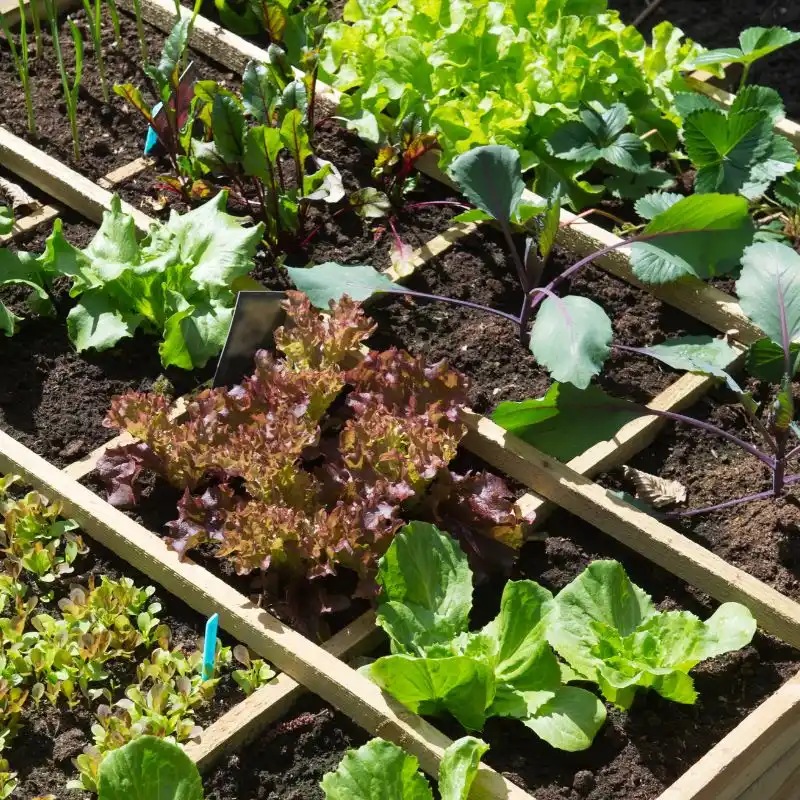
No Spanish summer meal is complete without a fresh ensalada. Lettuce is a mandatory crop in almost every Spanish garden. Romaine (lechuga romana) is the most popular type, prized for its crisp texture and ability to hold up against the heat.
Spanish gardeners often grow several varieties to ensure a continuous supply throughout the seasons. Lettuce grows best in the cooler months but can be grown year-round in coastal areas like the Costa del Sol or the Valencian community.
Providing shade cloth during peak summer sun helps prevent bolting. Loose-leaf varieties are popular for their “cut-and-come-again” potential, allowing you to harvest just the outer leaves and let the plant keep growing. Growing lettuce in containers is also very popular in urban Spanish gardens.
Top lettuce varieties for Spanish gardens:
- Iceberg (Lechuga Iceberg): Crisp, mild, and very heat-tolerant for inland areas.
- Romaine (Lechuga Romana): The classic Spanish choice for Caesar and mixed salads.
- Lollo Rosso: Adds vibrant color and texture to mixed salads.
- Oakleaf (Lechuga Hoja de Roble): Tender, fast-growing, and ideal for cutting.
- Little Gem: A compact romaine perfect for small spaces and container growing.
5. Broccoli and Calabrese – The Modern Favorite
Broccoli has surged in popularity in Spain over the last two decades. It is now a common sight in both supermarkets and home gardens. The Mediterranean climate in southern Spain is perfect for growing broccoli during the cooler months.
Broccoli is rich in sulforaphane, a compound known for its powerful cancer-fighting properties, which appeals to health-conscious gardeners. This makes it a modern favorite among green vegetables in the Spanish diet.
Growing broccoli in Spain requires rich soil and consistent watering. Harvesting the main head encourages side shoots to develop, extending the harvest period significantly. This makes it a very productive crop for small spaces.
The key to perfect broccoli is timing the harvest while the heads are still tight and before the yellow flowers begin to open.
- Soil Preparation: Enrich the soil with well-rotted manure or compost before planting.
- Planting Time: Transplant seedlings in autumn for a winter harvest or early spring for a summer crop.
- Spacing: Space plants at least 18 inches apart for optimal head size.
- Mulching: Mulch heavily to retain moisture and keep the shallow roots cool.
- Pest Control: Watch out for cabbage white caterpillars; use fine netting if necessary.
6. Peas (Guisantes) – Sweet Spring Treats
Peas are one of the first crops Spanish gardeners sow in the spring. The sweet, tender pods are a delicacy that rarely makes it from the garden to the kitchen without being eaten raw on the spot. Sugar snap peas (tirabeques) and snow peas are particularly popular for their edible pods.
Peas are nitrogen-fixers, meaning they enrich the soil for subsequent heavy-feeding crops like tomatoes or peppers. They prefer cool weather and will stop producing once the summer heat arrives.
This makes them a seasonal favorite that marks the sweet transition from winter to summer vegetables. Peas are easy to grow from seed and require minimal care, just a simple trellis for climbing varieties. The taste of a freshly picked pea is incredibly sweet due to the sugars beginning to convert to starch immediately after picking, making homegrown peas far superior to any store-bought version.
Important: Soaking pea seeds overnight before planting can speed up germination by softening the hard outer shell, especially in cooler spring soils that are common in northern Spain.
7. Kale (Col Rizada) – The Newcomer on the Block
Kale, or col rizada, has become increasingly trendy in Spain, particularly among younger gardeners and health enthusiasts. While not a traditional Spanish staple like chard, its hardiness and nutrient density have earned it a permanent spot in many modern huertos. Kale thrives in the same conditions as Swiss chard and is extremely cold-tolerant, making it a fantastic winter green.
Spanish gardeners appreciate that kale is virtually pest-free compared to other brassicas like cabbage or cauliflower.
It can be harvested from autumn through late spring. The leaves are often used in green smoothies, baked into crispy kale chips, or added to traditional potato and bean soups for an extra nutrient kick. Curly kale and Tuscan kale (Cavolo Nero) are the most popular varieties in Spain.
Its ability to withstand frost actually improves its flavor, making it sweeter after a cold night.
What is the easiest green vegetable to grow in Spain?
For complete beginners, the easiest green vegetable to grow in Spain is undoubtedly Swiss chard (acelgas). Its tolerance for both intense heat and light frost makes it forgiving across different seasons and regions. Unlike lettuce, which bolts easily in heat, or spinach, which requires specific cool temperatures, chard handles the average Spanish garden with minimal fuss.
Just sow seeds directly into well-drained soil, water moderately, and you will have a continuous harvest for months. It is almost foolproof, even in poor soil conditions.
How to start a Spanish vegetable garden?
Starting a vegetable garden in Spain is straightforward thanks to the favorable climate. Most of Spain falls into USDA hardiness zones 8-10, allowing for nearly year-round growing. The key is to understand your local microclimate and to amend your soil with organic compost, as many Spanish soils are naturally high in clay or limestone.
Choosing the right green vegetables for Spanish gardens depends largely on your local weather patterns.
Steps to get started successfully:
- Choose a sunny spot: Most vegetables need 6-8 hours of direct sunlight daily.
- Improve soil drainage: Add sand or organic matter to heavy clay soils to prevent root rot.
- Install drip irrigation: Conserve water and deliver moisture directly to the roots efficiently.
- Start with easy crops: Chard, green beans, and lettuce are perfect for novices.
- Plant by the season: Cool crops (lettuce, spinach) in autumn, warm crops (beans) in spring.
Frequently Asked Questions
What are the most common green vegetables in Spain?
The most common green vegetables grown in Spanish households include Swiss chard (acelgas), green beans (judías verdes), spinach (espinacas), and lettuce (lechuga). These are widely cultivated in home gardens and feature prominently in regional Spanish cuisine from Andalusia to Catalonia.
What is Spain’s favorite vegetable?
While tomatoes are incredibly popular in Spanish cooking, when it comes to green leafy vegetables, Swiss chard (acelgas) holds the top spot in home gardens due to its ease of growth and versatility in dishes like tortilla de acelgas and potaje de acelgas.
Do Spanish gardens grow kale?
Yes, kale (known as col rizada or simply kale) has grown significantly in popularity in Spain over the last decade. It is especially popular among young, health-conscious gardeners and is widely available in seed catalogues across the country.
What vegetables grow in Spain in winter?
Winter vegetables grown in Spain include Swiss chard, spinach, kale, broccoli, cabbage, cauliflower, Brussels sprouts, and various hardier types of lettuce. The mild winters in coastal regions allow for continuous growth and harvest.
Is it easy to grow vegetables in Spain?
Yes, Spain’s Mediterranean climate is excellent for vegetable gardening. The main challenges are managing the intense summer heat and ensuring a consistent water supply. These challenges can be easily solved with shade cloth, mulching, and efficient drip irrigation systems.
Final Thoughts
Spanish gardeners have perfected the art of growing green vegetables that are perfectly suited to their climate and cuisine. From the ubiquitous Swiss chard to the sweet spring peas, these greens form the backbone of the healthy Mediterranean diet. By choosing regionally appropriate varieties and mastering the seasonal cycle, anyone can cultivate a thriving Spanish-style garden.
We hope this guide helps you select the best greens for your own huerto.