
How Many Potatoes Should You Hill in One Bed?
In a 4-by-8-foot raised bed, about 8 to 16 potato plants may fit, depending on spacing; a common approach is 12-inch spacing for full-size potatoes or about 8 to 10 inches for smaller harvests, while keeping about 12 to 18 inches from the bed edge. Too little room leads to weak stems, exposed tubers, and smaller yields. This guide gives a simple bed-capacity calculator, spacing by bed size, and how hilling changes planting depth in shallow beds.
How many potatoes fit in one bed?


The fast answer is to size the bed by spacing, then reduce the count if you are growing large indeterminate potatoes or if the bed drains poorly. A bed planted on a 12-inch grid holds fewer plants than one planted at 16 inches, but the wider spacing gives each plant more room to form tubers and accept repeated hilling. Extension guidance commonly places potatoes 12 to 16 inches apart, with wider spacing used for larger varieties and better airflow (University of Minnesota Extension; NC State Extension).
Seed potatoes are the planting material for this crop, not true seed. Use disease-free stock. Small seed potatoes can go in whole, while larger ones are often cut into pieces with at least one healthy sprout on each piece.
Potato bed calculator
This calculator assumes a usable interior area after leaving roughly 12 inches of edge clearance for mounding and access. Counts below show both square-grid and staggered layouts so you can compare tighter and looser planting plans. For large indeterminate varieties or beds that stay wet after rain, reduce counts by one plant per row or more as needed (RHS; University extension spacing and drainage guidance).
| Raised-bed footprint | Usable interior area after edge clearance | Layout | Plants at 12-inch spacing | Plants at 16-inch spacing | Hilling space to leave above the original planting depth | When to reduce the count |
|---|---|---|---|---|---|---|
| 4 x 4 ft | About 2 x 2 ft | Square grid | 4 plants | 1 plant | 6 to 8 inches in a 12-inch-deep bed planted 4 to 6 inches deep | Reduce to 3 plants for large indeterminate types or wet soil |
| 4 x 4 ft | About 2 x 2 ft | Staggered | 4 plants | 4 plants only if the bed is used very efficiently; otherwise 1 to 3 | 6 to 8 inches in a 12-inch-deep bed planted 4 to 6 inches deep | Reduce to 3 plants for large indeterminate types or wet soil |
| 4 x 8 ft | About 2 x 6 ft | Square grid | 8 plants | 4 to 6 plants | 6 to 8 inches in a 12-inch-deep bed; more if the bed is deeper | Reduce to 6 to 8 plants for large indeterminate types |
| 4 x 8 ft | About 2 x 6 ft | Staggered | 8 plants | 6 to 8 plants | 6 to 8 inches in a 12-inch-deep bed; more if the bed is deeper | Reduce to 6 to 7 plants if drainage is poor or the variety is large |
| 3 x 6 ft | About 1 x 4 ft | Square grid | 4 plants | 2 to 3 plants | 6 to 8 inches in a 12-inch-deep bed | Reduce to 3 plants if drainage is poor or the variety is large |
| 3 x 6 ft | About 1 x 4 ft | Staggered | 4 plants | 3 to 4 plants | 6 to 8 inches in a 12-inch-deep bed | Reduce to 3 plants if drainage is poor or the variety is large |
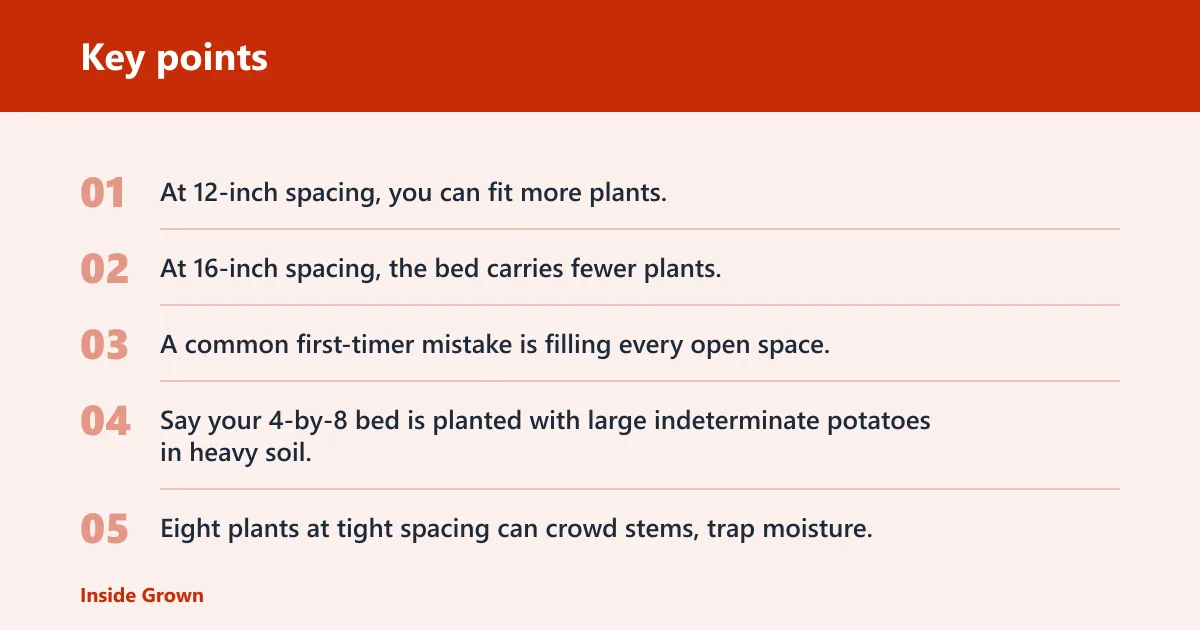
The calculator is conservative on purpose. At 12-inch spacing, you can fit more plants, but tuber size often shrinks as crowding rises. At 16-inch spacing, the bed carries fewer plants, but each plant has more room for hilling and tuber fill. A common first-timer mistake is filling every open space, then running out of soil cover later.
Say your 4-by-8 bed is planted with large indeterminate potatoes in heavy soil. Eight plants at tight spacing can crowd stems, trap moisture, and leave less room to mound soil later. Cutting that count to six gives you more space for airflow, light exclusion, and root growth.
How deep should a potato bed be?
A closed-bottom raised bed should be at least 12 inches deep for potatoes, which matches common raised-bed minimums for root crops and gives enough room for tuber development and hilling (University extension guidance; Oregon State Extension). Deeper beds give more root room and better drainage, and the soil should stay loose, crumbly, and free draining. If the bed is shallow or compacted, lower the plant count and build the soil depth before planting.
Bed depth and drainage
Potato tubers form along underground stems, so the root zone needs both depth and air space. In a bed that holds water after rain, the problem is not only wet feet. Dense, soggy soil also makes hilling harder because the added material settles and packs down.
If the bed is open-bottom and the subsoil drains well, depth still matters. A deeper bed gives a taller column for hilling and keeps developing tubers covered. In a shallow bed, use fewer plants, plant a bit higher, and plan on mulch or soil added in stages.
What to do with shallow beds
In a shallow bed, plant fewer seed potatoes and leave enough open soil on top to hill later. If the bed cannot spare 6 to 8 inches of extra cover above the original planting depth, the planting plan is too tight. Poor drainage calls for even fewer plants than the calculator shows.
How to plant potatoes in raised beds

Use one of two planting methods, and keep them separate so the depth guidance stays clear. For full-depth planting, place seed potatoes sprout-side up and cover them about 4 to 6 inches deep, which is a common extension recommendation for garden potatoes (University extension guidance). For a shallow-trench then hill up method, place the seed pieces in a shallow trench with about 1 to 2 inches of cover at first, then add soil or mulch as plants grow (RHS and other raised-bed potato guides). Keep rows or placements about 1 foot apart where possible.
- Choose disease-free seed potatoes in small whole pieces or cut pieces with sprouts.
- Set each piece sprout-side up in loose soil.
- Cover to the planting depth you are using, such as 4 to 6 inches.
- Keep plants about 12 inches apart, or 16 inches apart if you want fewer, larger tubers.
- Water gently after planting so the soil settles without crusting.
Spacing and placement
Potato spacing is the main lever for bed capacity. One planting method uses tubers every 12 inches. 16 inches between seed potatoes. Row spacing around 1 foot is common in raised-bed layouts, but staggered placement can use the bed more evenly than straight rows. If you are deciding between a tighter grid and a wider layout, raised-bed planting guidance usually favors enough room to hill soil without burying neighboring stems.
Planting too close makes hilling harder. It also leaves less room for air to move through the canopy, which can raise disease pressure. If you want a larger harvest from fewer plants, wider spacing is the cleaner choice.
How high should you hill potatoes?
Hill enough soil or mulch to keep developing tubers covered from light. Start when plants are about 6 to 8 inches tall, which is the standard first hilling stage in many extension guides, and continue every few weeks until flowering. Once flowering starts, late hilling has less value because tuber formation is already underway and the plants are nearing the point where added soil matters less.
Hilling does two jobs. It keeps light away from tubers, which prevents green skin, and it gives stems more covered length where new tubers can form. The benefit drops once tops begin to die back.
How to hill potatoes properly
Pull loose soil up around the stems without burying the leaves completely. Keep the growing tips exposed. Build the mound gradually rather than piling on all the soil at once, especially in a shallow raised bed where the planting depth is limited.
Use the same rule for mulch hilling: the cover must stay thick enough to block light. Thin layers do not do the job.
Soil or straw for hilling
Straw can replace soil if it is weed-free and laid on thick enough to block light. That makes it useful in beds where the topsoil is limited or where you want lighter material that is easier to move around stems. Loose straw is not enough if sunlight still reaches the tubers.
Picture a 3-by-6 bed with four plants. If each plant gets a shallow soil mound and then a thin layer of straw, light still slips through. A thicker, opaque layer works better, especially after the stems reach the first hilling stage.
What changes potato count in a bed?

Variety choice changes the number of plants a bed can hold as much as the footprint does. Indeterminate potatoes keep producing along longer stems and tend to reward repeated hilling, so they need more room. Determinate potatoes set tubers over a shorter span and usually need less aggressive mounding.
Drainage matters just as much. In a wet bed, crowding can slow drying after rain and raise disease pressure. In a dry, loose bed, the same spacing may work better and let you push plant count a little higher without sacrificing tuber size.
Determinate versus indeterminate varieties
Large indeterminate varieties are the ones to space out first. They use the extra room for longer stems and more hilling space. Determinate types are more forgiving in tighter beds, but even they need enough cover to keep new tubers out of the light.
That difference also changes the tradeoff between more plants and larger tubers. Tight spacing can raise the count of plants, but it often lowers tuber size per plant. If the goal is supper-sized potatoes, fewer plants are usually the better fit.
Water, frost, and pests
Potato crops should receive about 1 inch of water per week, ideally from rain plus irrigation combined, with consistently moist but not saturated soil (University extension guidance; Missouri Extension). Keep the soil evenly moist, not saturated. Watch for striped potato beetles, and protect young shoots from late frost because tender tops can be damaged just after emergence.
Hilling and watering work together. Dry soil crumbles and is easier to mound, while overly wet soil packs down and can smother stems. Stable moisture helps the bed produce more even tubers.
Frequently asked questions
How far apart for potatoes?
A practical range is 12 inches apart for fuller plant counts and 16 inches apart for larger tubers or more hilling room. Another guide uses 16 inches as the minimum. If drainage is weak or the variety is large and indeterminate, widen the spacing rather than forcing more plants into the bed.
How much space do potatoes need?
Each plant needs enough width for stems, hilling, and tuber fill. In a raised bed, that usually means about 12 inches between plants at minimum, plus room at the edge for mounding. If you want bigger tubers, give each plant closer to 16 inches and reduce the total count.
How deep raised bed for potatoes?
For a closed-bottom bed, 12 inches is the practical minimum. Deeper beds give more room for roots, better drainage, and easier hilling. If the bed is shallow, cut back the plant count and rely on mulch or extra soil to keep developing tubers covered.
Do I have to hill potatoes?
You do not have to hill heavily, but you do need to keep tubers out of light. If the bed is deep and you plant with enough soil above the seed piece, the hilling task is lighter. In shallow beds, hilling or thick mulch becomes much more important.