How Many Days Before Transplanting Should You Start Seeds?
Start seeds 4–8 weeks before transplanting for most crops, but use 10–12 weeks for slow growers like onions and celery, 6–8 weeks for tomatoes and peppers, and 3–4 weeks for cucumbers and squash, then move them only when seedlings are sized up and nights are warm enough. Start too early and seedlings become rootbound, leggy, and stressed at transplant. This guide gives crop-by-crop timing, seedling size cues, and the outdoor conditions that decide when to plant.
How to count backward from your last frost date
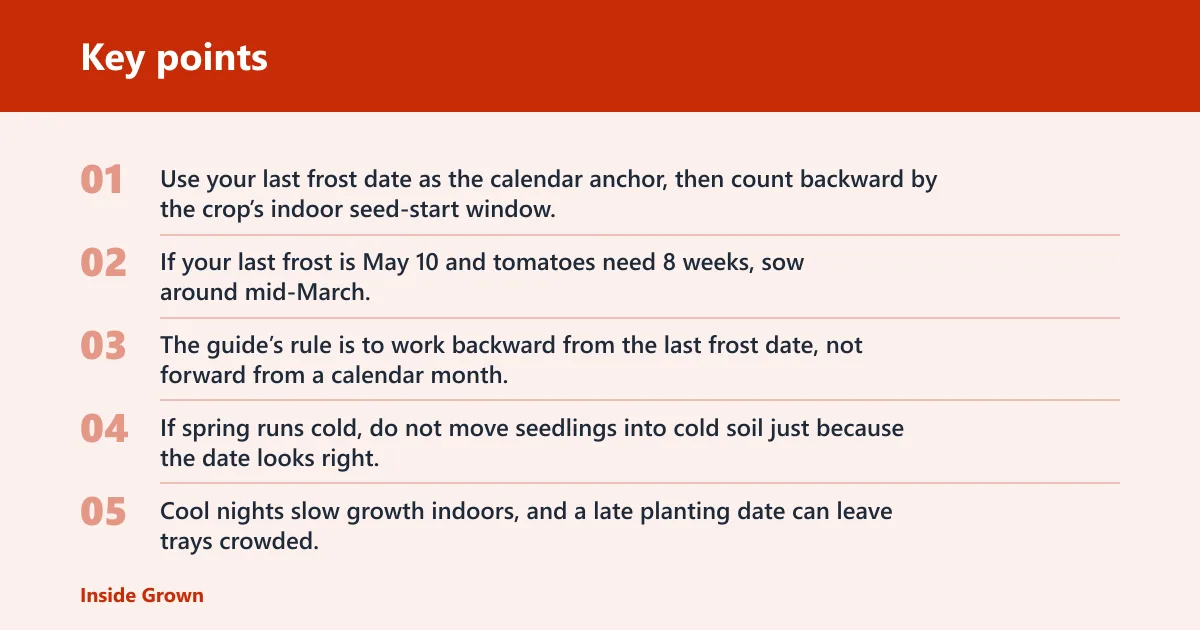


Use your last frost date as the calendar anchor, then count backward by the crop’s indoor seed-start window. That date matters more than USDA hardiness zone, which is only a broad seasonal reference. A local frost date gives you the timing for your yard, patio, or cold frame, while the zone only hints at the likely spring window.
How to turn weeks before frost into a sowing date
Start with the last expected spring frost date, then subtract the number of weeks on the seed packet or in a crop timing chart. If your last frost is May 10 and tomatoes need 8 weeks, sow around mid-March. The guide’s rule is to work backward from the last frost date, not forward from a calendar month.
If spring runs cold, do not move seedlings into cold soil just because the date looks right. Cool nights slow growth indoors, and a late planting date can leave trays crowded. In that case, hold seedlings in a cooler but bright indoor spot to slow them down, or transplant into protected space such as a cold frame, cloche, or large container that warms faster.
When to adjust for a cold spring or late transplanting
Adjust the plan if your transplant site is still cold, wet, or windy. Warm-season crops stall in chilly soil, and indoor seedlings can outgrow their trays if the garden is not ready. If the weather delays planting by more than a week or two, reduce fertilizer, give more light, and move larger seedlings into deeper pots so roots do not spiral.
Crops also split into three practical groups. Cool-season crops such as lettuce, cabbage family crops, onions, leeks, and celery often start earlier indoors or can be direct-sown outdoors depending on the crop. Warm-season crops such as tomatoes, peppers, eggplant, basil, cucumbers, squash, and melons usually start closer to transplant time. Some crops are better direct-sown and should skip the tray entirely.
What to start 8 weeks before last frost
Eight weeks before the last frost fits crops that need a moderate head start but should not sit indoors too long. Tomatoes are the classic example, and this timing also works for several other vegetables that need sturdy transplants without becoming oversized. If the room is cool and growth slows, a slightly later sowing date is usually safer than forcing weak, stretchy seedlings.
Typical 8-week crops
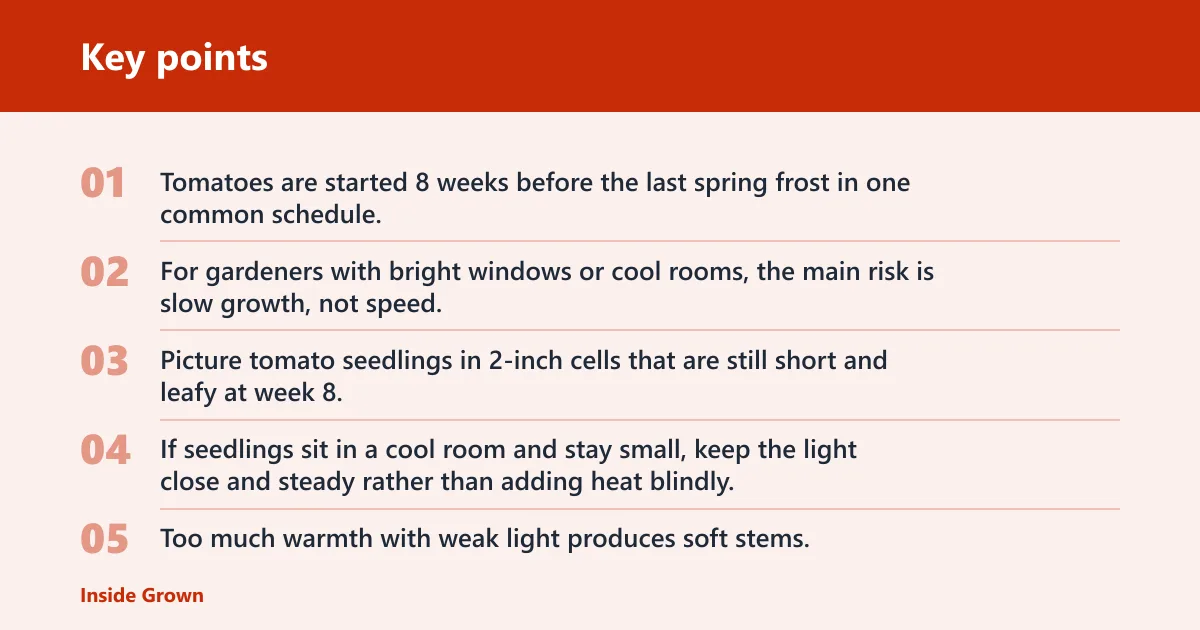
Tomatoes are started 8 weeks before the last spring frost in one common schedule. That window usually gives enough time for a sturdy stem, several true leaves, and a root ball that holds together at transplant. For gardeners with bright windows or cool rooms, the main risk is slow growth, not speed.
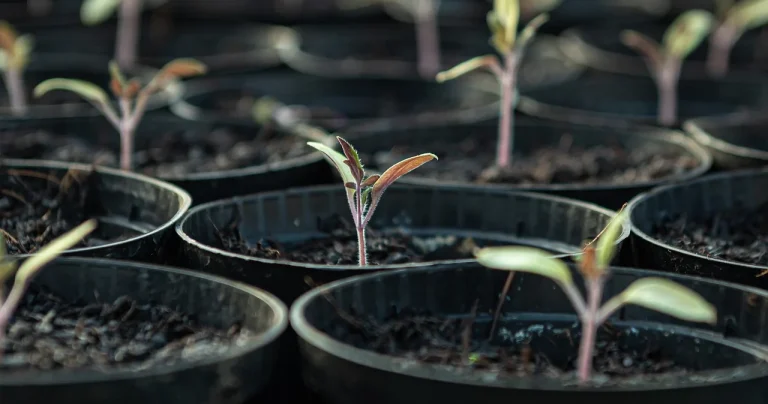
Picture tomato seedlings in 2-inch cells that are still short and leafy at week 8. That is good. If they are already bent over the edge of the tray, they have had too much time indoors or too little light, and they need a bigger pot or a faster planting date.
What to do if growth slows indoors
If seedlings sit in a cool room and stay small, keep the light close and steady rather than adding heat blindly. Too much warmth with weak light produces soft stems. For tomatoes started on time but stalled by cool conditions, a bright south window is usually not enough; a grow light held close helps them stay compact.
What to start 10 weeks before last frost
Ten weeks before last frost is for slow starters that need a longer runway indoors. In one schedule, leek, celery, eggplant, onion, pepper, and parsley are started 10 weeks before frost. That longer window matters because these crops germinate slowly or grow slowly early on, but it also raises the risk of oversized, root-bound plants if the outdoor window slips.
Slow starters that need more lead time
Onions, leeks, celery, and peppers are common 10-week crops. The seedlings should still fit comfortably in their cells when transplant time arrives. If they have filled the tray early, move them into larger containers, trim back fertilizer, or lower the temperature slightly to slow top growth.
A common first-timer mistake is sowing peppers too early because the seedlings look small at first. They often stay small for a long time, then suddenly crowd the tray. The result is a tall, thin plant with a tangled root ball and a weak start outdoors.
When a longer start window stops making sense
Do not extend the indoor window just because you have shelf space. Once seedlings become cramped, the benefit of an early start disappears. A crop that is supposed to wait 10 weeks before frost should still be transplant-ready, not pot-bound, when outdoor conditions improve.
How big seedlings should be before transplanting?
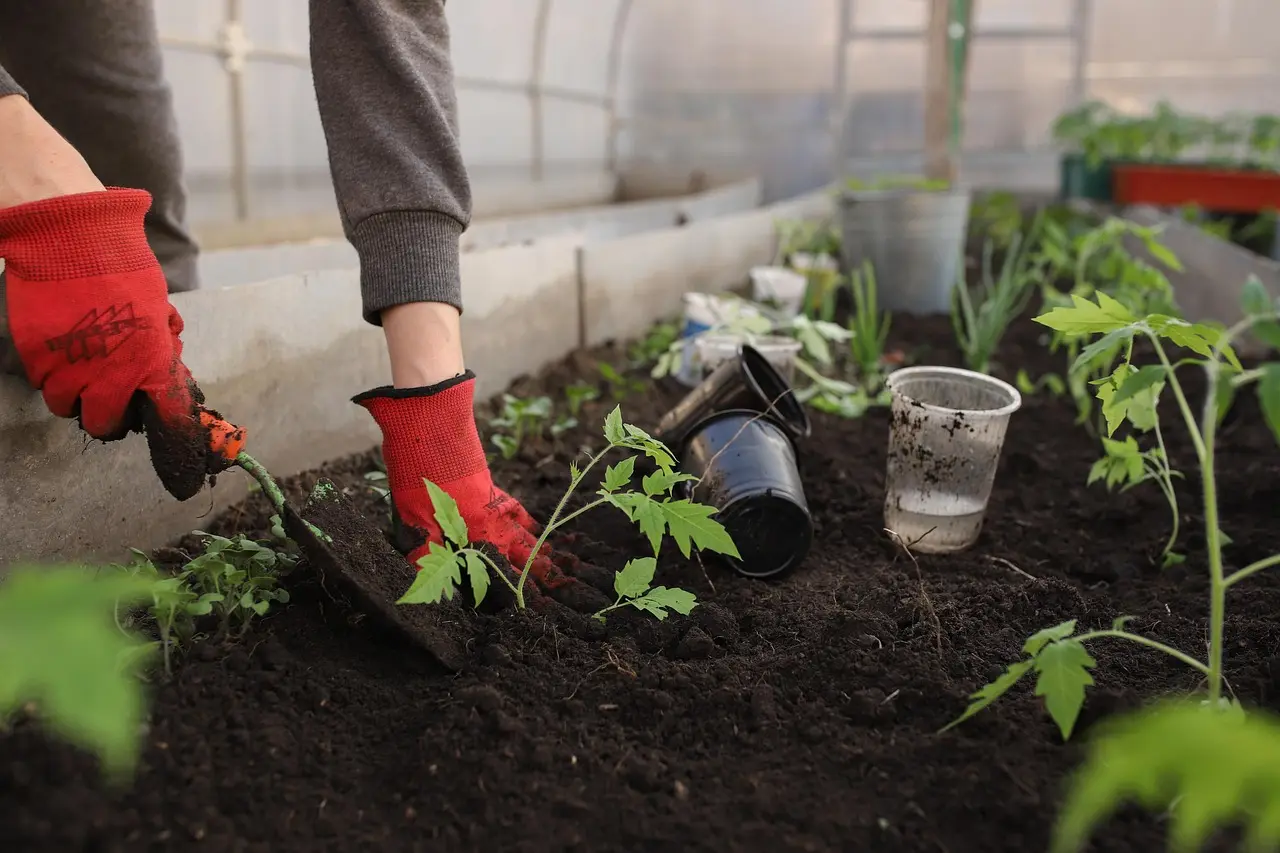
Seedlings are ready when they are sturdy enough to handle wind, sun, and cooler nights without collapsing. Look for several true leaves, a thick stem, and roots that hold the plug together without circling hard around the cell. Avoid plants that are leggy, oversized, or root-bound, because those traits make transplant shock more likely.
Signs a seedling is ready to move
A transplant-ready seedling usually has a compact shape and a firm root ball. The plant should stand upright after watering, and the soil should come out of the cell intact. For larger crops such as tomatoes and peppers, a ready plant often has multiple true leaves and enough stem strength to stay straight after a light breeze.
- Check stem strength. Gently tap the tray. If the seedling flops over, it needs more light or more time before transplanting.
- Inspect the roots. Slide one plant from its cell. White roots are fine; a dense spiral around the bottom means it is getting root-bound.
- Match the crop size. Keep tomato and pepper seedlings compact, but do not let lettuce or brassicas sit so long that they crowd each other and stall.
- Watch the weather. Move warm-season seedlings only when nights are warm enough for the crop and the soil is not cold and saturated.
How to spot leggy or root-bound plants
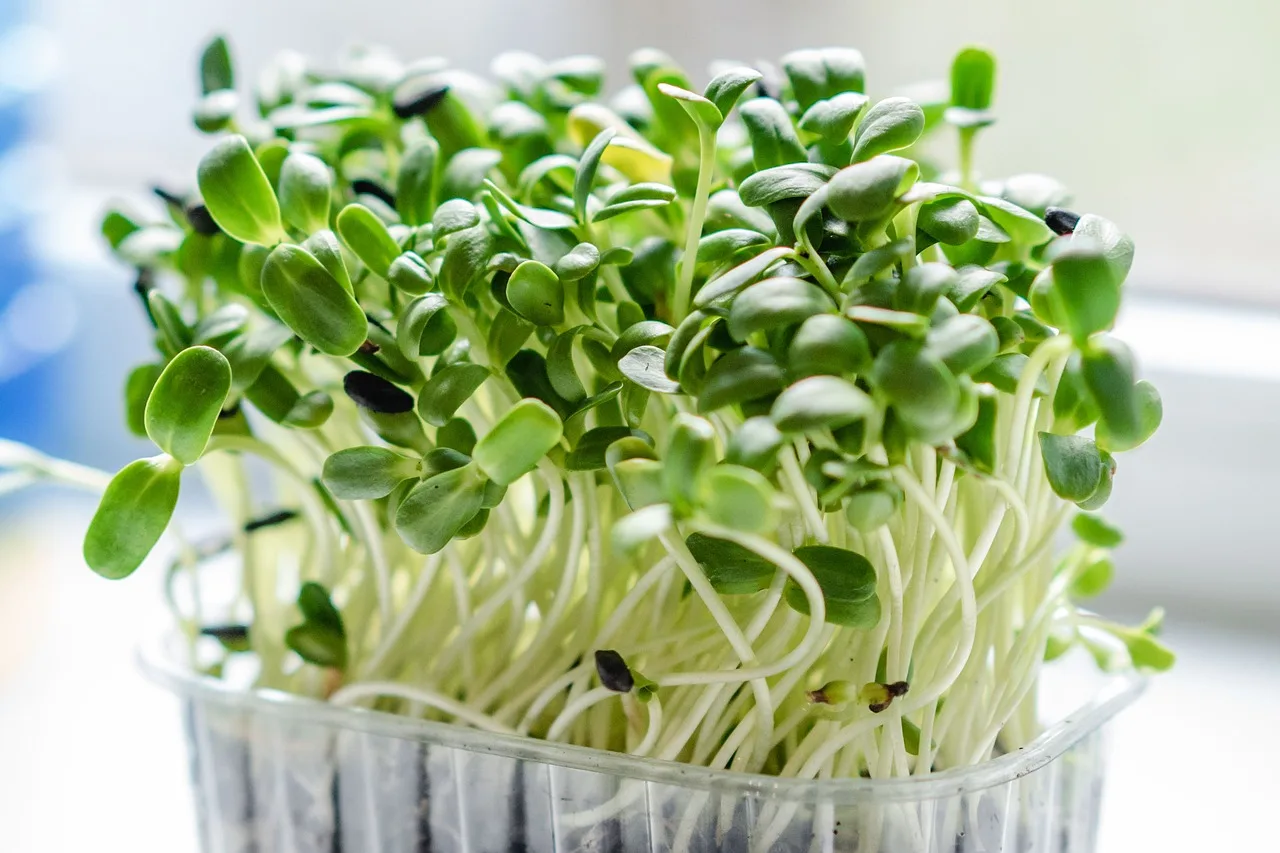
Leggy seedlings have long stems, wide gaps between leaves, and a lean toward the light. Root-bound seedlings dry out fast, stop gaining size, and can start yellowing even when watered. Oversized plants are harder to set out cleanly, and they often sulk after transplanting because their roots have already filled the container.
Suppose a pepper plant is 10 inches tall with a thin stem and roots circling the bottom of a 3-inch pot. That plant is not “ahead.” It is overdue for a larger pot or a faster move outdoors once nights are warm enough.
What transplant-ready size looks like by crop
Small cool-season crops such as lettuce and brassicas can be transplanted at a modest size with a few true leaves. Tomatoes and peppers should be compact and sturdy, not tall and spindly. Onions and leeks are often moved while still slender, but the tops should be straight and the roots active.
Transplant timing matrix
This table pairs common crops with a practical indoor start window, a transplant-ready size, and a simple rescue move if the seedlings get too big before the garden is ready. The “delay if nights stay cold” column matters because some crops still need warmer conditions even when the seedlings themselves look ready.
| Crop | Weeks before last frost | Ideal transplant size | Delay if nights stay cold? | Too-early rescue |
|---|---|---|---|---|
| Onion | 10 weeks | Slender tops, pencil-thin stems | No; handle cool weather better | Trim tops slightly and move to larger cells if roots crowd |
| Leek | 10 weeks | Thin, grass-like seedlings | No; can wait in cool weather | Pot up deeper to hold upright growth |
| Celery | 10 weeks | Compact seedlings with several true leaves | Yes; prefers steadier spring warmth | Move into a larger flat and keep evenly moist |
| Eggplant | 10 weeks | Small but sturdy, with thick stems | Yes; cold nights slow it down | Pot up and keep under strong light |
| Pepper | 10 weeks | Short, bushy plant with firm stem | Yes; wait for warmer nights | Shift into a larger pot and reduce water slightly |
| Parsley | 10 weeks | Low, leafy seedling | Usually no; handles cool spring better | Thin, pot up, or hold in bright cool light |
| Tomato | 8 weeks | Compact plant with several true leaves | Yes; frost and cold soil are a problem | Pot deeper; bury part of the stem at transplant |
| Lettuce | 6 weeks | Small rosette with strong leaves | No; can go out early | Pot up or set out sooner before it crowds |
| Cabbage family crops | 6 weeks | Stocky seedling with a solid root plug | No; tolerates cool conditions well | Move to a larger plug tray if roots are circling |
| Basil, cucumber, squash, melon, pumpkin | 4 weeks | Small, upright, not pot-bound | Yes; wait for warm nights and soil | Upsize the pot and plant as soon as weather allows |
Beans, peas, corn, and zucchini are usually better direct-sown. The same is true for carrots, beets, parsnips, and radishes, which dislike root disturbance. Direct sowing avoids transplant shock and root deformation, and for some of these crops it is the better option from the start.
How to harden off seedlings before planting out
Hardening off is the gradual move from indoor conditions to outdoor sun, wind, and temperature swings. It should happen before transplanting, not after. Start the process several days before planting out, and keep warm-season crops protected until nights are reliably mild. Without that step, seedlings can show sun scorch, leaf curl, wilt, or stalled growth after transplant.
- Start in light shade. Put seedlings outside for a short period on day one, protected from direct afternoon sun and strong wind. A sheltered porch or bright shade is safer than full exposure.
- Increase exposure daily. Add more time outdoors and more direct sun over several days. This gradual shift helps leaves thicken and reduces shock.
- Watch for stress signs. If leaves bleach, curl, or wilt badly, shorten the exposure and move them back to a gentler spot. The goal is steady adaptation, not a quick test.
- Plant when conditions fit. Transplant once seedlings are ready and the soil and night temperatures suit the crop. Warm-season crops need warmer conditions than lettuce or cabbage family crops.
Frequently asked questions
How many weeks before transplanting should I start seeds indoors?
For most crops, start seeds 4–8 weeks before transplanting. Slow growers such as onions and celery usually need 10–12 weeks, while tomatoes and peppers often need 6–8 weeks. The exact window depends on the crop, the last frost date, and how fast the seedlings grow indoors.
What seeds should be started 8 weeks before the last frost?
Tomatoes are the clearest example of an 8-week crop. This timing also fits many other transplants that need a solid start without sitting indoors too long. If your room is cool and growth slows, keep the seedlings under strong light and avoid pushing them into oversized pots too early.
What seeds should be started 10 weeks before the last frost?
Leek, celery, eggplant, onion, pepper, and parsley are started 10 weeks before frost in one common schedule. These crops either grow slowly at first or need a long runway before transplanting. The main risk is not being late; it is letting them become root-bound before the garden is ready.
Can I start seeds too early before transplanting?
Yes. Starting too early often leads to leggy, root-bound, or stressed seedlings that recover slowly after transplant. If the garden is not ready, shift seedlings into larger containers, keep light close, and reduce warmth if growth is racing. Early sowing only helps when the plants stay compact and healthy.
How do I know when seedlings are ready to transplant?
Seedlings are ready when they have a sturdy stem, several true leaves, and a root ball that holds together without circling badly. They should be small enough to fit the weather window, but large enough to handle wind and sun. If they bend, yellow, or dry out quickly, they are not ready yet.
Which crops should not be started indoors?
Some crops are better direct-sown instead of started indoors. Beans, peas, corn, and zucchini are listed that way, and carrots, beets, parsnips, and radishes are also common direct-sow choices because they dislike root disturbance. Direct sowing avoids transplant shock and keeps the root system undisturbed.
How far back from my last frost date should I sow tomatoes?
Tomatoes are commonly started 8 weeks before the last spring frost in one schedule. Count backward from your local last frost date, not from USDA zone alone. If the spring stays cold, keep the seedlings compact indoors and wait to transplant until nights and soil are warm enough.
When should I harden off seedlings before transplanting?
Begin hardening off a few days before planting out, once seedlings are close to transplant-ready and the forecast looks suitable. Start with short periods in shade, then increase sun and time outdoors over several days. Stop or slow the process if leaves scorch, curl, or wilt badly.