How Many Seeds Should You Plant for Microgreens?
For a standard 10×20 tray, start with enough seed to cover the surface in a dense single layer, then adjust by crop: about 10–15 g for broccoli, 20–30 g for radish, and 60–90 g for sunflower. Too little seed leaves gaps; too much creates mold-prone mats and weak stems. This guide shows how to match tray size, seed type, and germination rate to a reliable seeding amount.
What determines microgreen seed quantity?


Seed quantity comes down to three things: the tray surface you need to cover, the size of the seed, and how many seeds are likely to sprout. Microgreens are cut young, so you want a closed canopy before stems stretch or leaves move past the best harvest stage.
Surface area matters more than the tray’s depth. A 10×20 tray gives you a fixed planting surface, and that surface sets the base amount of seed. Crop size changes the math because a pea or sunflower seed covers more area than a broccoli or basil seed. Germination rate changes it again because older or poorly stored seed leaves more empty spots.
Tray area is the starting point
A standard 10×20 tray is usually the reference size for microgreens. Full-tray coverage needs far more seed than a half tray, but the method stays the same: measure the area first, then choose a crop-specific rate that fits that area. If you change tray size, scale the seed amount with it.
Seed size changes coverage
Small-seeded crops such as broccoli and basil spread into many more plant points per gram than large-seeded crops such as sunflower and pea. That is why there is no single universal number. Dense sowing creates a closed canopy, but the amount needed to get there depends on how large each seed is.
Germination rate changes the final stand
Seed viability is part of the calculation. Older seed, or seed stored in warm or damp conditions, often needs a little more coverage to offset misses. If germination is lower, the same spread of seed leaves a thinner canopy, which can create gaps, reduce uniform height, and make the tray dry unevenly.
How does tray size change the amount you need?
Tray size changes seed needs because a larger surface must be covered evenly. A 10×20 full tray needs roughly twice the seed of a 10×10 half tray if the crop and planting depth are the same. The practical move is to think in surface area, then scale the rate rather than guessing a fixed number.
Full tray versus half tray
A full 10×20 tray is the baseline for most home growers. A half tray needs about half as much seed if you keep the same crop and sowing density. That works because the number of planting points is tied to exposed surface, not to the volume of growing medium below it.
Use area, not a fixed number
If you swap to a tray that is wider, shorter, or split into sections, the seed amount should change with the exposed area. A crop that needs 20 g in a 10×20 tray will not need 20 g in a smaller insert. A simple way to calculate it is to start with the crop’s 10×20 rate and multiply by the new tray’s surface area relative to a standard 10×20 tray.
When to scale up or down
Scale up for crops with large seeds, for seed lots with weaker germination, or when you want a very full canopy from the first harvest. Scale down only when the crop is naturally dense at low weight, or when the tray is smaller than the standard reference size. For most home growers, crop fit matters more than chasing one universal figure.
Microgreen seed calculator table
Use this table as a starting point, then adjust for seed quality and tray area. The ranges below assume a standard 10×20 tray and a reasonably even sowing surface.
| Tray size | Crop category | Estimated seed amount range | Adjustment notes for low-germination seed |
|---|---|---|---|
| 10×20 full tray | Small-seeded crops | 10–15 g | Add 10% to 25% if the lot is older or germination is uncertain. |
| 10×20 full tray | Medium-seeded crops | 20–30 g | Use the higher end of the range if seed looks dry, chipped, or uneven. |
| 10×20 full tray | Large-seeded crops | 60–90 g | Increase modestly if sprouting is below normal, but avoid thick piles. |
| 10×10 half tray | Small-seeded crops | 5–8 g | Raise slightly only if you also expect lower viability. |
| 10×10 half tray | Medium-seeded crops | 10–15 g | Use the upper end for older seed or if the tray edge dries faster. |
| 10×10 half tray | Large-seeded crops | 30–45 g | Keep the layer even; extra seed should not become a thick mat. |
Worked example: A standard 10×20 tray planted with broccoli, radish, and sunflower can be estimated like this: broccoli at 10–15 g, radish at 20–30 g, sunflower at 60–90 g. If the seed lot is older and germination is likely lower, move each range up by about 10% to 25%, then stop once the surface looks evenly covered without stacking seed.
How much seed do common crops need?
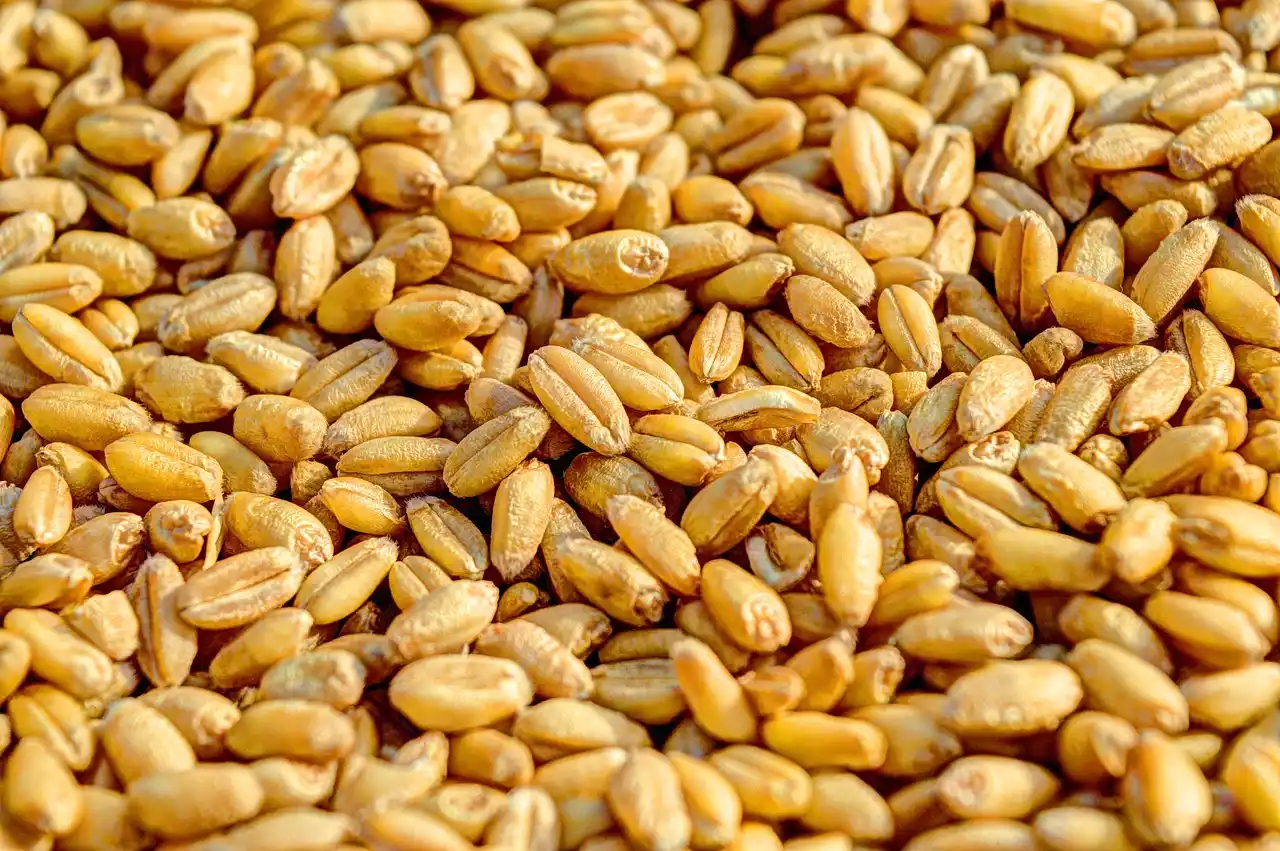
Different microgreens need different seeding rates because their seed size and sprouting behavior differ. Radish and broccoli fall into the smaller-seed group, sunflower is much larger, and basil sits on the small end but often needs careful handling because its seed is tiny and can clump when wet.
Radish and broccoli
Radish usually needs more seed by weight than broccoli because the seeds are larger and the tray often needs a thicker starting layer to reach a full canopy. Broccoli is lighter per tray and works well in the lower-to-middle end of a small-seed range. Both crops benefit from a uniform spread across the full surface.
For a 10×20 tray, a practical starting range for broccoli is about 10–15 g. If the surface looks patchy after spreading, add a small amount rather than dumping seed into the thin spots. A little extra coverage is useful; clumps are not.
Sunflower and pea
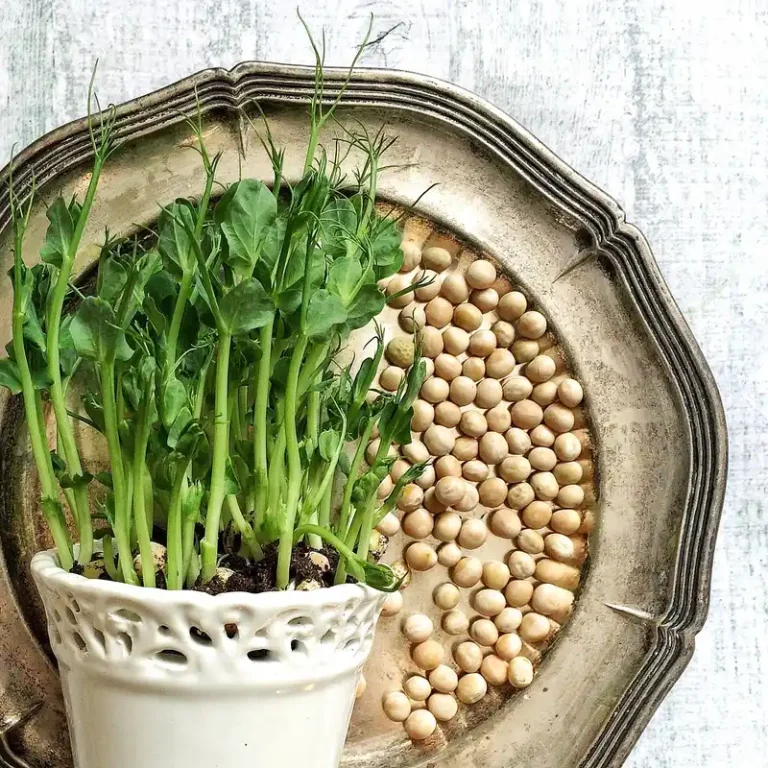
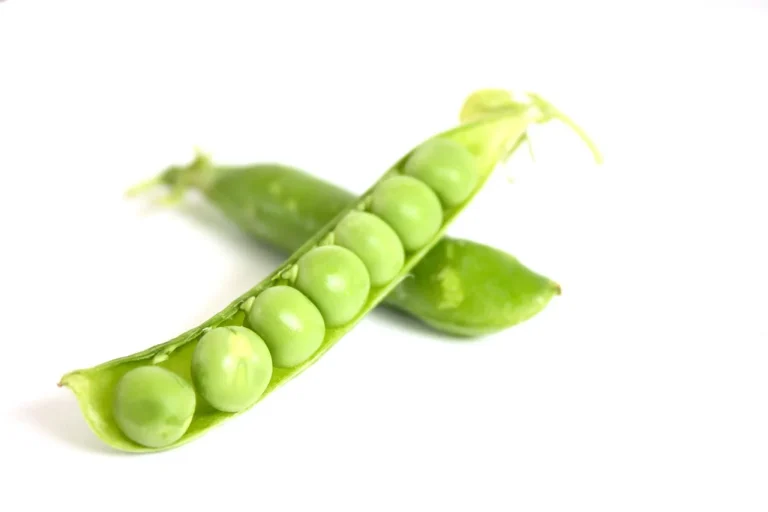
Sunflower needs much more seed per tray because the seeds are large.
Say your sunflower seed lot has a lower sprout rate than expected. Adding a bit more seed can close gaps, but too much creates crowded crowns and weak airflow near the surface. That raises the chance of a damp, compact mat that dries slowly.
Basil and other small-seeded crops
Basil is tiny, so a little seed covers a lot of surface. For a standard tray, the amount is usually far below the weight used for radish or sunflower. Small-seeded crops like basil need careful spreading because the seeds can gather in wet pockets and leave bare strips elsewhere.
For very small seed, weigh it rather than relying on spoon measures. A spoon can vary too much by seed shape and moisture. If you are weighing seed, use the range for the crop first, then fine-tune after checking how evenly the tray fills.
How do you adjust for germination rate?
If germination is below normal, sow a little heavier so the final stand still closes into a canopy. A seed lot with poorer viability needs more coverage to reach the same density as fresh seed. The right adjustment is usually modest, not dramatic, because pushing too far leads to crowding, poor airflow, and weak stems.
When to seed heavier than the label rate
Use the upper end of a crop range when the seed is older, has been stored poorly, or comes from a batch with uncertain viability. If the seed is fresh and looks uniform, start near the middle or lower end of the range. The goal is enough live plants to cover the tray, not the heaviest possible layer of seed.
How much to add
A common adjustment is about 10% to 25% more seed when viability is in doubt. That is usually enough to protect final canopy density without making the tray too dense. If the seed is very unreliable, the better answer is often a fresh lot rather than endless extra sowing.
What germination does to canopy density
Lower germination means fewer stems, more open space, and a canopy that closes later. That slower closure can let the medium dry in spots and can leave some stems taller than others. For harvest targets that depend on a smooth, even mat, seed quality matters as much as tray size.
How should you sow seeds evenly?
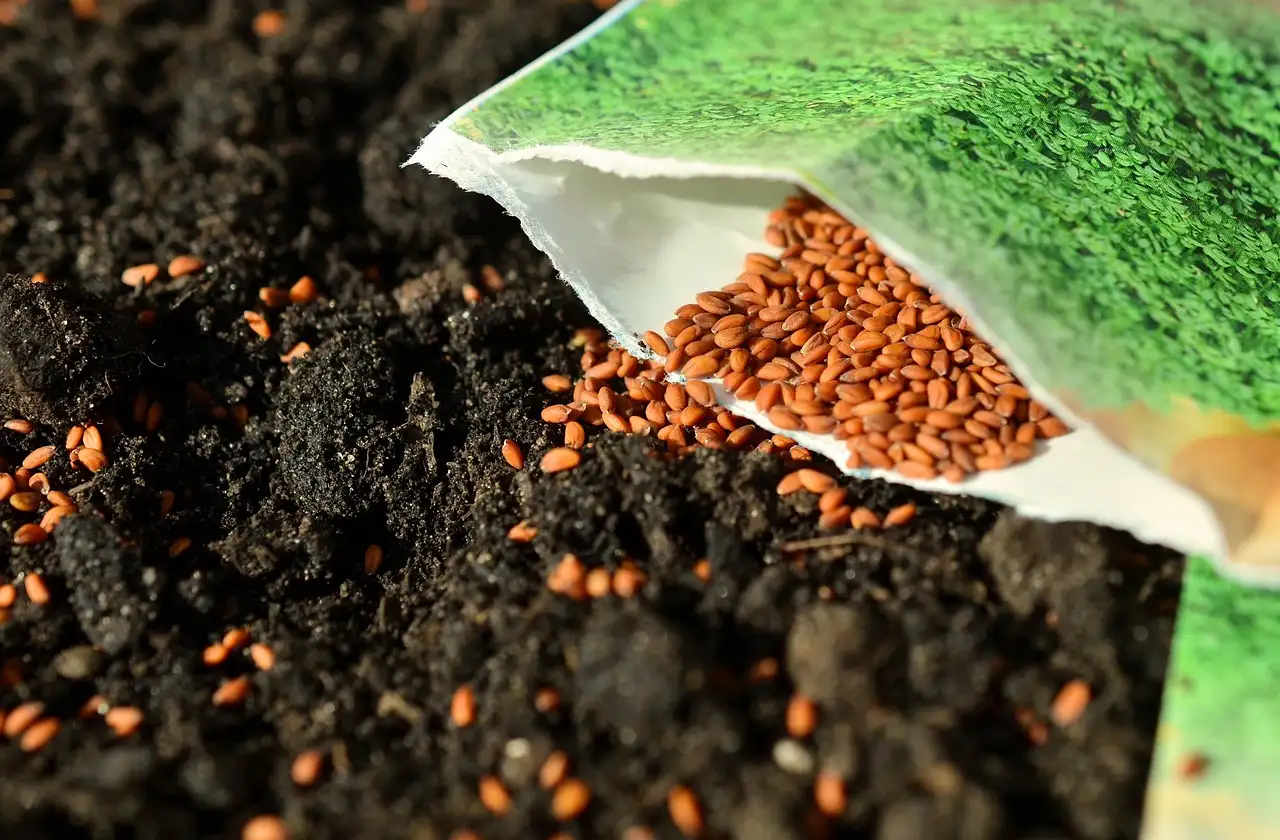
Spread seed in a single layer across the surface, then press or settle it lightly so it contacts the medium. Even spacing matters because clumps compete for light and airflow, while bare spots stay thin. A level, moist surface makes even sowing much easier.
- Fill the tray with a soil-based medium or coco coir and level the surface.
- Moisten the medium so it is evenly damp, not soggy.
- Measure the seed amount for the crop and tray size.
- Scatter seed as evenly as possible across the full surface.
- Check for dense piles or obvious bare zones and correct them.
- Use a slotted or solid tray setup that supports bottom watering and drainage as needed.
Medium moisture and surface evenness
Growing medium affects how evenly seed settles. Soil-based media and coco coir both hold moisture well, but they need a smooth, level surface or seed will roll into low spots. A tray that is uneven at sowing usually produces an uneven canopy later.
Tray type matters too
An open drainage tray paired with a solid bottom-watering tray is common because it keeps moisture available without soaking the seed. Slotted trays drain quickly; solid trays hold water longer beneath the root zone. Either setup can work, but the surface still needs even coverage and enough moisture to support germination.
A common first-timer mistake is overfilling one corner of a tray with seed because the surface looks thin at a glance. The result is a dense patch that stays wet too long beside a thin patch that dries out early. The fix is to reseed the bare area lightly, not to pile more seed onto the heavy area.
Dense sowing, airflow, and harvest timing
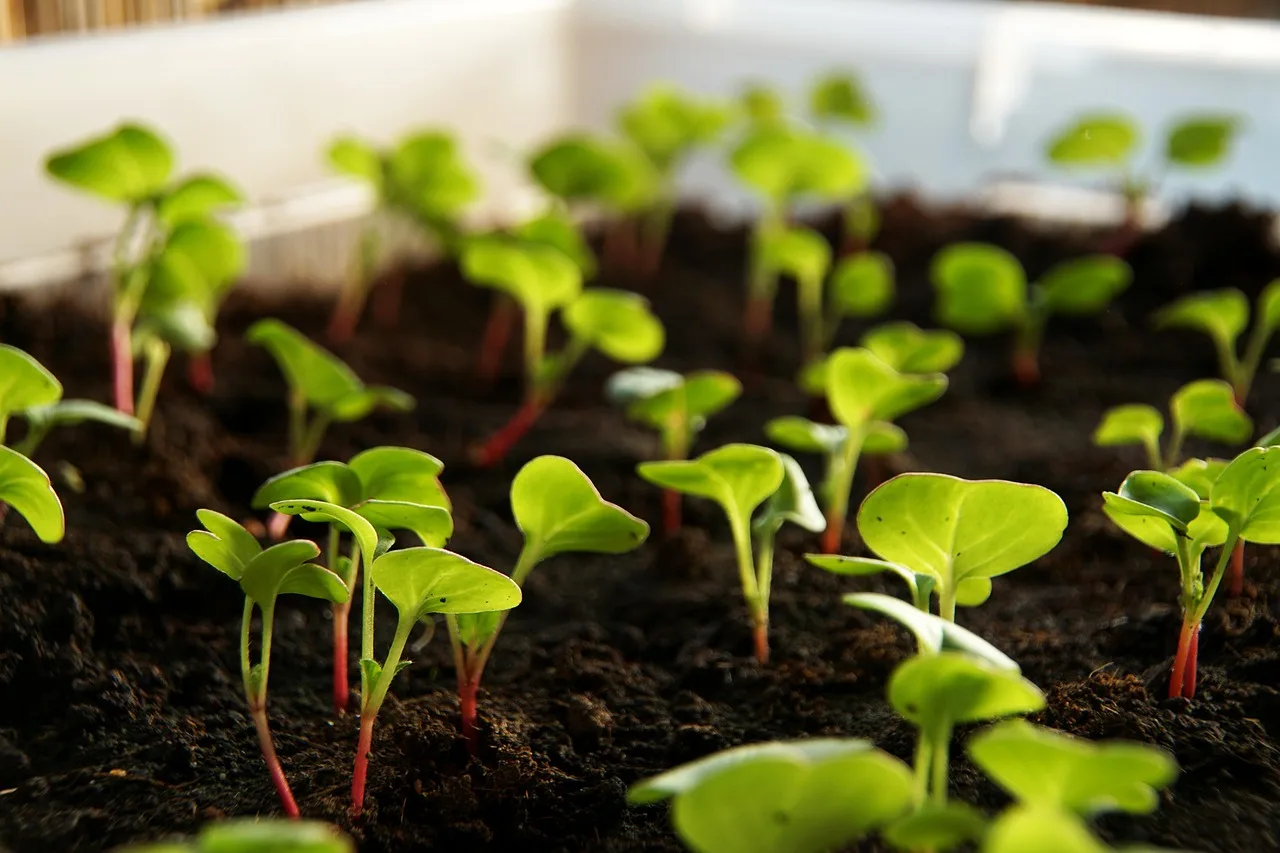
Dense sowing helps microgreens form a full canopy, but dense is not the same as packed solid. The tray should close quickly, yet still allow some airflow between stems. Harvest timing matters too: cut before true leaves dominate if you want the best texture and the most uniform stems.
Why dense sowing helps
A dense start helps stems rise together and keeps the tray visually full. That is useful because the harvest target is a canopy that looks and cuts evenly. Sparse trays can stretch, lean, and vary in height, which lowers usable yield even when the plants are healthy.
What happens when sowing is too thick
Overthick sowing can trap moisture, slow airflow, and create a mat that stays damp longer than it should. That is where mold risk rises. Weak stems can also appear when plants compete too hard for space, especially if light is limited or the tray remains covered too long.
Harvest timing and tradeoffs
Harvesting at the right stage gives you the best mix of yield and quality. Waiting too long can add mass, but it can also bring tougher stems and more uneven texture. For most crops, the best cut point is a dense canopy before true leaves become the main feature.
Suppose a 10×20 tray of broccoli was sown too lightly and the canopy never closed. The stems may stand unevenly, and the tray can finish with a lower usable cut because the open gaps never filled in. A slightly heavier sowing next time usually improves coverage more effectively than waiting longer.
Frequently asked questions
How many seeds should you plant for microgreens?
Start with a crop-specific rate that fills the tray in a dense single layer, then adjust for seed size and germination. Small-seeded crops often need less seed than large-seeded crops, while large-seeded crops need far more. The right amount is the one that gives full coverage without crowding the surface.
How much seed do you need for a 10×20 microgreen tray?
A standard 10×20 tray commonly takes about 10–15 g for broccoli, 20–30 g for radish, and 60–90 g for sunflower. That range assumes even sowing and reasonably good seed quality. If germination is lower, increase slightly rather than doubling the amount.
Do different microgreens need different seeding rates?
Yes. Seed size and crop behavior change how much you need per tray. Radish, broccoli, sunflower, pea, and basil all fit different ranges because their seed counts per gram are not the same. Crop-specific rates are better than one fixed number for every tray.
Should microgreens be sown densely or thinly?
Dense, but not packed. A full canopy is the goal, because sparse sowing leaves gaps and uneven height. Too much density can reduce airflow and raise mold risk, so the best practice is even coverage that closes quickly without forming a thick, wet mat.
How do you calculate seed quantity from tray size?
Use tray surface area as the starting point, then apply a crop-specific rate for that area. A full 10×20 tray is the common reference, while a half tray needs about half as much seed. After that, adjust upward slightly if germination is weak or the seed lot is old.
How do you adjust seed amount for seed quality or germination rate?
If germination is uncertain, sow 10% to 25% more seed than the normal range for that crop. Older seed usually needs the biggest adjustment. If viability is very poor, a fresh seed lot is often the better fix, because extra seed can only go so far before crowding becomes a problem.