Gardening Tips for Using a Soil Test Before Planting
Use your soil test to choose three things before planting: whether to change pH, which nutrients to add, and which crops fit the soil as it is. If pH falls outside the crop’s range, address that along with any nutrient needs the report shows. Skipping the report can leave you with weak seedlings, wasted amendments, and crops that fail even in good weather. This guide shows how to read pH, phosphorus, potassium, and organic matter numbers and turn them into a planting plan.
What your soil test reports and does not

- Tests pH and key nutrients
- Includes fertilizer recommendations
- Quick, easy liquid testing
A soil test turns guesswork into a planting plan. It shows whether the bed needs lime, sulfur, a nutrient-specific fertilizer, or no amendment at all. It also helps you choose crops that fit the soil now instead of pushing every bed toward the same target.
What a soil test tells you
Basic lab and extension tests commonly report pH, phosphorus, potassium, and often organic matter. Some reports also include nutrient retention data and texture notes. USDA recommends local Cooperative Extension offices for region-specific planting help. (USDA)
That matters because the same number can mean something different in sand, loam, or clay. A sandy bed may lose nutrients fast. A clay-heavy bed may hold water and stress roots after rain.
What a soil test does not tell you
A nutrient test does not rule out contamination. If the site has possible lead, heavy metals, wildfire ash exposure, demolition debris, or unknown fill, nutrient data alone is not enough. In those cases, mail-in contaminant testing is the better next step, even though it costs more than a basic fertility report.
It also does not tell you how a plant will look by eye next month. Yellow leaves can come from cold soil, compacted roots, or a deficiency. A report separates those possibilities before you buy amendments.
When to test soil before planting?
Test soil before you add amendments or seed a bed. For new gardens, take a baseline test before planting anything. For spring planting, fall is the best time to prepare soil so there is time for changes to work.
Best timing for new beds and spring planting
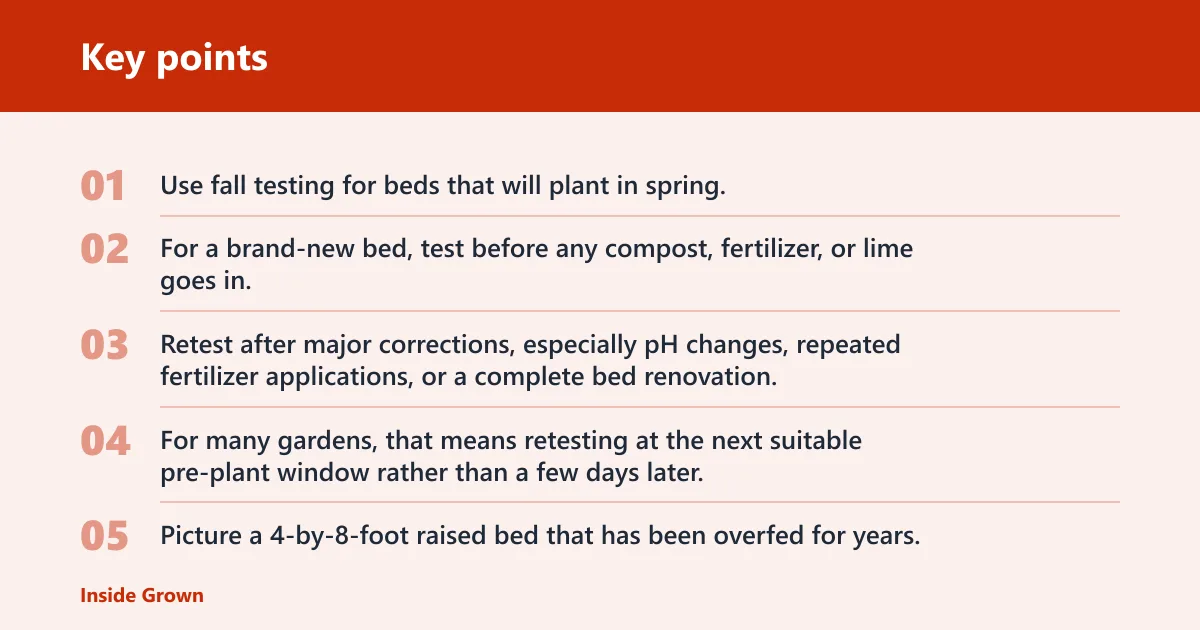
Use fall testing for beds that will plant in spring. That timing gives lime, sulfur, and other amendments a chance to react before roots go in.
For a brand-new bed, test before any compost, fertilizer, or lime goes in. That first report is your baseline. It helps you avoid fixing a problem that is not there.
When you should retest after amendments
Retest after major corrections, especially pH changes, repeated fertilizer applications, or a complete bed renovation. If lime is added to raise pH or sulfur is added to lower it, wait long enough for the amendment to react before testing again. For many gardens, that means retesting at the next suitable pre-plant window rather than a few days later.
Picture a 4-by-8-foot raised bed that has been overfed for years. If the first test says high phosphorus and low pH, do not stack compost, fertilizer, and lime all at once. Address the pH and nutrient needs the report shows, then retest before deciding whether phosphorus still needs attention.
How to take a garden soil sample
Good sampling is as important as the lab. Collect multiple points across the bed, sample about 6 to 8 inches deep, and mix similar-area samples from similar areas in a clean bucket. That gives the lab a composite that reflects the bed instead of one spot.
-
Mark similar areas.
Split the garden by history and exposure. Keep in-ground beds, raised beds, containers, shaded corners, and spots with different fill or drainage separate, because each area can need a different report. -
Collect several cores.
Take small scoops from multiple points across each similar area. Go about 6 to 8 inches deep for most garden beds so the sample reflects the root zone, not just surface debris. -
Mix in a clean bucket.
Combine the soil from one similar area in a clean bucket and break up clods. Remove stones, roots, and mulch pieces. Clean tools matter because residue from fertilizer or lime can distort the result. -
Send a composite sample.
Fill the lab bag with the mixed soil from that one area. Do not combine a vegetable bed with a lawn strip or a contaminated corner, because the mixed report can hide a problem that needs its own fix.
Say a long bed has one end that stays wet after rain and another end that dries fast. Treat them as two samples if you want a result you can actually use. Different drainage often means different texture, and texture changes how the bed holds nutrients and water.
For containers, sample the entire potting mix if the container is large and has been used for more than one crop cycle. For small pots, a fresh mix is often easier to replace than to test. Raised beds with imported soil should be sampled like any other bed, especially if the fill history is unclear.
Soil test to planting action table

This table turns a report into a next move. Start with the result you have, then match it to the safest amendment and crop choice for the next planting window.
| Result | What it means | What to add before planting | What not to add yet | Safest crop groups next |
|---|---|---|---|---|
| Low pH | Soil is acidic; nutrient uptake can suffer. | Lime, applied before planting and mixed in if possible. | Do not add sulfur. | Blueberry-type acid lovers, potatoes, and other acid-tolerant crops; many vegetables may wait until pH is corrected. |
| High pH | Soil is alkaline; some nutrients become less available. | Sulfur, if the report says the change is needed and you have time before planting. | Do not add lime. | Leafy greens and crops that tolerate a wider pH band while correction works. |
| Low nitrogen | Plants may grow slowly and look pale. | Nitrogen fertilizer matched to the recommendation, or a modest pre-plant feeding. | Do not overapply compost as a stand-in for nitrogen. | Most vegetables once nitrogen is corrected; quick crops can wait least long. |
| Low phosphorus | Rooting and early growth can lag. | Phosphorus fertilizer only at the rate the report calls for. | Do not blanket-feed with a high-P mix if the bed already has enough P. | Root crops, transplants, and young vegetables after correction. |
| Low potassium | Water regulation and fruiting can suffer. | Potassium fertilizer matched to the deficiency. | Do not add extra phosphorus just because a garden fertilizer contains it. | Fruit and root crops after potassium is corrected. |
| Low organic matter | Soil may hold less water and fewer nutrients. | Compost, leaf mold, or shredded leaves before planting if the report and bed condition support it. | Do not keep piling on fertilizer without improving the soil structure. | Hardier vegetables now; moisture-sensitive crops after organic matter improves. |
| Poor drainage | Roots may sit in water and lose oxygen. | Raised bed correction, coarse compost, and texture-aware changes if the problem is surface compaction or shallow structure. | Do not bury the issue under more fertilizer. | Shallow-rooted greens, peas, and crops suited to beds that dry faster. |
| Possible contamination | Lead, heavy metals, ash, or fill may be a risk. | Mail-in contaminant testing before edible planting, plus clean soil or barriers if needed. | Do not rely on a nutrient test alone. | Ornamentals, or edible crops only after a contamination plan is in place. |
How do you read pH and NPK results?
Soil pH tells you how acidic or alkaline the soil is, and it directly affects nutrient uptake. pH needs vary by crop. pH under 7.0 is acidic and over 7.0 is alkaline, so a small shift can matter.
Soil pH and what the number means
If the pH is low, lime raises pH in acidic soil. If the pH is high, sulfur lowers pH in alkaline soil. Timing matters because those changes work before planting, not after a crop is already struggling.
Do not chase pH with fertilizer. Fertilizer feeds plants; it does not correct acidity or alkalinity. If the report shows the pH is already near the crop range, leave it alone and use the nutrient recommendations instead.
Nitrogen, phosphorus, and potassium
Nitrogen, phosphorus, and potassium are the primary macronutrients most soil tests report. Nitrogen drives leafy growth, phosphorus supports early rooting and flowering, and potassium helps with water regulation and overall plant performance. The right fertilizer should match the documented deficiency, not a general guess.
A common first-timer mistake is buying a “garden fertilizer” because it sounds balanced. If the bed only needs nitrogen, a high-phosphorus product can push the soil in the wrong direction. Match the input to the shortage on the report.
Organic matter and soil texture
Organic matter improves fertility and structure, and many tests report its percentage. Gardening Know How notes that soil test reports can include organic matter and nutrient retention data. Epic Gardening also notes that soil tests can show organic material percentage.
Texture matters because sand, silt, and clay control drainage and nutrient retention. Sandy soil usually needs more frequent nutrient attention. Clay-heavy soil may need structure fixes and careful watering, not a heavy dose of fertilizer.
What should you add before planting?
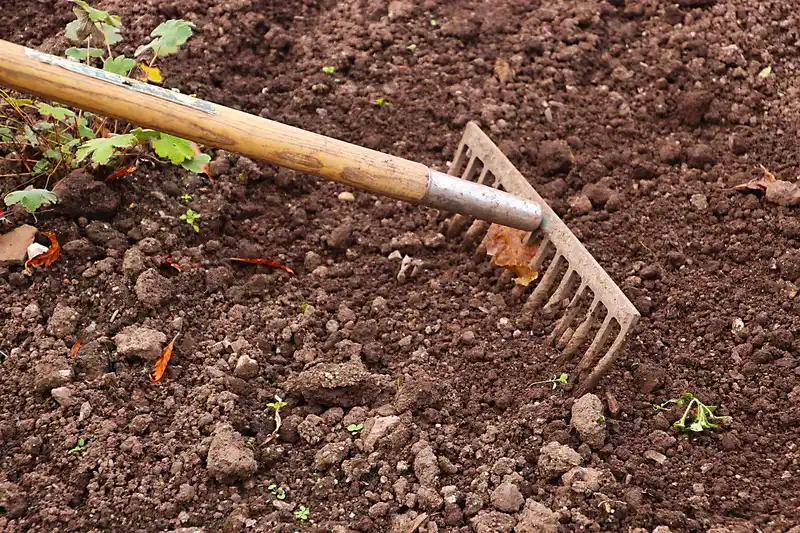
Add only what the report calls for, in the amount the report supports. If pH is wrong, address pH along with any documented nutrient needs. If nutrients are low, add the specific missing nutrient. If organic matter is low, improve it without masking the test by dumping in an unmeasured pile of compost first.
When lime or sulfur makes sense
Use lime when the soil is too acidic for the crops you want. Use sulfur when the soil is too alkaline and the report says a pH correction is worthwhile. Work those amendments in before planting so the root zone changes, not just the surface.
Do not treat lime and sulfur as routine garden additives. They change chemistry, so they belong in response to a test result.
When compost helps and when to wait
Compost helps when organic matter is low, the soil is thin, or the structure needs support. Leaf mold and shredded leaves can also raise organic matter over time. But adding them before testing can blur the numbers and make it harder to know what the soil needed in the first place.
If the report already shows enough organic matter, use compost sparingly and for structure rather than as a cure-all. In a healthy loam, a light topdress may be enough. In a poor bed, it may be part of a larger reset.
When fertilizer should match the deficiency
Use fertilizer to correct a specific nutrient shortage, not to cover every possible problem. If nitrogen is low, add nitrogen. If phosphorus is low, add phosphorus. If potassium is low, add potassium. The report should decide which one, or whether more than one is actually needed.
Do not add fertilizer after a test that says the bed is contaminated. Nutrients do not solve contamination, and extra inputs can complicate later cleanup or crop choice.
How do you use a soil test before planting?
Start by reading the pH, nutrient, organic matter, and texture sections together. Then decide whether the bed needs a chemistry fix, a fertility fix, or a crop swap. If contamination is possible, stop edible planting plans until you have a contaminant result.
The practical order is simple: test, correct pH if needed, correct only documented nutrient shortages, and choose crops that match what the soil can support now. USDA’s extension guidance can help you match the result to crops in your region, which is often more useful than trying to force every bed into the same target.
Frequently asked questions
When should I test soil before planting a garden?
Fall is the best time for spring gardens because it leaves room for amendments to work. If you are planting sooner, test as early as possible before the new planting cycle so you can act on the result.
What do soil test results mean for vegetables?
For vegetables, the main questions are whether the pH is near the crop’s range and whether nitrogen, phosphorus, and potassium are adequate. If the report falls outside that range, adjust pH and use the nutrient data to guide fertilizer choice.
Do I need a lab soil test or a home kit?
For basic nutrient and pH guidance, lab or extension tests are more reliable than many home kits. Extension offices can also help you match results to local crops. Use a contaminant test when lead or heavy metals are a concern.
How many soil samples should I take from a garden bed?
Take multiple points across the bed and combine them into one composite sample for each similar area. That approach is better than one scoop from one corner. Keep beds with different history, drainage, or fill separate, because mixed samples can hide problems that need different fixes.
Can I test soil after adding compost or fertilizer?
You can, but the result may be harder to trust because fresh compost or fertilizer can distort nutrient readings. Test before adding those materials whenever possible. If you already added them, wait until the next pre-plant window and retest so the report reflects the bed, not the last treatment.