Do Plants Use Oxygen When They Are Not Photosynthesizing?
It’s a common thought: plants make their own food with sunlight, so they must be “breathing in” only good stuff, right? When the sun is out, they take in carbon dioxide and give off oxygen. That’s photosynthesis.
But what happens when the sun goes down? Do they just stop breathing? The simple answer is no.
Plants, like all living things, need to breathe all the time. This means they use oxygen, even when they are not making food. It’s a bit confusing, so let’s clear it up together.
We’ll dive into how plants really work, day and night.
Plants use oxygen constantly, not just during photosynthesis. They take in oxygen and release carbon dioxide through respiration, a process essential for their survival, much like animals. This happens all the time, whether the sun is shining or not.
Photosynthesis uses carbon dioxide and releases oxygen, but respiration uses oxygen and releases carbon dioxide. Both are vital for plant life.
How Plants Breathe: More Than Just Sunlight
Plants are amazing living things. They have a special trick called photosynthesis. This is how they use sunlight, water, and carbon dioxide from the air to create their own food, which is a type of sugar.
A wonderful side effect of this process is that they release oxygen. This is why we often hear that plants are good for the air we breathe. They help clean it and make it fresh for us.
But photosynthesis is not the whole story of how plants live. They also need to do something called respiration. Think of respiration like how humans and animals breathe.
We take in oxygen from the air. Our bodies use that oxygen to break down the food we eat. This process gives us energy to move, think, and live.
Plants do something very similar.
During respiration, plants take in oxygen from their surroundings. They then use this oxygen to break down the sugars they made during photosynthesis. This breaking down process releases energy.
This energy is what the plant uses to grow, repair itself, and carry out all its life functions. So, even when the sun is not shining, the plant is busy using this energy.
Respiration is happening all the time. It happens in every single living cell of the plant. This includes the roots, stems, leaves, and even the flowers or fruits.
Because it’s so important for life, respiration doesn’t stop just because it’s dark outside. The plant still needs energy to keep its cells alive and working.
The key thing to remember is that photosynthesis and respiration are two different processes. Photosynthesis only happens when there is light. It uses carbon dioxide and makes oxygen.
Respiration happens all the time, day and night. It uses oxygen and makes carbon dioxide. This balance is what keeps the plant alive and healthy.
So, when we ask if plants use oxygen when they are not photosynthesizing, the answer is a definite yes. They use oxygen for respiration. This is a fundamental part of their life cycle.
It’s like asking if a person stops breathing when they are sleeping. No, they keep breathing to stay alive. Plants are the same way.
The amount of oxygen a plant uses during respiration is usually much less than the amount of oxygen it produces during photosynthesis. This is why, overall, plants give us more oxygen than they take. But in the dark, when only respiration is happening, the plant is indeed taking in oxygen and releasing carbon dioxide.
Understanding these two processes helps us see plants in a new light. They are not just passive oxygen producers. They are active living beings with complex needs.
They manage their energy carefully, using sunlight to make food and then using that food with oxygen for energy. It’s a constant cycle of creation and consumption.

My Own “Aha!” Moment with Plant Breathing
I remember being a kid and thinking plants were pretty magical. They just sat there, soaking up sun, and making our air better. My grandpa had a huge garden.
He always talked about how plants needed to “breathe.” I just assumed that meant they breathed in all day and then rested at night. He tried to explain photosynthesis and respiration, but it was a bit too much for me then.
One summer, I was helping him with some late-night weeding. It was a warm night, and the garden smelled so good. I noticed he had a small fan set up near some of his more delicate plants.
I asked him why. He smiled and said, “Well, they need fresh air, just like we do, even when it’s dark.”
That confused me. “But they don’t make oxygen at night, right?” I asked. He sat down on a little stool and explained it again, this time in a way that clicked.
He said, “Think of it like this. Photosynthesis is like making dinner. You use ingredients and energy to make a meal.
That’s when you’re busy creating. But you still need to eat that meal to get energy for everything else, right? Respiration is like eating your dinner.
You use what you made to power yourself up.”
He told me that plants make their sugar food during the day. But they need to use that food to live and grow all the time. So, at night, when the sun isn’t helping them make more food, they still need energy.
They get this energy by breaking down some of their stored sugar. And to break down sugar for energy, they need oxygen. So, they take in oxygen, and just like us when we exhale, they release carbon dioxide.
He pointed to a young tomato plant. “This little guy needs to grow its roots and stems. That takes energy.
Even when it’s dark, its cells are working. They’re using up oxygen and giving off a little carbon dioxide. That fan helps make sure the air around them stays fresh and doesn’t get too full of their ‘breath’ so they can keep breathing well.”
That simple analogy of making dinner versus eating dinner really stuck with me. It helped me understand that plants are not just passive sunbathers. They are active living organisms.
They work constantly, day and night, to survive and grow. It made me respect them so much more. It was a real moment of understanding for me.
Plant Gas Exchange: A Closer Look
Plants have tiny pores on their leaves and stems called stomata. These are like little mouths that open and close. They are super important for gas exchange.
During photosynthesis, stomata open to let carbon dioxide in. They also let oxygen out. But these same stomata are used for respiration.
When it’s dark, or even when it’s light, stomata can open to let oxygen in. They also release carbon dioxide.
The opening and closing of stomata are controlled by special cells. These cells react to light and water levels. When it’s bright and there’s enough water, stomata usually open for photosynthesis.
But they can also open at night if the plant needs to respire efficiently. It’s a smart system designed for survival.
Think about underwater plants. They still need oxygen for respiration. They get it from the dissolved oxygen in the water.
They don’t need light to get this oxygen. This shows that oxygen use is a fundamental life process for plants, not tied only to making food.
The amount of carbon dioxide released at night is usually less than the amount of oxygen taken in. This is because the sugars are being used up, and the process is about energy release. It’s not as active as the food-making process of photosynthesis.
So, the gas exchange at night is a reversal of sorts. Instead of taking in CO2 and releasing O2, plants take in O2 and release CO2. This happens through the same stomata.
It’s a continuous cycle of life for the plant.
The Two Big Jobs: Photosynthesis vs. Respiration
Let’s break down these two main jobs plants do. They are both super important, but they work in different ways and at different times. Understanding the difference helps us see why plants need oxygen even without sun.
Photosynthesis: Making Food
This is the plant’s “kitchen.” It happens mostly in the leaves. Plants use sunlight as energy. They take in carbon dioxide from the air through their stomata.
They also pull water up from the soil through their roots.
Inside the plant’s cells, in parts called chloroplasts, a magical process occurs. Sunlight’s energy is used to convert carbon dioxide and water into glucose, which is a type of sugar. This sugar is the plant’s food.
It stores energy for later use.
As a byproduct of making this sugar, plants release oxygen into the air. This is the part that’s so good for us. So, photosynthesis is all about building and creating, using light energy.
Key points for photosynthesis:
- Requires sunlight.
- Takes in carbon dioxide (CO2).
- Uses water (H2O).
- Produces glucose (sugar/food).
- Releases oxygen (O2).
- Happens in chloroplasts.
- Occurs mostly in leaves.
Respiration: Using Food for Energy
This is the plant’s “engine.” It happens in all living parts of the plant, all the time, day and night. Respiration breaks down the glucose (sugar) that was made during photosynthesis. This process needs oxygen.
When oxygen is combined with glucose, it releases energy. This energy is like fuel for the plant. It’s used for growing, repairing damage, moving water and nutrients around, and everything else a living plant does.
During this process, plants release carbon dioxide and water.
So, respiration is all about breaking down and using energy to keep the plant alive and functioning. It’s a continuous need for all living cells.
Key points for respiration:
- Does NOT require sunlight.
- Takes in oxygen (O2).
- Uses glucose (sugar/food).
- Releases energy.
- Releases carbon dioxide (CO2) and water (H2O).
- Happens in mitochondria (in cells).
- Occurs in all plant cells, all the time.
The Balance of Gases
During the day, photosynthesis is usually much more active than respiration. This means the plant takes in a lot of CO2 and releases a lot of O2. The CO2 used for respiration is also taken from the CO2 made during photosynthesis.
So, overall, a plant is a net producer of oxygen during the day.
At night, only respiration is happening. The plant takes in O2 and releases CO2. This is a much smaller exchange compared to the daytime.
The amount of CO2 released is not enough to harm other plants or animals nearby. It’s a natural part of the plant’s life cycle.
It’s like a factory. During the day, the factory is running at full power, making lots of products (sugar and oxygen). At night, the factory machinery is still running, but at a lower speed, just to maintain itself and use some of its own products for energy.
It’s not shutting down; it’s just in a different mode.
This balance is crucial. Without respiration, the plant would have no energy to live, even if it made plenty of sugar. Without photosynthesis, the plant would eventually run out of food to respire.
Both processes are essential partners.
Even seeds that are dormant need to respire. They are not photosynthesizing, but they are alive. They use stored energy to stay alive until conditions are right for germination.
This requires oxygen.
Real-World Scenarios: When This Matters
Understanding how plants use oxygen day and night isn’t just for science class. It helps us in many real-world situations.
Gardening and Agriculture
When you plant seeds, they need to respire to start growing. This is why soil needs to be well-aerated, meaning it has air pockets. If soil is too compacted, roots can’t get enough oxygen, and the seeds or plants can struggle or die.
Good soil structure helps roots breathe.
Greenhouses are a great example. During the day, plants are busy photosynthesizing. But at night, they are respiring.
If a greenhouse is sealed too tightly, the CO2 can get used up by respiration, and the oxygen can become a bit depleted. Good ventilation systems are important to manage both gas levels.
Also, consider overwintering plants. Even when they are not actively growing, their cells are still alive and respiring. This is why plants stored in very cold, dark places might not survive if they are completely sealed without any air exchange.
They need some oxygen to keep their life processes going.
Forests and Ecosystems
Forests are vast systems. During the day, they produce a huge amount of oxygen. But at night, they also consume a significant amount of oxygen through the respiration of all the trees, plants, and even microorganisms in the soil.
This balance is part of the Earth’s natural carbon cycle.
The decomposition of dead organic matter in forests also requires oxygen. Bacteria and fungi break down leaves, wood, and other plant material. This process is respiration by microorganisms.
They are using oxygen to get energy from the decaying matter.
In very wet or waterlogged soils, oxygen can be limited. This is why some plants have special adaptations, like large air spaces in their stems and roots, to help transport oxygen from the air down to the submerged parts. These plants are designed to survive in low-oxygen environments.
Indoor Plants and Air Quality
Many people have houseplants. They are often in bedrooms or living areas. While plants do produce oxygen during the day, it’s important to remember they use it at night.
In a small, well-sealed room, a large number of plants might slightly reduce the overall oxygen level at night.
However, the impact is usually very small. The amount of oxygen used by typical houseplants during respiration is minimal compared to the amount produced by plants outdoors or the needs of the humans in the room. So, don’t worry too much about your beloved fiddle-leaf fig stealing all your oxygen!
What’s more important for indoor air quality is good ventilation. Opening windows regularly helps
Common Misconceptions
Myth: Plants only “breathe in” good stuff (CO2) and “breathe out” good stuff (O2).
Reality: Plants breathe in O2 and breathe out CO2 during respiration, just like animals. This is essential for their survival.
Myth: Plants don’t need anything at night.
Reality: Plants use stored food and oxygen at night for energy to stay alive and grow.
The idea that plants are simply air purifiers that only do good things is an oversimplification. They are living organisms with complex needs. They have a balance of processes that keep them alive.
Understanding this balance helps us care for them better and appreciate them more.
What This Means For You
So, what’s the takeaway from all this? How does knowing that plants use oxygen when they’re not photosynthesizing affect you?
When It’s Normal
It is completely normal and expected for plants to use oxygen at night. This is respiration, and it is vital for their life. Every living plant cell is doing this right now, no matter the time of day.
The carbon dioxide they release at night is also normal. It’s a natural part of their metabolic process. It gets mixed with the air, and its concentration is usually very low.
If you have houseplants, don’t worry if your room feels stuffy at night. It’s more likely due to lack of general ventilation than just the plants. However, good airflow is always beneficial.
When to Be a Little More Aware
If you have a very large number of plants in a very small, unventilated space, the cumulative effect of respiration could slightly lower oxygen levels. This is rare and usually only a concern in highly controlled environments, not typical homes.
For gardeners, understanding this is key. If your plants are in pots, make sure the soil drains well. Waterlogged soil means less oxygen for the roots, which can lead to root rot.
This happens because the roots can’t respire properly.
If you are trying to grow plants in very specific conditions, like a sealed terrarium or a specialized growth chamber, you might need to monitor gas levels more closely. But for the average plant owner, it’s not usually a major issue.
Simple Checks You Can Do
Soil Moisture: Stick your finger about an inch into the soil of your potted plants. If it feels very wet, it might be staying that way too long, meaning poor drainage and low oxygen for roots. Let it dry out a bit between waterings.
Airflow: If you have houseplants, especially in a bedroom, consider opening a window for a short period each day. This refreshes the air and helps everything breathe better.
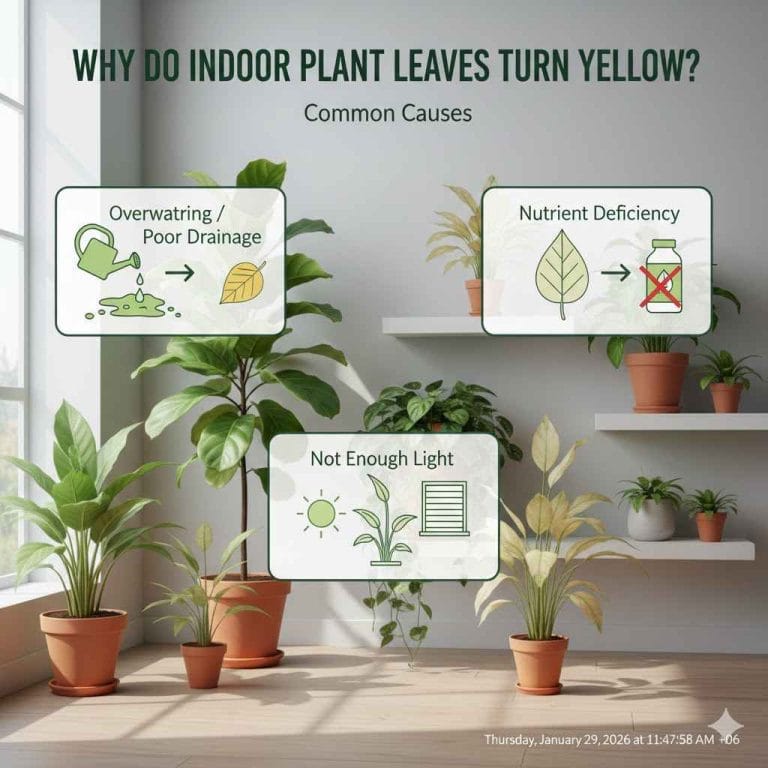
Plant Health: If your plants look unhealthy (yellowing leaves, wilting), it could be due to many things, but poor root oxygen is one possibility, especially if the soil stays wet.
It’s all about balance. Plants are part of a living system, and like all living things, they have needs that are met through constant processes. Their nighttime “breathing” is just as important as their daytime food-making.
Quick Tips for Happy Plants
Here are some simple things to keep your plants thriving, keeping in mind their need to respire:
- Proper Watering: Water only when the top inch of soil feels dry. Avoid overwatering, as soggy soil suffocates roots by blocking oxygen.
- Good Drainage: Ensure your pots have drainage holes. Use potting mix that drains well.
- Adequate Light: Provide the right amount of light for your specific plant type. This fuels photosynthesis, which creates the food needed for respiration.
- Air Circulation: Don’t cram plants too tightly together. Good airflow helps prevent fungal issues and ensures gases can move freely around leaves.
- Right Pot Size: Use pots that are appropriately sized. Too large a pot can hold too much moisture, leading to root problems.
Respiration vs. Photosynthesis: A Quick Table
| Feature | Photosynthesis | Respiration |
|---|---|---|
| Purpose | Make food (sugar) | Release energy from food |
| Requires | Sunlight, CO2, Water | Oxygen, Sugar |
| Produces | Sugar, Oxygen | Energy, CO2, Water |
| When it Happens | Daytime (light) | All the time (day and night) |
| Main Site | Leaves (chloroplasts) | All cells (mitochondria) |
By following these simple tips, you help your plants maintain the balance they need to live and grow. You are essentially supporting both their food-making and their energy-using processes.

Frequent Questions About Plant Breathing
Do plants breathe oxygen at night?
Yes, absolutely. Plants respire all the time, day and night. Respiration uses oxygen to break down sugars and release energy, which is essential for the plant’s life processes.
Photosynthesis, which produces oxygen, only happens when there is light.
What gas do plants release at night?
At night, when photosynthesis is not occurring, plants release carbon dioxide (CO2) as a byproduct of respiration. This is similar to how animals exhale CO2.
Is it bad to have plants in your bedroom at night?
For most people, it’s not an issue. The amount of oxygen consumed and CO2 released by typical houseplants is very small and easily managed by normal room ventilation. It’s highly unlikely to affect your sleep quality.
Do all plants need oxygen?
Yes, all living plants need oxygen for respiration to survive. This is true for trees, flowers, vegetables, and even simple algae. Oxygen is critical for cellular energy production.
Why do plants need energy at night?
Plants need energy around the clock for various functions: cell repair, growth, nutrient transport, and maintaining life. Respiration provides this necessary energy, even when they are not actively photosynthesizing and producing new food.
Is the CO2 released by plants at night harmful?
The amount of CO2 released by plants at night is generally very low and disperses into the air. It is not considered harmful to humans or animals in normal home or outdoor environments. It’s a natural part of the ecosystem.
The Full Picture of Plant Life
It’s clear that plants are complex and active living beings. They don’t just sit and soak up sun. They work day and night to survive.
Photosynthesis is their way of making food, and respiration is how they use that food for energy.
Understanding that plants use oxygen even when the sun is down helps us appreciate their full life cycle. It’s a reminder that life requires constant energy. This knowledge helps us be better plant parents and understand our green friends more deeply.