Affordable Landscaping Services for Budget-conscious Homeowners
Affordable landscaping services for budget-conscious homeowners are the basic upkeep jobs that protect curb appeal and plant health: mowing, edging, pruning, bed cleanup, mulch refresh, and minor irrigation fixes, while skipping costly redesigns and hardscape add-ons. Ignore that split, and you pay for cosmetic extras while weeds, dead branches, and water waste keep driving up long-term costs. This guide shows which services are worth buying, what they usually include, and how to spot quote gaps before they inflate the bill.
What affordable landscaping should cover

Affordable landscaping should focus on recurring maintenance and small corrective work. That usually means lawn mowing, trimming, edging, garden bed cleanup, light pruning, and basic debris removal. For a tight budget, the goal is to keep the yard healthy and presentable, not to fund a full redesign or a full-property rebuild.
Landscapers typically handle lawn mowing, tree trimming, and garden maintenance, and many also offer hardscaping, irrigation, sprinkler installation, and yard design. Those extra services can be useful, but they should only enter the quote when the property truly needs them. A low-cost scope stays close to maintenance, not transformation.
Budget scope comparison table
| Task | What it does | Typical pricing model | Red-flag upsells | What can be bundled | Risk if deferred | When DIY is reasonable | What to ask for in a quote | Safe to defer? |
|---|---|---|---|---|---|---|---|---|
| Lawn mowing and trimming | Keeps grass at a manageable height and improves curb appeal. | Usually priced per visit, by lawn size, or by recurring schedule. | Unneeded fertilizing, seeding, or premium treatment packages. | Can be bundled with edging and light cleanup. | Overgrowth, uneven appearance, and harder future cuts. | Small, level lawns with basic equipment. | Cut height, trimming around edges, and whether clippings are left or removed. | No, if the lawn is actively growing. |
| Edging | Defines beds, sidewalks, and driveways. | Often included with mowing, but sometimes billed as a separate add-on. | Decorative border upgrades when a basic edge is enough. | Pairs well with mowing and cleanup. | Messier lines and a less finished look. | Okay for simple, straight edges when tools are already on hand. | Whether edging is included with mowing or billed separately. | Sometimes, if the property is already tidy. |
| Garden maintenance | Removes weeds, dead growth, and overgrowth from beds. | Commonly priced by bed size, visit frequency, or hourly labor. | Extra planting design, specialty soil upgrades, or seasonal color packages. | Can be bundled with mowing, trimming, or mulch work. | Weeds spreading and plants getting crowded. | Light weeding and small border cleanup on manageable beds. | Bed size, weeding frequency, pruning limits, and debris haul-away. | No, if weeds are spreading or plants are crowded. |
| Tree trimming | Clears dead, rubbing, or low branches. | Often priced by branch size, tree height, access, or job complexity. | Unnecessary removals, topping, or full tree replacement when pruning will do. | May be bundled with haul-away and cleanup. | Safety hazards, limb damage, and plant stress. | Only for small, reachable cuts on low-growth shrubs. | Branch diameter limits, tree height, and disposal of cut material. | Yes, if only light cosmetic cuts are needed. |
| Mulch refresh | Improves soil moisture retention and bed appearance. | Usually priced by cubic yard, bed area, or material plus labor. | Full bed redesigns, extra decorative features, or unnecessary old-mulch removal. | Can be bundled with bed cleanup and planting prep. | Faster drying and a more tired-looking bed. | Yes, if the homeowner is only topping off small beds. | Mulch depth, whether old mulch is removed, and delivery or spreading fees. | Yes, if the existing mulch still covers the beds. |
| Irrigation or sprinkler repair | Fixes leaks, broken heads, or coverage problems. | Commonly priced as a diagnostic visit plus parts and labor. | System replacement, controller upgrades, or extra zones that do not address the problem. | Can be bundled with seasonal checks or small lawn repairs. | Water waste, dry patches, or plant decline. | Simple head replacement if the issue is obvious and accessible. | Diagnostic fee, parts labor, and whether follow-up visits cost extra. | Yes, unless plants are drying out or water is wasted. |
| Hardscaping | Adds non-plant features such as patios, retaining walls, or borders. | Usually quoted as a project price based on materials, labor, and site prep. | Upgrades to premium stone, design revisions, or scope changes that are not necessary. | Can sometimes be combined with grading or drainage work. | Higher cost, longer timelines, and more disruption. | Rarely; simple cleanups only, not structural work. | Materials, site prep, permits, and cleanup. | Yes, for budget-first maintenance plans. |
| Yard design | Plans larger changes to the yard layout or planting scheme. | Usually priced as a separate planning service, not routine maintenance. | Extra revisions, implementation fees, or upgrades to a full transformation package. | May be paired with a phased install plan if the property truly needs it. | Higher spend before basic upkeep problems are solved. | Only if the homeowner already has a clear, simple plan and can phase work later. | Plan deliverables, revisions, and whether implementation is separate. | Yes, unless the yard needs a full reset. |
Say your front yard is a quarter acre with one overgrown bed near the porch. A budget scope may need mowing, edging, and bed cleanup only. It probably does not need a design plan, a patio estimate, or a sprinkler upgrade to make the property look cared for.
Best-fit buying guide for budget homeowners
For a small urban yard, the best buy is usually mowing, edging, and light cleanup on a simple recurring plan. For HOA curb-appeal upkeep, prioritize the tasks that keep the frontage consistent, such as mowing, edging, and bed cleanup, because the visible areas are what matter most. For a rental turnover cleanup, focus on a one-time reset that clears debris, trims growth, and restores the yard to a neutral, presentable condition. For a seasonal reset, bundle the work that removes buildup after a long gap, then shift back to lighter maintenance. For an older yard with irrigation issues, spend first on leak checks and head repairs so the rest of the landscape does not suffer from avoidable water loss.
How can I find affordable landscaping services near me?
Start by narrowing the search to providers that list the exact work you need, then compare what is included in the quote, not just the headline price. The lowest rate is only useful if the scope covers mowing, trimming, cleanup, and disposal without surprise add-ons.
List the smallest useful scope. Write down the exact tasks you need this month, such as mowing, edging, bed cleanup, or one tree visit. That keeps you from paying for design work or specialty upgrades you do not need.
Request the same scope from each pro. Ask every provider to quote the same task list, the same lot size, and the same visit frequency. Matching scope is the only way to compare price fairly.
Check what the quote excludes. Look for disposal, edging, pruning limits, and return-trip fees. A quote that omits those items may look cheaper on paper and cost more after the first visit.
Use reviews and pricing details together. Reviews help separate value from a low sticker price. Pricing information helps you see whether a provider is in line with other local quotes for the same scope.
Thumbtack makes it simple to find landscaping professionals who cater to specific needs. Each landscaping pro has a profile that includes pricing information, and the app allows homeowners to read reviews from previous consumers. That mix is useful when you need quick comparison rather than a blind call to the cheapest listing.
How do I compare landscaping quotes without getting ripped off?
Compare quotes by scope, exclusions, and follow-up terms, then judge the provider’s reviews and pricing profile against the same job description. A cheap quote can still be expensive if it leaves out edging, debris removal, or any revisit needed to finish the work correctly.
Affordable landscaping services checklist
Use this checklist like a downloadable matrix before you approve any estimate. Ask each provider to answer the same items in writing so you can compare apples to apples.
- Scope: confirm each quote covers the same lawn area, bed area, and number of trees or shrubs.
- Lot size: confirm the square footage, acreage, or boundary limits used to price the job.
- Frequency: check whether the quote is for one visit, weekly service, biweekly service, or seasonal work.
- Cleanup: ask whether clippings, branches, and weeds are removed or left on-site.
- Haul-away: verify whether hauling debris is included or billed separately.
- Pruning limits: check branch size, height limits, and whether larger cuts require a separate tree service.
- Materials: confirm whether mulch, soil, plants, or parts are included in the price.
- Travel fee: ask if a service call or trip charge applies.
- Minimum charge: check whether there is a base fee even for a small job.
- Revisit policy: ask if return trips for missed spots or irrigation checks cost extra.
- Payment terms: confirm deposit amount, due date, and accepted payment methods.
Pricing profiles help you compare providers in the same city, but they do not replace scope review. A provider with a lower hourly figure may still charge more overall if the quote is packed with extra fees. Reviews then help you judge whether the provider communicates clearly, shows up on time, and finishes the quoted work.
A common first-timer mistake is comparing a “yard cleanup” quote against a “weekly maintenance” quote as if they were the same thing. One may include one visit and debris hauling; the other may cover several visits, edging, and light pruning. Those differences can change the total far more than a small hourly gap.
Which services are worth paying for first?
On a budget, pay first for mowing and trimming, then for garden maintenance, then for tree trimming when safety or plant health is at stake. Those jobs protect curb appeal and reduce the chance that a small issue turns into a larger cleanup or plant-loss expense.
Lawn mowing and trimming
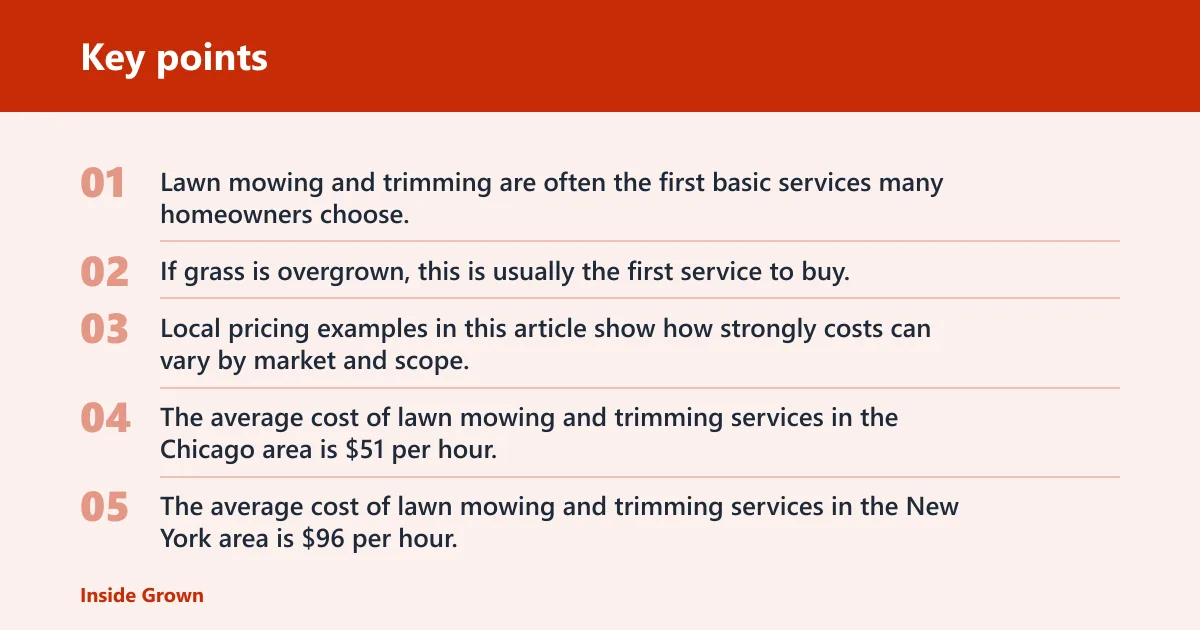
Lawn mowing and trimming are often the first basic services many homeowners choose. They are the benchmark for affordability because they are common, repeatable, and easy to compare across providers. If grass is overgrown, this is usually the first service to buy.
Local pricing examples in this article show how strongly costs can vary by market and scope. The average cost of lawn mowing and trimming services in the New York area is $96 per hour. Louis area is $46 per hour. The average cost of lawn mowing and trimming services in the Des Moines-Ames area is $50 per hour.
Garden maintenance
Garden maintenance is usually the best recurring add-on for homeowners who want lower-cost help without a major project. It keeps weeds down, removes dead growth, and preserves the appearance of beds and borders. It can often be bundled with mowing or trimming, which helps keep the visit efficient.
Tree trimming
Tree trimming is often worth paying for when branches are dead, rubbing, too low, or close to structures. It usually costs more than mowing because it requires more skill and equipment. If the job involves tall limbs, thick branches, or overhead hazards, it is not a good place to chase the lowest price.
Hardscaping, irrigation installation, and yard design belong in a different budget bucket. They may be needed for drainage, water control, or a full property reset, but they are not the first spend for a homeowner trying to keep the yard tidy at low cost.
Is it cheaper to hire a landscaper for one-time work or maintenance?
Recurring maintenance is usually cheaper when the property needs steady upkeep, because each visit is lighter and prevents buildup. One-time work is cheaper only when the yard needs a reset, then returns to a stable condition. The better choice depends on how fast the property falls behind.
If grass grows quickly, weeds spread, or beds collect debris every week, maintenance often costs less over time than repeated rescue visits. If the yard is already in decent shape and only needs a seasonal cleanup, one-time work can be the lower-cost move.
Suppose a lot around 6,000 square feet only needs mowing and edging about every two weeks. A recurring plan may cost less than calling for emergency cleanup after the grass gets too tall and the beds fill with weeds. The same yard, after a storm or a long vacancy, may need one deeper cleanup first, then lighter maintenance later.
One-time work is usually the better buy when the property has one clear problem: overgrowth after a missed season, a pile of leaves, or a bed that needs a reset. Maintenance wins when the yard needs predictable attention to stay presentable and healthy.
What should be included in a low-cost landscaping estimate?
A low-cost estimate should name the exact tasks, the visit frequency, the cleanup standard, and any extra charges that may apply later. The quote should also say what is excluded, so you do not discover missing edging, haul-away, or revisit fees after the work starts.
Ask for a task list. The estimate should spell out mowing, trimming, edging, pruning, bed cleanup, or mulch work item by item. A vague “yard service” line is too broad to compare.
Confirm disposal terms. Ask whether branches, weeds, and clippings are hauled away or left on-site. If removal is extra, get that fee in writing before you approve the job.
Check revisit terms. If a visit is needed to finish missed spots or handle a small correction, ask whether that counts as a return trip or is covered in the original price. That detail matters most on irregular or overgrown properties.
Define the finish level. Say whether you want a basic cleanup or a more polished curbside look. That tells the pro whether the job stops at function or includes extra detail work that can raise the bill.
Look for quotes that mention edging, cleanup, and debris disposal directly. If those items are absent, the price may be incomplete rather than truly low. That matters because the cheapest line item can become the highest total once the omitted work is added back in.
When to DIY and when to hire
DIY makes sense for small, routine jobs with low risk, especially when the tools are already on hand and the work is straightforward. Hire a pro when the job involves ladders, large branches, irrigation diagnosis, heavy debris, or any task that could damage plants or property if done poorly.
Safe DIY tasks
- Mowing a small, level lawn with standard turf.
- Pulling light weeds from beds and borders.
- Raking leaves and bagging small amounts of debris.
- Trimming soft growth on shrubs at ground level.
Jobs to leave to a pro
- Tree trimming near roofs, power lines, or tall ladders.
- Any irrigation or sprinkler repair that needs diagnosis or parts.
- Overgrown cleanup with heavy brush or repeated haul-away.
- Hardscaping and yard design that change grading or layout.
DIY is also useful when you want to stretch a maintenance budget between professional visits. A homeowner can handle light weeding, then pay a landscaper for mowing, edging, and periodic pruning. That split keeps the highest-skill work in professional hands.
Frequently asked questions
What landscaping services are worth paying for on a budget?
Prioritize mowing, trimming, garden maintenance, and tree trimming when safety or plant health is involved. Those services protect curb appeal and reduce future cleanup. Skip design-heavy or construction-heavy work unless the property has a drainage, layout, or access problem that truly needs it.
How much does lawn mowing and trimming usually cost by hour?
Local prices vary by city and scope. The average cost of lawn mowing and trimming services in the Chicago area is $51 per hour, $96 per hour in the New York area, $46 per hour in the St. Louis area, $50 per hour in the Des Moines-Ames area, and $57 per hour in the Buffalo area.
Which landscaping tasks should I skip if I need to save money?
Skip hardscaping, yard design, and sprinkler installation unless the property has a clear need for them. Also defer cosmetic mulch refreshes, minor decorative work, and large pruning jobs when the yard is still healthy and presentable. Keep the budget on maintenance first.
How do reviews and pricing profiles help me choose a landscaper?
Reviews help you judge reliability, communication, and whether the provider finishes the quoted work cleanly. Pricing profiles help you see whether the rate fits the local market for the same scope. Together, they help you avoid picking the lowest sticker price without context.