Which Layer of the Soil Profile Forms First From Bedrock?
Beneath our feet lies a complex, layered world that shapes everything from the food we eat to the air we breathe. The soil profile—a vertical section of the ground showing distinct layers known as horizons—holds the secrets to Earth’s terrestrial ecosystems and agricultural productivity. But where does soil begin? Which layer emerges first as solid bedrock slowly transforms into the life-sustaining material we depend on? This question not only fascinates geologists and agronomists but also holds vital clues for environmental management, land restoration, and sustainable farming.
Unraveling the origins of soil takes us on a journey from the raw, unweathered bedrock deep below, up through the earliest stages of weathering, and into the rich, organic layers that eventually support plant and animal life. Understanding which layer forms first from bedrock isn’t just an academic exercise—it’s essential for anyone concerned with soil conservation, ecological restoration, and even the search for life on other planets. This article explores the formation of the soil profile, focusing on the pioneering horizon that emerges from the solid rock, and examines its broader implications for science and society.
Key Takeaways
- The C horizon (regolith or parent material) is the first soil layer to form directly from bedrock through physical and chemical weathering.
- Soil profile development is a gradual process influenced by climate, organisms, topography, parent material, and time.
- The transformation from bedrock to soil involves distinct stages, with the C horizon giving rise to upper horizons such as the B (subsoil) and A (topsoil) over thousands of years.
- Understanding early soil formation is crucial for agriculture, ecosystem restoration, and combating land degradation.
- Real-world examples, such as volcanic landscapes and glacier retreat zones, demonstrate soil formation in action.
- Knowledge of soil horizons guides sustainable land management and informs environmental policy.
Credit: study.com
The Soil Profile: Structure And Significance
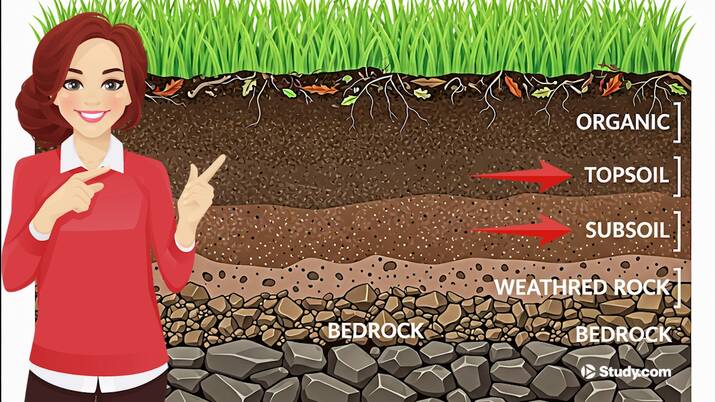
The soil profile is a vertical slice through the earth, revealing a sequence of layers known as soil horizons. Each horizon displays unique physical and chemical characteristics resulting from complex interactions between weathering, organic matter input, and biological activity. Understanding these horizons is essential for soil classification, land use decisions, and ecological studies.
Soil Horizons: An Overview
A typical soil profile includes the following major horizons:
- O Horizon (Organic Layer): Consists mainly of decomposed organic material, such as leaves and plant debris. This layer is dynamic, often fluctuating in thickness depending on seasonal changes and the type of ecosystem. In forests, the O horizon can be several centimeters thick, whereas in grasslands, it may be thinner but still vital for nutrient cycling.
- A Horizon (Topsoil): Rich in organic matter and minerals; vital for plant growth. The A horizon is often the most biologically active zone, teeming with earthworms, insects, fungi, and bacteria, all contributing to decomposition and nutrient turnover.
- E Horizon (Eluviation Layer): Zone of leaching where minerals are washed out. Common in older, well-developed soils, the E horizon is often seen in forested regions where high rainfall promotes leaching, resulting in a lighter color and reduced fertility.
- B Horizon (Subsoil): Accumulates minerals leached from above; less organic matter. This horizon acts as a reservoir for nutrients and water, supporting deeper-rooted plants and providing stability for soil structure.
- C Horizon (Parent Material): Weathered pieces of bedrock, minimal biological activity. The C horizon is a critical interface, storing information about the geological history of the site and offering clues to the processes shaping the soil above.
- R Horizon (Bedrock): Solid, unweathered rock. This is the starting point for soil formation, representing the bulk of Earth’s crust in any given location.
Function Of Each Horizon
- The O and A horizons are crucial for plant life, containing the highest concentrations of organic matter and nutrients. These layers support the majority of terrestrial biomass and are essential for sustaining crop production.
- The B horizon acts as a storage zone for minerals like clay, iron, and aluminum oxides. Its properties influence water retention and drainage, affecting plant health and soil stability.
- The C horizon serves as the transition from solid bedrock to true soil, holding clues to the soil’s origin and development. It is often studied in soil surveys to understand the potential for agriculture, construction, and restoration projects.
Visualizing A Soil Profile
| Horizon | Composition | Color | Function |
|---|---|---|---|
| O | Organic debris | Dark brown/black | Nutrient source |
| A | Mineral + organic | Brown/gray | Plant growth |
| E | Leached minerals | Pale/light | Eluviation |
| B | Mineral accumulations | Reddish/brown | Storage |
| C | Weathered rock | Light gray/yellow | Parent material |
| R | Solid bedrock | Varies | Base |
Why The Soil Profile Matters
- Agriculture: Determines soil fertility and crop suitability. Farmers assess the thickness and quality of the A and B horizons to decide which crops will thrive and whether soil amendments are needed.
- Ecology: Influences plant and animal communities. The diversity and abundance of organisms in each horizon reflect the health of the ecosystem and its resilience to disturbance.
- Engineering: Impacts construction and land stability. Soil profiles are analyzed before building foundations, roads, or dams to ensure structural safety and minimize risks of erosion or landslides.
- Environmental Science: Guides remediation and conservation efforts. Understanding soil horizons enables targeted interventions for polluted or degraded soils, maximizing the success of restoration projects.
Credit: study.com
Bedrock To Soil: The Process Of Soil Formation
The transformation from bedrock to a mature soil profile is a dynamic, multistage process. This progression, known as pedogenesis, results from a combination of physical, chemical, and biological forces acting over long periods.
Stages Of Soil Formation
- Weathering of Bedrock: Physical disintegration (freeze-thaw, temperature changes) and chemical alterations (hydrolysis, oxidation) break down solid rock. The initial cracks, fissures, and mineral changes set the stage for further soil development.
- Formation of the C Horizon: Loose fragments and partially weathered material accumulate above the bedrock, creating the C horizon. This layer often contains a mix of coarse sand, gravel, and smaller particles, varying by local geology.
- Development of Upper Horizons: Organic matter accumulates, and leaching processes begin, forming the A, E, and B horizons. Soil organisms start to colonize, breaking down plant residues and mixing materials vertically.
- Soil Maturation: Distinct horizons become well-developed, supporting diverse biological communities. Mature soils often exhibit clear transitions between layers, each with unique properties and functions.
The Role Of Weathering
- Physical Weathering: Mechanical breakdown via temperature fluctuations, frost action, root growth, and abrasion. For example, tree roots can force their way into rock cracks, further splitting the rock and contributing to soil formation.
- Chemical Weathering: Reactions with water, oxygen, acids, and biological byproducts transform minerals into clays and oxides. Carbonic acid, formed from CO₂ and water, is particularly effective at dissolving certain minerals, promoting soil genesis.
Real-world Example: Granite To Soil
In the Sierra Nevada Mountains, granite bedrock undergoes intense weathering. Over centuries, this process forms a sandy, mineral-rich C horizon, which eventually supports coniferous forests once organic matter accumulates. The transition from bare rock to productive soil illustrates how weathering rates and biological colonization interact to shape the landscape.
Influence Of Environmental Factors
Soil formation is shaped by five key factors, often summarized as CLORPT:
- Climate: Dictates temperature and precipitation patterns, affecting the speed of weathering and organic matter decay.
- Organisms: Influence nutrient cycling, soil mixing, and horizon development through their activity.
- Relief (Topography): Controls water movement, erosion, and deposition, determining soil depth and horizon formation.
- Parent Material: The mineral composition and structure of the bedrock or unconsolidated deposits influence soil properties from the outset.
- Time: Longer periods allow for greater horizon differentiation and soil complexity.
Each factor determines the rate and nature of soil development, dictating how quickly the C horizon forms and evolves. For instance, tropical climates with high rainfall promote rapid weathering and horizon formation, while arid regions progress much more slowly.
Timescale Of Soil Formation
- Formation of the initial C horizon can occur in decades to centuries, depending on climate and rock type. For example, volcanic ash can weather into a C horizon within a few decades, while granite may take centuries.
- Development of a full soil profile with upper horizons may take thousands to tens of thousands of years. Ancient soils like those found in Australia have horizons that developed over millions of years, demonstrating the remarkable longevity and complexity of soil formation.
For further reading on pedogenesis, see Pedogenesis – Wikipedia.
The C Horizon: First Layer From Bedrock
When asking, “Which layer of the soil profile forms first from bedrock?” the unequivocal answer is the C horizon. This horizon, also called regolith or parent material, represents the crucial intermediate stage between unaltered bedrock and true soil.
Characteristics Of The C Horizon
- Composition: Partially weathered rock fragments, with some unaltered minerals. The mineralogy of this layer reflects the original bedrock, providing insight into the geologic history of the area.
- Texture: Coarse, with little structure compared to upper horizons. Particle size ranges from gravel and sand to silt, depending on the degree of weathering and parent material.
- Color: Often lighter than the horizons above due to lower organic content. Colors can range from pale gray to yellowish, or even reddish if iron minerals are present.
- Biological Activity: Limited, though some pioneer organisms like lichens and mosses may be present. Microbial populations are typically sparse, but their activity is crucial in initiating mineral breakdown.
C Horizon Vs. Other Horizons
| Feature | C Horizon | B Horizon | A Horizon |
|---|---|---|---|
| Organic Content | Very low | Low-moderate | High |
| Mineral Weathering | Initial/partial | Advanced | Most advanced |
| Biological Activity | Minimal | Moderate | High |
| Role | Source material | Mineral storage | Plant growth |
Formation Process
- Physical Disintegration: Expansion and contraction, frost wedging, and plant root penetration fracture the bedrock. Seasonal changes, such as freeze-thaw cycles, are particularly effective in mountainous and temperate climates.
- Chemical Alteration: Rainwater, acidic compounds, and microbial activity begin breaking down minerals. For example, sulfuric acid from volcanic emissions can accelerate mineral dissolution in newly formed soils.
- Accumulation: Weathered fragments and finer particles build up, forming a loose, unconsolidated layer. This process can be accelerated in areas with active tectonics or frequent disturbances, such as landslides or floods.
Pioneer Organisms And Initial Soil Life
Certain hardy organisms—such as lichens, algae, and mosses—are among the first to colonize bare rock. Their metabolic processes release acids that accelerate mineral breakdown, gradually enriching the C horizon and paving the way for more complex soil life. Over time, their remains contribute small amounts of organic matter, slowly increasing the biological activity and fertility of the layer.
Real-world Case Study: Icelandic Lava Fields
After a volcanic eruption, the landscape is initially dominated by bare basalt. Over several decades, weathering and colonization by lichens and mosses lead to the formation of a thin C horizon, which eventually supports grasses and shrubs. The rate at which this occurs is influenced by the local climate and the composition of the volcanic material. For more on soil development in volcanic areas, see Geoderma: Volcanic Soil Genesis.
From C Horizon To Mature Soil: Building Upper Layers
Once the C horizon is established, additional processes gradually give rise to the upper soil horizons that support robust plant and animal life.
Development Of The A Horizon
- Organic Matter Accumulation: Dead plant material, roots, and microbial residues mix with mineral particles. This process is facilitated by the growth of pioneering plants, which begin to establish themselves as the soil becomes more hospitable.
- Mixing by Soil Fauna: Earthworms, insects, and burrowing animals blend organic and mineral components, enhancing soil fertility. The activity of these organisms creates pores and channels, improving water infiltration and aeration.
- Darkening of Soil Color: Increased organic content gives the A horizon its characteristic dark color. In agricultural soils, this horizon may be further enriched through the addition of compost or manure.
Formation Of The B Horizon
- Leaching and Accumulation: Rainwater percolates downward, carrying dissolved minerals (such as iron, clay, and calcium) from the A and E horizons into the B horizon. This movement of materials is essential for the development of soil structure and fertility.
- Soil Structure Development: Formation of aggregates and increased density due to mineral accumulation. In many soils, the B horizon is marked by the presence of clay bands or iron oxide nodules.
Eluviation And The E Horizon
- Loss of Minerals: In certain climates, heavy rainfall causes significant leaching, creating a distinct E horizon between A and B. The presence of this layer is a sign of advanced soil development and long-term stability.
- Color and Texture: The E horizon is usually lighter in color and sandier in texture due to loss of finer particles. Its properties can be used to infer past environmental conditions and soil management history.
Role Of Biotic Factors
- Plant Roots: Penetrate deeper into the soil, enhancing weathering and mixing. Deep-rooted trees and shrubs can access nutrients from lower horizons, contributing to soil health and resilience.
- Microorganisms: Decompose organic matter, cycle nutrients, and drive soil formation. Their activity is influenced by temperature, moisture, and the availability of organic substrates.
- Fungi: Form symbiotic relationships with plants, aiding nutrient uptake and soil aggregation. Mycorrhizal fungi are particularly important in forest and grassland ecosystems, facilitating the exchange of nutrients between plants and soil.
Real-world Example: Glacier Retreat In Alaska
As glaciers recede, they expose fresh bedrock and glacial till. Over decades, weathering produces a C horizon, followed by the colonization of mosses and lichens. In subsequent centuries, grasses, shrubs, and trees appear as the A and B horizons develop, ultimately leading to a mature forest soil profile. Research in such environments provides valuable data on the speed of soil formation and the factors controlling horizon development. For data on post-glacial soil development, refer to ISME Journal: Soil Development After Glaciation.
Factors Influencing The Rate And Nature Of Soil Horizon Formation
The formation and characteristics of the C horizon—and the subsequent development of upper soil layers—are governed by a suite of environmental and geological factors.
Climate
- Temperature: Warmer climates accelerate chemical weathering; colder climates favor physical weathering. Seasonal variations can lead to alternating processes, such as freeze-thaw cycles or intense summer rains.
- Precipitation: High rainfall speeds up mineral leaching and organic matter decomposition. Regions with monsoon climates often exhibit rapid horizon development, while deserts remain slow to evolve.
Parent Material
- Rock Type: Softer rocks like limestone weather faster than hard rocks like granite. The mineral content of the parent material influences the initial soil chemistry and structure.
- Mineral Content: Determines the initial fertility and structure of the emerging soil. For example, volcanic ash produces soils rich in potassium and phosphorus, whereas quartz-rich sandstones yield less fertile soils.
Topography
- Slope: Steep slopes promote erosion, slowing soil formation; flat areas accumulate more material. Valley bottoms often have deeper, more fertile soils due to the deposition of eroded material from higher elevations.
- Drainage: Poorly drained areas may develop waterlogged soils with unique properties. Wetlands and floodplains can accumulate thick organic horizons, sometimes leading to peat formation.
Biological Activity
- Vegetation: Roots and litter input drive organic matter accumulation. The type of vegetation present determines the rate of organic matter input and decomposition.
- Soil Fauna: Burrowing and mixing enhance horizon development. In tropical soils, termite activity can significantly alter soil structure and nutrient distribution.
Time
- Soil Age: Young soils may only display a C horizon, while ancient soils exhibit well-developed profiles. Over time, repeated cycles of weathering, erosion, and deposition refine the soil structure.
- Disturbance History: Events like landslides, floods, and human activity can reset soil development. Restoration efforts often aim to restart the soil formation process by exposing fresh parent material and encouraging biological colonization.
Comparative Table: Factors Affecting Soil Horizon Formation
| Factor | Effect on C Horizon Formation | Effect on Upper Horizons |
|---|---|---|
| Climate | Controls weathering rates | Regulates organic matter buildup |
| Parent Material | Sets mineral composition | Influences fertility |
| Topography | Dictates erosion/deposition | Affects water movement |
| Biological Activity | Limited at first | Essential for development |
| Time | Short-term: C only | Long-term: A, B, E form |
Real-world Case Study: Amazonian Oxisols
In the Amazon Basin, ancient soils called Oxisols have developed over millions of years from weathered parent material. The C horizon here is highly depleted, while the upper horizons are thick but low in fertility, demonstrating how time and climate shape soil profiles. In these soils, the intense leaching and nutrient cycling create conditions that challenge conventional agriculture, requiring innovative management practices. See FAO: World Soil Resources for more on global soil types.
Implications For Agriculture, Ecology, And Environmental Management
Understanding which soil layer forms first from bedrock has practical significance for land use, ecosystem restoration, and combating land degradation.
Soil Genesis And Crop Suitability
- Newly Formed Soils: Often lack sufficient nutrients and structure for intensive agriculture. Farmers and land managers must assess soil profiles to determine the suitability of the land for cultivation or grazing.
- Soil Amendments: Addition of organic matter and minerals can accelerate the development of upper horizons. Practices such as green manuring, composting, and targeted fertilization can improve soil quality and productivity.
- Site Assessment: Soil profiles guide crop selection and land management strategies. For example, areas with only a thin C horizon may be best suited for forestry or native grassland restoration rather than row crops.
Ecosystem Restoration
- Reforestation and Revegetation: Success depends on the depth and fertility of the C horizon and presence of organic-rich upper layers. Restoration projects often begin by assessing soil structure and nutrient content, then introducing pioneer species to stimulate horizon development.
- Land Reclamation: Mining, construction, and natural disasters often expose bedrock; understanding soil formation aids in remediation. Techniques such as hydroseeding, mulching, and nutrient supplementation can help accelerate soil genesis and improve ecosystem recovery.
Combatting Soil Degradation
- Erosion Prevention: Conserving upper horizons is crucial, as loss exposes the fragile C horizon and slows recovery. Strategies include terracing, buffer strips, and the use of cover crops to reduce runoff and wind erosion.
- Soil Conservation Techniques: Mulching, cover cropping, and reduced tillage help protect developing soil profiles. These practices maintain soil structure, promote organic matter accumulation, and foster the health of soil organisms.
Policy And Planning
- Land Use Zoning: Soil surveys inform decisions on agriculture, forestry, and urban development. Urban planners and conservationists rely on soil profile data to guide sustainable land use and minimize environmental impacts.
- Environmental Regulations: Policies may require restoration of soil profiles after disturbance. Regulations often mandate soil testing and monitoring to ensure compliance with restoration standards and long-term sustainability.
For additional context, see USDA NRCS: Soil Conservation.
Real-world Example: Restoring Mined Land
In the Appalachian region, coal mining strips away entire soil profiles, exposing bedrock. Successful reclamation projects begin by encouraging weathering to create a C horizon, then adding organic amendments to jump-start the formation of A and B horizons, eventually restoring vegetation and ecosystem function. Long-term monitoring of these sites has shown that soil restoration is possible, but patience and adaptive management are required for success.
Soil Formation In Extreme Environments
Examining soil genesis in harsh or unusual environments offers valuable insights into the universality—and variability—of the process.
Deserts
- Slow Weathering: Arid climates slow chemical weathering, leading to thin C horizons and poorly developed upper horizons. The lack of moisture limits biological activity and organic matter accumulation.
- Biological Crusts: Cyanobacteria and lichens play an outsized role in initial soil formation. These organisms form mats that stabilize the surface, reduce erosion, and contribute organic material to the developing soil.
Polar Regions
- Permafrost: Frozen ground limits weathering and biological activity, resulting in shallow soils with prominent C horizons. The brief summer thaw allows only minimal soil development, and soil profiles may remain unchanged for centuries.
- Seasonal Thaw: Brief summer thaws allow for minimal soil development. In tundra regions, the active layer above permafrost supports mosses, grasses, and dwarf shrubs, but deeper horizons remain locked in ice.
Volcanic Landscapes
- Rapid Soil Genesis: Volcanic ash and tephra weather quickly, allowing for relatively fast formation of C horizons. The chemical composition of volcanic materials often leads to fertile soils once weathering proceeds.
- Unique Fertility: Some volcanic soils, such as Andisols, are highly fertile due to mineral-rich parent material. These soils can support high-value crops and dense forests, making them important for both agriculture and conservation.
For more on soils in extreme environments, see Soil Science Society of America.
Real-world Case Study: Hawaiian Andisols
On the slopes of Hawaii’s volcanoes, fresh lava flows are colonized by pioneer species, and the rapid weathering of volcanic glass leads to the development of a nutrient-rich C horizon. Within a few centuries, these soils support lush tropical forests and intensive agriculture.
The contrast between newly formed soils and mature Andisols highlights the importance of parent material and climate in soil genesis.
Methods For Studying Soil Profile Development
Modern soil science employs a variety of field and laboratory techniques to investigate soil horizon formation, dating, and composition.
Field Methods
- Soil Pits and Augers: Direct excavation and sampling reveal the sequence and characteristics of soil horizons. Soil scientists often dig pits several meters deep to analyze profiles, measure horizon thickness, and collect samples.
- Color Charts (Munsell System): Standardized comparison of soil colors aids in horizon identification. Color is a key indicator of organic content, mineral type, and drainage conditions.
Laboratory Analysis
- Particle Size Distribution: Determines proportions of sand, silt, and clay. This information helps classify soils and predict behavior under different land uses.
- Chemical Assays: Measure nutrient content, pH, and mineral composition. Soil chemistry is vital for understanding fertility, pollutant mobility, and restoration potential.
- Microscopy: Examines soil structure and mineralogy at micro-scale. Advanced techniques such as scanning electron microscopy reveal details about mineral weathering and microbial colonization.
Dating Techniques
- Radiocarbon Dating: Estimates the age of organic matter in upper horizons. This technique is useful for reconstructing historical land use and ecosystem changes.
- Optically Stimulated Luminescence (OSL): Dates the last exposure of mineral grains to sunlight, used for C horizon studies. OSL can help pinpoint the timing of soil formation and disturbance events.
- Stable Isotope Analysis: Traces sources of carbon, nitrogen, and other elements through the soil profile. Isotopic studies reveal nutrient cycling patterns and the impact of environmental changes.
Modeling And Remote Sensing
- Soil Genesis Models: Simulate soil development over time under various environmental scenarios. These models can predict how soils will respond to climate change, land use, or restoration efforts.
- Satellite Imagery: Identifies large-scale soil patterns and disturbances. Remote sensing is increasingly used to monitor soil health, erosion, and horizon development globally.
For further reading on soil analysis methods, refer to Nature Reviews Genetics: Soil Science Techniques.
Frequently Asked Questions
What Is The First Layer Of The Soil Profile To Form From Bedrock?
The C horizon is the first layer to form directly from the weathering of bedrock. It consists of partially weathered rock fragments and minimal organic material.
How Long Does It Take For The C Horizon To Form From Bedrock?
The formation of the C horizon can take anywhere from a few decades to several centuries, depending on factors such as climate, rock type, and biological activity.
Can Plants Grow Directly In The C Horizon?
Most plants require the nutrient-rich A horizon for optimal growth, but some pioneer species, such as mosses and lichens, can establish themselves in the C horizon as it forms.
How Do Human Activities Affect Soil Horizon Development?
Human activities like agriculture, deforestation, mining, and construction can disturb or remove soil horizons, exposing the C horizon or bedrock and significantly slowing natural soil formation processes.
Why Is The C Horizon Important For Soil Restoration Projects?
The C horizon serves as the foundation for rebuilding a full soil profile. Successful restoration relies on encouraging weathering and organic matter accumulation to transform the C horizon into productive soil.
The journey from solid bedrock to a living, breathing soil profile is a testament to the power of Earth’s natural processes. The C horizon—the first layer to emerge from bedrock—marks the critical starting point for this transformation. By understanding the formation and function of the C horizon, scientists, land managers, and policymakers can make informed decisions that protect and restore the world’s vital soil resources.