Is Spray Paint Safe on Garden Edging?
Spray paint can be safe on garden edging if you choose a water-based, low-VOC product made for the edging material, apply it in thin coats, and let it cure before it touches soil, turf, or plants. The main risks are overspray, poor adhesion, and residue that can spread into nearby beds. This guide explains which spray paints are lower risk, how edging material changes the answer, and how to paint without harming the garden.
Factors affecting spray paint safety
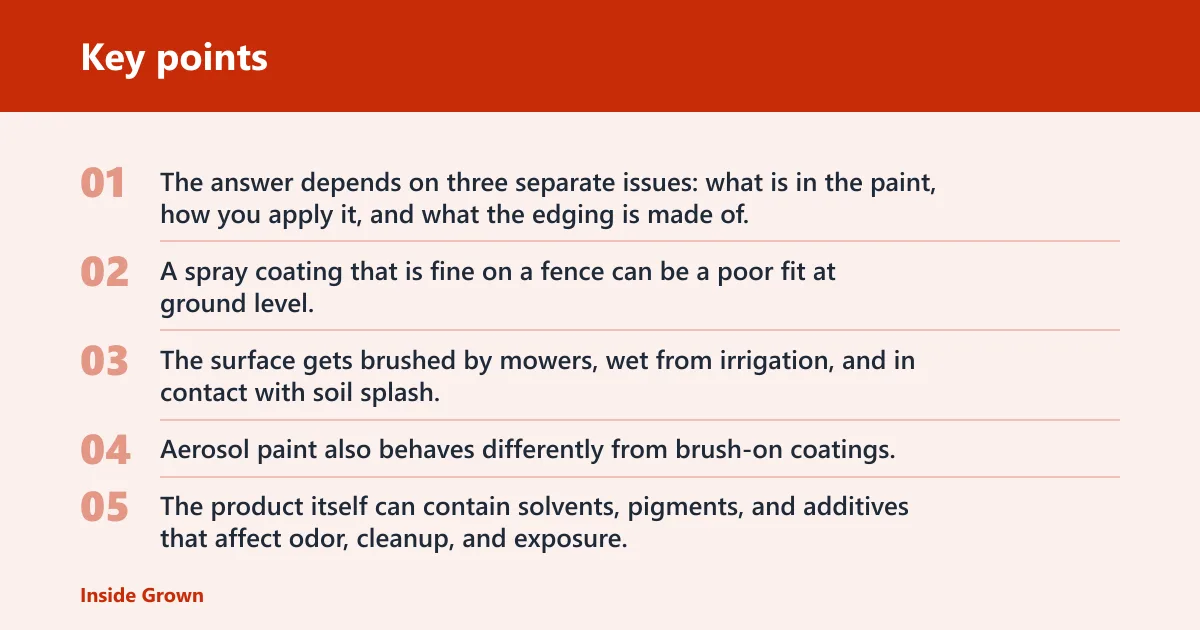


It can be, but only under the right conditions. The answer depends on three separate issues: what is in the paint, how you apply it, and what the edging is made of. Garden edging sits beside soil, turf, mulch, irrigation, and often edible beds, so overspray and coating wear matter as much as the can label.
A spray coating that is fine on a fence can be a poor fit at ground level. The surface gets brushed by mowers, wet from irrigation, and in contact with soil splash. That means adhesion, abrasion resistance, and weathering matter just as much as odor or dry time.
Aerosol paint also behaves differently from brush-on coatings. It atomizes into fine droplets, which makes coverage quick but increases overspray risk. Even outdoors, spray application can still send mist toward nearby beds, so ventilation alone does not solve the exposure problem.
Where the main risks come
The product itself can contain solvents, pigments, and additives that affect odor, cleanup, and exposure. The application can send paint onto grass, mulch, or leaves. Then wear starts: once the coating chips or flakes near soil and irrigation, those fragments can spread through the garden.
Some acrylic formulas may list ingredients such as ammonia, formaldehyde-releasing preservatives, or metal-containing pigments on the SDS, but that is product-specific rather than universal. Cadmium- and cobalt-containing pigments can raise additional health concerns in some formulas, which is why the front label is not enough on its own.
Garden edging decision table
| Edging material | Risk level | Label checks | Avoid spray paint entirely when… |
|---|---|---|---|
| Metal | Low to moderate | Lead-free, outdoor-rated, corrosion resistant, low-VOC; check the SDS for heavy metals | The edging is already rusting through, sits in constant wet soil, or is near vegetables and irrigation heads |
| Plastic | Moderate to high | Plastic adhesion notes, flexible coating claims, solvent warnings, and drying time on the label | The plastic is thin, flexible, UV-brittle, or the label does not list plastic compatibility |
| Wood | Moderate | Exterior use, wood adhesion, mildew resistance, and lead-free status; verify the SDS and prep requirements | The wood is untreated and soil-soaked, or the edging will sit directly against edible beds |
| Stone | High | Masonry compatibility, mineral surface prep, and weather resistance; read the SDS for pigment and solvent hazards | The goal is a natural look, the stone is porous, or the edging contacts soil you may want to keep clean |
That table is the short version. Metal is usually the easiest candidate if you want a painted finish. Plastic is the most uncertain because many coatings chip or peel when the edging flexes. Wood can work, but only if you are comfortable with regular maintenance. Stone is the least forgiving because adhesion is inconsistent and cleanup is harder once overspray lands on textured surfaces.
What labels can and cannot tell you
Labels help, but they do not settle the whole question. Non-toxic wording does not make paint automatically safe for skin use, and it does not guarantee safety for soil, edible plants, or mulch contact. Lead-free paint is a better baseline for outdoor surfaces near a garden, but the full ingredient list and SDS still matter.
Water-based paint is different from solvent-based aerosol paint. Water-based options are often lower odor and easier to clean up while wet, because an acrylic polymer emulsion holds color pigments in a water phase. While wet, acrylic paint remains soluble with water. Once dry, it hardens.
That drying behavior matters near a garden. A coating may feel dry to the touch before it fully cures, and the safer window for placing edging back beside plants is longer than the first dry-to-touch stage. Plan for the product’s full cure time, not just its surface dry time.
Why the Safety Data Sheet matters more than the front label
The SDS is the best place to check for heavy metals, hazard statements, and other ingredients that a front label may not spell out. It can also flag irritants and exposure concerns that matter when you are spraying near soil or food crops. If the SDS is missing or vague, choose a different product.
Check the can for the exact surface type, outdoor-use instructions, and cure time. Then open the SDS from the brand’s site or a retailer listing and confirm whether the formula lists heavy metals, formaldehyde, ammonia, or other hazards. A can that says “non-toxic” but gives no SDS details is not enough for garden-adjacent work.
Which edging materials can take spray paint?
Metal edging is the most practical surface for spray paint when the product is lead-free and made for outdoor use. Plastic edging is the least predictable because adhesion depends on the exact polymer and on whether the can is meant for flexible surfaces. Wood and stone can be painted, but both need careful prep and a plan for wear.
Metal edging
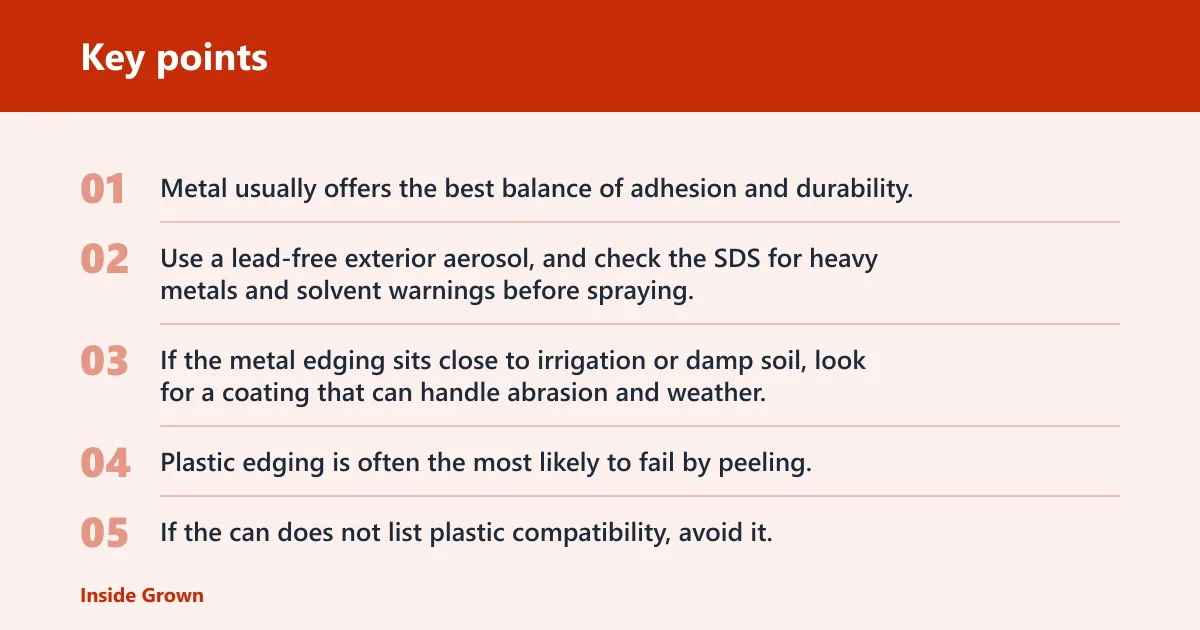
Metal usually offers the best balance of adhesion and durability. It is a strong candidate if the surface is clean, dry, and free of loose rust. Use a lead-free exterior aerosol, and check the SDS for heavy metals and solvent warnings before spraying.
If the metal edging sits close to irrigation or damp soil, look for a coating that can handle abrasion and weather. Flaking near the ground is a bigger problem than color loss on a decorative object because chips can land in mulch or turf.
Plastic edging
Plastic edging is often the most likely to fail by peeling. If the can does not list plastic compatibility, avoid it. A product that grips metal may bead up or flake on a flexible plastic strip, especially if the edging bends during installation or from heat.
If you choose to paint plastic, test only a small hidden section first and let it fully dry before judging adhesion. If the finish remains tacky, cracks when flexed, or scratches off with a fingernail, stop and switch to a factory-colored replacement instead.
Wood edging
Wood can take spray paint, but moisture is the enemy. Edging that sits against wet soil or mulch can swell, split, or shed coating sooner than a raised trim piece. A lead-free exterior coating is the safer baseline, and the SDS should not list heavy metals.
Wood also needs more maintenance than metal. If the goal is only a neat border, a brush-on exterior paint or a prefinished board may make more sense because you can control where the coating goes and keep overspray out of the bed.
Stone edging
Stone is often the weakest candidate for a sprayed finish. Porous or rough stone can absorb coating unevenly, and textured faces make overspray harder to remove once it lands. If the goal is a natural stone look, painting is usually the wrong move.
If you still need color on stone, look for a masonry-compatible product and expect more prep, more waste, and a higher chance of chipping. In many gardens, leaving the stone unpainted is the cleaner choice.
Will spray paint harm grass or soil?
Yes, overspray can harm grass or soil if it lands there in enough quantity, especially near edible beds or fresh mulch. The risk comes from product ingredients, fine droplets drifting in wind, and residue that remains on leaves or topsoil. Ventilation matters outdoors, but it does not cancel overspray.
Grass usually shows the problem first because blades catch airborne droplets. Soil and mulch can also collect overspray, where it is harder to remove. If the coating contains heavy metals or strong solvents, the concern is more than appearance.
When to avoid spraying near vegetables or irrigation
Avoid spray paint altogether if the edging borders edible beds and you cannot mask well enough to block drift. Also avoid spraying if irrigation heads wet the area before the coating cures, because water can move uncured residue and slow hardening. If the edging sits directly beside herbs, greens, or berries, a different finish is better.
Say your edging runs along a 10-foot vegetable bed and the forecast calls for gusty afternoon wind. That is a poor spraying day even if the can says outdoor use. A calmer morning or a brush-on option gives you better control and less chance of contamination.
How to paint edging with less risk
The safest approach is controlled application. Keep the can close enough to limit drift, use thin coats, and avoid spraying when wind can carry mist into turf or beds. Masking and spacing are not optional near the garden. They are the main defense against overspray.
-
Check the label and SDS.
Confirm that the product is lead-free, intended for exterior use, and suitable for the material you plan to coat. Read the SDS for heavy metals, formaldehyde, ammonia, and other hazard statements before you buy or spray. If the product page does not provide the SDS, move on to a different can.
-
Choose a calm window.
Spray only when wind is light enough to keep mist from moving into grass or beds. If you can feel the spray drifting away from the target, stop. Overspray is easier to prevent than to clean from leaves and mulch.
-
Mask the garden edge.
Use cardboard, paper, or plastic sheeting to shield turf, soil, and nearby plants. Press the masking down close to the edging so droplets do not curl under the edge and land where they should not.
-
Apply thin coats.
Hold the can steady and move in even passes. Thin coats dry more evenly and are less likely to sag, run, or form heavy residue that flakes later beside irrigation and mulch.
-
Let it cure fully.
A common rule of thumb is not to return the edging to garden contact until the coating has cured for about 24 to 72 hours, or longer if the label says so. Dry-to-touch is not the same as ready for soil, turf, or plants.
Suppose a plastic border is sprayed on one side only and the gardener puts it back after a few hours because the surface feels dry. That can still leave uncured film against moist soil, where it may smear, tack up again, or pick up dirt before the finish has hardened.
What safer alternatives should you consider?
Factory-coated edging is often the safest choice when you want color without spray application risk. The finish is already cured, so you avoid overspray on grass and soil, and you do not have to guess about drying time. For many gardens, that is the cleanest answer.
Brush-on or roll-on coatings can also make sense. They give you more control at the edge of the bed, where spray drift is hardest to contain. If the coating is meant for the outdoors and the surface is properly prepped, these methods reduce the chance of mist landing on mulch, turf, or edible plants.
If appearance is the only reason for repainting, compare the cost and time against replacement. A prefinished metal strip or a naturally weathered material may be simpler than recoating an old border every season.
Frequently asked questions
Is spray paint safe on garden edging?
It can be safe on garden edging if the product is lead-free, suitable for outdoors, and used with strong overspray control. The bigger risks are drift onto turf and beds, poor adhesion on the wrong material, and placing the edging back before the coating has fully cured.
What spray paint is safe for grass?
No spray paint is truly safe for grass if you let it land there. The safer approach is to prevent contact with masking, calm weather, and controlled spraying. If some paint hits the lawn, stop and protect the area right away rather than trying to cover more ground.
Can I use non toxic lawn and garden edging paint near vegetables?
Use caution. Non-toxic wording does not guarantee safety for edible plants, soil, or skin, and it does not replace the SDS. If vegetables are nearby, choose lead-free paint and avoid any product that could drift onto leaves or contaminate the bed.
What is the safest paint for garden beds?
The safest option is often no spray paint at all, especially for beds close to vegetables. Factory-coated edging or a brush-on exterior coating usually gives better control. If you do paint, choose a lead-free, exterior-rated product and let it cure fully before it returns to the bed.
How long does spray paint take to stop off-gassing outdoors?
There is no single number that fits every product. Off-gassing depends on the formula, film thickness, temperature, and airflow. Use the label’s cure instructions rather than surface-dry time, and keep the edging away from soil, turf, and plants until the coating has fully hardened.
What kind of spray paint is best for metal, wood, or plastic edging?
Metal usually tolerates exterior aerosol paint best, especially if it is lead-free and corrosion resistant. Wood needs a product made for exterior use and moisture exposure. Plastic is the hardest case, because many paints do not bond well unless the can specifically says it works on that surface.