Plant Spacing Calculator
A plant spacing calculator works best when you measure center-to-center spacing, then divide the planting length or bed area by that number to estimate plant count. Wrong spacing can crowd plants, waste space, restrict airflow, and add labor or plant costs. This guide shows how to choose spacing patterns and calculate counts for beds, rows, hedges, and mixed unit setups.
How is this calculated?
Press Calculate to see the math with your numbers.
What a plant spacing calculator does


A plant spacing calculator estimates how many plants fit in a given area, and many also estimate density and purchase cost. It usually accepts area length, width, and a spacing value, then supports square, rectangular, and triangular layouts in imperial or metric units.
That makes it useful for small beds and larger plantings alike. The same tool can help you plan a vegetable patch, a shrub border, or acre-scale tree spacing when the numbers are entered in one consistent unit system.
Where it helps most
It is most useful when you need a fast plant count for beds, rows, hedges, and repeated plantings. It also helps when you want to compare a tighter layout with a wider one before you buy plants or prepare soil.
For larger projects, the calculator can estimate area-based counts for acre or hectare planning. For smaller jobs, it can save you time and reduce manual math by turning spacing into a plant total instead of a rough guess.
How do you measure spacing between plants?
Measure spacing from center to center, not edge to edge. That means you place the tape at the center of one plant’s stem or crown, then measure to the center of the next plant’s stem or crown, which keeps the math consistent even as plants grow to different widths.
In rows, measure the distance between plants along the row and the distance between rows separately. In hedges, measure along the line of planting and keep the same center-to-center gap from one shrub to the next.
Plant spacing calculator checklist
- Mark the first planting point.
- Measure the planned spacing from that center point.
- Mark the next center point, not the outer leaf edge.
- Check row spacing if the layout uses multiple rows.
- Use the same unit throughout the bed, row, or hedge.
Mixed-unit mistakes to avoid
A common error is mixing feet, inches, centimeters, and meters in the same calculation without converting first. Another is measuring a bed in feet but entering spacing in inches, which can cut the plant count far below or above what the space can hold.
Say your bed is 12 feet long and you want plants every 20 inches. Convert the spacing to one unit before dividing, or the count will be wrong. The same rule applies to metric beds measured in meters with spacing entered in centimeters.
Square, row, or triangular spacing?
Square spacing places one plant at each corner of equal-side squares. Rectangular row spacing uses rows plus in-row spacing, which is easier for access and often helps with disease management. Triangular spacing uses an equilateral triangle pattern with 60-degree internal angles and maximizes use of space.
Square spacing is simple, but it is less space-efficient than triangular spacing. Rectangular row spacing is also less space-efficient than triangular spacing, but it is often easier to maintain in gardens where you need walking space, tools, or row access.
When each pattern fits
Use square grid spacing when you want a clean, simple layout and can accept a little lost space between plants. Use rectangular row spacing for beds and field crops that need access between rows. Use triangular spacing when you want denser coverage, often in gardening.
For example, a hedge or mixed shrub border may use a row pattern, while a formal planting bed may use a square grid. A triangular layout often suits full coverage goals because the plants interlock more tightly than a square grid.
How many plants fit in your bed?
The answer depends on whether you are counting by square foot, by row length, or by total bed area. Plants with narrow crowns can fit more densely than sprawling crops, while wide plants need more room even if the bed area is the same.
A calculator gives the fastest estimate, but you should still check the mature size of the plant and whether it will be pruned, staked, or left to spread. That change in form can alter the final count more than the bed dimensions themselves.
Plants per square foot, row, or area
For square-foot planning, divide the area by the space each plant needs. For rows, divide row length by in-row spacing, then adjust for the number of rows and the gap between them. For larger plots, area-based planning works well because it scales cleanly.
Picture a small 4-by-8-foot bed planted with compact greens. A tighter layout may work there, but the same spacing would fail for a sprawling tomato plant that needs support and air around the canopy.
Plant spacing units and conversions
Use one unit system from start to finish. Feet and inches are common in home gardens, while meters and centimeters are common in metric plans. For larger projects, acres and hectares are used to estimate total planting area and overall plant count.
A calculator that accepts both imperial and metric units is useful because plans often mix them. The safe move is to convert every measurement before you divide, multiply, or estimate cost.
How to keep one unit system consistent
If you start in inches, keep the entire plan in inches until the final count. If you start in centimeters, keep the whole layout in centimeters. Mixed units can produce bad spacing even when the formula is correct.
- Feet and inches: useful for beds, fences, and small planting areas.
- Meters and centimeters: useful for metric garden plans and nursery labels.
- Acres and hectares: useful for field-scale planning.
Raised bed and hedge spacing
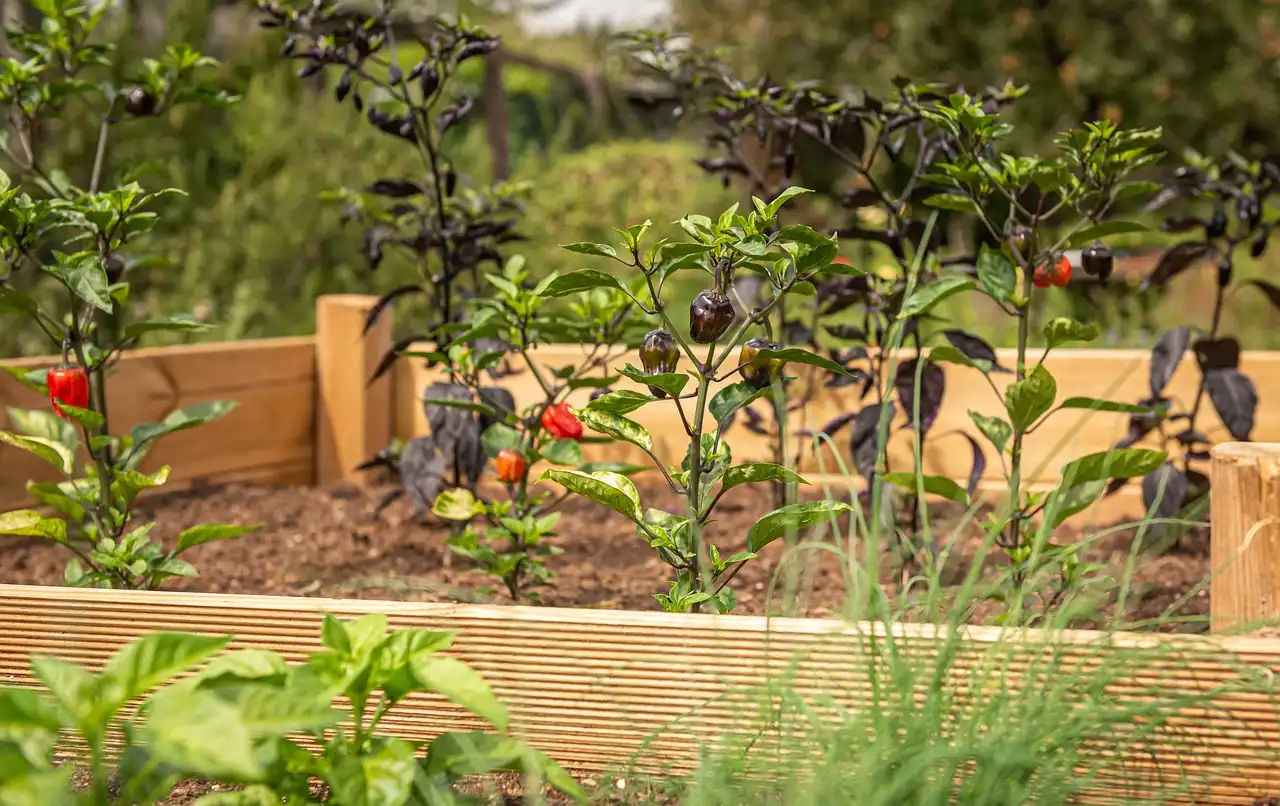
Raised beds can support slightly tighter spacing because the soil is often improved and easier to manage, but tighter spacing also demands more fertility and careful watering. If the crop is vigorous or disease-prone, crowding the bed can turn into a yield risk fast.
Hedge spacing needs a different lens. You are not only filling a line now; you are planning for mature width, fill time, and the look you want at planting size and at maturity.
Raised beds
Tighter spacing in a raised bed works best with high-fertility soil, regular moisture, and crops that tolerate close planting. If the bed is underfed or dry, plants compete harder for water and nutrients, and the yield can drop instead of rise.
Spacing becomes especially important with intensive planting. The more tightly you plant, the less room you have for error when germination is uneven or one plant grows faster than the others.
Hedgerow and privacy screen spacing
For hedges, a common close spacing rule is 33cm apart, which equals 3 plants per meter. Dwarf box can be spaced around 15cm apart, and common box around 20cm apart, but the final choice should still reflect mature width and how quickly you need the screen to fill.
Hedges used as borders, barriers, and windbreaks often look sparse at first. If instant cover matters, tighter spacing may help, but if the shrubs are slow to fill, the gap can stay visible for longer than expected.
Say you plant a privacy hedge along a 9-meter fence line. If you choose a 33cm spacing, the line fills quickly on paper, but the plants still need time to knit together. Wider spacing lowers plant count, yet it also slows cover and leaves more open space between crowns.
Plant spacing decision table
This table matches plant type and setup to the pattern, measuring method, and risk level. Use it as a quick check before you enter numbers into a plant spacing calculator.
| Plant type and setup | Spacing pattern | Measurement method | Risk level |
|---|---|---|---|
| Vegetable bed with compact plants | Square or rectangular | Center-to-center within the bed | Low if soil and moisture are steady |
| Field row crop | Rectangular row | Row spacing plus in-row spacing | Moderate if rows are too tight for access |
| Formal site planting | Triangular | Center-to-center in a triangle lattice | Low to moderate, depending on mature width |
| Privacy hedge or windbreak | Linear row | Center line to center line, then along the row | Moderate if mature width is ignored |
| Raised bed with high fertility | Square or tight rectangular | Center-to-center, then check airflow | Moderate if fertility or watering is weak |
| Trellised crop | Rectangular or narrow row | Measure at the base, then allow vertical growth | Moderate if support is missing |
| Container planting | Single plant or small grouping | Pot center to pot center | High if roots become cramped |
How spacing changes with support
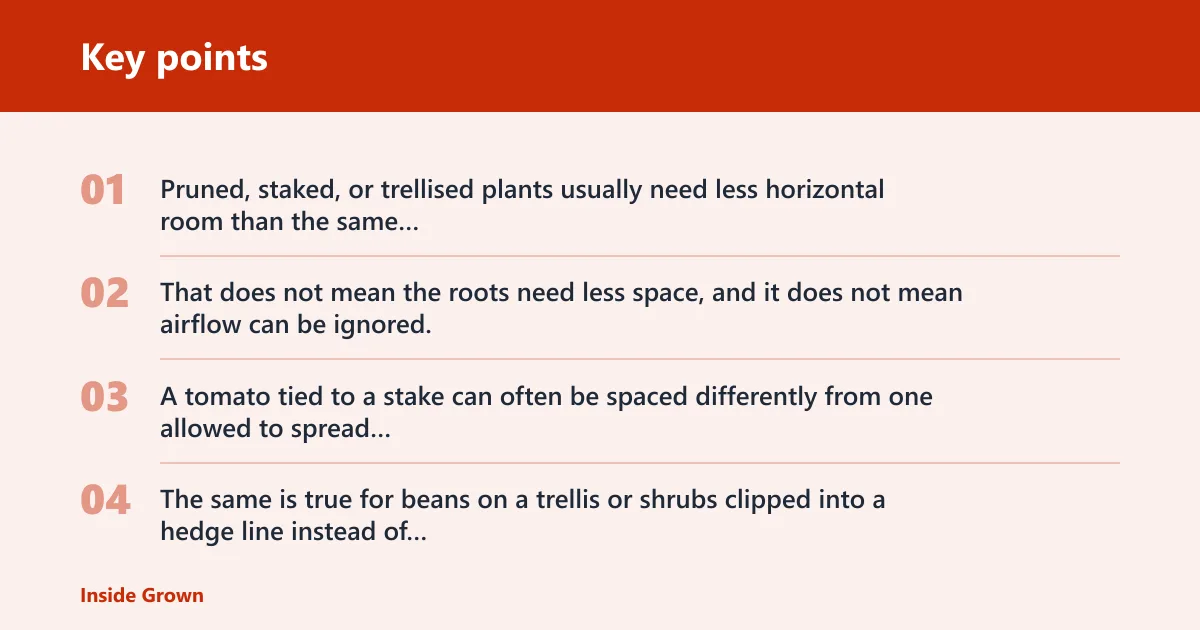
Pruned, staked, or trellised plants usually need less horizontal room than the same plant left to sprawl. That does not mean the roots need less space, and it does not mean airflow can be ignored.
A tomato tied to a stake can often be spaced differently from one allowed to spread across the ground. The same is true for beans on a trellis or shrubs clipped into a hedge line instead of left in their natural shape.
Frequently asked questions
How many plants fit in my garden bed?
Divide the bed area by the space each plant needs, or divide row length by in-row spacing if you are planting in rows. The answer changes with plant size, pruning, and whether the crop stays compact or spreads outward as it matures.
What is the formula for plant spacing?
The basic formula is area divided by spacing area for square or triangular layouts, or length divided by spacing for a row layout. A plant spacing calculator automates that math and can also estimate plant density and cost from the same inputs.
What’s the difference between square and triangular spacing?
Square spacing uses equal side-length squares with one plant at each corner. Triangular spacing uses equilateral triangles with 60-degree internal angles and usually packs plants more efficiently. Square is simpler to lay out, while triangular spacing maximizes use of space.
Can I use a plant spacing calculator in feet or meters?
Yes. Good calculators support imperial and metric units, including feet, inches, meters, and centimeters. The key is to keep one unit system consistent before you enter the numbers, especially if you are comparing small beds with acre or hectare planning.
What happens if I plant too close together?
Too-close planting can increase competition for water, nutrients, and light, and it can limit airflow around leaves. That often raises disease risk and can reduce yield. It also makes thinning, pruning, and harvesting harder because plants crowd each other as they grow.