How Far To Space Broccoli Plants In High Intensity Gardening
Getting the right spacing for broccoli in high-intensity gardens means finding a balance. It’s about giving plants enough room to grow their heads and leaves. But also about fitting as many as possible into your space. Optimal spacing usually ranges from 12 to 18 inches apart. This allows for good air flow. It also helps prevent disease. Consider your specific variety and soil quality. Some varieties are smaller. Rich soil can support slightly closer planting. Companion planting can also influence spacing. Careful planning leads to bigger harvests.
Understanding Broccoli Spacing Needs
Broccoli needs space. This is true for any garden. But in a high-intensity setup, we push these limits.
Plants need room for a few reasons. First, they need space for their roots. Roots spread out to find water and food.
If roots are too close, they compete. This stunts growth. Second, plants need room for their leaves.
Leaves soak up sunlight. Sunlight is energy for the plant. Overlapping leaves block sun.
This reduces how much energy the plant gets. Third, air needs to move. Good air flow stops problems.
Pests and diseases like damp, still air. Space lets air circulate. This keeps plants drier.
It helps them stay healthy.
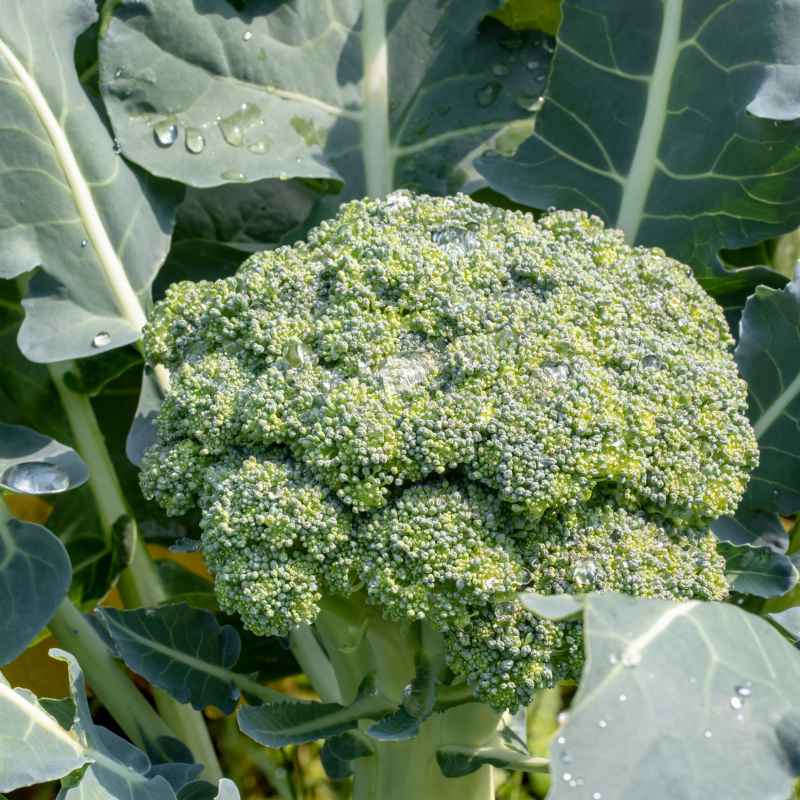
The main part of the broccoli plant is the head. This head gets quite large. It needs space to form properly.
If plants are too close, the heads can be small. They might even fail to form well. You might get many small florets instead of one big head.
That’s not what most gardeners want. They aim for a good, solid crown. So, giving them enough room is not just about plant health.
It’s also about getting the harvest you expect.
Each broccoli plant is a hungry eater. It pulls nutrients from the soil. It also uses a lot of water.
If plants are packed in tight, they all want the same things. They drain the soil quickly. This can lead to weak plants.
Weak plants get sick more easily. They don’t produce much. Proper spacing helps ensure each plant has access to resources.
This means healthier plants. It also means better yields over time.

My Own Broccoli Spacing Oopsie
I remember one spring, I was so excited to get planting. My first year trying intensive methods. I had these lovely little broccoli starts.
They looked so perfect. I pictured rows of them. Big, beautiful heads ready for harvest.
I wanted as many as I could fit. So, I ignored the usual advice. I put them about 10 inches apart.
I thought, “They’re small now. They’ll grow into it.” I even put them in a square pattern. This seemed really efficient.
The first few weeks were great. The little plants grew. They looked healthy.
I felt so proud. Then, things started to change. The leaves began to overlap.
Significantly. Sunlight was getting blocked. The air didn’t move well between them.
I started seeing a bit of mildew on lower leaves. Then, the heads started forming. But they were tiny.
Some were just little clusters of flowers. Not the big, dense crowns I was dreaming of. It was frustrating.
All that work. All that anticipation. For such small yields.
That experience taught me a lot. It wasn’t just about how many plants I could squeeze in. It was about how many plants could thrive in that space.
I learned that pushing the limits too far backfires. It’s better to have fewer, well-grown plants. They produce more usable food.
It was a valuable, if slightly disappointing, lesson. Since then, I’m much more mindful of spacing. Especially when trying to garden intensely.
High-Intensity Broccoli Spacing Factors
Variety: Larger varieties need more room. Smaller, compact types can be closer.
Soil Fertility: Very rich soil can support slightly closer planting. But don’t push too hard.
Climate: Hot climates might stress plants more. Extra space can help with air flow and cooling.
Your Goal: Are you after huge heads or many side shoots? This affects spacing.
How Close is Too Close? The Science of Spacing
Broccoli belongs to the Brassica family. These plants often need a good amount of space. For standard gardening, people often say 18 to 24 inches apart.
This is generous. It ensures plants have plenty of room. They get good sun and air.
But for high-intensity gardening, we adjust this. We aim for the shorter end of the range. Usually, 12 to 18 inches is the target.
Why this range? Think about the plant’s mature size. A healthy broccoli plant can spread its leaves out 1 to 2 feet wide.
The central head can be 6 to 12 inches across. If you plant them 12 inches apart, the leaves will touch. The plants will create a dense canopy.
But if the soil is good and you manage well, they can handle it. If you plant them 18 inches apart, there’s more breathing room. More light gets to the lower leaves.
Studies and experienced gardeners often point to 12 inches as a minimum. Even for intensive setups. Any closer, and you risk serious problems.
You might see disease spread faster. The plants might grow weak. The heads might be very small.
It’s a trade-off. You fit more plants. But each plant might produce less.
You have to find the sweet spot for your garden.
It’s not just about distance between plants in a row. It’s also about the distance between rows. If your rows are too close, the plants shade each other.
This is especially true for the plants on the sides of the rows. They don’t get as much sun. In intensive systems, we often use square foot gardening.
Or beds that are 3-4 feet wide. This allows access from both sides. It means you can plant in a grid pattern.
This is more efficient than long rows.
The Power of Companion Planting
Companion planting is a smart way to garden. It means planting different crops together. These plants can help each other.
They can deter pests. They can attract helpful insects. They can even improve soil.
For broccoli, some companions are great. They can make denser planting work better.
Herbs are good friends to broccoli. Basil can help repel flies. Rosemary and thyme can deter cabbage moths.
Cabbage moths are a major pest for broccoli. They lay eggs that hatch into hungry caterpillars. If you plant these herbs near your broccoli, it can offer some protection.
This is especially helpful in a tight space. Where pests can spread quickly.
Some vegetables also work well. Radishes planted nearby can act as a trap crop. They can distract flea beetles.
These tiny beetles love young Brassicas. They can chew holes in the leaves. If radishes are more appealing, they might leave the broccoli alone.
Or at least give it a head start. Beans can also be good companions. They fix nitrogen in the soil.
Broccoli uses a lot of nitrogen. So, beans can help feed the broccoli.
Flowers can also play a role. Nasturtiums are a classic. They can attract aphids away from the broccoli.
This means the aphids go to the nasturtiums instead. Then you can deal with them there. Marigolds are known to deter nematodes.
These are tiny worms in the soil that can harm plants. Planting these flowers among your broccoli adds a layer of defense. It helps the plants cope with being closer.
When you plan companion planting, think about space. Don’t let the companions take over. The goal is to help the broccoli.
Not to compete with it. So, plant them in small numbers. Or use herbs that don’t grow too large.
This way, you get the benefits. Without sacrificing broccoli’s space.
Top Broccoli Companions
- Herbs: Basil, Rosemary, Thyme, Dill
- Vegetables: Radishes, Bush Beans, Beets
- Flowers: Nasturtiums, Marigolds, Calendula
Why they help: Pest deterrence, nutrient fixing, trap cropping.
Choosing the Right Broccoli Variety
Not all broccoli is the same. Some varieties are bred for specific uses. Some are more compact.
Others are larger and produce bigger heads. When you’re gardening intensely, choosing the right variety is crucial. A smaller variety will naturally need less space.
This allows you to plant them closer together.
Consider broccoli types like ‘Bonanza’ or ‘Patio Broccoli’. These are often smaller. They are bred for container growing or small spaces.
They tend to produce smaller heads. But they might produce many side shoots. This can be good for continuous harvest.
‘De Cicco’ is another variety that is known for side shoots. It’s also a bit more heat tolerant. This can be useful in some climates.
Larger, heading types like ‘Premium Crop’ or ‘Belstar’ will need more room. They produce a big main head. If you want massive heads, you’ll need to give these more space.
Trying to plant them too close might result in smaller main heads. Or plants that are stressed.
Think about your goal. Do you want one big harvest? Or do you want to pick broccoli over a longer period?
For intensive systems, varieties that produce side shoots are often excellent. They keep giving. Even after the main head is cut.
This extends your harvest. And it means you can potentially plant them a bit closer. Because the plant might not get as massive as a single-head type.
Always read the seed packet or plant tag. It will give you recommended spacing. For intensive gardening, you might push the minimum recommended spacing.
But don’t go below it. Also, consider how long the variety takes to mature. Faster-maturing varieties might be more forgiving.
They spend less time in the ground growing to their full size. This can be an advantage in a busy garden.
Spacing in Different Garden Layouts
The way you lay out your garden matters. This is especially true for intensive gardening. We often move away from long, straight rows.
Instead, we use raised beds or square foot gardens.
Raised Beds: A common raised bed width is 3 to 4 feet. This lets you reach the center from either side. You can plant broccoli in a grid pattern.
For example, in a 4×4 foot bed, you could plant a 3×3 grid of broccoli plants. This would put them 16 inches apart. This is a good, safe spacing.
Or, if you want to push it, you could try a 4×4 grid. That would put them 12 inches apart. You’d need to watch closely for air flow.
Square Foot Gardening: This method divides your garden into 1-foot squares. Broccoli is typically given 2 to 4 squares per plant. If you are aiming for a smaller variety and tight spacing, you might try 1 plant per square.
This means they are 12 inches apart. Again, this is pushing it. You need to be sure your soil is rich.
And you need to monitor for disease. A safer bet in square foot gardening is 2 squares per plant. This puts them about 17 inches apart.
In-Ground Beds: If you’re planting directly in the ground, you can still use intensive methods. Create wide beds. Plant in a grid or offset pattern.
An offset pattern means plants are staggered. This can help leaves overlap less. If you have plants in row A at position 1, 2, 3, plants in row B would be at positions 1.5, 2.5, 3.5.
This means plants are not directly in line with each other. They fit into the gaps.
The key is to visualize the mature plant. Imagine its leaves spread out. Its head growing.
How much space does it truly need to be healthy? Then, figure out how many of these you can fit. While still allowing for that essential air flow and light penetration.
It’s about density, but also about plant health. A dense garden of sick plants won’t yield well. A slightly less dense garden of healthy plants will.
Spacing Comparison: Standard vs. Intensive
| Garden Type | Standard Spacing (inches) | Intensive Spacing (inches) | Notes |
|---|---|---|---|
| Row Garden | 18-24 | 12-18 | Intensive uses offset planting for better light. |
| Raised Bed (4ft wide) | 2-3 plants per row | Grid: 3×3 (16″), 4×4 (12″) | Grid is more efficient for space. |
| Square Foot Garden | 2-4 squares/plant | 1-2 squares/plant | 1 sq/plant is 12″. 2 sq/plant is ~17″. |
Signs Your Broccoli is Too Crowded
Sometimes, even with careful planning, plants can get too close. Or the conditions might not be ideal. Your plants will tell you.
You just need to know what to look for. These signs indicate stress from overcrowding.
Yellowing Lower Leaves: This is often the first sign. The lower leaves turn yellow. They might even start to die off.
This happens because the upper leaves are blocking sunlight. The plant can’t support all its leaves. So, it sheds the ones that aren’t getting enough light.
Small or Malformed Heads: As mentioned before, overcrowding directly impacts head size. If you’re expecting large heads and getting small ones, spacing is a likely culprit. Or if the heads are loose and not dense.
They look almost like small bouquets instead of a solid crown.
Increased Pest and Disease Problems: This is a big one. When plants are packed tightly, air doesn’t move well. This creates a humid microclimate.
This is perfect for fungal diseases like powdery mildew or downy mildew. Pests like aphids and cabbage worms can also spread rapidly. They can move from one plant to the next easily.
And the plants themselves are weaker. So, they can’t fight off attacks as well.
Slowed Growth: If your plants were growing well and then suddenly stop, it could be overcrowding. They might have run out of nutrients in their immediate area. Or they are struggling for light and water.
The plant’s energy is diverted to just surviving.
Leggy Stems: Sometimes, plants will grow tall and thin. Trying to reach for light. This is called being “leggy.” While some plants do this naturally, excessive legginess in broccoli can be a sign of competition.
They are stretching to get above their neighbors.
If you see these signs, don’t panic. Sometimes you can thin plants. Carefully remove the weakest ones.
Or, you might need to prune lower leaves to improve air circulation. But the best approach is prevention. Start with good spacing from the beginning.
Maximizing Yield in Tight Spaces
Intensive gardening is all about maximizing yield. Spacing is one part of it. But there are other factors too.
Soil Health is Paramount: In a tightly packed garden, your soil needs to be amazing. It needs to be rich in organic matter. This means adding compost regularly.
Good soil provides nutrients. It holds moisture well. And it allows roots to grow easily.
Healthy soil is the foundation of high-intensity gardening.
Consistent Watering: Tightly planted crops use water faster. They also shade the soil. This can lead to faster drying.
Water deeply and consistently. Check the soil moisture often. Especially during hot weather.
Drip irrigation or soaker hoses are great. They deliver water directly to the roots. And they keep foliage dry.
This helps prevent disease.
Feeding Your Plants: Even with great soil, intensive gardening can deplete nutrients. You may need to feed your broccoli. A balanced liquid fertilizer every few weeks can help.
Or side-dress with compost. This is especially important after the main head is harvested. If you want good side shoot production.
Succession Planting: Don’t plant all your broccoli at once. Plant some now. Then plant more in a few weeks.
This gives you a continuous harvest. It also reduces the risk of losing your entire crop to a problem. If one batch gets hit by pests, you have others coming along.
Harvesting Properly: When the main head is ready, cut it. Use a sharp knife. Cut the main stalk about 6 inches from the ground.
This encourages the plant to produce side shoots. If you just yank the whole plant, you lose that potential. Harvesting the main head at the right time is key.
Mulching: A layer of mulch helps retain soil moisture. It also suppresses weeds. Weeds compete with your broccoli for water and nutrients.
Mulch can also help keep the soil cooler. This is good for broccoli, which prefers cooler temperatures.
By combining good spacing with these practices, you can achieve impressive yields. Even in a small garden. It’s about working smarter, not just harder.
And respecting the plant’s needs.
Quick Yield Boosters
Boost 1: Feed the Soil – Always add compost.
Boost 2: Water Wisely – Deeply and consistently.
Boost 3: Feed the Plant – Use a good fertilizer.
Boost 4: Harvest Smart – Cut for side shoots.
Boost 5: Mulch Well – Conserve moisture, fight weeds.
When Broccoli Spacing is Less Critical
While spacing is important, there are times when it’s less of a strict rule. For example, if you are growing broccoli specifically for its leaves. Or if you are growing a very small variety for microgreens.
In these cases, you might plant much closer. But for most gardeners aiming for broccoli heads, proper spacing is key.
Also, if you have extremely fertile soil. And a very long growing season. You might be able to get away with slightly closer planting.
Because the plants have more resources. And more time to grow. But this is a gamble.
And it’s usually only for experienced gardeners who know their soil very well.
Another case is if you plan to harvest the side shoots. Varieties that produce lots of side shoots are often less demanding. They don’t need one massive space for one huge head.
The energy is spread out. But even then, you don’t want them to be so crowded that they choke each other out. Air flow is still important.
For the average home gardener wanting heads, sticking to the 12-18 inch rule is best. Especially in intensive systems. It’s the safest bet for good results.
It balances density with plant health. And it leads to a more reliable harvest.
Real-World Context: Urban Garden Challenges
Many people trying high-intensity gardening live in cities. They have small yards. Or even just balconies.
Space is a premium. This is where knowing optimal spacing becomes even more important.
In a small urban yard, you might have raised beds. Or containers. You want to maximize every inch.
But you still face the same plant needs. Broccoli needs light. It needs air.
It needs nutrients. If you plant too close in a container, the soil dries out fast. The roots get tangled.
Pests and diseases can spread through a whole container very quickly.
On a balcony, you might have less direct sun. Overcrowding would make this worse. The plants would shade each other.
You might not get any heads at all. You’d need to choose a variety that tolerates some shade. And give it as much sun as you can.
And that means spacing it well so it can capture all available light.
Even in a small plot, soil amendments are key. Urban soils can be compacted. Or have poor drainage.
Building good soil in raised beds or containers is essential. It provides the best possible environment. So the plants can cope with being closer together.
It’s a constant balancing act. Making the most of what you have.
What This Means for Your Garden
So, what’s the takeaway for your garden? It means you need to be deliberate. Don’t just cram plants in because you can.
Think about the mature size of the plant. Think about its needs for light, air, and water. For most broccoli varieties, aiming for 12 to 18 inches apart is a good target for intensive gardening.
If you’re using a square foot garden, aim for 1 to 2 squares per plant. For raised beds, a grid of about 12-16 inches apart works well. Always consider your specific variety.
Smaller varieties can be planted closer. Larger ones need more room.
Watch your plants. They will tell you if they are too crowded. Look for yellowing leaves.
Small heads. Signs of pests or disease. If you see these, you might need to thin them out.
Or improve air circulation.
The goal of intensive gardening is not just density. It’s about healthy, productive plants. In a smaller space.
Good spacing is a cornerstone of achieving that. It ensures each plant has enough to thrive. And that means more broccoli for you!
Quick Fixes and Tips for Spacing Issues
Sometimes, you realize your spacing isn’t quite right. Or you bought plants that were already a bit too big. Here are a few quick things you can do.
- Thinning: If plants are too close, you can remove the weakest ones. Cut them at the soil line. This leaves more room for the others. Do this early. It’s harder to fix once plants are big.
- Pruning Lower Leaves: You can carefully trim off the very bottom leaves. This can improve air flow. Especially if they are touching the soil. Don’t remove too many leaves. Plants need them for energy.
- Support for Neighbors: Sometimes, one plant is much larger. You might stake it. Or prune it back a little. This can help its neighbors get more light.
- Monitor Water and Nutrients: If plants are stressed from crowding, they need extra care. Ensure they have enough water. And give them a boost of nutrients if needed.
- Mulch More: A good layer of mulch can help keep soil moisture even. This reduces stress. And it keeps weeds from competing.
Remember, these are fixes. Prevention is always better. But if you’re in a bind, these tips can help you salvage your crop.

Frequently Asked Questions About Broccoli Spacing
What is the ideal spacing for broccoli in a raised bed?
For raised beds, a common intensive spacing is to plant in a grid pattern. Aim for about 12 to 16 inches between plants. This allows for good air circulation while maximizing the number of plants in the bed.
Can I plant broccoli closer than 12 inches apart?
Planting broccoli closer than 12 inches is generally not recommended. While some may try it with very small varieties, it significantly increases the risk of disease, poor head development, and stunted growth due to competition for resources.
Does broccoli spacing change if I’m only growing for greens?
Yes, if your primary goal is to harvest broccoli leaves or microgreens, you can plant them much closer together. They won’t form large heads, so the spacing requirements are very different and much tighter.
How does companion planting affect broccoli spacing?
Companion planting doesn’t usually change the minimum spacing required for the broccoli itself. However, beneficial companions can help plants tolerate slightly closer spacing by deterring pests and improving overall plant health. They act as a support system, not a replacement for adequate room.
What are the signs that my broccoli plants are too crowded?
Common signs include yellowing lower leaves, small or loose heads, increased susceptibility to pests and diseases, slowed growth, and leggy stems reaching for light.
Should I space broccoli differently in hot versus cool climates?
In hot climates, good air circulation is even more critical to prevent heat stress and disease. You might want to err on the side of slightly wider spacing, or ensure excellent air flow through pruning and proper row spacing.
What is the best spacing for ‘Patio Broccoli’ variety?
‘Patio Broccoli’ is a compact variety. For intensive gardening, you can usually plant it about 10-12 inches apart, but always check the specific seed packet for the most accurate recommendation for that particular cultivar.
Conclusion
Finding the right spacing for broccoli in a high-intensity garden is crucial. It balances fitting more plants with ensuring they can grow well. Aim for 12 to 18 inches apart for most varieties.
Watch for signs of crowding like yellow leaves or small heads. Good soil, consistent watering, and smart companion planting help. This allows you to get a great harvest.
Even in a small space.