Landscaping Services for Slope Stabilization
For slope stabilization landscaping, match the fix to the site: gentle slopes often need drainage correction and groundcover, while steeper or unstable slopes usually need terracing, retaining structures, or engineered reinforcement.
What you’ll need


- Measuring tape or laser distance tool
- Smartphone camera for photos after rain
- Notebook for slope angle, soil notes, and wet spots
- Soil test kit or lab test sample container
- Stakes and string for tracing runoff paths
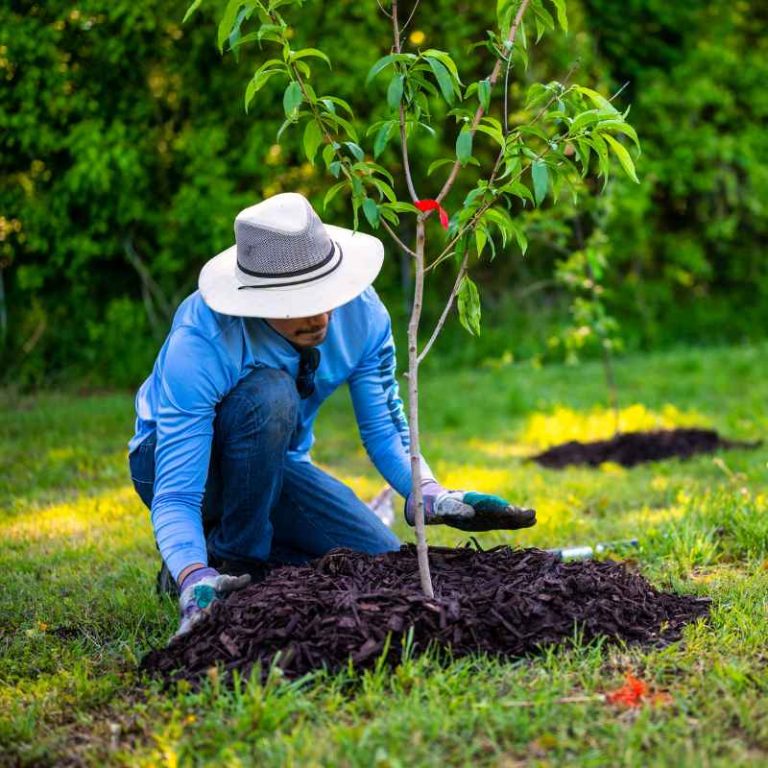
- Mulch, erosion control blankets, or other protective coverings
- Planting plan with deep-rooted native plants, groundcover, or grass seed
- Drainage materials such as pipe, outlet fittings, or swale layout notes
- Repair materials for grading, fill, or structural support systems
What should a landscaper inspect first?
The first inspection should map the slope angle, soil composition, and drainage patterns before any planting starts. Those three factors shape runoff speed, root anchoring, and how much structural support the slope may need. A steep grade with concentrated flow usually needs more than plants alone.
Measure slope angle
Measure the grade in degrees or percent, and note where access becomes difficult. Higher slopes usually mean faster runoff, less working room, and narrower planting choices. A mild slope can often be managed with drainage fixes and vegetation; a sharper one may need grading or reinforcement.
Check soil composition
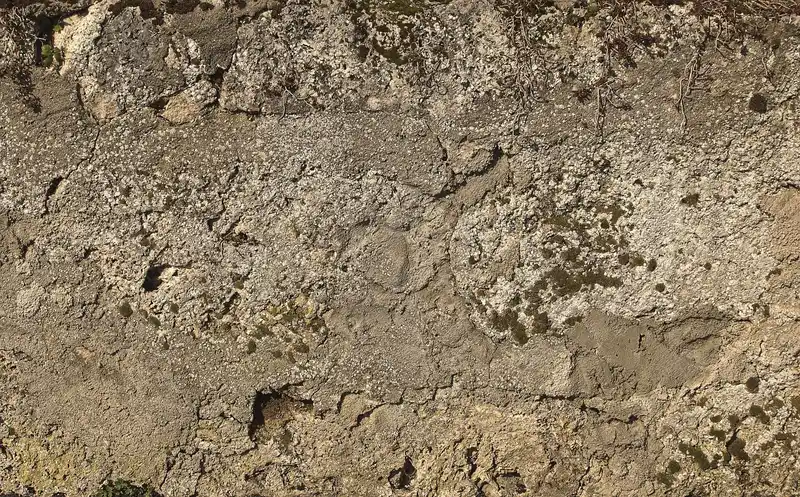
Soil should be tested before choosing a method. Clay tends to hold water and can shed runoff across the surface; sand drains quickly but may not anchor roots as well; loam is often better for planting; mixed soils may need a site-specific plan because drainage and stability can vary over short distances.
Trace drainage patterns
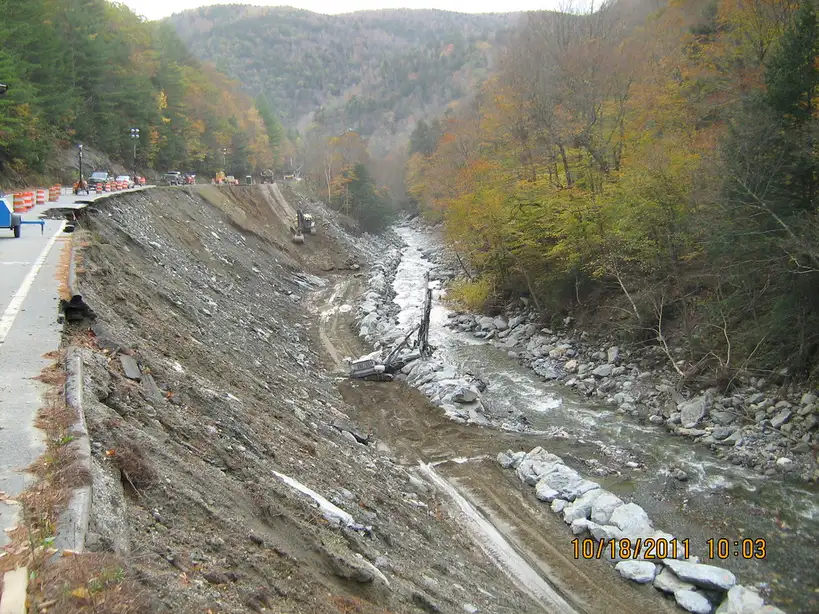
Look for ponding, bare channels, and spots where water shoots downslope in a narrow line. Those are the places that tend to wash out after installation. Photos taken after rain help reveal the true runoff path, especially near hardscape edges, retaining walls, and foundation lines.
Which landscaping services fit your slope?
The best service mix depends on steepness, soil, drainage, and how much upkeep you can support. A slope that only loses surface soil may respond to mulch, blankets, and planting. A steeper or unstable hillside may need grading, drainage correction, and structural support before vegetation can hold.
Step 1: Match the slope steepness
Gentle slopes often fit vegetation support systems first: groundcover, grass establishment, and deep-rooted native plants. Moderate slopes usually need planting plus erosion control materials and drainage correction. Steep slopes often move into engineered ground reinforcement, terracing, or retaining structures, especially where access is limited.
Step 2: Match the soil type
Clay usually pushes the plan toward drainage correction and surface protection. Sand can call for tighter erosion control and more frequent establishment checks. Loam often gives the widest planting options. Mixed soils should be treated as variable, not assumed stable, because one section may drain while another stays saturated.
Step 3: Match the maintenance load
If the slope must stay low-maintenance, choose durable plantings, heavier protection during establishment, and simple drainage routes. If replanting and periodic checks are acceptable, you can use more vegetation-heavy methods. A slope with little upkeep tolerance should not depend on a plant-only plan if runoff is strong.
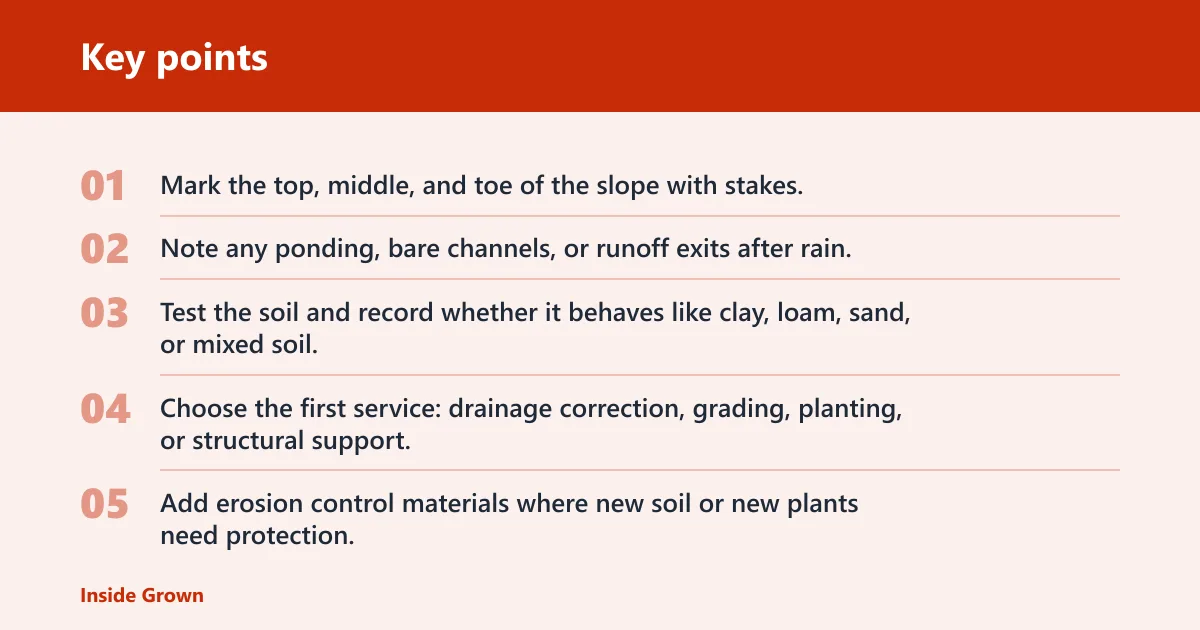
- Mark the top, middle, and toe of the slope with stakes.
- Note any ponding, bare channels, or runoff exits after rain.
- Test the soil and record whether it behaves like clay, loam, sand, or mixed soil.
- Choose the first service: drainage correction, grading, planting, or structural support.
- Add erosion control materials where new soil or new plants need protection.
- Schedule follow-up checks for bare spots, root establishment, and washouts.
Say your backyard has a fairly steep slope, clay soil, and a downspout that empties partway down the hill. That site usually needs runoff correction before planting, because water will keep cutting the same line and strip new roots before they establish.
Do you need drainage fixes first?
Yes, when runoff has a clear path, ponding is present, or water concentrates in one channel. Drainage problems can damage foundations and suffocate plants, so they often need correction before work begins. If water is still moving wrong, planting alone can fail fast.
Correct runoff paths
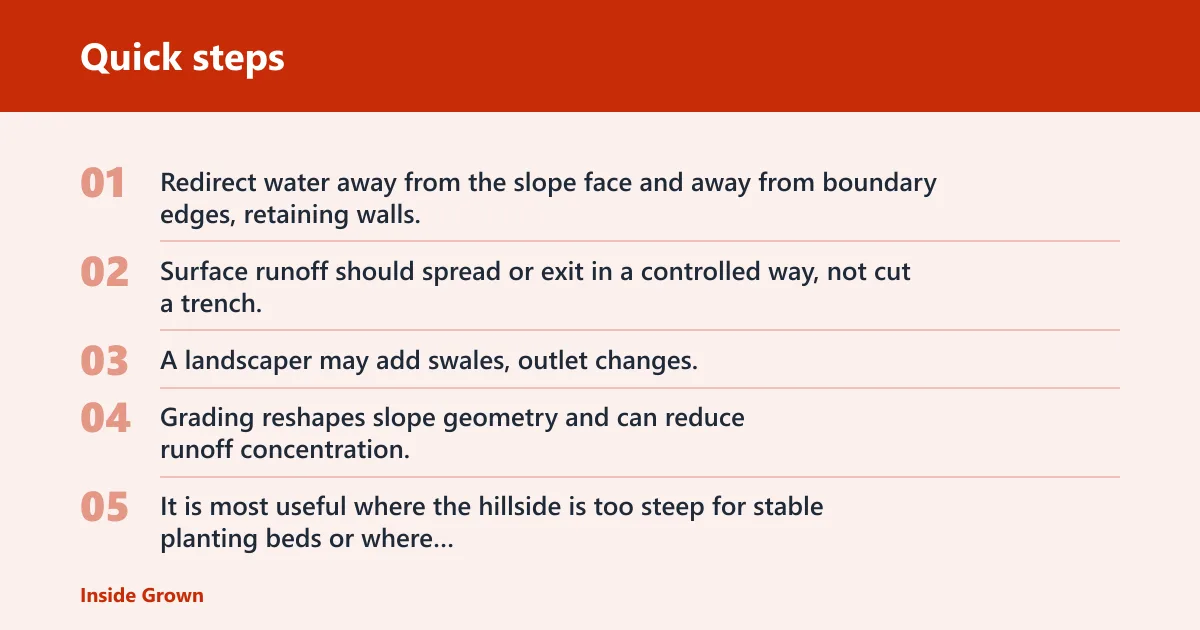
Redirect water away from the slope face and away from boundary edges, retaining walls, and hardscape joints. Surface runoff should spread or exit in a controlled way, not cut a trench. A landscaper may add swales, outlet changes, or subsurface drainage where the path is obvious.
Add grading where needed
Grading reshapes slope geometry and can reduce runoff concentration. It is most useful where the hillside is too steep for stable planting beds or where water accelerates down one face. On unstable ground, grading is usually paired with drainage correction rather than used alone.
Use erosion control materials during establishment
Mulch, erosion control blankets, and protective coverings help reduce soil loss while roots establish. They matter most after grading, seeding, or new planting because bare soil is most vulnerable. These materials do not replace drainage fixes; they support the slope while the new surface takes hold.
Suppose a side yard has a shallow swale that keeps opening into a bare strip after every storm. The first fix is not more seed. It is to correct the runoff line, then protect the seeded area with mulch or a blanket so the soil stays in place long enough for roots to anchor.
Can plants stabilize a steep slope?
Yes, but only when the slope and soil can support root growth and runoff is controlled. Deep-rooted native plants, groundcover, and grass establishment can reduce runoff and bind soil. On steep or unstable slopes, plants are usually one part of the fix, not the whole plan.
Choose deep-rooted native plants
Deep-rooted native plants work best where soil depth and moisture allow roots to spread. They help absorb water and slow runoff, especially when paired with erosion control materials during establishment. Choose species that match sun exposure, soil type, and the slope’s maintenance tolerance.
Add groundcover and grass
Groundcover and grass establishment can fill exposed soil fast, which matters on shallow erosion areas and along the edges of planted beds. They are less useful where the slope is steep enough for soil to slide or where concentrated flow keeps reopening the same bare channel.
Plan for replanting and checks
Long-term maintenance matters because new plantings can fail in the first rainy season. Check for bare patches, uprooted starts, and washed mulch after storms. Replant thin areas early. A slope that is monitored after installation is less likely to develop a hidden failure line.
What causes slope erosion on a hillside?

Hillside erosion usually comes from rain impact, fast runoff, poor drainage, unstable soil, and vegetation loss. Heavy rainfall can break soil apart, then moving water carries it downhill. When the slope has a clear flow path, the same strip can erode again and again.
Common failure points after installation
- Washouts where runoff concentrates at one outlet
- Bare channels where mulch or seed never stays in place
- Patches where roots do not establish because soil stays too wet
- Edges where water escapes beside retaining walls, walks, or driveways
A common first-timer mistake is covering a slope with seed and mulch but leaving the roof downspout aimed at the same area. The slope may look protected at first, then open a narrow washout after one storm because the water path never changed.
What should a landscaper inspect before stabilizing a slope?
Before work begins, a landscaper should inspect slope angle, soil type, drainage patterns, erosion severity, and boundary conditions. Retaining walls, embankment edges, nearby hardscape, and foundation lines can change the design. Those features can be damaged if water or soil movement is not controlled first.
Boundary concerns to flag early
Check whether the slope ends at a wall, driveway, patio, fence line, or foundation. These edges can trap runoff or shift load toward structures. If the site includes a retaining wall or embankment edge, the stabilization plan should keep water away from the base and away from joints.
What a complete inspection changes
A full inspection usually decides whether the job starts with drainage, grading, planting, or reinforcement. It also sets the maintenance burden. A homeowner who can inspect after every storm may choose a vegetation-heavy plan; a low-maintenance site often needs more support up front.
Common mistakes
Most slope failures after work comes from the same avoidable errors: treating every hillside the same, skipping drainage work, and assuming plants will fix unstable ground on their own. The wrong first step can turn a repair into a repeat washout.
- Ignoring concentrated flow: If water cuts one line, fix that path before planting.
- Using plants on an unstable slope without support: Pair vegetation with grading, blankets, or reinforcement when the slope is steep or loose.
- Skipping follow-up after installation: Recheck after rain for bare channels, settlement, and failed roots.
- Missing boundary risks: Keep water away from foundations, walls, and hardscape edges.
Slope stabilization decision matrix
Use this matrix to match the slope to the service mix. Start with the steepness, then soil, drainage, and maintenance tolerance. The best answer is often a combination, but the first move should address the factor most likely to cause failure.
| Slope steepness | Soil type | Drainage condition | Maintenance tolerance | Best-fit service mix | Red flags | First two actions |
|---|---|---|---|---|---|---|
| Gentle | Loam | Even runoff, no ponding | High | Native groundcover, grass establishment, mulch | Thin soil, exposed roots, recurring bare patches | Measure grade; seed and mulch the bare zones |
| Gentle to moderate | Clay | Slow drainage, shallow ponding | Medium | Drainage correction, erosion control blanket, deep-rooted planting | Water sitting after storms, slick surface, runoff across the face | Trace runoff path; add drainage relief before planting |
| Moderate | Sand | Fast runoff, loose surface | Low | Mulch, protective coverings, dense groundcover, limited grading | Surface sloughing, exposed seed, dry blowout spots | Test soil; install erosion cover and reduce exposed soil |
| Moderate to steep | Mixed soil | Concentrated flow channel | Medium | Grading, drainage correction, native plants, blanket protection | Washout trench, water exiting at one point, root failure | Map the channel; reshape the slope and redirect water |
| Steep | Clay or mixed soil | Ponding plus concentrated flow | Low | Engineered ground reinforcement, grading, drainage work, targeted planting | Slump movement, wall stress, repeated erosion after rain | Inspect boundaries; design support before any planting |
| Very steep | Any unstable soil | Uncontrolled runoff | Low | Structural support, drainage correction, restoration work, limited vegetation | Visible slippage, exposed subsoil, access difficulty | Assess slope angle; prioritize support and water control first |
How long does slope stabilization last?
Properly stabilized slopes can perform for many years with routine maintenance, but the result depends on steepness, drainage, and soil behavior. A planted slope with good water control may need only seasonal checks. A reinforced slope needs inspections for settlement, washouts, and wall or edge movement.
Maintenance cadence that prevents repeat failure
Check the slope after major rain events, then at least seasonally. Replant bare patches early. Remove sediment from drainage paths before it redirects water. The goal is simple: catch small changes before they become bare channels, root loss, or a larger slope failure.
Prevention
Keep water off the slope face where possible. That single habit does more to preserve grading, planting, and structural support than any one material choice.
Frequently asked questions
What is slope stabilization?
Slope stabilization is the set of landscaping and structural measures used to keep soil from moving downhill. It usually combines drainage correction, grading, planting, erosion control materials, and, on unstable sites, engineered ground reinforcement or retaining support.
What is slope stabilisation?
It means the same thing as slope stabilization. The spelling changes, but the work does not: inspect the grade, test the soil, map drainage, and choose the mix of planting, grading, and support that fits the site conditions.
What landscaping methods work for steep slopes?
Steep slopes usually need a combination approach: grading, drainage correction, erosion control blankets, deep-rooted native plants, and sometimes retaining structures or engineered reinforcement. The steeper the slope, the less likely a plant-only plan will hold during heavy rain.
Can plants help stabilize a steep slope?
Yes, but only when the slope is stable enough for roots to establish and runoff is controlled. Deep-rooted native plants, groundcover, and grass can reduce runoff and bind soil, but steep or unstable slopes often need drainage work or reinforcement first.