How to Use Lime in Acidic Landscape Soil
Use lime only after a soil test shows pH below the target for the plants in that bed, and apply the label rate in small splits, not more than the test calls for. Overliming can push pH too high, lock up nutrients, and damage azaleas, blueberries, and other acid-loving plants. This guide explains how to read a soil test, choose the right lime, and apply it safely in mixed beds.
Why acidic soil matters
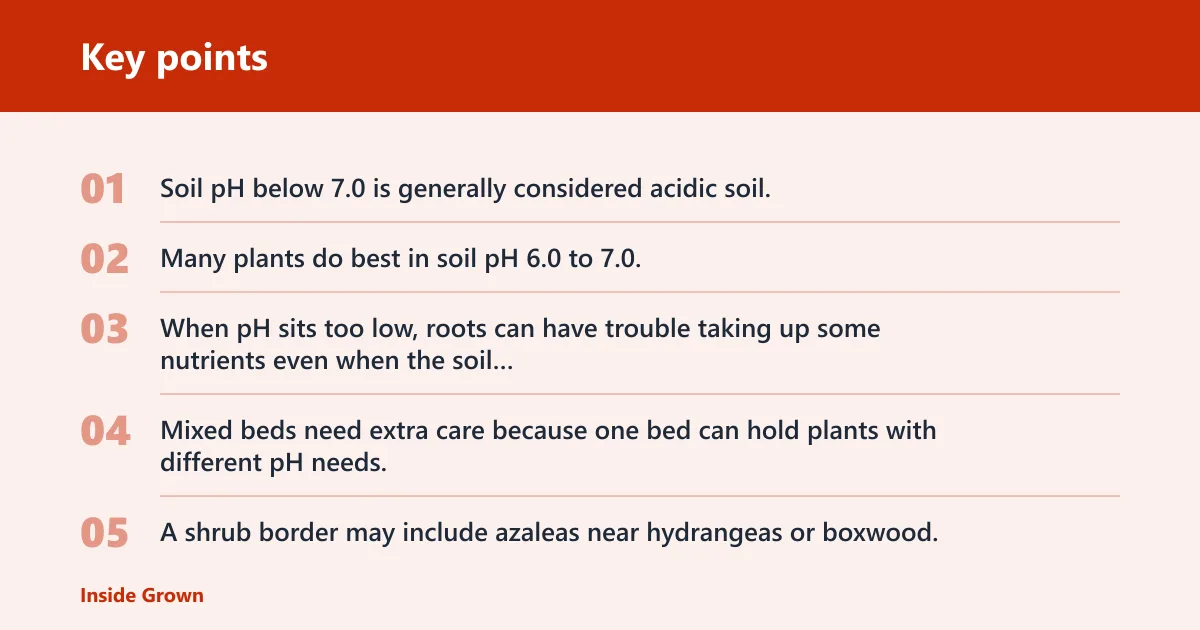


Soil pH below 7.0 is generally considered acidic soil, and pH can affect nutrient availability. Many plants do best in soil pH 6.0 to 7.0, while vegetables and lawns usually grow best in that range. When pH sits too low, roots can have trouble taking up some nutrients even when the soil contains them.
Mixed beds need extra care because one bed can hold plants with different pH needs. A shrub border may include azaleas near hydrangeas or boxwood. A foundation bed may also sit close to masonry, which can already push soil conditions upward in spots.
What lime does to soil
Agricultural lime is the standard tool for raising soil pH. It reacts more slowly than hydrated lime, which works faster than ground limestone. That slower action is useful in beds, where you want correction without a sharp swing in pH.
Lime does not fix every soil problem. If roots are stressed by compaction, standing water, or heavy thatch-like mulch buildup, pH correction alone may not change plant health right away.
What you’ll need
- Soil test report or lab sample
- Chosen lime type: calcitic, dolomitic, pelletized, or ground limestone
- Hand scoop, small spreader, or broadcast spreader for larger beds
- Gloves and a dust mask if using powdered material
- Water source for settling the material after application
- Rake or broom for moving granules off crowns and hardscape
Landscape lime decision table
| Bed type | Soil texture | Starting pH | Target pH | Amendment choice | Risk level |
|---|---|---|---|---|---|
| Shrub border | Sandy | 5.4 to 5.8 | 6.0 to 6.5 | Calcitic pelletized lime if magnesium is adequate | Medium, because nearby acid-loving shrubs can be hit by drift |
| Mixed perennial bed | Loam | 5.2 to 5.7 | 6.2 to 6.8 | Dolomitic limestone only if the soil test shows low magnesium; otherwise calcitic limestone | High, because plant preferences often vary within one bed |
| Foundation bed | Clay/loam | 5.5 to 6.0 | 6.2 to 6.8 | Ground limestone or pelletized lime, applied evenly and in measured splits | Medium to high, because clay/loam buffers more strongly and pH changes more slowly |
This table is a planning tool, not a substitute for a lab result. Sandy soil usually needs less lime than clay or loam because it buffers less strongly. Clay and loam usually need more lime because they resist pH change more strongly.
Which lime type should you use?
Choose the lime type by soil test, not by habit. Calcitic limestone adds calcium and fits soils that already have enough magnesium. Dolomitic limestone adds calcium and magnesium, so it fits magnesium-deficient soil. Hydrated lime is generally faster-acting than ground limestone, but it is more caustic and is often a poor choice for decorative beds.
Calcitic, dolomitic, pelletized, or hydrated
Pelletized lime is often easier to spread evenly in small beds, and it is commonly reported to have a similar effect to ground limestone. Powdered lime can work for larger areas if you can meter it carefully. Hydrated lime should stay in the “use with caution” category because a mistake in a mixed bed can affect roots faster than you expect.
For example, a 12-by-8-foot shrub border might test at about pH 5.6, and the lab may say magnesium is adequate. Calcitic pelletized lime is usually the cleaner choice, because it adds calcium without pushing magnesium higher than needed.
How do you apply lime in beds?
Apply lime only after a soil test shows the need, then match the rate to soil texture and the bed layout. Keep the material out of root crowns and off foliage. Spread it evenly, water it in, and wait before making another correction. Do not repeat applications without a new test.
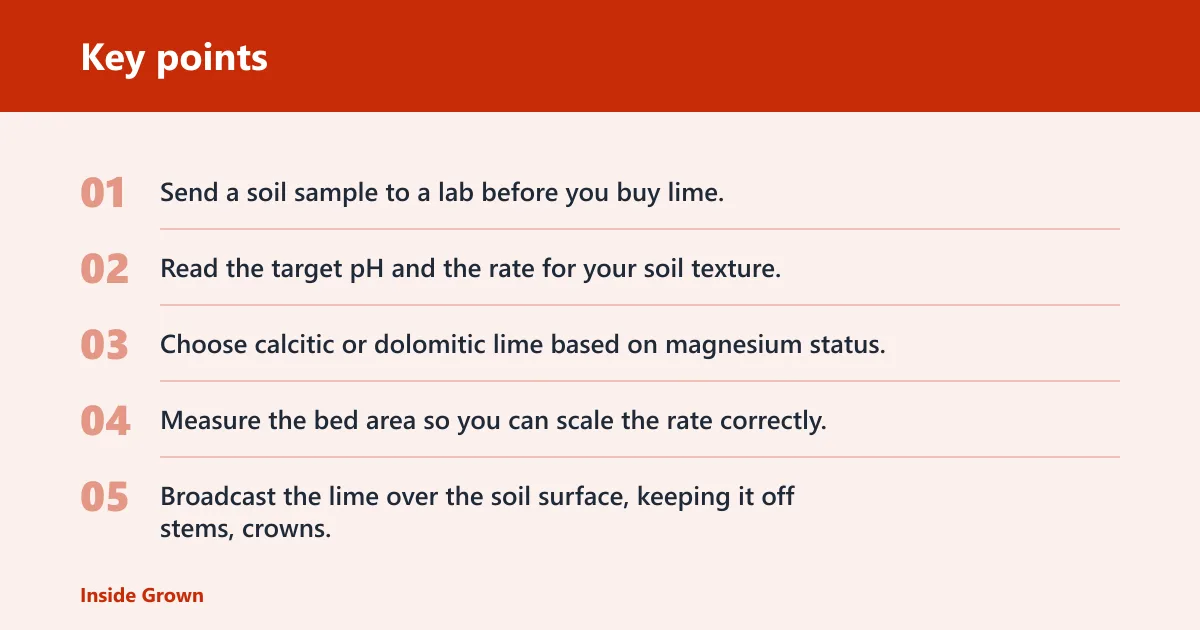
- Send a soil sample to a lab before you buy lime.
- Read the target pH and the rate for your soil texture.
- Choose calcitic or dolomitic lime based on magnesium status.
- Measure the bed area so you can scale the rate correctly.
- Broadcast the lime over the soil surface, keeping it off stems, crowns, and evergreen foliage.
- Rake or brush granules away from plant bases and hardscape edges.
- Water lightly after application so particles can begin reacting with the soil.
- Retest after the lime has had time to work before you add more.
A common mistake is applying pelletized lime to a soil test that calls for dolomitic lime, then wondering why the magnesium level stays low. For a 400-square-foot perennial bed, pelletized material may spread more evenly than powder, while a wider shrub border may accept ground limestone if the surface is level and calm weather limits drift.
For sandy soil, the lab may call for a lower rate than for clay/loam. One common reference point is 40–50 lb per 1,000 sq ft to raise pH from 5.5 to 6.5 in sandy soil, while clay/loam may need 70–80 lb per 1,000 sq ft for the same pH change. Do not apply more than 50 lb of ground limestone per 1,000 sq ft at one time.
If that didn’t work, try this next: split the remaining correction into a second application after retesting. Use the same rate the lab recommends for the next pass, then wait for the soil to settle before you decide on another round.
When should you lime soil beds?

Fall is the best time to apply lime because cool weather gives the material time to react before spring growth starts. Lime works slowly, and it can take 2 to 6 months to see full lime effect. That delay is normal, so do not expect quick visual changes in the bed.
Spring can work if a renovation cannot wait, but timing matters when fertilizer is also due. Lime and heavy fertilizer applications should not compete for attention in the same bed on the same day, especially if you are correcting pH before a new planting phase.
Suppose a foundation bed needs lime, mulch, and a light feeding. Apply lime first, water it in, then wait before adding mulch so the material does not form a thick barrier over the amendment. A heavy mulch cap can slow contact between lime and the soil surface.
Why placement and bed condition matter
Lime is less effective in compacted or waterlogged soil because roots and water movement are already restricted. Thick mulch can also keep lime sitting at the surface instead of entering the root zone. In those beds, correct the physical problem first or at least loosen the surface before liming.
Mixed beds need spacing discipline. Keep lime away from acid-loving plants such as azalea, rhododendron, camellia, hydrangea blue forms, blueberry, and gardenia. Even a well-measured application can drift onto the wrong root area if you spread too close to crowns.
Common mistakes
Over-liming based on guesswork is the most common error. A second mistake is using the wrong lime type. A third is applying lime in compacted, waterlogged, or heavily mulched soil and expecting fast correction. Another is ignoring acid-loving plants nearby.
Can you over-lime your soil? Yes. Too much lime at once or repeated applications without retesting can push pH above the plant’s comfort range. If plant symptoms continue after a soil test shows improved pH, check drainage, root damage, fertilizer salt buildup, and mulch depth before adding more lime.
- Stop liming if the last test already reached the target range.
- Inspect the bed for standing water, hardpan, or mulch piled against stems.
- Check whether yellowing or weak growth is tied to one plant group, not the whole bed.
- Retest soil before changing the rate again.
- Adjust drainage or mulch depth before any new lime pass.
Frequently asked questions
Does lime add acidity to soil?
No. Lime is used to raise soil pH in acidic soil, not to add acidity. If the lab shows pH below the target range, lime is the standard correction tool. Use the lab rate, because the amount needed depends on texture and the starting pH.
Does lime make soil more acidic?
No. Lime moves soil pH upward when soil is too acidic. That is why it is useful for many lawns, vegetables, and general beds. It is not a treatment for plants that already prefer acidic conditions, and those areas should stay unlimed unless a lab specifically says otherwise.
What does lime do to soil?
Lime changes the soil’s pH, which changes nutrient availability to roots. It can also add calcium, and dolomitic lime adds magnesium too. The effect is gradual, so the soil usually responds over months rather than days.
How do I apply lime to garden soil?
Test the soil first, then spread the calculated rate evenly over the surface. Keep the material off stems and crowns, water it lightly, and retest before repeating. Pelletized lime is often easier to apply cleanly in smaller ornamental beds.
How much lime should I add to acidic soil beds?
Use the lab recommendation for your soil texture. As a general reference, sandy soil may need 40–50 lb per 1,000 sq ft to raise pH from 5.5 to 6.5, while clay/loam may need 70–80 lb per 1,000 sq ft. Do not exceed 50 lb of ground limestone per 1,000 sq ft at one time.
How long does lime take to work in soil?
It can take 2 to 6 months to see full lime effect. Faster results are more likely with hydrated lime, but that product is more caustic and should be used carefully. For most beds, patience and retesting are safer than chasing a quick visual change.
Should I use calcitic or dolomitic lime?
Use calcitic limestone when magnesium is already adequate and you mainly need calcium. Use dolomitic limestone when the soil test shows magnesium deficiency. The lab report should drive this choice, because the wrong product can correct pH while leaving the mineral balance off.
Can I over-lime my soil?
Yes. Too much lime can push pH above the plant’s range and reduce nutrient availability. It is especially easy to overdo in mixed beds, where one area may need correction and another may already suit acid-loving plants. Retest before any follow-up application.