Gardening Techniques for Planning a Productive Herb Spiral
Plan a herb spiral by listing your herbs first, then placing sun-loving, dry-soil herbs at the top, moisture-tolerant herbs at the bottom, and giving each zone the drainage it needs. Skip that order and the spiral may look neat, but roots sit too wet or too dry. This guide shows how to match herbs to sun, drainage, and watering zones before you build.
What is a herb spiral?


A herb spiral is a compact, three-dimensional mound bed that creates several growing conditions in one footprint. The top is drier and warmer, the middle stays more even, and the base holds more moisture. That vertical shift lets you group herbs by need instead of forcing every plant into one soil and watering pattern.
Because the bed rises in a coil, water runs from the top toward the bottom rather than pooling across the whole bed. That drainage pattern helps Mediterranean herbs on the upper slope while giving parsley, chives, mint, and cilantro a wetter root zone lower down. In a small garden, the shape often fits a footprint of about 1.5 to 2.5 metres across, though smaller versions can work if the herb list is short.
For sun, place the spiral where the main growing face gets the strongest light. In the northern hemisphere, that is usually south-facing; in the southern hemisphere, north-facing is usually better. Fences, sheds, walls, and trees can cut several hours of light, so do not set the spiral where afternoon shade covers the whole bed.
How the shape creates zones
The upper ring drains fastest and dries first. The middle slope holds moisture more evenly. The bottom edge collects runoff and stays cooler and wetter. That built-in gradient is the real reason the design works for mixed herbs.
Why the footprint matters
A spiral is useful because it increases planting area without spreading far across the yard. But the bed still needs room for a stable slope, a path to reach the center, and enough surface area for each herb’s mature spread. A cramped spiral often becomes crowded before it becomes productive.
What you’ll need
- Marked-out rope or hose for laying the spiral footprint
- Stones, brick, or similar retaining material
- Gravel or rubble for the drainage layer
- Free-draining topsoil
- Compost
- Coarse sand or horticultural grit for dry-zone herbs
- Hand trowel and garden fork
- Bucket or wheelbarrow for mixing soil
- Mulch such as straw, leaf mould, or fine bark for the surface
- Watering can, drip line, or soaker line
How do you plan the site and footprint?
Start with a sunny, open site, then size the spiral to the number of herbs you actually want to grow. Check for shade from fences, walls, sheds, and trees across the whole day, because a site that looks bright at noon can still be shaded for much of the afternoon. If the bed is in a container-style patio space, keep the spiral modest and limit the plant count.
The footprint should fit the space and the herb list at the same time. A spiral with a 1.5 metre diameter can hold a modest herb mix if you prune regularly. A bed closer to 2.5 metres across gives more room for stronger growers and clearer zone separation.
- Map the light first. Mark the sunniest side and note where shade begins at midmorning, noon, and late afternoon. Build so the hottest, brightest side supports the driest herbs and the shaded side does not steal the best growing zone.
- Set the footprint to the plant count. Count mature spreads, not seedling size. A rosemary plant needs far more room than thyme, so the spiral should grow around the largest herbs you plan to keep, not the smallest.
- Check drainage before digging. Dig a shallow test hole and fill it with water. If it stays full for hours, raise the spiral higher and improve the base drainage, because a waterlogged site can turn the bottom zone swampy.
Say your patio allows only a circle about 1.2 metres wide. That size can still work, but it should hold fewer herbs and a shorter retaining wall. A common first-timer mistake is squeezing in mint, rosemary, sage, oregano, and parsley all at once; the result is crowding, uneven light, and a bed that dries too fast on top and stays muddy below.
Herb spiral planning matrix
Use this matrix before you build. It assigns each herb to a zone, plus the sun, moisture, soil texture, and spacing it needs. The goal is to match roots to conditions first, then shape the spiral around those needs.
| Herb | Zone | Sun | Moisture | Soil texture | Spacing |
|---|---|---|---|---|---|
| Thyme | Top | Full sun | Low | Very free-draining, gritty | 20 to 30 cm |
| Rosemary | Top | Full sun | Low | Free-draining, sandy-gritty | 60 to 90 cm |
| Oregano | Top | Full sun | Low to moderate | Light, free-draining | 30 to 45 cm |
| Sage | Top | Full sun | Low | Free-draining, lean | 45 to 60 cm |
| Marjoram | Top | Full sun | Low to moderate | Light, well drained | 25 to 35 cm |
| Basil | Middle | Full sun to light shade | Moderate | Loamy, composted | 25 to 30 cm |
| Parsley | Bottom | Sun to partial shade | Even | Moist loam | 20 to 30 cm |
| Chives | Bottom | Sun to partial shade | Moderate to moist | Fertile loam | 15 to 20 cm |
| Cilantro | Bottom | Morning sun, light afternoon shade | Even | Cool, moisture-retentive loam | 15 to 25 cm |
| Mint | Bottom | Sun to partial shade | Moist | Rich loam | 30 to 45 cm |
| Dill | Middle | Full sun | Moderate | Loose, well drained | 20 to 30 cm |
| Fennel | Middle or separate bed | Full sun | Moderate | Deep, fertile, well drained | 45 to 60 cm |
How do you build the spiral?
Build the structure from the ground up so the retaining wall and drainage base can support the slope. A stone or brick wall gives the spiral mass, keeps the mound in place, and stores heat through the day. Keep the wall stable and stepped rather than steep and smooth, especially on the outer curve where pressure is highest.
The usual build starts with a rubble base, then a shaped soil mound, then the planting zones. The finished top should be high enough to create a dry crown, but not so tall that it becomes unstable in wind or heavy rain. For many home beds, a wall height around 60 to 90 cm is often enough to create clear microclimates without making the structure hard to maintain.
- Lay the drainage base. Spread about 10 to 15 cm of gravel or rubble across the footprint. This keeps the lower section from becoming waterlogged and supports the slope above it.
- Stack the retaining wall. Build the spiral wall with stone or brick, leaning it slightly inward. Keep the outer edge firm and the curve continuous so the soil pressure does not push weak sections outward.
- Fill and shape the mound. Add soil in layers and shape the bed into a rising coil. Compact lightly as you go, but do not pack it hard; the roots still need air and water movement.
- Blend zone soils. Use a free-draining topsoil mix with compost for the whole bed, then add extra grit or coarse sand to the upper zone. Keep the top leaner and the bottom a little more fertile and moisture-holding.
- Water to settle the slope. Soak the finished mound once, then top up any settling spots with another 5 to 10 cm of mix. Recheck the wall line after settling so erosion does not begin at the edges.
If the wall is too low, the soil can slump after the first few heavy rains. If the mix is too rich across the whole spiral, herbs such as thyme and rosemary often grow soft, leafy, and leggy instead of compact and aromatic.
Which herbs go in each zone?
Put drought-tolerant, sun-loving herbs at the top, average-water herbs in the middle, and moisture-loving herbs at the bottom. That pattern matches the natural drainage of the bed and cuts down on watering mistakes. Do not force every herb into the same moisture band just because it looks tidy.
Dry top zone
The top zone suits thyme, rosemary, oregano, sage, and marjoram. These herbs want full sun, quick drainage, and leaner soil. They can handle heat bouncing off the retaining wall, so the upper ring is the best place for them.
Average middle zone
The middle slope works for basil and dill, and it can also support fennel if you give it enough room or keep it out of the main spiral. This band should stay evenly moist but never soggy. A loamy mix with compost is enough here.
Moister bottom zone
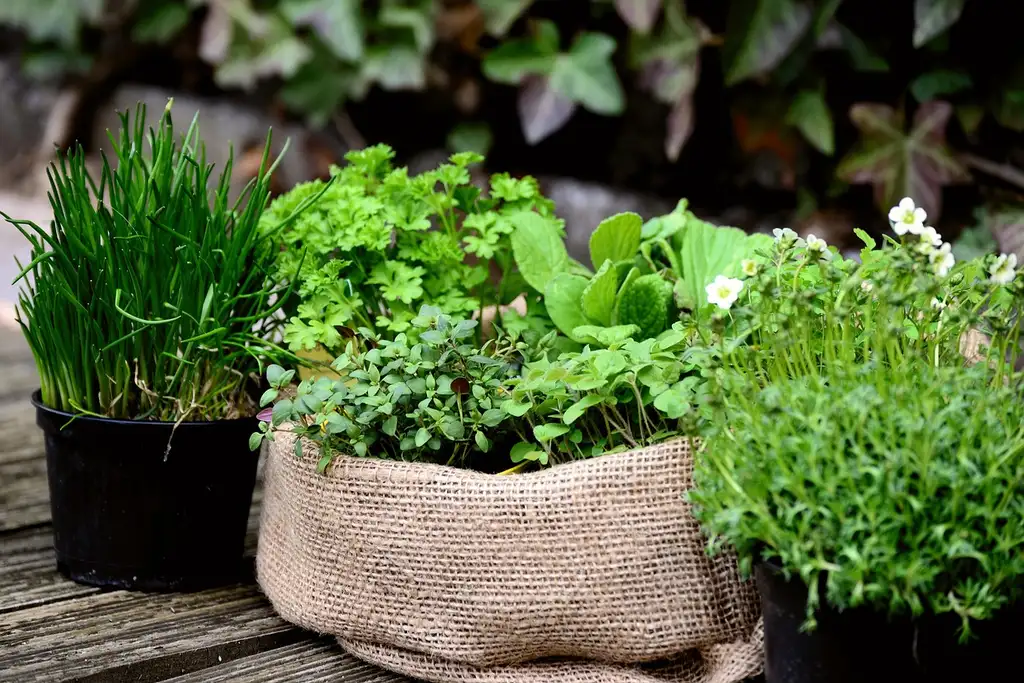
The bottom is the right place for parsley, chives, cilantro, and mint. These herbs need more even moisture and often appreciate a little afternoon shade. Mint should be kept contained because it spreads aggressively and can crowd slower herbs.
Picture a spiral with rosemary at the top, basil halfway down, and parsley at the base. That arrangement gives each herb the moisture and sun it expects. Swap parsley for thyme at the bottom, and the herb likely struggles because the lower zone stays too damp.
Which herbs should not go in the same herb spiral? Strong spreaders and moisture extremes cause the most conflict. Mint is the clearest problem herb because it can take over the base unless it is restrained. Fennel is another difficult fit because it grows large and can shade smaller herbs. If your spiral is small, keep those two out or place them in separate containers.
How do you keep the spiral productive?
Water by zone, mulch lightly, and prune on a schedule. The driest top zone may need a hand watering or a short drip cycle more often than the middle, while the bottom may need less frequent but deeper watering. A drip line or soaker line can work well if it is looped so the lower zone receives slightly less water than the upper bed.
Use a light mulch, such as straw or shredded leaf mould, on the middle and bottom sections to slow surface drying. Keep mulch thinner on the top so the crown herbs do not hold too much moisture around their stems. Prune woody herbs after flowering or when stems begin to sprawl, and replant tired annuals on a seasonal cycle.
- Water by zone. Hand water the top more often in warm weather, then give the middle and bottom zones deeper watering only when the top few centimetres dry out. If using drip, set the top run for a shorter time and the lower run for a longer soak only when needed.
- Mulch lightly. Apply about 2 to 3 cm of fine mulch to the middle and bottom zones. Keep mulch away from woody stems so the base does not stay damp and rot.
- Prune on schedule. Trim thyme, oregano, and sage after flowering to keep them compact. Harvest basil often to prevent flowering, and cut mint back hard when it starts to spread beyond its spot.
- Replace by season. Refresh annual herbs such as basil and cilantro as they bolt or decline. Recheck the compost and grit balance each planting cycle, because repeated watering can move fines downhill and alter the moisture pattern.
A common first-timer mistake is watering the whole spiral the same way. The top then dries out too fast, while the bottom stays wetter than intended. Start with a little extra water at the crown and watch how long each zone holds moisture before changing the schedule.
Common mistakes
Most problems come from poor structure, wrong soil, or mismatched plants. A spiral that looks solid on day one can still fail if the base is weak or the wall is too steep. Overly rich soil can also push Mediterranean herbs into leafy growth with fewer oils and weaker flavor.
- Too much shade. If a wall, fence, or tree blocks the sun, the dry top zone will not stay dry enough and the sun-loving herbs will thin out.
- Flat soil mix. Using the same heavy mix everywhere blurs the microclimates. Add grit to the top and keep more compost in the lower zones.
- Loose wall construction. If the retaining stones are not set firmly, rain can wash soil out and collapse the edge.
- Overcrowding. A small spiral cannot hold every herb at once. Choose fewer plants and give each its mature spread.
- Mint without containment. Mint can overrun nearby herbs unless it is sunk in a pot or tightly controlled.
Suppose a 1.8 metre spiral is built with rich garden soil from top to bottom. The rosemary at the crown may grow soft and weak, while parsley at the base still struggles because water moves unevenly through the mound. A leaner top and a loamier bottom would fix both problems.
Frequently asked questions
How do you plan a herb spiral for the best sun and drainage?
Start with the sun path, then place the spiral so the brightest side faces the strongest light in your hemisphere. Use a gravel or rubble base, a rising coil, and a free-draining top mix. That lets water run downward while the upper herbs stay hotter and drier.
What herbs should go on the top, middle, and bottom of a herb spiral?
A common layout is to put thyme, rosemary, oregano, sage, and marjoram on top. Use basil and dill in the middle. Place parsley, chives, cilantro, and mint at the bottom. Keep fennel separate if you want the rest of the spiral to stay compact and easy to manage.
How wide and tall should a herb spiral be?
A practical home spiral often works well around 1.5 to 2.5 metres across. Many home gardens do fine with a height around 60 to 90 cm at the crown. Size it to your herb count, because the largest mature plant should still have room to spread.
What soil mix works best in a herb spiral?
Use free-draining topsoil with compost as the base mix, then add sand or grit to the upper zone for Mediterranean herbs. Keep the whole bed light rather than heavy and wet. Richer compost belongs lower down, where parsley and chives can use it without softening the dry-zone herbs.
How do you orient a herb spiral for sun and water flow?
Face the main slope toward the brightest side of the site. In the northern hemisphere, that is usually south; in the southern hemisphere, north is usually better. Keep the bed away from shade-casting fences and buildings, and let the spiral slope carry water from top to bottom.
Can you build a herb spiral in a small backyard or patio?
Yes, if you reduce the footprint and herb count. A smaller spiral still creates moisture zones, but it needs fewer large plants and more careful pruning. On a patio, use a compact ring with strong drainage and keep mint in a separate container if space is tight.
How do you keep a herb spiral from drying out too fast?
Use mulch on the middle and bottom zones, water early in the day, and avoid planting too many dry-zone herbs on the hottest side all at once. A drip or soaker line can help, but the top still needs more frequent checks than the lower slopes in warm weather.
Which herbs should not go in the same herb spiral?
Mint is the biggest conflict because it spreads fast and can crowd the bed. Fennel is also awkward in a small spiral because it grows large and shades nearby plants. If you want both, keep them in separate containers or place them outside the main spiral.