Is It Safe To Use Treated Pine For Vegetable Gardens?
Thinking about building raised garden beds? Many folks love treated pine for its cost and durability. But a big question pops up: is it safe for growing the veggies we eat?

Garden Safe
Garden Safe Insecticidal Soap Insect Killer Spray,…
- READY-TO-USE CONTACT SPRAY: No mixing required. Thoroughly spray insecticide on all plant parts, including the underside of leaves…
- FOR ORGANIC GARDENING: This product can be used indoors, outdoors and in greenhouses on vegetables, fruit trees, ornamentals, shru…
- USE UP TO DAY OF HARVEST: This product may be applied to edibles up to and including the day of harvest
As an Amazon Associate I earn from qualifying purchases.
When safety around edible beds matters, Is It Safe To Use Concrete For Vegetable Gardens? Explained adds another practical check before using materials or treatments near vegetables.
It’s a worry many gardeners share. You want your food to be healthy and free from yucky stuff. Let’s dig into this.
We’ll look at what treated pine is and if it’s a good fit for your garden.
What Is Treated Pine and Why Is It Used?
Treated pine is wood that has been forced to soak up chemicals. These chemicals protect the wood. They stop bugs from eating it.
They also stop rot and fungus. This makes the wood last a very long time. It’s great for decks.
It’s also good for fences and outdoor furniture. Builders often use it outside. It handles rain and sun well.
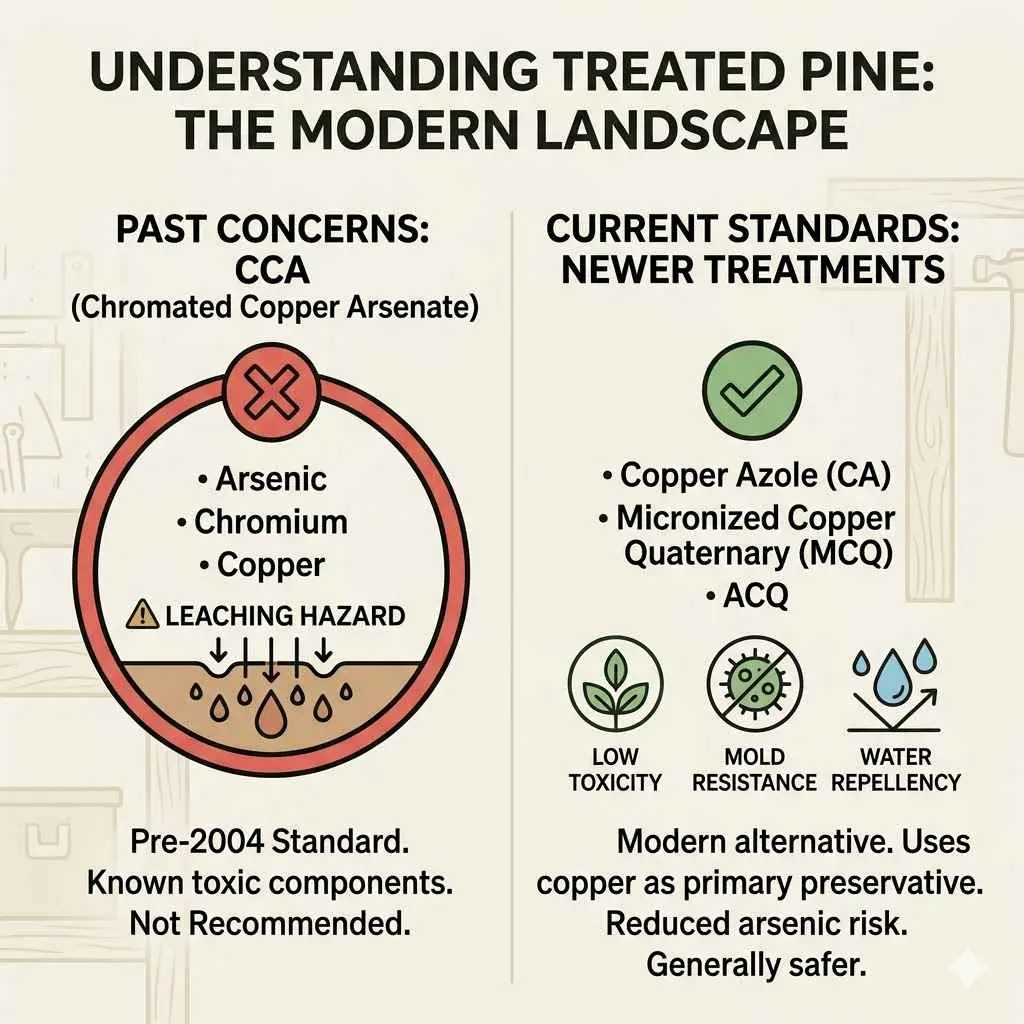
The chemicals used can be different. A common one is called ACQ. This stands for Alkaline Copper Quaternary.
Another is called MCA, or Micronized Copper Azole. Older treatments used CCA, or Chromated Copper Arsenate. CCA is not used much anymore for homes.
This is because of safety worries.
These treatments help the wood resist decay. They also make it harder for insects to chew through. This means your garden beds could last for many years.
They won’t rot away quickly. This is a big plus for anyone building something that will be in the ground. It saves you money in the long run.
You won’t have to replace them as often.
The Big Question: Is It Safe for Veggie Gardens?
This is where the worry starts. We know treated wood lasts long. But what about the chemicals inside it?
Do they get into the soil? If they get into the soil, can they get into our vegetables? This is what most people want to know.
They picture those chemicals soaking into their tomatoes or carrots.
The thought of chemicals in our food is scary. We try to eat healthy. We want to grow our own food to be sure it’s good.
So, using wood that has chemicals in it for growing food feels wrong to many. It’s a tough choice. You want a sturdy garden bed.
But you also want to be sure what you eat is safe.
Many studies have looked into this. They want to see if the chemicals leach out. They also check if plants take them up.
The results can be a bit mixed. But there’s a general agreement on what to watch out for. Let’s break down what the science says.
How Chemicals Might Get into Your Garden
There are a few ways chemicals could get from the wood to your plants. First, the chemicals are inside the wood. Rain can wash over the wood.
This water can carry some of the chemicals. They can drip onto the soil. This is called leaching.
The chemicals seep out of the wood. They then mix with the soil.
Another way is through the wood touching the soil. The edges and ends of the boards are where chemicals might come out more. If the wood is cut, the inside is exposed.
This fresh cut can release more. If the wood is directly touching the dirt, it’s easier for things to move.
Plants also have roots. These roots grow in the soil. If chemicals are in the soil, the roots can absorb them.
Plants take up water and food from the soil. They can also take up other things. This is how things get into the plant itself.
So, if chemicals are in the soil, they can end up in your vegetables.
It’s like a chain reaction. Wood has chemicals. Rain washes them into the soil.
Plants absorb them from the soil. Then you eat the plants. That’s the scary path everyone worries about.
We want to break that chain. We want to make sure that chain doesn’t even start.
What Do the Experts Say?
Many experts and government groups have looked at this. They want to give good advice. The U.S.
Environmental Protection Agency (EPA) is one. They track chemicals and their safety. They have looked at wood treatments.
They say that newer treatments are less concerning than older ones.
ACQ and MCA are thought to be safer. This is because the copper in them does not move around as much in the soil. It tends to stay put.
Older treatments like CCA had arsenic. Arsenic is a chemical we really don’t want in our food or soil. That’s why CCA is used less now.
Still, even with newer treatments, there can be some leaching. It might not be a lot. But it’s still there.
Many studies show that plants do not take up a lot of these chemicals. Especially not the copper. The amount is usually very small.
It’s often too small to be a real health risk.
But here’s the thing. “Very small” might not be small enough for some people. Especially if you are growing food for children.
Or if you are growing a lot of food. You want to be as sure as you can be. Even a small risk can feel big when it’s your food.
So, it’s good to understand all the angles.
Consumer Reports has also tested this. They found that chemicals can leach from treated wood. They suggest using barriers.
They also suggest avoiding treated wood for vegetable gardens. They feel it’s best to be extra careful. Their advice often leans towards caution when it comes to food.
The key takeaway is that while risks might be low with newer treatments, they aren’t zero. And older treatments are definitely a no-go. If you want to be totally sure, you might want to look for other options.
Treated Wood: What’s Inside Matters
Older Treatments (Avoid):
- CCA (Chromated Copper Arsenate): Contains arsenic. High risk.
Newer Treatments (Less Worry):
- ACQ (Alkaline Copper Quaternary): Uses copper. Lower risk.
- MCA (Micronized Copper Azole): Also uses copper. Lower risk.
Even with newer types, some experts suggest caution for food gardens.
My Own Garden Bed Story
I remember when I first built my garden. I was so excited! I wanted raised beds.
They make weeding easier. They also help with drainage. I saw treated pine at the lumber yard.
It was cheap. It looked strong. I thought, “Great!
These will last forever!” I built these big, sturdy beds. I filled them with good soil. I planted tomatoes, peppers, and lettuce.
I felt so proud.
Then, the worry started to creep in. I read an article online. It talked about chemicals in treated wood.
It mentioned leaching. It talked about arsenic. My heart sank.
I pictured those chemicals soaking into my lovely tomatoes. I started Googling like crazy. Was I poisoning my family?
I felt this knot of panic in my stomach.
I spent a whole weekend researching. I looked at EPA reports. I read garden forums.
I talked to other gardeners. Some said, “It’s fine! We’ve used it for years!” Others were very cautious.
They said, “Never! Use something else!” I felt so confused. I wanted to trust my food source.
That first year, I didn’t harvest much from those beds. I was too scared. I ended up lining them with thick plastic sheeting.
It was a mess. It didn’t look nice. I felt like I had made a big mistake.
I learned a lot that year. The biggest lesson was that peace of mind is worth more than a few dollars saved. I eventually replaced those beds.
It was a good decision for my garden and my health.
Safer Alternatives for Your Garden Beds
Because of these concerns, many gardeners choose to avoid treated wood altogether. Luckily, there are many other great options. You can still build beautiful, strong raised beds.
And you can do it without worrying about chemicals.
One popular choice is untreated lumber. Cedar and redwood are fantastic. They are naturally resistant to rot and bugs.
They smell great too! They do cost more than pine. But they will last a long time.
They are a really good, natural option. They won’t leach any chemicals.
Another option is composite wood. This is made from wood fibers and plastic. It’s very durable.
It doesn’t rot. It also doesn’t leach chemicals. It can be a bit pricey.
But it lasts a very, very long time. It’s a good choice if you want something low-maintenance.
You can also use natural materials. Stones or rocks make lovely garden borders. Bricks are another option.
They look nice. They are very stable. They last forever.
They also don’t add anything bad to your soil. You just need to make sure they are well-placed.
Choosing Your Bed Material
Option: Natural Stone or Brick
Pros: Very long-lasting, looks great, no chemical worries.
Cons: Can be expensive, labor-intensive to build.
Option: Untreated Cedar or Redwood
Pros: Naturally rot-resistant, smells nice, looks beautiful, safe for gardens.
Cons: More expensive than pine.
Option: Composite Wood
Pros: Extremely durable, low maintenance, no chemical leaching.
Cons: Can be costly, not a natural material.
Using Treated Pine Safely (If You Must)
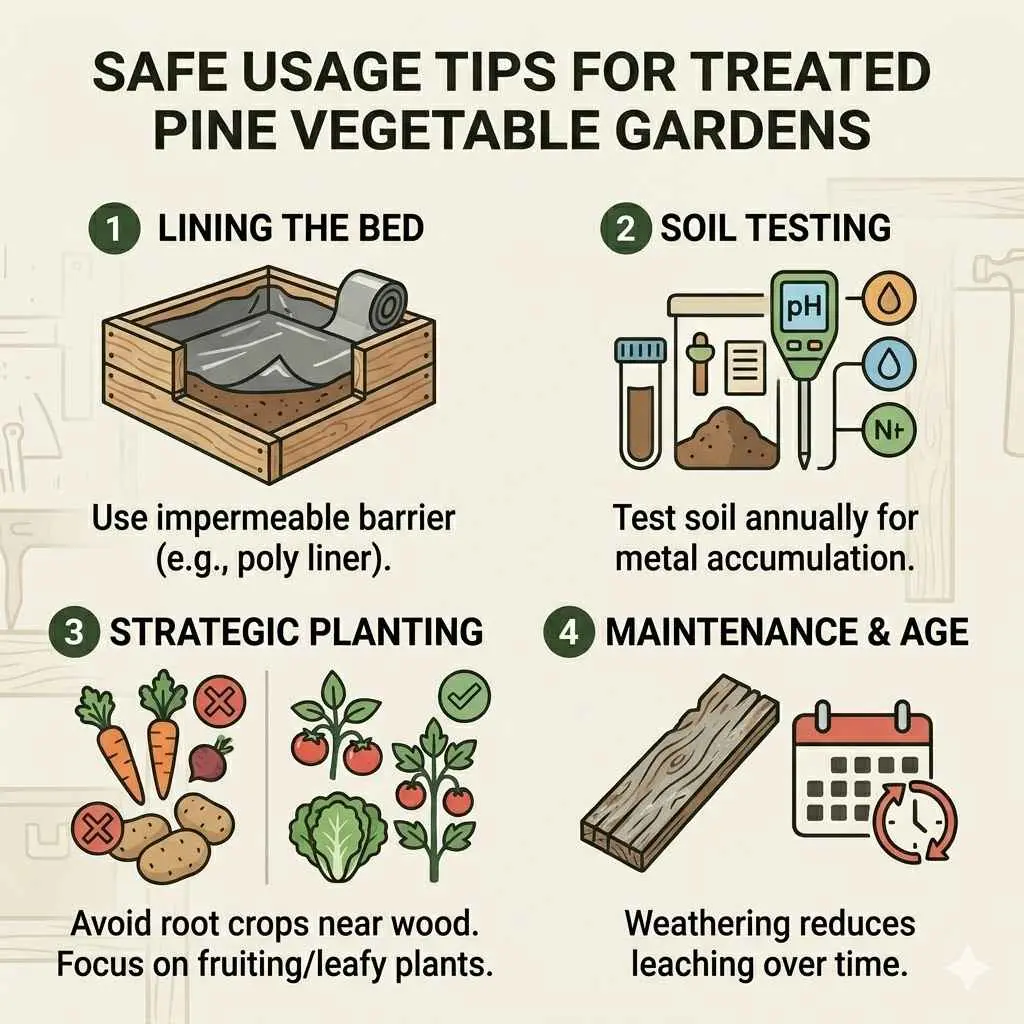
If you’ve already got treated pine or it’s the only option you can afford right now, there are ways to make it safer. These steps help reduce the risk of chemicals getting into your soil and plants. It’s all about creating a barrier.
The first thing to do is never use older treated wood. Stick to wood treated with ACQ or MCA. If you don’t know what it was treated with, it’s best not to use it for food.
Check the label on the wood if you can. Or ask the store where you bought it.
The best way to keep chemicals out of your soil is to use a liner. You can buy special garden bed liners. They are made of heavy plastic or a thick fabric.
You line the inside of the bed with it. Make sure it goes all the way up the sides. This stops the soil from touching the wood directly.
It creates a physical barrier.
Another simple liner is food-grade plastic sheeting. You can get this at hardware stores. Make sure it’s thick and strong.
You want it to last. Staple it to the inside of the wood. Overlap seams so nothing can get through.
This plastic stops the wood from touching the soil. It also stops water from washing chemicals into the dirt.
When you cut treated wood, always do it outside. Wear a mask. Sweep up the sawdust right away.
Do not let it blow around. The sawdust can have chemicals in it. Dispose of it properly.
Don’t compost it. This is an important safety step for you and your garden.
Also, try to avoid using fasteners that can rust. Use stainless steel screws or nails. They will last longer.
They are less likely to cause reactions with the wood chemicals. It’s a small detail. But it adds to the overall safety and lifespan of your bed.
Safe Use Tips for Treated Pine
1. Use Newer Treatments Only: Stick to ACQ or MCA. Avoid CCA.
2. Line Your Beds: Use food-grade plastic sheeting or a garden liner.
3. Seal Cut Ends: Apply a wood sealant to any cut edges.
4. Handle Safely: Wear gloves and a mask when cutting. Clean up sawdust.
5. Avoid Direct Contact: Ensure the wood doesn’t touch the soil directly if possible.
Real-World Context: What Happens in Your Yard?
Think about how your garden beds sit. Are they in full sun? Does it rain a lot where you live?
These things matter. In very dry areas, less water might wash chemicals out. In very wet areas, more leaching could happen.
What kind of soil do you have? Some soils hold onto chemicals more. Others let them move freely.
Most garden soils are rich and have lots of organic matter. This can help hold onto some chemicals. It might make them less likely to move into the plant roots.
But it can also mean they stay in your soil longer.
How deep are your beds? If they are very deep, the roots of your plants might not reach the bottom. Where the chemicals might be more concentrated.
This is especially true if the wood is older. Newer beds might have less leaching in the top soil layers. But over time, chemicals can move deeper.
Think about your habits too. Do you turn your soil a lot? Do you add a lot of compost?
These actions can mix the soil. This can move chemicals around. It might bring them closer to the plant roots.
Or it might dilute them. It depends on how the chemicals behave in your specific soil.
Consider the plants you grow. Leafy greens like lettuce and spinach grow close to the ground. Their leaves might touch the soil more.
Root vegetables like carrots and radishes grow right in the soil. They are a direct part of the soil. This means they could be more likely to absorb things from the soil.
Many gardeners online share their experiences. Some say they’ve used treated wood for years with no problems. Others have switched to safer materials after reading or hearing about the risks.
There’s no single answer that fits everyone. It depends on your comfort level and your goals for your garden.
What This Means for Your Vegetable Garden
So, is it safe to use treated pine for vegetable gardens? The short answer is: it’s risky, and many prefer not to. Especially with older treatments.
Newer treatments are considered safer, but some leaching can still happen.
If you are growing food for your family, especially children, the safest bet is to avoid treated wood. There are too many other good options available. Why take a chance when you don’t have to?
Peace of mind is important. You want to enjoy your garden and your food without worry.
If you are building non-edible garden features, like a simple border for flowers, treated pine is probably fine. But for growing things you eat, caution is key. Think about the long-term.
You want your garden to be a healthy place.
It’s important to know the source of your wood. If you are buying new, look for ACQ or MCA. If you are using old wood, try to find out what it was treated with.
If you don’t know, it’s best to assume it’s not ideal for growing food.
Ultimately, the decision is yours. But understanding the potential risks helps you make an informed choice. You want your garden to be a place of health and growth.
That means being careful about what materials you use.
Quick Tips for Garden Bed Safety
Here are some simple ideas to help you build safe garden beds:
- Choose untreated wood: Cedar, redwood, or fir are great.
- Use natural materials: Stone, brick, or concrete blocks work well.
- Line your beds: If using treated wood, use thick plastic sheeting.
- Create distance: Build beds on a layer of landscape fabric. This separates wood from soil.
- Test your soil: You can get your soil tested for heavy metals. This can show if there are any bad chemicals.
- Rotate crops: Don’t plant the same thing in the same spot every year. This can help manage soil health.
Quick Garden Bed Materials Check
Material: Treated Pine (ACQ/MCA)
Safety Concern: Low risk of chemical leaching into soil.
Recommendation: Use with caution. Line beds with food-grade plastic.
Material: Untreated Cedar/Redwood
Safety Concern: No chemical leaching.
Recommendation: Highly recommended for vegetable gardens.
Material: Natural Stone/Brick
Safety Concern: No chemical leaching.
Recommendation: Excellent, durable option.
Frequently Asked Questions About Treated Pine in Gardens
Is it safe to use treated pine for raised garden beds for vegetables?
It’s a topic with differing opinions. Newer treatments like ACQ and MCA are considered safer than older ones. However, some chemical leaching into the soil is still possible.
Many experts recommend using untreated wood or other materials for vegetable gardens to be completely safe.
What are the risks of using treated pine in vegetable gardens?
The main risk is that chemicals from the treated wood might leach into the soil. These chemicals, like copper, could then be absorbed by your vegetables. While amounts are often small, some people worry about long-term exposure or effects on sensitive individuals, especially children.
What is the difference between older and newer treated pine treatments?
Older treatments like CCA (Chromated Copper Arsenate) contained arsenic, which is a known toxin. They are largely phased out for residential use. Newer treatments like ACQ (Alkaline Copper Quaternary) and MCA (Micronized Copper Azole) use copper as the primary preservative.
Copper is less mobile in soil and is generally considered less harmful than arsenic.
How can I make treated pine safer if I use it for my garden beds?
To reduce risk, line the inside of the garden bed with a thick, food-grade plastic liner or heavy-duty landscape fabric. This creates a barrier between the wood and the soil. Also, ensure you are using wood treated with newer, safer chemicals (ACQ or MCA) and avoid using very old, CCA-treated wood.
Will the chemicals from treated pine get into my vegetables?
There’s a possibility, but studies show that plants absorb very little of the chemicals, especially copper. The amount that leaches is often minimal, and plant uptake is usually low. However, to eliminate this risk entirely, many gardeners opt for untreated materials or use barriers.
What are the best alternatives to treated pine for vegetable gardens?
Excellent alternatives include untreated cedar or redwood lumber, which are naturally rot-resistant. Other options are natural stone, bricks, concrete blocks, or composite decking materials. These materials do not contain harmful chemicals and are safe for growing food.
Final Thoughts on Garden Bed Safety
Building a vegetable garden should bring joy and healthy food. When choosing materials, it’s always best to err on the side of caution. Treated pine has its uses, but for growing food, safer alternatives often make more sense.
Your garden is an extension of your healthy lifestyle. Choose wisely for the best results and peace of mind.
Related pick: Check today's price on Amazon