How to Prepare Your Yard for Landscaping Services
Clear 10 to 15 feet around the work zone, shut off irrigation and outdoor power where needed, and flag buried utilities before landscapers arrive. Skip that prep and crews can lose time, damage equipment, or hit a line. This guide shows what to move, what to turn off, and what to point out before the first truck unloads.
What you’ll need


- Trash bags or bins for yard debris and small items
- Labels, flags, or marking paint for sprinkler heads and buried components
- Access to the project schedule and the crew’s contact details
- A way to lock or secure pets away from the work area
- Contact information for utility marking, including 811 or your local service
- A flashlight for checking valve boxes, gates, and shaded corners
How far in advance should you prep?
Start 3 to 7 days before installation. That gives you time to confirm the scope, line up utility marking, and clear the yard without rushing. It also leaves room for delays if the soil is wet or a gate issue turns up at the last minute.
3 to 7 days out
Confirm the start date, the work zone, and any access limits. If digging is involved, call 811 about one week before installation so markings can be completed in time. In New Mexico, residents can call NM811. Utility marking is a free service, and the process can usually be completed within 3 business days.
24 to 48 hours out
Clear the yard, mow overgrown areas, and move anything that blocks the route to the work zone. The crew may not bring mowers or trimmers, so leave tall grass and weeds cut back before they arrive. If the area is overgrown, trimming first keeps the job on schedule.
Day of service
Unlock gates, keep pets inside, and make sure the path from the driveway to the project area is open. A locked side gate or a parked car in the staging area can stop work before it starts. Leave enough room for equipment to move and for workers to carry materials without squeezing past obstacles.
Prepare the yard in order

- Remove furniture, toys, pots, tools, decorations, and valuables from the work area. Clear debris too, because crews need open ground before they can place materials or start digging.
- Open gates and clear the route to the work zone. Leave drive paths, side yards, and staging areas accessible so workers can move without carrying equipment around tight corners.
- Mow or trim overgrown grass and weeds before the crew arrives. This reduces trimming delays and prevents the team from spending the first part of the job clearing tall growth.
- Shut off irrigation before excavation and identify sprinkler heads and drip lines. Irrigation should be accessible so technicians can mark sprinkler heads, valve boxes, and shallow runs before work begins.
- Call 811 before digging and wait for utility marking where required. Mark gas, electric, cable, and internet lines, and allow several business days for marking so the crew is not guessing underground locations.
- Move pets inside and remove or flag buried pet or mosquito systems in the work zone. Dog fence lines may need to be removed if they run through the installation area, and shallow mosquito system parts can be punctured easily.
- Check soil conditions and report wet spots, drainage problems, or compacted areas. Wet sod is three times the weight of dry sod, and soggy ground can change excavation depth, delivery timing, and crew access.
For example, a project might cover a 20-by-12-foot planting bed near a side gate. If the gate is blocked by stacked planters and the bed still has tall weeds, the crew may spend the first hour moving obstacles and trimming instead of planting. Clear access changes the whole start of the job.
Suppose a drainage crew is scheduled after heavy rain. If the soil stays shiny, soft, or prints deeply underfoot, tell the landscaper before arrival. Wet soil can slow excavation and load-in, and the crew may need to delay rather than cut into unstable ground.
What should you tell the crew?
Give the crew the exact work zone, any access limits, and the location of hidden systems. A short handoff message prevents confusion when the project involves planting, drainage, sod, cleanup, or hardscape work. It also helps the crew choose the right approach before equipment is unloaded.
Point out irrigation and shallow lines
Show the crew where sprinkler heads, drip lines, valve boxes, and any shutoff points are located. If a head is buried or a box is hidden by mulch, mark it clearly. That matters because irrigation parts are easy to miss once the ground is opened up.
Flag drainage, compaction, and access limits
Tell the crew where water stands, where the soil feels hard, and where access is narrow. A compacted strip along a fence or a low area near a downspout can affect grading and drainage work. Also note any locked gates, low branches, or narrow turns before the truck arrives.
Yard handoff checklist
This handoff list separates what the homeowner should do from what the crew should handle. Send it before arrival so there is no confusion about access, buried systems, or soil conditions.
| Task | Timing | Owner / crew responsibility | Risk if skipped |
|---|---|---|---|
| Clear furniture, toys, pots, debris, and valuables | 24 to 48 hours before service | Owner | Slower setup, damaged items, blocked work area |
| Open gates and keep access routes clear | Day of service | Owner | Delayed unloading and limited equipment movement |
| Stop irrigation before digging and mark sprinkler heads | 3 days before service | Owner first, crew confirms | Broken heads, cut drip lines, water leaks |
| Call 811 for utility marking | About one week before installation | Owner | Striking gas, electric, cable, or internet lines |
| Mow or trim overgrown grass and weeds | 24 to 48 hours before service | Owner | Extra labor, delayed start, missed layout points |
| Contain pets and remove dog fence lines in the work zone | Day of service | Owner | Pets in the work area, hidden wiring damage |
| Drain or remove mosquito system parts and flag shallow components | Before crews arrive | Owner, then crew avoids marked areas | Accidental punctures or broken lines |
| Report wet soil, drainage issues, or compacted patches | At the start date review | Owner | Slower excavation, schedule shifts, poor grading decisions |
Common mistakes
Leaving tall growth for the crew to cut is a common miss. If the area is overgrown, mow first so the team can get to the actual work instead of clearing surface growth. That matters most for planting beds, sod prep, and cleanup jobs where layout lines have to stay visible.
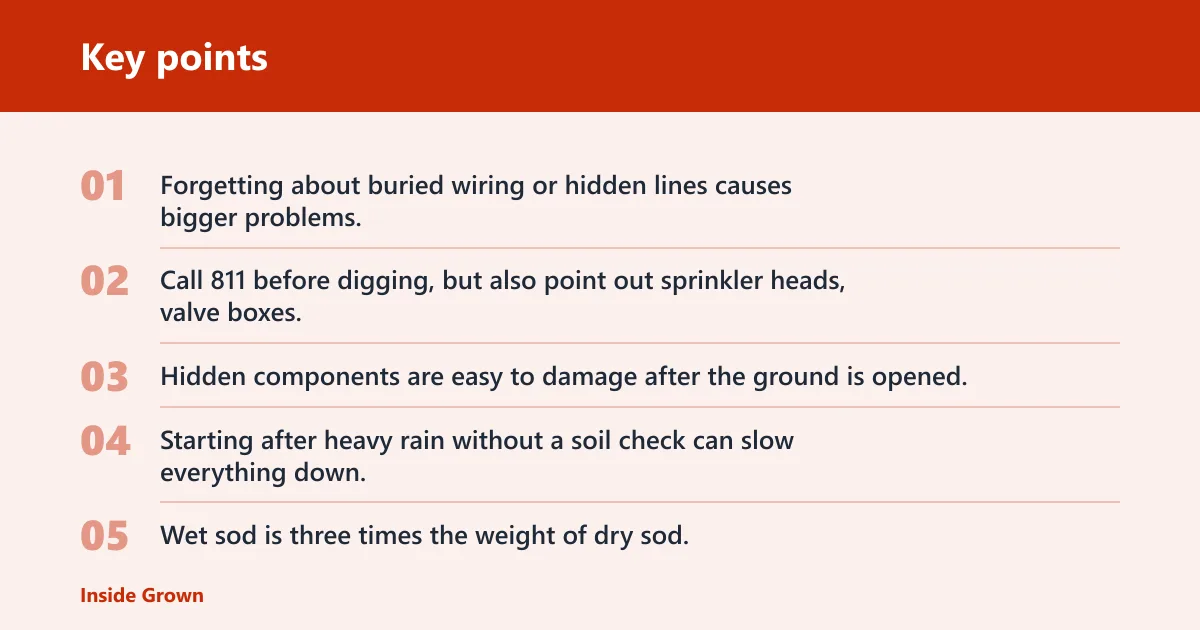
Forgetting about buried wiring or hidden lines causes bigger problems. Call 811 before digging, but also point out sprinkler heads, valve boxes, pet fence lines, and mosquito system parts that sit close to the surface. Hidden components are easy to damage after the ground is opened.
Starting after heavy rain without a soil check can slow everything down. Wet sod is three times the weight of dry sod, and saturated ground can change how quickly a crew can dig or grade. If the yard is soft, ask whether the schedule should shift.
Keeping pets outside or leaving gates locked blocks the work. Keep animals inside or contained away from the project area, and make sure the crew can reach the side yard, backyard, and staging spots without stopping to hunt for keys or open paths.
If a gate or side path is too narrow for the planned work, clear an extra 3 feet of width before the crew arrives, then recheck that the route stays open all the way to the work zone.
Frequently asked questions
How do I prepare my yard for landscaping services?
Clear the work zone, mow overgrown areas, stop irrigation before digging, and mark buried utilities before the crew arrives. Then open gates, keep pets contained, and tell the landscaper about drainage, compacted spots, or hidden components that could slow the job.
What should I remove before landscapers arrive?
Move furniture, toys, pots, tools, loose debris, and anything valuable out of the work area. Also clear access paths, side gates, and staging areas so the crew can move materials without stopping to shift personal items or work around narrow openings.
How far in advance should I stop watering before landscaping work?
Stop watering at least 3 days before work in traveled and landscaped areas. That gives the soil time to firm up and helps avoid soft ground, especially if sod or excavation is part of the job. Confirm whether any beds need a different schedule before the crew arrives.
Do I need to mow before a landscaping installation?
Yes, if the area is overgrown. Mow or trim 24 to 48 hours before service so the crew is not spending time cutting back grass and weeds. The crew may not bring mowers or trimmers, so this is usually a homeowner task.
Should I mark utilities before landscaping services?
Yes. Call 811 about a week before installation so gas, electric, cable, and internet lines can be marked. Allow several business days for marking, then show the crew where the marks are before any digging starts.
What if my yard has pets, fences, or mosquito systems?
Keep pets out of the work zone, and remove or flag buried dog fence lines if they cross the area. Drain or remove mosquito system parts in the project zone, and mark any shallow buried components so they are not punctured during digging or grading.