How Is Transported Soil Different From Residual Soil?
Soil forms the foundation of terrestrial life, shaping everything from agriculture to construction. Among the many types of soil, transported soil and residual soil stand out due to their distinct origins and characteristics. Understanding the differences between these two soil types is crucial for professionals in geology, engineering, environmental science, and agriculture. The properties of soil impact crop yields, building stability, and even the success of environmental restoration projects. As global demand for sustainable land management increases, so does the importance of soil classification and behavior.
This article dives deep into the scientific and practical differences between transported and residual soils. We will explore their formation processes, properties, distribution, and real-world implications. You’ll discover why engineers, farmers, and environmentalists must distinguish between these soil types, supported by data, case studies, and expert insights.
Whether you’re a student, a professional, or simply curious, this comprehensive guide will equip you with the knowledge to make informed decisions about soil use and management.
Key Takeaways
- Transported soil is moved from its place of origin by natural forces, while residual soil remains at the site where its parent rock weathered.
- The two soil types differ in physical properties, chemical composition, and distribution patterns.
- Engineering and agricultural applications require careful evaluation of soil type for optimal results.
- Transported soils are more widespread globally, while residual soils dominate in certain climatic regions.
- Real-world case studies illustrate the impact of soil type on construction safety and crop productivity.
- Soil management strategies must account for the unique challenges and benefits of each soil type.
Credit: www.chegg.com
Understanding Soil Formation: Origins And Processes
The formation of soil is a complex interplay of physical, chemical, and biological processes. At the heart of this process lies the distinction between transported soil and residual soil.
The Basics Of Soil Genesis
Soil genesis begins with the weathering of parent rock. Weathering can be mechanical (physical breakdown), chemical (alteration of minerals), or biological (action by organisms). Over time, these processes create smaller particles that combine with organic matter to form soil.
For example, mechanical weathering might involve freeze-thaw cycles that fracture rocks, while chemical weathering could see feldspar minerals transforming into clay through hydrolysis. Biological weathering includes the action of plant roots breaking apart rocks and microorganisms altering mineral compositions. The interplay of these forces is influenced by climate, topography, and the presence of living organisms, leading to the diverse soil types observed worldwide.
Residual Soil: Born And Raised In Place
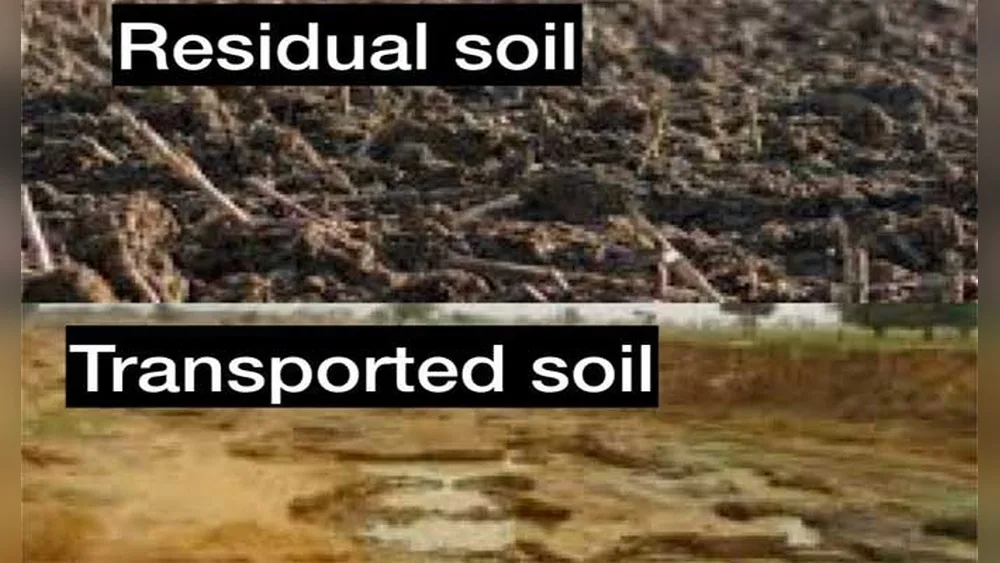
Residual soil is formed directly from the weathering of underlying bedrock. It remains at the site where the parent material breaks down, gradually accumulating above the rock. The composition of residual soil closely mirrors that of the parent rock, with minimal influence from external materials.
Key characteristics include:
- Stable location: Residual soil does not move from its origin, making it highly representative of the local geological context.
- Deep profile: Often exhibits a well-defined horizon structure, including A, B, and C horizons, which indicate stages of weathering and organic enrichment.
- Mineral content: Reflects the local geology, so if the parent rock is rich in quartz, the soil will tend to be sandy and siliceous; if rich in feldspar, clay content will be higher.
Residual soils also tend to develop over long periods, resulting in mature profiles with distinct layers. They are commonly seen in regions with stable land surfaces and minimal disturbance from external forces.
Transported Soil: Journey Of Movement
Transported soil originates elsewhere and is relocated by agents such as water, wind, ice, or gravity. This movement alters its composition and structure, often mixing materials from various sources.
Transported soil types include:
- Alluvial soil: Moved by rivers and streams, commonly found in floodplains and deltas. These soils are often rich in silt and nutrients, ideal for crops.
- Aeolian soil: Transported by wind, such as the loess deposits in China, which are highly fertile but prone to erosion.
- Glacial soil: Carried by glaciers, containing a mix of clay, sand, gravel, and boulders. These soils are found in moraines and glacial valleys.
- Colluvial soil: Shifted by gravity, often downhill, typically seen at the base of slopes as a result of landslides, soil creep, or mass wasting.
The diversity in parent materials and transportation methods leads to a wide range of soil properties. Transported soils may also carry organic material, pollutants, or minerals from distant sources, creating a unique mixture that impacts their fertility and engineering properties.
Agents Of Soil Transportation
The main agents responsible for soil movement are:
- Water: Rivers, floods, and rainfall can move enormous quantities of soil, forming alluvial plains, river terraces, and deltas. Waterborne transportation leads to sorting, with finer particles carried further and coarser ones deposited earlier.
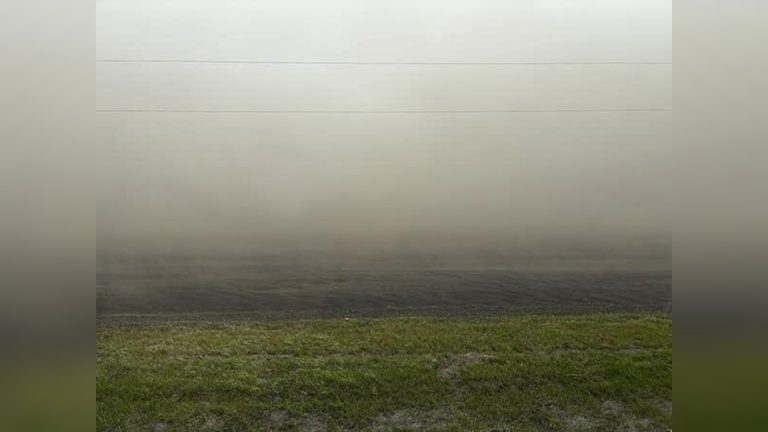
- Wind: Particularly in arid regions, wind can create vast deposits of sand dunes (as in the Sahara Desert) or loess plateaus (as in northern China and Europe).
- Ice: Glaciers during the Ice Age and in polar environments act as conveyer belts, transporting a mix of soil and rock across large distances. When glaciers melt, they deposit unsorted material known as till.
- Gravity: Landslides and surface creep drive colluvial soil movement, often resulting in accumulation at the base of hills or mountains.
Each agent imparts unique physical and chemical characteristics to the soil, affecting its behavior and suitability for various uses. For example, water-transported soils are often well-sorted and fertile, while glacial soils can be poorly sorted and variable in fertility.

Credit: www.youtube.com
Comparative Analysis: Properties Of Transported Vs Residual Soil
The physical and chemical properties of soil significantly influence its performance in agriculture, construction, and environmental projects. This section compares key aspects of transported and residual soils.
Physical Properties
Physical properties determine how soil interacts with water, air, and biological life. These include:
- Texture: Particle size distribution (sand, silt, clay) directly influences water retention, aeration, and root penetration. Residual soils, such as those developed from granite, tend to be sandy, while those from basalt are often clay-rich. Transported soils can exhibit a patchwork of textures, depending on the source and transportation method.
- Structure: Arrangement of soil particles affects porosity and permeability. Residual soils often have granular or blocky structures, while transported soils may have platy or massive structures, especially when deposited rapidly.
- Porosity: Volume of pore spaces determines the soil’s capacity to hold air and water. Residual soils often have moderate to high porosity due to gradual weathering, whereas transported soils may have variable porosity depending on deposition.
- Permeability: Ability to transmit water is crucial for both agriculture and engineering. Residual soils typically allow water to infiltrate slowly and evenly, while transported soils, especially sandy alluvial soils, may drain quickly, increasing irrigation needs.
Residual soils tend to have:
- Uniform texture: Reflecting the parent rock, which ensures predictable behavior for engineering and agricultural purposes.
- Well-developed horizons: Due to prolonged weathering and minimal disturbance, allowing for clear differentiation of organic, mineral, and transition layers.
- Stable structure: Less disturbed by external factors, making them more reliable for construction and less prone to sudden changes in behavior.
Transported soils exhibit:
- Variable texture: Mixing of materials from different origins can result in unpredictable water retention and nutrient availability.
- Irregular profiles: Depending on transportation method, often lacking well-defined horizons, which complicates soil management.
- Less stability: Higher susceptibility to erosion and instability, especially in areas prone to flooding or wind.
Chemical Properties
Chemical properties affect nutrient availability and soil fertility.
- Mineral composition: Derived from parent material, influencing the presence of essential nutrients like potassium, calcium, and magnesium.
- PH levels: Influenced by weathering and organic activity. Residual soils often have acidic pH due to prolonged leaching, while transported soils can vary widely based on their source materials.
- Cation exchange capacity (CEC): Determines nutrient retention. Residual soils may have low CEC if weathered extensively, while transported soils (especially those rich in clay or organic matter) may have higher CEC.
Residual soils often have:
- Consistent mineral content: Matching local geology, which allows for targeted soil amendments based on known deficiencies.
- Lower fertility: In some cases, due to leaching of nutrients over time, especially in tropical climates with intense rainfall.
- Distinct chemical horizons: Reflecting ongoing weathering, with clear differentiation between organic-rich topsoil and mineral-rich subsoil.
Transported soils usually possess:
- Mixed mineral content: From various sources, leading to a broader range of nutrients and micronutrients.
- Higher fertility: Especially alluvial soils, which are continually replenished by river deposits and often support high-intensity agriculture.
- Homogenized chemical profile: Due to mixing, which can be beneficial or problematic depending on the intended use.
Mechanical Behavior
Mechanical properties are critical for engineering applications.
- Shear strength: Indicates resistance to sliding or failure. Residual soils, formed over stable bedrock, typically offer higher shear strength, making them suitable for foundations and embankments.
- Compressibility: Measures how much soil will compact under load. Residual soils are less compressible, reducing settlement risks. Transported soils, especially those with high clay or organic content, may compress significantly, affecting structural stability.
- Bearing capacity: The ability of soil to support structures. Residual soils generally have better bearing capacity, while transported soils often require reinforcement or special engineering solutions.
Residual soils:
- Higher shear strength
- Lower compressibility
- Better bearing capacity
Transported soils:
- Variable strength
- Higher compressibility
- Lower bearing capacity
These differences are particularly important in areas prone to earthquakes, flooding, or landslides, as soil type directly influences the safety and longevity of infrastructure.
Data-driven Comparison Table
| Property | Residual Soil | Transported Soil |
|---|---|---|
| Origin | Weathered in place | Moved from elsewhere |
| Texture | Uniform, reflects parent rock | Variable, mixed sources |
| Structure | Well-developed horizons | Irregular profile |
| Fertility | Often lower, localized | Often higher, especially alluvial |
| Shear Strength | High | Variable |
| Distribution | Localized | Widespread |
Real-world Example: Residual Soil In The Piedmont Region
The Piedmont region of the eastern United States is dominated by residual soils formed from weathered granite and gneiss. These soils are highly stable, supporting dense forests and sustainable agriculture, but require careful management due to their lower fertility and susceptibility to leaching.
In construction, buildings and roads benefit from the predictable mechanical behavior of Piedmont soils, which reduce risks of foundation failure. However, the soils’ acidic nature means that farmers must regularly apply lime and fertilizers to maintain productivity. The mature soil profile also supports diverse ecosystems, providing habitat for numerous plant and animal species.
Real-world Example: Alluvial Soil In The Ganges Basin
The Ganges Basin in India is characterized by extensive alluvial soils deposited by river systems. These transported soils are rich in nutrients, making the region one of the most productive agricultural zones globally. However, their variable structure can pose challenges for infrastructure development.
Farmers take advantage of the basin’s fertile soils to grow rice, wheat, and sugarcane, benefitting from the replenishment of minerals during annual flooding. Engineers, on the other hand, must contend with the high water table and variable bearing capacity when constructing roads and buildings.
To mitigate risks, deep foundations and soil stabilization techniques are often employed.

Credit: www.civilconcept.com
Distribution And Occurrence: Where Are These Soils Found?
Understanding the geographic distribution of soil types is essential for environmental planning and resource management.
Global Distribution Patterns
Residual soils are most common in:
- Tropical and subtropical regions: Intense weathering due to high rainfall and temperature, as seen in Brazil, Africa, and Southeast Asia.
- Stable continental interiors: Limited disturbance allows residual soils to develop deep profiles, such as in parts of Australia and North America.
Transported soils are found:
- Near rivers, lakes, and coastlines: Alluvial deposits dominate floodplains and deltas, supporting agriculture and urban settlements.
- Deserts and semi-arid regions: Aeolian soils are prevalent, forming vast sand dunes and loess plateaus.
- Mountainous areas: Glacial and colluvial soils accumulate in valleys and at the base of slopes, often mixing materials from multiple sources.
Transported soils tend to cover larger areas, especially in regions with active geological processes or where rivers and glaciers have reshaped the landscape.
Environmental Factors Influencing Distribution
- Climate: High rainfall accelerates weathering, favoring residual soil formation. Dry climates promote wind transportation, creating extensive aeolian soils.
- Topography: Steep slopes promote transportation by gravity, resulting in colluvial soils. Flat areas near rivers are more likely to host alluvial soils.
- Vegetation: Dense cover protects residual soils from erosion and helps maintain soil stability. Sparse vegetation, as in deserts, increases vulnerability to wind and water erosion.
Human activities, such as deforestation and urbanization, also influence soil distribution by increasing rates of erosion and altering natural transportation pathways.
Case Study: Residual Soil In Brazil
Brazil’s Cerrado region features deep residual soils formed from weathered sandstone. These soils support unique savanna ecosystems but require fertilization for intensive agriculture. Their distribution is linked to the region’s climate and geology.
The Cerrado is a biodiversity hotspot, with residual soils supporting native grasses and shrubs adapted to nutrient-poor conditions. Farmers cultivating soybeans and corn must invest in soil amendments, including lime and phosphates, to overcome acidity and low fertility. Conservation efforts focus on balancing agricultural productivity with preservation of native vegetation and soil health.
Case Study: Glacial Transported Soil In North America
During the last Ice Age, glaciers transported massive amounts of soil across North America. Today, glacial soils are prevalent in the Midwest and Northeast, offering fertile land for agriculture but presenting challenges for construction due to their mixed composition.
In states like Minnesota and Wisconsin, glacial till supports crops such as corn and soybeans. However, the presence of boulders, gravel, and clay complicates excavation and foundation design. Engineers must conduct detailed soil surveys and use specialized equipment to ensure stability and safety.
Distribution Table
| Soil Type | Primary Regions | Key Environmental Factors |
|---|---|---|
| Residual Soil | Tropics, continental interiors | High rainfall, stable geology |
| Alluvial Transported Soil | River valleys, floodplains | Water movement, periodic flooding |
| Aeolian Transported Soil | Deserts, semi-arid regions | Wind, sparse vegetation |
| Glacial Transported Soil | Temperate and polar zones | Ice movement, cold climate |
| Colluvial Transported Soil | Mountainous slopes | Gravity, slope instability |
Soil Classification And Identification Techniques
Correctly identifying soil type is essential for land management, construction, and scientific research. Professionals use a combination of laboratory and field techniques to differentiate transported and residual soils.
Field Identification
Key indicators in the field include:
- Soil profile observation: Residual soils show gradual transitions from surface to parent rock, with clear horizon development. Transported soils often lack this continuity, exhibiting abrupt changes or mixed layers.
- Texture and color: Residual soils are more uniform in texture and color, consistent with underlying bedrock. Transported soils display variable colors and textures, reflecting their mixed origin.
- Presence of foreign materials: Transported soils may contain pebbles, gravel, or organic material not matching local geology, signaling movement from distant sources.
Field identification can also utilize simple tools such as augers, soil pits, and color charts to quickly assess soil type and suitability.
Laboratory Analysis
Common tests include:
- Particle size distribution: Determines texture and predicts water retention and drainage characteristics.
- Mineralogical analysis: Identifies parent material through techniques like X-ray diffraction and microscopy, offering insights into soil genesis.
- Chemical assays: Assesses fertility, pH, and nutrient content, guiding agricultural and environmental management.
Laboratory analysis is essential for complex projects, such as large-scale construction or environmental remediation, where precise soil data is required.
Remote Sensing And Gis
Modern technology aids soil classification:
- Satellite imagery: Detects large-scale soil patterns, allowing for rapid assessment of soil distribution and changes over time.
- GIS mapping: Combines environmental data, including topography, climate, and vegetation, to produce detailed soil maps used in agriculture, urban planning, and conservation.
Remote sensing is particularly valuable for inaccessible or large regions, helping professionals make informed decisions without extensive fieldwork.
Example: Soil Survey In California
California’s Soil Survey Program utilizes field sampling, laboratory tests, and GIS to distinguish between alluvial transported soils in the Central Valley and residual soils in the Sierra Nevada foothills. This information guides agricultural planning and urban development.
For instance, the Central Valley’s fertile alluvial soils are mapped for optimal crop placement, while the Sierra Nevada’s residual soils are assessed for suitability in vineyard development and erosion control. The integration of field, laboratory, and digital tools ensures comprehensive and accurate soil classification.
Comparison Table: Identification Methods
| Method | Residual Soil | Transported Soil | Applications |
|---|---|---|---|
| Field Profile Analysis | Gradual horizon transition | Abrupt changes, mixed materials | Quick site assessment |
| Particle Size Distribution | Uniform | Variable | Agriculture, engineering |
| Mineralogical Testing | Matches local bedrock | Mixed sources | Geology, soil science |
| Remote Sensing | Detects stable patterns | Identifies movement zones | Land use planning |
Applications And Implications In Agriculture And Engineering
The choice between residual and transported soils has profound consequences for agriculture, construction, and environmental management.
Agricultural Considerations
- Residual soil: Often requires amendment (fertilizers, lime) due to lower fertility. For example, crops like maize and soybeans may struggle in highly leached tropical soils unless supplemented with essential nutrients.
- Transported soil: Alluvial types are prized for crop production, but may need erosion control. Loess soils, while fertile, are highly vulnerable to wind and water erosion, requiring protective measures such as cover crops and windbreaks.
Key impacts:
- Crop yields: Transported soils often outperform residual soils, especially in regions with annual flooding or river deposits. Floodplain agriculture in Egypt, Bangladesh, and China relies on the replenishment of nutrients through sediment deposition.
- Irrigation needs: Residual soils may drain faster, requiring more irrigation, while transported soils, particularly those with high clay content, may retain water but risk waterlogging.
- Soil conservation: Transported soils are more prone to erosion, necessitating practices like terracing, mulching, and contour plowing to maintain productivity.
Engineering Applications
- Residual soils: Preferred for foundations due to high stability. Large infrastructure projects, such as skyscrapers and bridges, often seek out sites with residual soils to minimize risks of settlement and instability.
- Transported soils: Require reinforcement or stabilization for construction. Techniques include soil compaction, geotextile installation, and chemical stabilization to improve bearing capacity.
Critical factors:
- Bearing capacity: Residual soils support heavier loads, reducing costs for deep foundations and pilings.
- Slope stability: Transported soils pose landslide risks, especially on steep slopes or in areas with high rainfall. Engineering solutions include retaining walls, drainage systems, and vegetation planting.
- Road construction: Alluvial soils need compaction and drainage measures to prevent rutting, potholes, and subsidence.
Environmental Management
- Residual soils: Support native vegetation, ideal for restoration projects such as reforestation and wetland creation. Their stable profiles allow for long-term sustainability of ecosystems.
- Transported soils: May require remediation due to contamination or instability. For example, urban expansion onto alluvial soils necessitates soil testing and treatment to ensure safe development.
Environmental managers must tailor strategies to the unique challenges posed by each soil type, balancing productivity with sustainability.
Case Study: Construction In Singapore
Singapore’s rapid urbanization involves building on both residual and transported soils. Engineers use soil surveys to assess bearing capacity and recommend pile foundations in areas with deep alluvial soils. This approach minimizes settlement and structural risk (Wikipedia).
Urban planners also consider soil permeability and drainage to prevent flooding and enhance the resilience of infrastructure. By integrating soil data with architectural design, Singapore has managed to develop high-density urban spaces safely and efficiently.
Case Study: Agriculture In The Mississippi Delta
The Mississippi Delta is renowned for its fertile alluvial soils. Farmers invest in erosion control and irrigation systems to maximize yields while preventing nutrient loss. The mixed parent materials provide rich crop diversity (USDA).
The region supports crops like cotton, rice, and soybeans, with periodic flooding replenishing soil nutrients. However, intensive agriculture has led to concerns about sustainability, prompting adoption of conservation tillage and cover cropping.
Environmental Impact And Soil Management Strategies
Soil management is central to sustainability. The properties of transported and residual soils influence erosion rates, nutrient cycling, and ecosystem health.
Erosion And Conservation
- Transported soils: High erosion risk due to loose structure. River valleys and loess plateaus frequently require erosion control measures to maintain soil integrity.
- Residual soils: Lower risk, but vulnerable in steep areas. Deforestation and land clearing can destabilize slopes, triggering landslides and soil loss.
Conservation practices:
- Contour plowing: Reduces water runoff and soil loss on slopes.
- Cover cropping: Protects soil from wind and water erosion, improves organic matter.
- Terracing: Converts steep slopes into level steps, decreasing erosion and increasing arable land.
These practices are vital in regions with high rainfall or where soil movement threatens agricultural productivity and infrastructure.
Nutrient Management
- Residual soil: Often depleted, requiring fertilizer. Farmers must regularly test soil and apply nutrients to sustain yields.
- Transported soil: May be rich, but nutrients can leach quickly, especially in sandy alluvial soils or areas with heavy rainfall.
Best practices:
- Soil testing: Monitors nutrient levels and pH, informing targeted amendments.
- Targeted fertilization: Matches fertilizer types and amounts to soil needs, minimizing waste and environmental impact.
- Organic amendments: Compost and manure improve soil structure and fertility, supporting sustainable agriculture.
Effective nutrient management enhances crop yields, preserves soil health, and reduces environmental pollution.
Reclamation And Restoration
- Residual soils are favored for reforestation and wetland restoration due to their stability and compatibility with native vegetation.
- Transported soils need stabilization and remediation before restoration, including erosion control and removal of contaminants (NRCS).
Restoration projects often use native plants and soil amendments to rebuild soil structure and promote biodiversity.
Case Study: Erosion Control In China’s Loess Plateau
China’s Loess Plateau is dominated by aeolian transported soils. Aggressive erosion led to the implementation of terracing, afforestation, and sustainable farming practices, reducing soil loss by over 50% in some areas (ScienceDirect).
These interventions have transformed the landscape, improving food security and ecological health. The plateau now supports diverse crops and forests, demonstrating the power of targeted soil management.
Urban Soil Management
Urban planners in New York City evaluate soil type when designing parks and green spaces. Transported soils require more maintenance and amendments, while residual soils offer stable bases for tree planting (NYC Parks).
Proper soil selection and treatment ensure healthy vegetation, prevent erosion, and support recreational and ecological functions in urban environments.
Frequently Asked Questions
What Is The Main Difference Between Transported And Residual Soil?
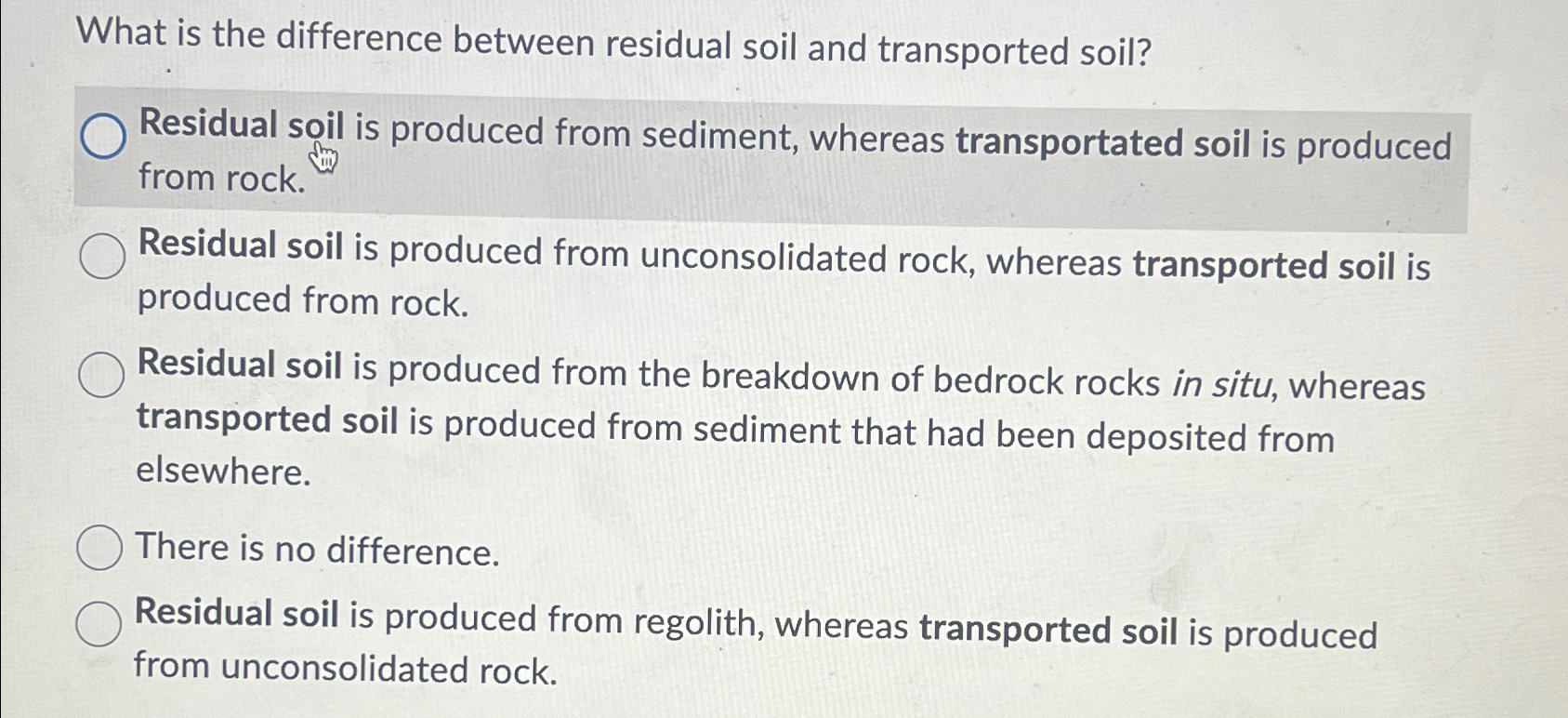
The primary distinction is origin. Residual soil forms directly from weathered parent rock at its original location, while transported soil is moved from its place of origin by natural forces such as water, wind, ice, or gravity. This difference affects their properties and suitability for various uses.
How Can You Identify Residual Soil In The Field?
Residual soil can be recognized by its gradual transition from the surface to the underlying bedrock, uniform texture, and mineral composition matching the local geology. There is usually a well-developed soil profile with distinct horizons.
Why Are Transported Soils Often More Fertile Than Residual Soils?
Transported soils, especially alluvial soils, are more fertile because they receive nutrients and minerals from multiple sources during their movement. This mixing enhances their nutrient profile, making them ideal for agriculture.
What Engineering Challenges Are Associated With Transported Soils?
Transported soils may have variable strength, higher compressibility, and lower bearing capacity. These factors increase risks of settlement, landslides, and instability, requiring special foundation designs and soil stabilization techniques.
Can Residual Soil Support Intensive Agriculture?
While residual soil can support agriculture, it often requires fertilization and soil amendments due to lower natural fertility. Intensive agriculture is feasible, but yields may be lower compared to transported soils unless proper management practices are applied.
References And Further Reading
- Wikipedia: Soil
- USGS Soil Basics
- NRCS Soil Science
- ScienceDirect: Loess Plateau Erosion
- USDA: Farming
- NYC Parks
The distinction between transported and residual soils is more than academic; it shapes the way we build, farm, and conserve our environment. By understanding their origins, properties, and impacts, professionals and policymakers can develop strategies that maximize productivity and sustainability.
Whether designing a skyscraper, planning a farm, or restoring an ecosystem, soil type is a critical factor that must not be overlooked.