Which Plant Hormone Is Responsible for Phototropism?
Plants, unlike animals, cannot move from place to place, yet they display remarkable adaptability by responding to their environment with subtle but powerful movements. One of the most fascinating of these responses is phototropism—the ability of plants to grow toward light. Imagine a sunflower field, all blooms tilted toward the morning sun, or a houseplant bending gracefully toward a window. These movements are not random; they are orchestrated by an intricate network of plant hormones and cellular signaling pathways. But which hormone is truly responsible for this elegant dance toward the light?
Understanding phototropism is not only a botanical curiosity but also a gateway to innovations in agriculture, horticulture, and even space biology. By decoding the hormonal mechanisms behind this response, scientists and growers can optimize plant growth, improve yields, and engineer crops suited for challenging environments. This article dives deep into the science of phototropism, focusing on the key plant hormone that triggers this phenomenon, its discovery, underlying mechanisms, and practical implications for the future of plant science.
Key Takeaways
- Auxin is the primary plant hormone responsible for phototropism, directing differential cell growth in response to light.
- Phototropism is crucial for maximizing photosynthesis and plant survival, affecting both wild and cultivated species.
- Understanding phototropism’s hormonal control has led to advances in agriculture, crop engineering, and indoor plant growth.
- Other hormones and environmental factors can modulate or interact with auxin’s effects, adding complexity to plant movement.
- Real-world applications include crop optimization, vertical farming, and research into plant behavior in space environments.
- Recent genetic and molecular research is uncovering deeper layers of control and interaction in the phototropic response.
What Is Phototropism?
Defining Phototropism
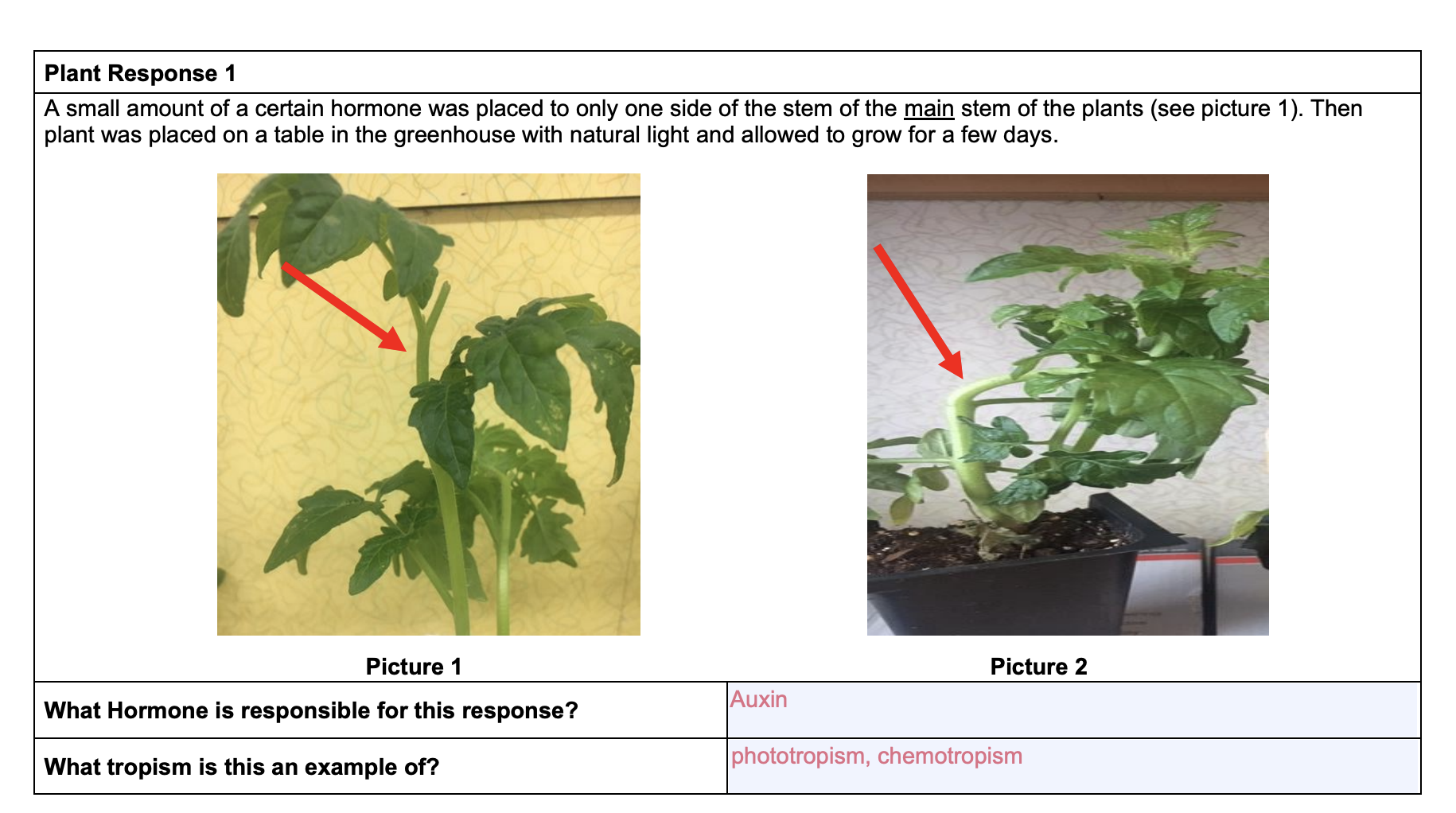
Phototropism is the growth response of a plant in reaction to light direction. The term comes from the Greek words “photo” (light) and “tropos” (turning), and describes the way plant organs, especially stems and leaves, bend toward (positive phototropism) or away from (negative phototropism) light sources. While stems typically exhibit positive phototropism, roots may show negative phototropism, growing away from light.
Phototropism is not just a single, uniform process; it can vary greatly depending on the intensity, duration, and angle of the incoming light. For example, in dense forests, young seedlings must rapidly elongate toward a small gap in the canopy to survive, while in open fields, plants may only need to make subtle adjustments to leaf angles.
The phenomenon can also be observed in the movement of chloroplasts within cells, a process called chloroplast photorelocation, which ensures optimal light capture and prevents damage from excessive sunlight.
Biological Significance
This adaptive movement ensures that photosynthetic surfaces—mainly leaves—capture maximum sunlight, enhancing the plant’s ability to convert light energy into chemical energy. Phototropism increases survival chances, promotes efficient growth, and shapes the architecture of individual plants and entire ecosystems.
The importance of phototropism goes beyond individual plants. In natural ecosystems, phototropism influences plant competition, vertical stratification in forests, and the structure of plant communities. In agriculture, phototropism underpins practices such as crop spacing and row orientation, which are critical for maximizing light interception and yield.
Plants unable to perform phototropism effectively are often outcompeted, especially under shaded or crowded conditions.
Phototropism In Nature
- Seedlings: Rapidly bend toward light after germination to maximize exposure. This is vital for seedlings emerging from soil or leaf litter, where light is scarce.
- Mature Plants: Adjust leaf and stem orientation throughout the day. For example, leaves may track the sun (solar tracking) to maintain optimal light capture.
- Climbing Plants: Use phototropism, combined with other tropisms like thigmotropism, to reach optimal light positions, allowing them to climb toward sunlight in dense vegetation.
In aquatic environments, some submerged plants and algae also display phototropic responses, adjusting their position or growth to maximize access to light filtered through water. This adaptability demonstrates the universality and evolutionary importance of phototropism across plant lineages.
Historical Perspective
The phenomenon of phototropism was observed as early as the 19th century, with Charles Darwin and his son Francis conducting classic experiments that set the stage for hormone discovery. Their work demonstrated that the tip of a coleoptile (a protective sheath in grass seedlings) senses light and communicates with lower regions to induce bending.
Darwin’s meticulous observations led him to hypothesize the existence of a mobile signal, which was later identified as a plant hormone. This foundational work not only inspired generations of plant scientists but also established the basis for the emerging field of plant physiology.
The subsequent discovery and isolation of auxin revolutionized our understanding of plant growth and adaptation.
The Plant Hormone Behind Phototropism: Auxin
Auxin: The Master Regulator
The central hormone responsible for phototropism is auxin—specifically, indole-3-acetic acid (IAA). Auxin is a small, mobile molecule that regulates growth by promoting cell elongation in plant shoots and is involved in a multitude of developmental processes.
Auxin is sometimes called the “growth hormone” of plants because its influence extends to virtually every aspect of plant development, including root formation, fruit ripening, vascular tissue differentiation, and responses to gravity and touch. However, its role in phototropism is particularly well-characterized and has served as a model for understanding hormone-driven plant movements.
Mechanism Of Auxin Action In Phototropism
- Light Perception: Photoreceptors in the plant tip detect directional light. These photoreceptors are most sensitive to blue light, which is abundant in natural sunlight.
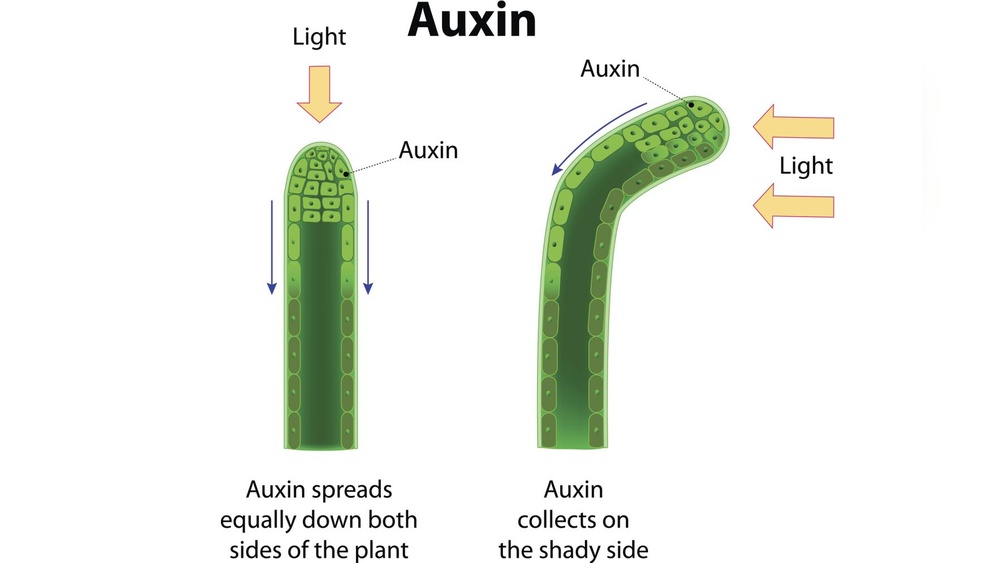
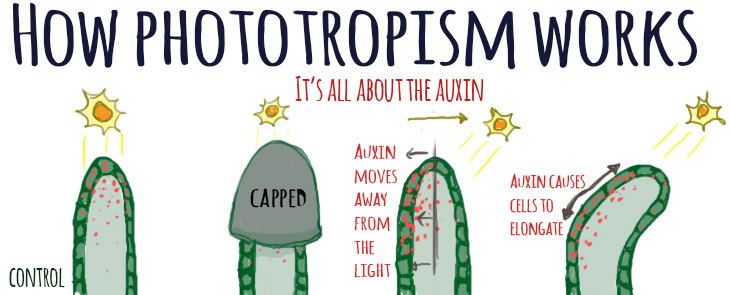
- Auxin Redistribution: Light causes auxin to be redistributed from the illuminated side to the shaded side of the stem.
- Differential Growth: Higher auxin concentration on the shaded side stimulates cell elongation, causing the stem to bend toward the light.
This orchestrated movement of auxin is not a passive process; it relies on active transport mechanisms and the coordinated action of multiple proteins and signaling molecules. The redistribution creates a gradient of auxin, which is translated into physical growth differences between the two sides of the stem.
Key Experiments
- Darwin’s Coleoptile Experiments: Showed that removing or covering the tip of the seedling prevented bending toward light, proving the tip’s role in sensing light and initiating the response.
- Boysen-Jensen’s Agar Block Experiment: Demonstrated that a chemical signal (later identified as auxin) passed from tip to stem. By inserting a gelatin barrier, he showed that the signal could diffuse through permeable substances.
- Went’s Avena Test: Placed agar blocks containing auxin on decapitated seedlings, inducing curvature, confirming auxin’s role. The degree of curvature was directly proportional to the amount of auxin present, providing quantitative evidence for auxin’s action.
These experiments collectively built the foundation for the modern understanding of plant hormones and their movement, demonstrating that plants use internal chemical messengers to coordinate complex behaviors.
Chemical Nature Of Auxin
Auxin exists in several forms, but indole-3-acetic acid (IAA) is the most abundant and physiologically relevant in natural settings. It is synthesized in young plant tissues, especially shoot tips.
Auxin’s structure—a simple indole ring linked to an acetic acid side chain—belies its diverse and potent effects. In addition to IAA, plants may produce or respond to related compounds, both natural and synthetic, which can mimic or modify auxin activity.
| Auxin Type | Chemical Structure | Biological Role |
|---|---|---|
| Indole-3-acetic acid (IAA) | Indole ring + acetic acid side chain | Primary natural auxin, regulates cell elongation |
| Indole-3-butyric acid (IBA) | Indole ring + butyric acid side chain | Rooting hormone, synthetic and natural roles |
| 1-Naphthaleneacetic acid (NAA) | Naphthalene ring + acetic acid side chain | Synthetic, used in horticulture |
Auxin Transport And Distribution
Auxin is actively transported from cell to cell via specialized carrier proteins, including PIN and AUX/LAX transporters. This directional, or polar, transport is vital for establishing the auxin gradient during phototropism.
- PIN proteins: Mediate efflux (outward movement) of auxin from cells, determining the direction of auxin flow.
- AUX/LAX proteins: Mediate influx (inward movement) of auxin into cells, helping to fine-tune auxin distribution.
This polar transport system enables plants to rapidly and dynamically adjust auxin gradients in response to changing environmental cues. The localization and activity of these transporters are often regulated by the same light signals that initiate phototropism, creating a feedback loop that enhances the plant’s responsiveness.
Supporting Evidence
Genetic studies with mutants defective in auxin synthesis or transport show reduced or abnormal phototropic responses, confirming the hormone’s central role. For instance, *Arabidopsis thaliana* mutants lacking functional PIN proteins fail to bend toward light.
Mutants in auxin biosynthesis genes, such as YUCCA or TAA1, also display altered or absent phototropic responses. These findings underscore the necessity of both proper auxin production and transport for normal plant movement. Modern molecular tools allow for the visualization of auxin gradients in real time, providing direct evidence of their formation during phototropic bending.
How Auxin Triggers Plant Bending Toward Light
Cellular And Molecular Mechanisms
Auxin’s effect on phototropism can be traced to its action on the cell wall. On the shaded side of the stem, auxin stimulates enzymes known as expansins and promotes proton pumping into the cell wall, loosening its structure and allowing the cell to expand.
Auxin activates proton pumps (H+-ATPases) in the plasma membrane, acidifying the cell wall (apoplast). This acidification activates expansins and other cell wall-modifying enzymes, which disrupt hydrogen bonds between cellulose fibers. The resulting increase in wall plasticity enables cells to elongate in response to the internal turgor pressure.
Step-by-step Process
- Light Sensing: Blue light is detected by phototropin receptors (phot1 and phot2), predominantly located in the plant tip.
- Signal Transduction: Activated phototropins trigger signaling cascades that alter auxin transport, involving kinases and other signaling proteins.
- Auxin Redistribution: Auxin is actively moved to the shaded side through regulated changes in PIN protein localization and activity.
- Cell Elongation: Auxin increases wall plasticity, leading to cell elongation on the shaded side.
- Curvature Formation: The stem bends toward the light due to asymmetric cell growth, a process that can be observed within hours in fast-growing seedlings.
This sequence exemplifies how environmental information is converted into a developmental response at the cellular and tissue level.
Phototropin Receptors
- Phototropin 1 (phot1): Main blue light receptor involved in phototropism. Mutants lacking phot1 have greatly reduced phototropic responses.
- Phototropin 2 (phot2): Redundant but essential for fine-tuning the response. In the absence of phot1, phot2 can partially compensate, but double mutants are almost completely phototropism-deficient.
Both photoreceptors undergo conformational changes upon blue light absorption, initiating the redistribution of auxin.
Gene Expression Changes
Auxin also induces the expression of genes involved in cell wall remodeling, further supporting differential growth. These include expansin and xyloglucan endotransglucosylase/hydrolase (XTH) genes.
In addition to cell wall-related genes, auxin regulates numerous transcription factors and signaling components that mediate growth responses. The rapid induction of these genes ensures that the plant can adapt its growth pattern within minutes to hours of light detection.
Real-world Example: Sunflower Tracking
Sunflowers (*Helianthus annuus*) exhibit heliotropism, a form of phototropism, where the flower heads track the sun from east to west during the day. This movement is regulated by auxin gradients and reversible cell elongation in the stem.
Heliotropism is most pronounced during the bud stage, allowing the developing inflorescence to maximize light absorption and, ultimately, seed production. As sunflowers mature, the heads usually become fixed facing east, which is thought to protect seeds from intense afternoon heat and further optimize reproductive success.

Other Plant Hormones And Factors Influencing Phototropism
Gibberellins And Cytokinins
While auxin is the primary hormone for phototropism, other hormones like gibberellins and cytokinins may modulate the response by influencing cell division and overall growth potential.
- Gibberellins: Promote stem elongation but do not direct curvature. They can enhance the magnitude of the phototropic response by increasing the capacity for cell expansion.
- Cytokinins: Stimulate cell division, possibly enhancing auxin effects. In some cases, they interact with auxin to regulate the balance between root and shoot growth.
The interplay between these hormones determines the overall growth rate and form of the plant, ensuring that phototropism is coordinated with other developmental processes.
Ethylene And Abscisic Acid
- Ethylene: Can antagonize auxin action, sometimes inhibiting elongation. High ethylene levels, often produced in response to stress or mechanical stimulation, can suppress phototropism by interfering with auxin signaling.
- Abscisic Acid (ABA): Generally involved in stress responses, can counteract auxin-induced growth. ABA levels rise during drought or other adverse conditions, prioritizing survival over growth and reducing phototropic responses.
Environmental Influences
- Light Quality: Blue light is most effective in inducing phototropism, while red and far-red light are less influential. This specificity is due to the absorption spectra of phototropin receptors.
- Gravity (Gravitropism): Interaction between phototropism and gravitropism can determine the final growth direction. For example, a seedling growing in the dark will follow gravity, but upon exposure to light, phototropism will gradually override gravitropic growth.
- Mechanical Stimuli: Touch and wind can modulate hormone levels and responsiveness. For instance, plants exposed to frequent mechanical stimulation may reduce their phototropic bending to avoid damage.
Case Study: Phototropism In Space
Experiments aboard the International Space Station have demonstrated that in microgravity, plants rely even more heavily on phototropism (and thus auxin signaling) to orient their growth, as gravity cues are absent (NASA).
These studies have revealed novel adaptations in auxin transport and sensitivity, offering insights into how plants might be engineered for growth in extraterrestrial environments. Such research is critical for future long-term space missions and extraterrestrial agriculture.
Experimental Evidence: Classic And Modern Approaches
Darwin And Boysen-jensen
The foundational experiments by Charles Darwin and Boysen-Jensen are still taught today for their elegant design and critical insights.
- Darwin’s Oat Seedling Experiment: Showed that the tip is the site of light perception.
- Boysen-Jensen’s Gelatin Block Test: Demonstrated that a chemical messenger (auxin) was responsible.
These early investigations used simple yet powerful manipulations—such as covering tips with opaque caps or inserting barriers—to dissect the components of the phototropic response.
Frits Went’s Avena Curvature Test
Frits Went’s experiments in the 1920s quantified the curvature caused by auxin and led to the isolation of IAA. By placing agar blocks containing auxin on decapitated coleoptiles, he showed that curvature was proportional to auxin concentration.
Went’s approach provided the first bioassay for auxin, allowing subsequent researchers to identify and characterize different auxin molecules and their effects on plant growth.
Modern Molecular Genetics
- Mutant Analysis: *Arabidopsis* mutants deficient in auxin transport (e.g., pin1, aux1) lack phototropic curvature. These mutants have been instrumental in identifying the specific genes and proteins involved in auxin movement.
- Reporter Genes: Use of auxin-responsive reporter constructs (e.g., DR5::GUS) visualizes auxin gradients in living plants. These tools have made it possible to directly observe the redistribution of auxin during phototropic responses.
Data Table: Key Phototropism Experiments
| Experiment | Researcher(s) | Year | Main Finding |
|---|---|---|---|
| Tip Removal | Charles Darwin | 1880 | Tip is site of light perception |
| Gelatin Block | Boysen-Jensen | 1913 | Chemical signal mediates bending |
| Agar Block Transfer | Frits Went | 1928 | Auxin causes curvature, can be quantified |
| Mutant Analysis | Modern researchers | 1990s–present | Genes for auxin transport are essential |
Technologies Used Today
- CRISPR/Cas9: Gene editing to study hormone function. Researchers can knock out or modify genes involved in auxin synthesis, transport, or signaling to elucidate their roles in phototropism.
- Live Imaging: Fluorescent markers track auxin movement. Advanced microscopy enables real-time visualization of hormone gradients and cellular responses.
- Omics Approaches: Transcriptomics and proteomics reveal downstream targets. Comprehensive datasets help unravel the complex gene networks activated during phototropic responses, offering new targets for crop improvement.
Real-world Applications Of Phototropism Research
Agriculture And Crop Improvement
Harnessing auxin’s role in phototropism allows for the optimization of plant architecture and light interception, leading to higher yields. Breeders select for traits that enhance phototropism to ensure crops grow upright and efficiently capture sunlight.
- Dense Plantings: Crops with strong phototropic responses compete better for light. In crowded fields, the ability to bend toward light can make the difference between success and failure.
- Vertical Farming: Artificial lighting can be used to steer plant growth via controlled phototropism. By adjusting the angle, intensity, and wavelength of lights, growers can shape plant morphology for maximum yield in limited space.
Phototropism research also informs the design of planting systems, such as intercropping and agroforestry, where light competition is a key consideration.
Horticulture And Urban Greening
Ornamental plants and indoor crops benefit from controlled phototropic growth. Understanding hormonal control helps in designing lighting systems that encourage desirable shapes and sizes.
- Houseplants: Rotating pots ensures even growth by redistributing auxin exposure, preventing lopsided development.
- Living Walls: Light placement influences vertical coverage and density. Strategic lighting can create lush, uniform green walls for aesthetic and environmental benefits.
Horticulturists use knowledge of phototropism to train and shape ornamental plants, creating attractive forms for landscapes and interiors.
Biotechnology And Genetic Engineering
- Gene Editing: Modify auxin pathways to create crops with customized growth habits. For instance, crops can be engineered to be more phototropically responsive, improving performance under low-light or artificial conditions.
- Synthetic Hormone Applications: Use of synthetic auxins to direct rooting or shoot growth. These applications are common in plant propagation and tissue culture, supporting the mass production of high-value crops.
Space Agriculture
With renewed interest in growing food in space, understanding phototropism and auxin signaling is pivotal. On the International Space Station, researchers manipulate light sources to guide plant orientation in the absence of gravity (Frontiers in Plant Science).
Successful cultivation of crops in space will depend on our ability to manage plant orientation and growth using light cues, ensuring efficient resource use and reliable food supplies for astronauts.
Case Study: Vertical Farming Success
A vertical farm in Singapore used blue LED lighting to enhance phototropism in lettuce, increasing yields by 20% and reducing uneven growth (Nature Scientific Reports). Auxin distribution was manipulated through light placement and timing.
The strategic use of blue light not only promoted uniform growth but also improved the nutritional quality and marketability of the produce. This example illustrates the direct economic and sustainability benefits of applying phototropism research to modern agriculture.
Comparisons: Phototropism Vs. Other Plant Tropisms
Plants respond to multiple environmental cues, not just light. Understanding the similarities and differences between phototropism and other tropisms is essential for comprehensive plant management.
Gravitropism
- Definition: Growth response to gravity (roots grow down, shoots grow up).
- Hormone Involved: Auxin plays a role, but distribution is opposite to phototropism in roots.
Gravitropism ensures that roots anchor the plant and access water and nutrients, while shoots reach for the light. The balance between phototropism and gravitropism is crucial during early seedling development.
Thigmotropism
- Definition: Growth in response to touch (e.g., tendrils wrapping around support).
- Hormones: Involves auxin, ethylene, and jasmonic acid.
Thigmotropism is essential for climbing plants, allowing them to secure support and reach sunlight in competitive environments.
Hydrotropism
- Definition: Growth toward moisture.
- Hormones: Auxin and abscisic acid are involved.
Hydrotropism helps roots find water, especially in arid or variable environments. The coordination of hydrotropism and phototropism ensures overall plant survival.
Table: Comparison Of Major Plant Tropisms
| Tropism | Stimulus | Main Hormone(s) | Typical Response |
|---|---|---|---|
| Phototropism | Light | Auxin | Shoots bend toward light |
| Gravitropism | Gravity | Auxin | Roots grow down, shoots grow up |
| Thigmotropism | Touch | Auxin, Ethylene | Tendrils coil around objects |
| Hydrotropism | Moisture | Auxin, ABA | Roots grow toward water |
Interaction Between Tropisms
When multiple stimuli are present, plants integrate signals. For example, a seedling growing in soil may balance phototropism and gravitropism to reach the surface and then orient toward the nearest light source.
This integration is not always straightforward; conflicting cues can lead to complex growth patterns or trade-offs, as seen in plants growing on slopes, in windy environments, or in heterogeneous soils. Sophisticated signaling networks and hormonal cross-talk enable plants to prioritize the most advantageous response for survival.
Recent Advances And Future Directions In Phototropism Research
Genetic And Genomic Insights
- Genome Editing: CRISPR/Cas9 allows for precise manipulation of auxin transport and signaling genes. This enables the creation of crops with enhanced phototropic responses or improved adaptation to novel environments.
- Transcriptomics: Reveals gene networks activated during phototropic curvature. Advanced RNA sequencing identifies not only the primary response genes but also secondary regulators and feedback loops.
Integrating these genomic tools with traditional breeding promises faster and more targeted crop improvement strategies.
Synthetic Biology Applications
- Programmable Light Responses: Synthetic promoters responsive to light or auxin enable custom plant behaviors. For example, researchers can engineer plants to activate specific genes only in response to particular light patterns, improving resource use efficiency.
- Biosensors: Fluorescent proteins visualize auxin gradients in real time (NCBI), allowing researchers to study hormone dynamics in unprecedented detail.
Synthetic biology is opening new possibilities for building plants with tailored responses, supporting sustainability and resilience in agriculture.
Ecological And Evolutionary Perspectives
- Diversity of Phototropic Responses: Different species have evolved unique phototropism mechanisms to suit their habitats. Shade-tolerant species may exhibit reduced or delayed phototropism, while pioneer species display rapid and robust bending.
- Climate Adaptation: Breeding for altered phototropism may help crops adapt to changing light conditions due to climate change. For instance, crops that can effectively track shifting light patterns may maintain productivity under variable cloud cover or altered sun angles.
These perspectives highlight the evolutionary significance of phototropism and its potential role in future food security.
Ai And Automated Phenotyping
New technologies use machine learning and automated imaging to quantify phototropic responses, accelerating research and crop improvement (ScienceDirect).
Automated systems can monitor thousands of plants simultaneously, detecting subtle variations in curvature, growth rate, and recovery from perturbations. This high-throughput approach facilitates the identification of superior genotypes and the dissection of complex genetic traits.
Environmental Sustainability
Optimizing phototropism can reduce the need for artificial lighting, lower energy costs, and improve food production efficiency, contributing to sustainable agriculture.
By designing cropping systems and urban landscapes that maximize natural light capture, we can decrease reliance on energy-intensive solutions and increase overall ecosystem productivity.
Case Study: Arabidopsis In Microgravity
Arabidopsis plants grown on the International Space Station have provided insights into the role of auxin and phototropism in the absence of gravity, leading to the development of light-based guidance systems for space crops (NCBI PMC).
These experiments are not only advancing space biology but also informing terrestrial agriculture, where controlled environments and artificial lighting are increasingly important.
Frequently Asked Questions
What Is The Main Plant Hormone Responsible For Phototropism?
Auxin is the primary plant hormone responsible for phototropism. It regulates differential cell elongation on the shaded side of the plant, causing shoots to bend toward light.
How Does Auxin Cause Plants To Bend Toward Light?
Auxin redistributes to the shaded side of a stem when a plant is exposed to directional light. The higher concentration of auxin promotes cell elongation on the shaded side, resulting in the bending of the stem toward the light source.
Are There Other Hormones Involved In Phototropism?
While auxin is the central hormone, other hormones such as gibberellins, cytokinins, ethylene, and abscisic acid can influence or modulate the phototropic response, but they do not directly cause it.
Do All Plants Show Phototropism?
Most higher plants, especially seedlings and young shoots, exhibit phototropism. However, the degree and direction can vary depending on the species, developmental stage, and environmental conditions. Some specialized plants or organs may show little or no phototropic response, reflecting their adaptation to specific niches.
Why Is Understanding Phototropism Important For Agriculture?
Understanding phototropism allows for the optimization of crop architecture, improving light capture, yield, and plant health. It is also essential for designing effective indoor and vertical farming systems, as well as for growing plants in non-Earth environments like space.
Plants’ elegant movement toward light, orchestrated by the hormone auxin, is a testament to the sophistication of botanical life. Decades of research have revealed the intricate signaling pathways and environmental cues that drive this phenomenon, linking molecular biology with agriculture and sustainability.
As our world faces new challenges in food production and climate adaptation, the insights gained from studying phototropism will remain pivotal. By harnessing and manipulating these natural responses, humanity can continue to innovate and thrive alongside the remarkable world of plants.