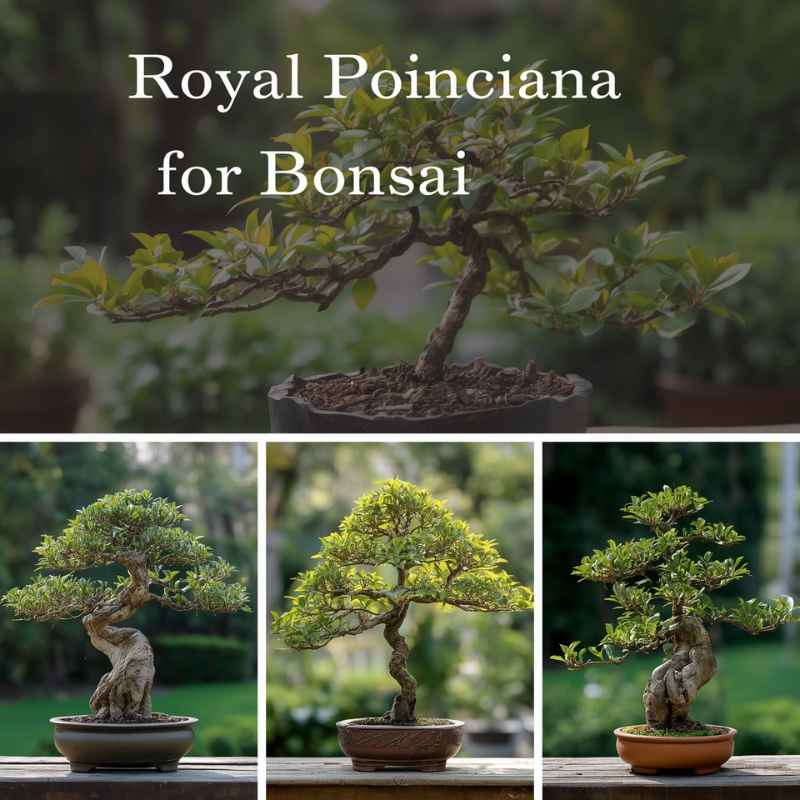
How To Use Royal Poinciana For Bonsai: Full Beginner Guide
Using a Royal Poinciana for bonsai is achievable for beginners with the right knowledge. This guide covers selecting your tree, essential care for its growth, and shaping it into a beautiful miniature tree that reflects its tropical origins.

KCT GARDEN
30 Royal Poinciana Tree Seeds, Delonix Regia…
- Grow Stunning Bonsai or Landscape Trees – Cultivate your own Royal Poinciana (Delonix Regia) tree, known for its vibrant red-orang…
- High Germination Rate – These premium tree seeds are carefully selected to ensure successful sprouting. Soak in warm water for 24…
- Versatile Planting Options – Ideal for outdoor landscaping or indoor bonsai cultivation, the Flame Tree thrives in sunny environme…
As an Amazon Associate I earn from qualifying purchases.

Understanding the Royal Poinciana for Bonsai
The Royal Poinciana, scientifically known as Delonix regia, is a flowering tree native to Madagascar. It’s famous for its brilliant show of fiery red or orange blossoms, which earned it the nickname “flame tree.” In its natural habitat, it grows into a large, wide-spreading tree, often planted for shade in tropical and subtropical regions. Its seeds are large and hard, and the tree has compound leaves that resemble ferns.
For bonsai, we’re looking for specific traits. The tree’s natural tendency to develop a broad crown and thick trunk is a great starting point. Its feathery foliage can also be reduced over time, mimicking the look of larger, mature trees.
However, its fast growth and tendency to drop leaves in cooler weather are things we must consider when planning our bonsai care. It’s a tree that needs warmth and light, much like it does in its native home.
Finding the Right Royal Poinciana Tree
Choosing the right young tree is your first big step. You have a few options here. You can start from seed, which is the most patient way.
It gives you complete control from the very beginning. It takes time, though, for a seedling to develop the thick trunk we want for bonsai. You’ll be waiting a few years to even start shaping it.
Another common way is to buy a young plant from a nursery. Look for a tree that’s about one to two years old. Check its trunk.
Is it already showing some thickness? Are there a few low branches forming? This is much quicker than starting from seed.
You want a healthy-looking plant, with green leaves and no signs of pests or diseases. Small, actively growing plants are best. Avoid trees that look leggy or have been neglected.
Sometimes, you might find a wild-collected tree, known as a yamadori. This is for more experienced growers. It’s risky and requires a deep understanding of the tree’s needs.
For beginners, starting with a nursery plant or seed is much safer and more rewarding. It lets you learn the basics without the stress of rescuing a tree.
Starting Your Royal Poinciana Bonsai
From Seed:
- Scarify seeds (nick or sand the hard coat) to help them sprout.
- Soak seeds in warm water overnight.
- Plant in a well-draining seed-starting mix.
- Keep soil moist and warm.
- Germination can take weeks to months.
From Nursery Stock:
- Look for a plant with a sturdy, developing trunk.
- Choose one with good root development visible at the bottom.
- Ensure the plant is pest-free.
- A one to two-year-old plant is ideal.

Essential Care for Your Poinciana Bonsai
Royal Poinciana trees are tropical. This means they need warmth and plenty of sunlight to thrive. They don’t like cold weather at all.
If you live in a place with cold winters, you’ll need to bring your bonsai indoors. It needs to be somewhere warm and bright, like a sunny windowsill. Even indoors, it needs consistent care.
Watering is key. These trees like moist soil, but not soggy soil. Let the top inch of the soil dry out before you water again.
This is crucial. Too much water can lead to root rot, which is a common killer of young bonsai. Too little water, and the leaves will start to droop and dry out.
Check the soil daily, especially in warm weather. You’ll get a feel for it with practice.
Feeding your bonsai is also important. Use a balanced liquid fertilizer during the growing season, which is typically spring and summer. Follow the instructions on the fertilizer bottle, but usually, half-strength is good for bonsai.
Stop fertilizing in the fall and winter when the tree’s growth slows down. This helps the tree rest.
Poinciana Bonsai Care Checklist
Light: Full sun is best, at least 6 hours daily.
Water: Water when the top inch of soil is dry. Avoid soggy conditions.
Fertilizer: Balanced liquid fertilizer during spring and summer. Reduce or stop in fall/winter.
Temperature: Tropical tree, needs warmth. Protect from frost.
Soil: Well-draining bonsai mix (akadama, pumice, lava rock).
Potting and Soil Mix
The right soil is vital for any bonsai. For a Royal Poinciana, you need a mix that drains really well. This prevents water from sitting around the roots.
A common bonsai soil mix includes akadama, pumice, and lava rock. These ingredients provide aeration and drainage. You can also add some organic matter, but keep it minimal.
When you pot your bonsai, choose a pot that fits the tree’s size and style. Bonsai pots are shallow. They help restrict root growth, which is part of keeping the tree small.
Make sure the pot has drainage holes. When repotting, which you’ll do every one to two years for younger trees, trim some of the roots. This encourages finer root growth and keeps the tree healthy in its confined space.
Repotting is usually done in early spring, just before the tree starts its active growth. Gently remove the tree from its pot. Inspect the roots.
Trim any thick, circling roots. You want to encourage a radial root spread. Then, place the tree in the new pot with fresh bonsai soil.
Water it thoroughly after repotting.
Shaping and Styling Your Poinciana Bonsai
This is where the art of bonsai comes in. Royal Poinciana trees are vigorous growers, which is great for shaping. You can use wire to gently bend branches into desired positions.
Start with young, flexible branches. Be careful not to bend them too sharply, or they might snap. Wrap the wire around the branch snugly, but not so tight that it cuts into the bark.
Pruning is another essential technique. You’ll want to prune to maintain the tree’s shape and encourage back-budding. Pinching new growth in spring and summer helps keep the foliage dense and compact.
You can also remove unwanted branches. This includes branches that grow straight up or down, or those that cross other branches. The goal is to create a balanced and pleasing form.
The feathery leaves of the Royal Poinciana can be a challenge. Over time, through repeated pruning and pinching, you can encourage smaller leaf growth. This is a gradual process.
Patience is key. You might also consider defoliation at the right time of year. This means removing all the leaves.
It forces the tree to grow new, smaller leaves. This is usually done in early summer for vigorous trees.
Styling Tips for Poinciana Bonsai
Wiring: Use anodized aluminum or annealed copper wire. Apply gently to young branches. Remove wire before it bites into the bark.
Pruning: Cut back new growth to encourage density. Remove crossing or awkward branches. Prune in spring and summer.
Pinching: Pinch off the tips of new shoots to create smaller leaves and denser pads.
Defoliation: Consider for vigorous trees in early summer to reduce leaf size. This is an advanced technique.
Style Goals: Aim for a naturalistic or informal upright style that mimics the tree’s tropical character.
Dealing with Pests and Diseases
Even a well-cared-for bonsai can sometimes face challenges. Royal Poinciana trees can be susceptible to a few common pests. Aphids, mealybugs, and spider mites can sometimes appear.
If you spot these, act quickly. A gentle spray of insecticidal soap or neem oil usually does the trick. Make sure to get the undersides of the leaves, too.
Diseases are less common for Royal Poinciana bonsai if the care is right. The biggest issue is usually root rot. This is caused by overwatering and poor drainage.
Signs include yellowing leaves and a general lack of vigor. If you suspect root rot, you’ll need to unpot the tree. Trim away any rotten roots and repot in fresh, well-draining soil.
Adjust your watering habits.
Prevention is the best medicine. Keep your bonsai healthy with proper light, water, and nutrients. A strong, healthy tree is less likely to attract pests or succumb to diseases.
Inspect your tree regularly. Catching problems early makes them much easier to fix. Good air circulation around the tree also helps prevent fungal issues.
Seasonal Care Considerations
Caring for your Royal Poinciana bonsai changes with the seasons. In spring, as temperatures rise, you’ll see new growth. This is the time for repotting and major pruning.
Fertilizing should begin regularly. Keep an eye on watering needs, as the tree will be drinking more.
Summer is peak growing season. Continue fertilizing and watering as needed. Pinch back new growth to maintain shape.
If you are considering defoliation, summer is the time to do it. Protect the tree from extreme heat if it’s outdoors. Consistent moisture is key during hot spells.
In autumn, growth starts to slow. Reduce fertilization. You might do some light pruning to tidy the shape.
The tree will likely start dropping its leaves if temperatures cool. This is normal, but you still need to protect it from frost. Bring it indoors before the first frost.
Winter is a resting period. Keep the tree in a bright, cool location indoors. Water less frequently, only when the soil is dry.
Do not fertilize. The goal is to let the tree conserve energy and prepare for the next growing season. Avoid placing it near heat vents, as this can dry out the tree too much.
Seasonal Care Snapshot
Spring: Repotting, pruning, fertilizing begins, increased watering.
Summer: Peak growth, pinching, regular watering & fertilizing, possible defoliation.
Autumn: Reduced growth, less fertilization, light pruning, prepare for indoor wintering.
Winter: Rest period, indoors in bright cool location, minimal watering, no fertilizing.
When to Worry About Your Poinciana Bonsai
There are a few clear signs that your Royal Poinciana bonsai might be in trouble. Yellowing leaves are a common symptom, but they can mean different things. If the leaves are yellowing and the soil is constantly wet, it’s likely overwatering and potential root rot.
If the leaves are yellowing and the soil is bone dry, it’s dehydration.
Drooping leaves can also indicate a problem. Like yellowing, it can be too much or too little water. It can also mean the tree is too cold.
If you see sudden leaf drop, especially outside of autumn, investigate why. Is there a draft? Is the humidity too low?
Has the watering schedule changed drastically?
Brown, crispy leaf edges are usually a sign of underwatering or low humidity. If you notice any white, cottony masses on the stems or leaves, that’s mealybugs. Small green or black dots are often aphids.
Early detection is key. Don’t wait until the problem is severe.
When in doubt, check the roots. Gently unpotting the tree is the best way to assess root health. Healthy roots are firm and white or light brown.
Rotten roots are black, mushy, and may smell bad. This is a critical check if your tree is showing significant signs of decline.
Troubleshooting Common Issues
I remember one time, my Poinciana bonsai’s leaves started turning yellow. I panicked! I thought I had killed it.
I had been watering it every day, thinking more water meant better growth. But the soil was staying wet for too long. After I dug around the roots a bit and saw they were getting mushy, I knew I had to repot it with fresh, dry soil and change my watering habits.
It took a while, but the tree bounced back beautifully.
Another common issue is leggy growth. This happens when the tree doesn’t get enough light. Its stems stretch out trying to find more.
Moving the tree to a sunnier spot is the quick fix. Regular pruning will also help promote more compact growth. Don’t be afraid to cut back leggy branches.
The tree will respond by pushing out new shoots closer to the trunk.
Sometimes, the flowers just don’t appear. This can be due to several reasons. The tree might be too young.
It needs to reach maturity before it flowers reliably. It might also not be getting enough light or nutrients. Or, perhaps it’s being kept too cold.
Ensuring optimal conditions will encourage those stunning blooms, even on a small scale.
The Long-Term Vision for Your Poinciana Bonsai
Creating a Royal Poinciana bonsai is a journey. It’s not something that happens overnight. You’re not just shaping a tree; you’re cultivating a living work of art.
The ultimate goal is to have a miniature representation of the magnificent flame tree, complete with its characteristic vibrant flowers. This requires consistent effort and observation.
As your tree matures, its trunk will thicken further, and its branches will develop ramification (finer branching). You’ll continue to refine its shape through regular pruning and wiring. The soil will need to be refreshed periodically, and the roots managed.
It’s about making the tree look old and wise, like a giant tree in miniature form.
Don’t get discouraged if your first attempt isn’t perfect. Every bonsai artist has had plants that didn’t make it. What matters is learning from each experience.
The process of growing a bonsai is incredibly rewarding. You connect with nature on a deep level and develop a unique skill. The first time your Poinciana bonsai blooms in its pot will be a moment of pure joy and accomplishment.
Poinciana Bonsai Growth Stages
Stage 1: Establishment (Years 1-3)
- Focus on trunk development and basic branch structure.
- Consistent watering and feeding.
- Protect from frost.
Stage 2: Shaping and Refinement (Years 3-7)
- Begin wiring and more detailed pruning.
- Encourage finer ramification and leaf reduction.
- Regular repotting and root pruning.
Stage 3: Maturity (Year 7+)
- Maintain shape and health.
- Focus on enhancing flowering and overall aesthetic.
- Less drastic styling interventions.

Frequently Asked Questions about Royal Poinciana Bonsai
Can a Royal Poinciana actually bloom as a bonsai?
Yes, absolutely! While it might take a few years for a young tree to mature enough to bloom reliably, it is definitely possible for a Royal Poinciana bonsai to produce its spectacular red-orange flowers. Good care, plenty of sunlight, and proper feeding are key to encouraging blooms.
How often should I water my Royal Poinciana bonsai?
Water your Royal Poinciana bonsai when the top inch of the soil feels dry to the touch. This is usually once a day in hot weather, but might be every few days in cooler or more humid conditions. Always check the soil moisture before watering.
Good drainage is essential to prevent root rot.
What kind of pot is best for a Royal Poinciana bonsai?
Choose a shallow bonsai pot with drainage holes. The size should be proportionate to the tree. A pot that is too large can lead to waterlogged soil, while one that is too small can restrict growth.
Ensure the pot allows for good air circulation and drainage.
My Royal Poinciana bonsai is losing its leaves. Is this normal?
If your Royal Poinciana bonsai is losing leaves in autumn or winter, and the temperatures are dropping, this is likely normal. They are tropical trees and will shed leaves as a natural response to cooler weather or shorter days. If it’s happening in spring or summer, it could indicate stress from overwatering, underwatering, or lack of light.
How do I make the leaves on my Royal Poinciana bonsai smaller?
Reducing leaf size is achieved through consistent care and techniques like pinching and pruning. Repeatedly pinching back new growth encourages the tree to produce smaller leaves. For more advanced growers, carefully timed defoliation in early summer can also promote the growth of smaller new leaves.
Is it difficult to care for a Royal Poinciana bonsai compared to other trees?
Royal Poinciana bonsai require consistent care, especially regarding warmth and light, as they are tropical. They grow quickly, which is good for shaping, but can also mean they need more frequent pruning. Beginners can succeed with them if they provide the right environment and learn to manage their watering and feeding needs carefully.
Final Thoughts on Growing Poinciana Bonsai
Embarking on the journey of growing a Royal Poinciana bonsai is a wonderfully rewarding endeavor. It challenges you to learn about a beautiful tropical tree and practice patience and precision. Remember, the vibrant blooms are the ultimate prize, and with consistent care and attention to its needs, you can bring that spectacular display to your miniature world.
Enjoy the process!
Related pick: Check today's price on Amazon