How Many Spinach Seeds Per Inch of Row?
Sow about 2 to 3 spinach seeds per inch of row, then thin to about 1 plant every 2 to 4 inches for full-size leaves, or leave tighter spacing for baby spinach. Crowding wastes seed and produces small, weak plants. This guide converts inches to feet, estimates bed totals, and shows how to adjust seed counts for baby leaf, bunching, or full-size harvests.
This guide is part of our Planting quantity guide series.
What you’ll need


- Spinach seed packet
- Ruler or tape measure
- Hoe, dibber, or finger-press tool
- Watering can or gentle hose setting
- Plant label and marker
Spinach sowing conversion table
Use this table as a planning tool, not a rigid rule. Spinach seed is small, so a few extra seeds can cover gaps from uneven depth, dry soil, or weaker germination in warm weather. For row sowing, the simplest baseline is 2 to 3 seeds per inch, then adjust by harvest goal.
| Harvest goal | Seeds per inch | Seeds per foot | 5 ft row | 10 ft row | 20 ft row | Note |
|---|---|---|---|---|---|---|
| Baby leaf | 3 to 4 | 36 to 48 | 180 to 240 | 360 to 480 | 720 to 960 | Over-seed lightly if you want a dense cut; switch to broadcast sowing for wide baby-leaf bands. |
| Standard leaf | 2 to 3 | 24 to 36 | 120 to 180 | 240 to 360 | 480 to 720 | Thin once seedlings have true leaves; this is the most useful row-sowing range. |
| Heavy-thin planting | 4 to 5 | 48 to 60 | 240 to 300 | 480 to 600 | 960 to 1,200 | Use when germination may be uneven, then thin hard; do not keep this density to harvest. |
- Mark rows 6 to 12 inches apart for full-size spinach, or 4 to 6 inches apart for baby-leaf bands.
- Make a shallow furrow about 1/2 inch deep, because deeper sowing slows emergence.
- Drop 2 to 3 seeds per inch, or use the higher rate if the seed is old or the bed is cool but not cold.
- Cover lightly, firm the soil, and water evenly so the seed coat stays in contact with moisture.
- Label the row and keep the top inch of soil damp until sprouts appear, then water often enough to keep the seedbed from drying out.
- If germination is patchy, add 1 to 2 more seeds per inch in the open spots, then recheck after emergence.
For a 10-foot row of standard spinach, a common estimate is about 240 to 360 seeds. At 2 to 3 seeds per inch, that row needs 240 to 360 seeds. If the packet germination is uncertain, add a 10 percent buffer and aim for 264 to 396 seeds instead. That extra margin is easier than reseeding gaps later.
How many spinach plants per square foot?

For bunching spinach, plan on about 9 to 16 plants per square foot, which matches 4- to 3-inch spacing. Baby-leaf plantings are usually denser and are harvested earlier, so the bed is managed for leaf mass rather than a fixed final plant count. Dense spacing makes harvest harder once leaves begin to overlap tightly.
Row sowing converts to bed totals by row length, but square-foot planning is better for raised beds and wide blocks. A 4-by-4-foot bed has 16 square feet; at 9 to 16 plants per square foot, that is roughly 144 to 256 mature plants if every spot reaches final spacing. In practice, some thinning loss is normal.
Row-to-bed conversion
Use row length first, then row spacing. If you sow four 10-foot rows, the seed count comes from each row’s length, while harvest access depends on the gap between rows. Wider rows improve airflow and make thinning easier; very tight rows are harder to weed and harvest without disturbing neighbors.
Picture a 2-by-6-foot bed planted for baby leaves. Two short, close rows may fit the bed better than one wide broadcast band if you want clean paths for cutting. The same bed used for bunching spinach needs wider row spacing so you can reach the center without flattening outer leaves.
When should you thin spinach seedlings?
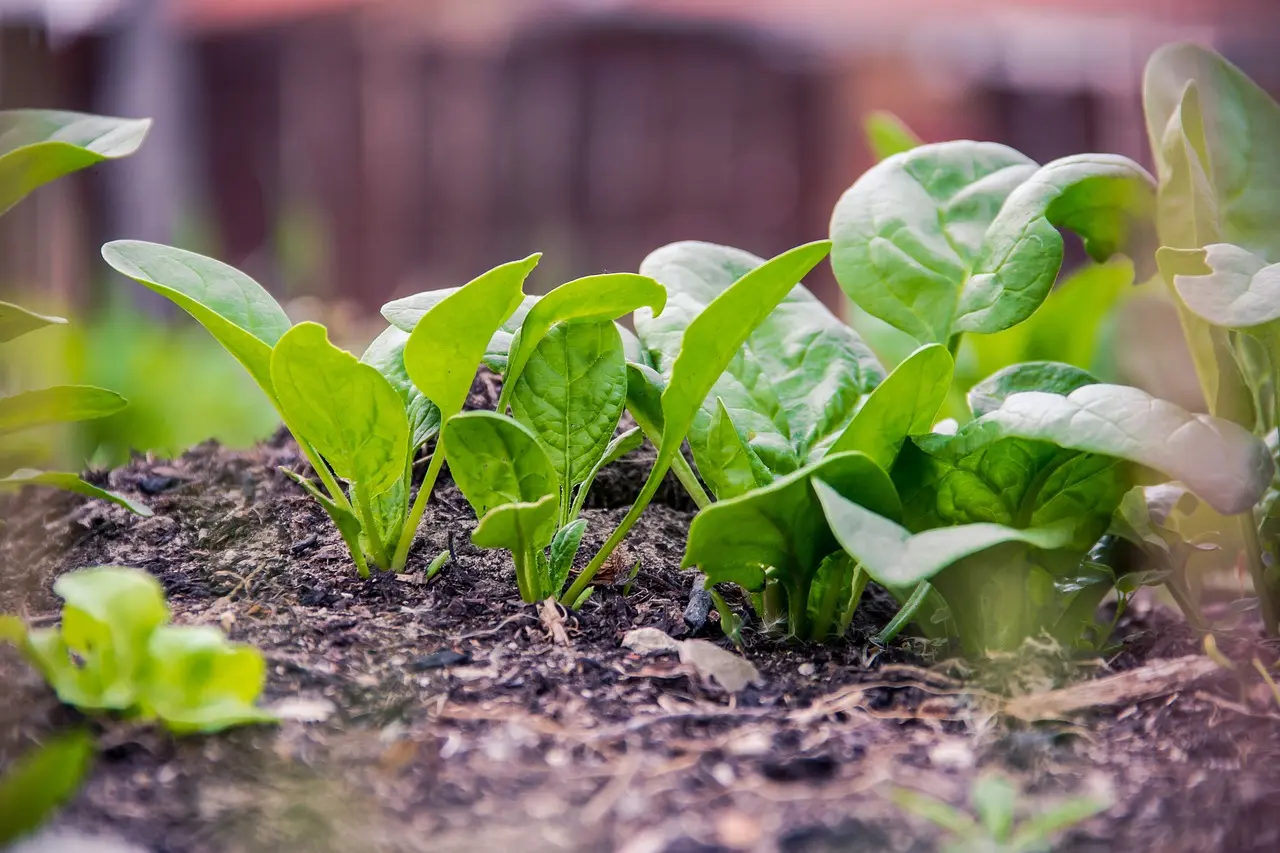
Thin spinach when seedlings have about one to two true leaves and the roots are developed enough to stay intact. Aim for a final spacing of 2 to 4 inches for mature leaves, and leave tighter spacing only when the crop is being cut young. Overcrowded spinach stays small, shades itself, and is harder to harvest cleanly.
First thin timing
- Wait until the seedlings show true leaves.
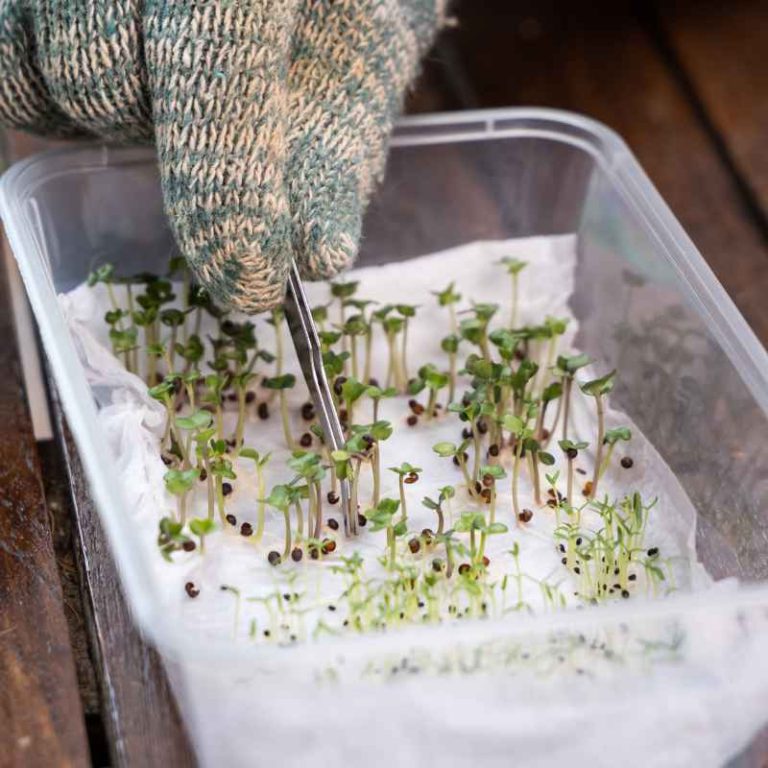
- Snip extras at soil level instead of pulling them, so the remaining roots stay undisturbed.
- Leave the strongest plant every 2 to 4 inches for full-size leaves.
Signs of overcrowding
- Leaves touch before plants reach usable size.
- Stems grow thin and stretch toward light.
- Air movement drops inside the row, which can trap moisture on leaves.
- Harvest becomes awkward because plants crowd each other at the base.
How do variety and harvest goal change density?
Savoy spinach has crinkled leaves and usually needs a little more room because the leaf mass fills space quickly. Semi-savoy types sit between savoy and smooth-leaf forms. Smooth-leaf spinach is easier to wash and often fits dense baby-leaf sowing better, since small leaves can be cut young without the same resistance during harvest.
Baby leaf versus bunching spinach
Baby-leaf spinach can be sown more tightly, often in a broad band or dense row, because you cut before crowding becomes a problem. Bunching spinach needs fewer plants per foot and more row spacing, since each plant must bulk up to a usable size. Cut-and-come-again works best only while leaves stay tender and open.
Succession sowing and bolting risk
Spinach does best in cool weather, and staggered sowings every 7 to 14 days spread harvests across the spring or fall window. Once heat builds, the crop bolts faster and leaf quality drops. A tighter spring sowing may mature before warm weather, while a later sowing often benefits from the baby-leaf approach.
Common mistakes
The biggest errors are sowing too deep, using summer spacing in cool weather, and planting one large batch instead of several smaller sowings. Heat-sensitive germination is the other trap: warm soil can slow or suppress sprouting, which makes a packet look empty when the issue is really temperature.
- Sowing too deep: keep seed near 1/2 inch deep.
- Skipping the row plan: match row spacing to your harvest goal, not just the bed width.
- Underestimating germination loss: add 10 to 20 percent more seed if the seed is old, warm, or patchy.
- Missing the thinning window: cut extras early so remaining plants do not stall.
- Planting all at once: stagger sowings for steadier harvest and lower bolting risk.
A common first-timer mistake is sowing smooth spinach at full-size spacing in a 6-inch band and expecting baby leaves. The row fills slowly, weeds slip in, and the harvest window opens late. A tighter sowing with earlier cutting gives a better result for that same bed space.
Frequently asked questions
How many spinach seeds per inch of row?
Sow 2 to 3 seeds per inch for standard row planting. For baby-leaf production, move up to 3 to 4 seeds per inch. If germination is questionable, add about 10 percent more seed and thin hard after emergence instead of starting too sparse.
How many spinach seeds should I sow per square foot?
For full-size spinach, a practical target is roughly 9 to 16 plants per square foot after thinning, which starts from more seed than that because not every seed becomes a final plant. For baby leaf, seed counts are higher and the bed is usually managed by row length or broad bands instead of final plant count.
How many spinach plants per person?
For a steady home supply, many gardeners plan several plants per person at each succession sowing rather than relying on one planting. A small household often needs repeated sowings because spinach matures fast and heat shortens the harvest window.
How much raw spinach is a serving?
A common raw serving is about 2 cups of leaves, which is a loose handful rather than a packed weight measure. For meal planning, count on more than one plant per serving if the plants are still small, especially when harvesting baby spinach.
How much raw spinach to cooked spinach?
Raw spinach shrinks sharply when cooked, so a large bowl of leaves may reduce to a much smaller cooked portion. For planning, think in cups of raw leaves first, then expect them to collapse into a side-dish amount once wilted.
How many spinach seeds should I plant in one spot?
For direct sowing in one spot, plant 2 to 3 seeds and thin to the strongest seedling. If the seed is older or the soil conditions are uneven, plant 4 seeds and remove extras after the first true leaves appear.
How many spinach plants per sq ft?
Use 9 to 16 plants per square foot for full-size spinach, with the lower end for larger savoy types and the higher end for smaller, smooth-leaf plants. If you want baby leaves, count on denser sowing and earlier harvest, not a final plant number.