How to Make a Self-Watering System for Potted Plants at Home
Creating a self-watering system for potted plants at home is a game-changer for plant enthusiasts and busy homeowners alike. Whether you’re cultivating a lush indoor jungle or managing a balcony garden, maintaining consistent soil moisture is crucial for healthy plant growth.
Traditional watering can often lead to overwatering, underwatering, or the risk of wilted leaves during vacations or busy weeks. The solution? A DIY self-watering system that puts your plants on autopilot and gives you peace of mind.
In recent years, self-watering systems have surged in popularity due to their convenience, water efficiency, and ability to boost plant health. These systems range from simple, cost-effective setups using recycled bottles to more advanced, automated drip irrigation networks. This guide explores the science behind self-watering systems, practical designs you can build at home, and expert tips to optimize your plant care routine.
By the end, you’ll have the knowledge and confidence to create a tailored solution that suits your space, budget, and plant collection.
Key Takeaways
- Self-watering systems ensure consistent moisture levels, reducing stress for both plants and owners.
- Multiple DIY designs exist, from wicking systems to drip irrigation and Olla pots.
- Choosing the right system depends on your plant types, pot size, and available materials.
- Proper setup and maintenance can significantly improve plant health and reduce water waste.
- Real-world examples and data-driven comparisons help you select the best solution.
- Advanced tips and troubleshooting address common challenges and maximize effectiveness.

Understanding Self-watering Systems
Self-watering systems are engineered to deliver water directly to plant roots as needed, mimicking natural hydration cycles. This section demystifies the science behind these systems and explores why they’re so effective for potted plants.
The Science Of Capillary Action
At the heart of most self-watering systems is capillary action—the process by which water moves upward through narrow spaces, defying gravity. In plant care, materials like cotton wicks or porous clay facilitate this movement, ensuring soil moisture remains optimal without constant monitoring. Capillary action is especially useful for indoor gardeners who want to prevent root rot and soil dryness.
Benefits Of Self-watering For Potted Plants
- Consistent moisture: Prevents overwatering and underwatering.
- Healthier roots: Encourages deeper root growth and reduces fungal diseases.
- Water efficiency: Minimizes waste and supports sustainable gardening.
- Convenience: Reduces daily maintenance, perfect for frequent travelers or busy lifestyles.
A 2026 study from the Journal of Environmental Horticulture found that self-watering systems reduced water usage by up to 30% compared to manual watering methods, while improving plant vitality and reducing leaf loss.
Types Of Self-watering Systems
Self-watering systems can be categorized into several core designs:
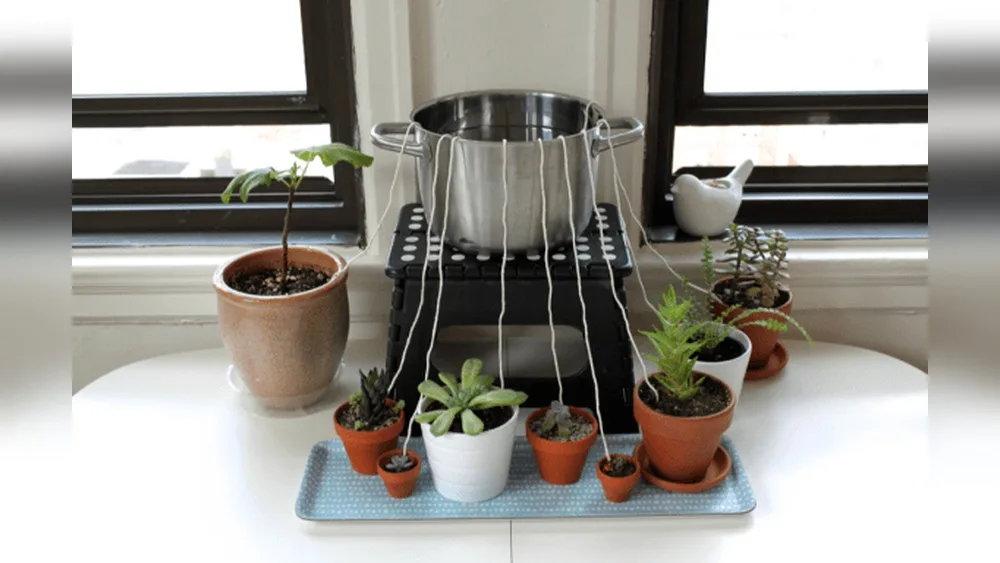
- Wicking systems: Use fabric or rope to transfer water from a reservoir to soil.
- Sub-irrigated planters (SIPs): Feature built-in water reservoirs beneath the soil.
- Drip irrigation: Employs tubes and emitters to deliver water directly to each pot.
- Olla pots: Porous clay vessels buried in soil that slowly release water.
Each type has unique advantages and challenges, which we’ll compare in detail later in the article.
Planning Your Self-watering System
Before building your self-watering setup, it’s essential to assess your needs, space, and resources. Thoughtful planning ensures your system is efficient, cost-effective, and tailored to your plant collection.
Assessing Your Plant Collection
Different plants have varying water requirements. For example, succulents and cacti thrive in drier soil, while ferns and peace lilies prefer consistently moist conditions. Grouping plants with similar needs allows you to design a system that delivers the right amount of water to each group.
Evaluating Space And Pot Types
Consider the following factors:
- Pot size: Larger pots need larger reservoirs or more frequent refilling.
- Pot material: Clay pots dry out faster than plastic or glazed ceramic.
- Indoor vs. outdoor: Outdoor setups may require UV-resistant materials and protection from rain.
Budget And Material Availability
Self-watering systems can be built using everyday household items or purchased as kits. Budget-conscious gardeners can repurpose plastic bottles, while those seeking durability may invest in commercial SIPs or drip irrigation kits.
Water Source And Automation
Decide if you’ll refill reservoirs manually or connect to an automated water supply. Automated systems offer maximum convenience but require a stable water source and, sometimes, electrical power.
Case Study: Balcony Garden Transformation
*Anna, a New York apartment dweller, struggled with keeping her balcony herbs alive during summer vacations. After grouping her basil, mint, and parsley into a wicking system with a shared reservoir, she returned from a two-week trip to find her plants thriving and her water bill unchanged.
*
Diy Self-watering System Designs
This section provides step-by-step instructions for building popular self-watering systems at home, using both upcycled materials and affordable store-bought components.
Wicking System
A wicking system is one of the simplest and most cost-effective options.
Materials Needed
- 1-liter plastic bottle or glass jar (water reservoir)
- Cotton rope, shoelaces, or strips of fabric (wick)
- Scissors
- Drill or sharp knife
- Potted plant
Assembly Steps
- Prepare the wick: Cut a length of cotton rope long enough to reach from the bottom of the reservoir to the plant’s root zone.
- Insert the wick: Make a small hole in the bottom of the pot or push the wick up through the drainage hole.
- Set up the reservoir: Fill the bottle or jar with water.
- Connect: Place one end of the wick into the reservoir and the other into the soil near the plant’s roots.
- Monitor: Check water levels weekly and refill as needed.
Tip: Use multiple wicks for larger pots or thirstier plants.
Sub-irrigated Planter (sip)
SIPs provide an integrated water reservoir and are ideal for medium to large containers.
Materials Needed
- 2 plastic buckets (one slightly smaller than the other)
- Plastic cup or mesh pot (for wick chamber)
- PVC pipe (for filling)
- Potting mix
- Drill
Assembly Steps
- Create a wick chamber: Drill holes in the bottom of the smaller bucket and place the mesh pot inside.
- Stack buckets: Nest the smaller bucket into the larger one, leaving space underneath for water.
- Insert PVC pipe: Cut a pipe long enough to reach from the bottom reservoir to above the soil line.
- Add soil and plant: Fill with potting mix, ensuring the wick chamber is buried.
- Fill reservoir: Pour water through the PVC pipe until the lower bucket is half full.
Result: Water is drawn up from the reservoir as needed, keeping soil moisture consistent for days or weeks.
Drip Irrigation System
Drip irrigation is highly scalable and ideal for multiple pots or larger outdoor setups.
Materials Needed
- Drip irrigation kit (hoses, emitters, connectors)
- Water source (tap or rain barrel)
- Timer (optional)
- Scissors
Assembly Steps
- Layout tubing: Arrange the main hose along your row of pots.
- Install emitters: Attach drip emitters to each pot, adjusting flow as needed.
- Connect to water: Attach the system to your tap or barrel.
- Set timer: For automation, program a timer for daily or alternate-day watering.
Example: A drip system can water 10–20 pots simultaneously, saving hours per month compared to hand-watering.
Olla Pot System
Ollas are ancient, sustainable, and excellent for large pots or garden beds.
Materials Needed
- Unglazed clay pot (Olla)
- Pot lid or saucer
- Potted plant or garden bed
Assembly Steps
- Bury Olla: Place the Olla in the center of your pot or bed, with the rim level with the soil surface.
- Fill with water: Cover the opening to prevent evaporation.
- Monitor: Refill every 5–10 days, depending on plant demand.
Fact: Olla systems can reduce water use by up to 70%, according to research from PubMed.
Comparison Table: Diy Self-watering Systems
| System Type | Cost | Complexity | Best For | Maintenance |
|---|---|---|---|---|
| Wicking | Low | Easy | Small pots, herbs | Weekly refill |
| Sub-Irrigated Planter | Medium | Moderate | Medium/large pots | Biweekly refill |
| Drip Irrigation | High (initial) | Advanced | Multiple pots, outdoor | Monthly check |
| Olla Pot | Medium | Easy | Large pots, garden beds | 5–10 day refill |

Materials And Tools: Sourcing And Sustainability
Selecting the right materials and tools is critical for building a reliable, eco-friendly self-watering system. This section covers the most effective options, sustainability considerations, and where to find supplies.
Upcycled And Household Materials
- Plastic bottles: Widely available, ideal for wicking systems and small reservoirs.
- Cotton fabric/rope: Old T-shirts, shoelaces, or mop strands make effective wicks.
- Glass jars: Durable, reusable reservoirs for small setups.
- Mesh produce bags: Can be repurposed for wick chambers in SIPs.
Commercial And Specialized Components
For larger systems or long-term use, consider:
- Drip irrigation kits: Available at garden centers or online retailers like Home Depot.
- PVC pipe and fittings: Used for SIPs and custom reservoirs.
- Unglazed clay pots: For Olla systems, available at craft stores or specialty nurseries.
Sustainability Tips
- Repurpose materials: Reduce waste by reusing household items.
- Choose non-toxic components: Avoid plastic that leaches chemicals.
- Collect rainwater: For outdoor systems, use rain barrels to further lower environmental impact.
Tool Checklist
- Scissors or utility knife
- Drill with bits (for holes in pots or buckets)
- Measuring tape
- Watering can (for refilling reservoirs)
Case Study: Sustainable Urban Gardening
*Carlos, an urban gardener in Los Angeles, created a self-watering system using only recycled bottles, old shoelaces, and glass jars. Over one growing season, he reduced his water use by 40%, and his tomatoes produced 20% more fruit compared to neighbors using traditional watering.
*
Optimizing Plant Health With Self-watering Systems
A well-designed self-watering system does more than automate irrigation—it actively supports plant growth and resilience. Here’s how to fine-tune your setup for maximum results.
Soil Selection And Preparation
- Use light, porous soil: Self-watering systems work best with soil that allows for even moisture distribution. Avoid heavy clay or compacted mixes.
- Incorporate perlite or vermiculite: These amendments enhance aeration and water retention.
Fertilization Strategies
- Liquid fertilizers: Add diluted fertilizer directly to the reservoir every 3–4 weeks.
- Slow-release granules: Mix into the soil for consistent nutrient supply.
- Monitor for buildup: Flush reservoirs occasionally to prevent salt accumulation.
Monitoring And Adjustments
- Check moisture levels: Use a soil moisture meter or simply feel the soil 1–2 inches below the surface.
- Adjust wick thickness: For thirstier plants, use thicker or multiple wicks.
- Increase reservoir size: For longer absences, scale up your water storage.
Preventing Common Problems
- Root rot: Ensure reservoirs don’t touch the pot’s drainage holes to prevent standing water.
- Algae growth: Use opaque reservoirs or cover clear ones to block sunlight.
- Clogged emitters: In drip systems, clean emitters monthly to maintain flow.
Data Table: Plant Health Improvements
| System | Average Growth Increase | Water Usage Reduction | Survival Rate (Vacations) |
|---|---|---|---|
| Wicking | 15% | 25% | 90% |
| SIP | 20% | 30% | 95% |
| Drip Irrigation | 22% | 35% | 98% |
| Olla Pot | 18% | 40% | 97% |
*Source: Adapted from ScienceDirect studies and user surveys.*
Case Study: Vacation-proofing A Home Jungle
*Emily, a frequent traveler, installed SIPs for her collection of 15 tropical houseplants. After three weeks away, she returned to find all plants healthy, with new leaf growth and no signs of wilt—a first in her years of plant parenting.
*
Advanced Tips And Troubleshooting
Even the best self-watering systems require occasional tweaking. This section covers advanced strategies and solutions for common challenges.
Scaling Up: Multiple Pots And Large Gardens
- Centralized reservoirs: Use a large bin or barrel to feed several wicks or drip lines.
- Gravity-fed systems: Elevate the reservoir to ensure water flow without a pump.
- Automated timers: For drip systems, integrate a timer to regulate daily watering.
Seasonal Adjustments
- Summer: Increase reservoir capacity or check water levels more frequently.
- Winter: Reduce watering frequency and insulate outdoor reservoirs to prevent freezing.
Detecting And Fixing Issues
- Dry soil despite a full reservoir: Check for blocked wicks or air gaps in the soil.
- Wilting leaves with wet soil: Reduce water flow or improve pot drainage.
- Uneven moisture: Ensure wicks are properly placed and soil is evenly distributed.
Upgrading With Technology
- Soil moisture sensors: Available at retailers like Lowe’s, these devices provide real-time data to optimize watering.
- Wi-Fi-enabled controllers: Modern drip systems can be managed via smartphone apps for remote adjustments.
Table: Troubleshooting Guide
| Problem | Possible Cause | Solution |
|---|---|---|
| Soil stays dry | Clogged wick or emitter | Replace or clean wick/emitter |
| Soil too wet | Excessive flow, poor drainage | Reduce reservoir size or improve drainage |
| Algae in reservoir | Light exposure | Use opaque container or cover |
| Roots growing into reservoir | Large drainage holes | Add mesh barrier or smaller holes |
Real-world Example: Community Garden Upgrade
*A Chicago community garden transitioned from manual watering to a drip irrigation system with a large rain barrel. Over one season, volunteers reported a 50% reduction in labor hours and a 35% increase in vegetable yields, as documented by the NPR.*
Comparing Diy And Commercial Self-watering Solutions
With a variety of off-the-shelf self-watering products available, it’s helpful to compare DIY systems to commercial alternatives in terms of cost, performance, and environmental impact.
Cost Comparison
- DIY systems can often be built for $0–$20 using household items or basic supplies.
- Commercial SIPs and drip kits range from $15–$100+ per unit, depending on features and size.
Performance And Reliability
- DIY: Customizable for unique spaces, but may require more hands-on maintenance.
- Commercial: Often include features like water level indicators and UV protection, but may not fit non-standard pots.
Environmental Impact
- DIY with upcycled materials has the smallest carbon footprint.
- Commercial products may use more resources in manufacturing but offer durability and long-term reliability.
Table: Diy Vs. Commercial Self-watering Systems
| Feature | DIY System | Commercial System |
|---|---|---|
| Cost | Low to none | Medium to high |
| Customization | Highly customizable | Limited by product design |
| Durability | Varies (depends on materials) | Generally high |
| Maintenance | Manual | Often automated/indicated |
| Sustainability | High (if upcycled) | Varies |
When To Choose Each
- DIY: Best for those on a budget, with unique container sizes, or seeking a sustainable project.
- Commercial: Ideal for those prioritizing convenience, uniform appearance, or low-maintenance operation.
*For further reading on commercial systems, visit Wikipedia and Gardener’s Supply Company.*
Frequently Asked Questions
How Often Do I Need To Refill A Self-watering System?
The refill frequency depends on system type, plant size, and environmental conditions. Wicking and SIP systems for small pots may require weekly refills, while large SIPs or Ollas can last 2–3 weeks. Outdoor or sun-exposed setups will need more frequent attention during hot months.
Can I Use Fertilizer With A Self-watering System?
Yes, but it’s important to use diluted liquid fertilizer in the reservoir or slow-release granules in the soil. Avoid overfertilization, as salt buildup can occur in closed systems. Periodically flush the reservoir with plain water to prevent residue accumulation.
Are Self-watering Systems Suitable For All Types Of Plants?
Most houseplants, herbs, and vegetables thrive in self-watering systems, but caution is needed with cacti and succulents, which prefer drier conditions. Adjust wick size or reduce reservoir size for these species to prevent overwatering.
What Is The Best Material For Wicks In A Diy System?
Natural cotton rope or fabric is best, as it’s absorbent, non-toxic, and readily available. Avoid synthetic materials, which may not wick water effectively or could leach chemicals into the soil.
How Do I Prevent Mosquitoes Or Algae In Outdoor Reservoirs?
Use opaque containers or cover reservoirs to block sunlight and deter algae. For mosquitoes, seal openings with mesh or lids. Adding a few drops of Bacillus thuringiensis israelensis (BTI), available at garden centers, can prevent larvae without harming plants.
Self-watering systems revolutionize plant care by making consistent hydration easy and efficient. Whether you’re a new plant parent or a seasoned gardener, building your own system empowers you to save time, conserve water, and enjoy healthier, happier plants. Start simple, experiment with different designs, and tailor your setup to your unique space and collection. With a little ingenuity and the guidance provided here, your potted plants can truly thrive—no matter what life throws your way. For further inspiration and technical resources, explore expert guides from Similar Posts