How Do Many Seeds Arrive And Grow in a Barren Landscape?
A barren landscape—desolate, devoid of life, and seemingly inhospitable—often evokes images of endless sand dunes, rocky plateaus, or scorched earth. Yet, remarkably, these hostile terrains can transform into thriving ecosystems teeming with vegetation. The secret behind this transformation lies in the extraordinary journeys that seeds undertake to reach and establish themselves in such unforgiving environments.
From the windswept deserts of the Sahara to the volcanic plains of Iceland, seeds find ingenious ways to travel, survive, and ultimately flourish where life appears impossible.
Understanding the mechanisms by which many seeds arrive and grow in a barren landscape not only illuminates the resilience and adaptability of nature but also provides valuable insights for ecological restoration, agriculture, and climate change mitigation. Exploring seed dispersal, survival strategies, and the factors influencing their successful germination, this article delves deep into how landscapes once considered lifeless can become vibrant centers of biodiversity.
Key Takeaways
- Seeds employ diverse dispersal mechanisms—including wind, water, animals, and human activity—to reach barren landscapes.
- Survival strategies such as dormancy, hard seed coats, and symbiotic relationships enable seeds to withstand harsh conditions.
- Environmental triggers like rain, temperature fluctuations, and fire play critical roles in seed germination and establishment.
- Case studies demonstrate nature’s resilience, with examples from volcanic islands, deserts, and post-fire environments.
- Ecological restoration leverages these natural processes to rehabilitate degraded land and combat climate change.
- Data-driven comparisons highlight the effectiveness of various dispersal and germination strategies in barren landscapes.
Credit: wattersgardencenter.com
Seed Dispersal Mechanisms In Barren Landscapes
The arrival of seeds in barren environments is not accidental; it is the result of evolutionary adaptations and diverse dispersal strategies. These mechanisms ensure that seeds reach far-flung locations, often overcoming extreme barriers.
Wind Dispersal
Wind dispersal is a primary method for seeds to colonize barren landscapes, especially those with little vegetation to impede air currents. Seeds adapted for wind dispersal typically possess features such as wings, hairs, or lightweight structures.
- Dandelion seeds use fine hairs to float long distances.
- Maple seeds (samaras) spiral through the air, increasing their travel range.
The effectiveness of wind dispersal is heightened in environments where vegetation is sparse, allowing unobstructed air movement. In deserts, for example, where strong winds are common and obstacles are few, seeds can be carried vast distances, sometimes across entire regions. The Sahara Desert sees the movement of seeds from distant oases or even from the edges of the desert itself, as wind currents sweep seeds over dunes and into depressions where moisture may accumulate. Similarly, in newly formed volcanic landscapes, such as those following eruptions, wind is often the first and most efficient vector for colonization.
A striking instance is the recovery of the area around Mount St. Helens after its 1980 eruption. The landscape was initially blanketed in sterile ash, with little hope for immediate recovery. However, wind-dispersed seeds—especially those of fireweed (Chamerion angustifolium) and other pioneer species—arrived quickly, jumpstarting ecological succession (Mount St. Helens Wikipedia). These seeds, designed for flight, can remain airborne for extended periods, increasing their chances of landing in favorable microhabitats, such as cracks in rocks or pockets of accumulating organic matter.
Water Dispersal
Water is a powerful agent for seed dispersal, particularly in landscapes with periodic flooding, riverbeds, or coastal regions. Buoyant seeds can float and travel great distances.
- Coconut seeds are classic examples, drifting across oceans to reach isolated islands.
- Mangrove seeds float until they encounter suitable mud flats.
In environments like floodplains or deltas, water dispersal enables seeds to reach new territory each season. For instance, Amazonian floodplain forests rely on annual inundations to redistribute seeds, which settle and germinate as waters recede. In arid regions, episodic flash floods can sweep seeds into depressions or playas, where moisture briefly accumulates, providing a critical window for germination and growth.
On volcanic islands, where terrestrial seed sources may be limited, water dispersal is vital for initial colonization. Ocean currents can carry seeds from distant continents or islands, as seen in the colonization patterns of many Pacific atolls. Even inland, water movement through ephemeral streams or seasonal rivers enables plant species to expand their range into barren terrain.
Animal-assisted Dispersal
Animals contribute significantly to seed dispersal, even in barren landscapes. Some seeds are encased in edible fruits, while others have hooks or sticky surfaces that attach to fur or feathers.
- Birds often carry seeds internally, depositing them through droppings far from their origin.
- Rodents and other mammals may transport seeds while foraging.
Animal dispersal is particularly important in post-disturbance environments. For example, after wildfires, birds and mammals are among the first to return, bringing with them seeds from surrounding, unaffected areas. Their movements—driven by foraging, nesting, or migration—facilitate the rapid recolonization of the landscape.
Additionally, some seeds require passage through an animal’s digestive tract to break down tough seed coats, a process known as scarification. This mutualistic relationship ensures that seeds not only reach new locations but are also primed for germination. In African savannas, for example, large herbivores such as elephants disperse the seeds of Acacia and other trees, depositing them in nutrient-rich dung that enhances seedling survival.
Human Influence
Humans inadvertently or deliberately introduce seeds to barren landscapes. Restoration efforts, agriculture, and even recreational activities can result in seed dispersal.
- Restoration projects use aerial seeding or manual planting to rehabilitate degraded land.
- Tourists and workers may carry seeds on clothing or equipment.
Human-mediated dispersal has become increasingly important in recent decades, especially as large-scale ecological restoration projects aim to reverse land degradation. For instance, aerial seeding is used extensively in the reclamation of mining sites, post-wildfire landscapes, and desertified areas. These projects are often supported by detailed ecological studies to ensure that introduced species are compatible with local conditions and will not become invasive.
Unintentional dispersal, however, can also bring challenges. Seeds of non-native or invasive species can hitchhike on vehicles, boots, or animal fur, establishing populations that may outcompete native vegetation. Thus, while human influence can accelerate revegetation, it requires careful management to ensure long-term ecological health.
Data Comparison: Dispersal Effectiveness
The following table compares the effectiveness of seed dispersal methods in colonizing barren landscapes:
| Dispersal Method | Distance Covered | Adaptation Examples | Success Rate (Post-Disturbance) |
|---|---|---|---|
| Wind | Up to 300 miles | Dandelion, Maple | High in open, windy areas |
| Water | Up to 1,000 miles (ocean) | Coconut, Mangrove | High in coastal/flood zones |
| Animal | Varies (up to 50 miles) | Berries, Burrs | Moderate in early succession |
| Human | Unlimited | Aerial seeding, Restoration | Very high when managed |
The table above emphasizes that while natural mechanisms can cover impressive distances, human-facilitated dispersal—especially when planned and monitored—can dramatically increase both the rate and success of revegetation.

Credit: wattersgardencenter.com
Seed Survival Strategies In Harsh Conditions
Seeds must overcome formidable obstacles to survive and germinate in barren landscapes. Their biological adaptations ensure persistence until conditions become favorable.
Dormancy And Longevity
Dormancy is a critical survival strategy, allowing seeds to delay germination until environmental cues signal optimal conditions.
- Some seeds remain viable for decades—desert annuals can wait for rare rain events.
- Fire-adapted species like lodgepole pine require heat to break dormancy.
The longevity of seeds is a marvel of evolutionary adaptation. For example, arctic tundra seeds have been found to remain viable in frozen soils for centuries. Similarly, seeds recovered from ancient Egyptian tombs have been known to sprout after thousands of years, demonstrating the extraordinary resilience of plant life.
Dormancy mechanisms are diverse. Some seeds contain chemical inhibitors that prevent germination until they are leached out by rain, ensuring that seedlings emerge only when sufficient moisture is available. Others require exposure to specific temperature regimes—a process known as stratification—to break dormancy. This is common in many alpine and temperate species, where seeds must experience winter cold before germinating in spring.
Protective Structures
Seeds possess hard coats, waxy surfaces, or chemical inhibitors that protect against predation, desiccation, and UV radiation.
- Acacia seeds have tough coats, preventing premature germination.
- Lotus seeds can survive for centuries due to impermeable shells.
Protective structures also defend seeds from physical abrasion and microbial attack. In deserts, where soils can be abrasive and temperatures fluctuate dramatically, these adaptations are particularly valuable. Some seeds, such as those of the mesquite tree, are so well-protected that they require physical or chemical scarification—such as passing through an animal’s digestive tract or exposure to fire—to initiate germination.
Seeds may also contain chemical compounds that deter herbivores or pathogens. For example, many legume seeds contain alkaloids or tannins that make them unpalatable or toxic, increasing the likelihood that some will survive to germinate.
Symbiotic Relationships
Some seeds depend on symbiotic organisms to aid survival and establishment.
- Mycorrhizal fungi help seeds access nutrients in poor soils.
- Nitrogen-fixing bacteria enable legumes to thrive in nutrient-deficient land.
Symbiotic relationships are especially crucial in newly formed or extremely poor soils, such as those found on volcanic islands or eroded deserts. Mycorrhizal fungi, for instance, form networks with plant roots, increasing the absorption of water and nutrients like phosphorus and nitrogen.
In return, the plant provides carbohydrates to the fungi. This mutualism is so essential that some plant species cannot survive without their fungal partners.
In arid environments, biological soil crusts—composed of cyanobacteria, lichens, and mosses—play a vital role in seedling establishment. These crusts stabilize soil, retain moisture, and fix atmospheric nitrogen, creating microhabitats where seeds can germinate and grow.
Example: Survival In The Atacama Desert
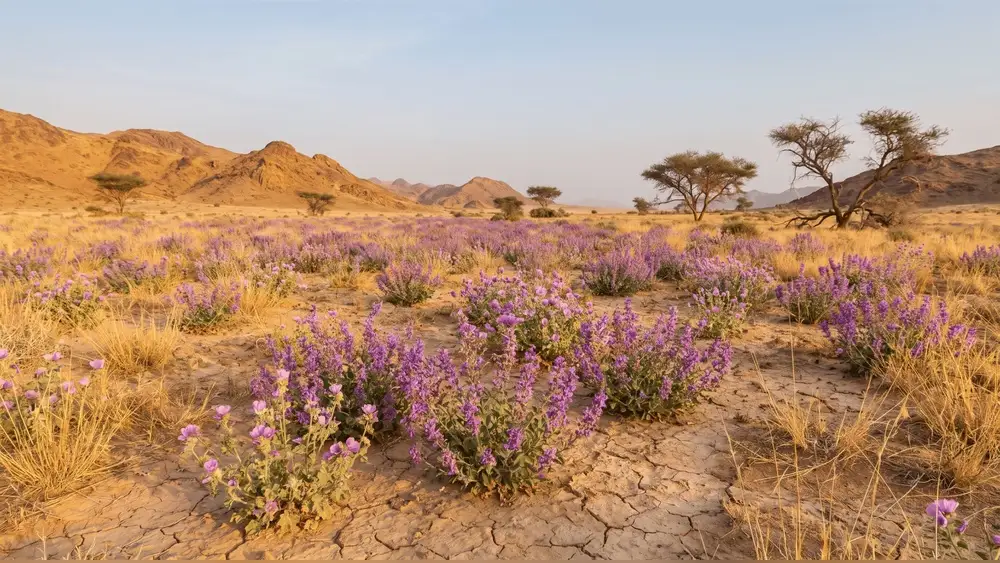
The Atacama Desert in Chile is among the driest places on Earth. Seeds endure prolonged dormancy, sometimes awaiting rain for decades. When rare precipitation occurs, the landscape transforms, with thousands of species blooming almost overnight (Atacama Desert Wikipedia).
This phenomenon, known as the “desierto florido” or “flowering desert,” is a testament to the remarkable endurance and adaptability of seeds. The seeds of various wildflowers, grasses, and shrubs remain buried in the soil, their germination suppressed by chemical inhibitors and physical barriers.
When rain finally arrives, these barriers are removed, and the seeds sprout en masse, taking advantage of the brief window of favorable conditions before the return of aridity.
Environmental Triggers For Germination
Even the most robust seeds require specific environmental conditions to break dormancy and begin growth. Barren landscapes often provide unique triggers.
Rainfall Events
Rain is a universal catalyst for germination, especially in deserts and recently disturbed land.
- Desert wildflowers respond to moisture by sprouting en masse.
- Floodplain species germinate after seasonal inundation.
In hyper-arid deserts, such as the Namib or the central Sahara, rainfall may be so infrequent that seeds must be capable of waiting for years or even decades. When the rain does arrive, it often comes in brief, intense bursts, saturating the upper soil layers and stimulating mass germination.
The resulting “super blooms” can be spectacular, with carpets of flowers and greenery suddenly appearing in places that seemed utterly lifeless.
Similarly, in floodplains and riparian zones, periodic flooding not only delivers water but also deposits silt and organic matter, creating fertile conditions for seedling establishment. Species such as willows, poplars, and sedges are adapted to these cycles, with seeds that germinate rapidly in the wake of receding waters.
Temperature Fluctuations
Extreme temperature changes signal seeds to begin growth.
- Fire-following plants utilize heat shock to break seed coats.
- Cold stratification is required by many alpine and tundra species.
Fire is a common disturbance in many ecosystems, and numerous plant species have evolved to exploit it. For example, the seeds of some Australian Banksia and Eucalyptus species are stored in woody cones or capsules that open only when exposed to the intense heat of a wildfire.
This ensures that seeds are released into an environment temporarily free of competition, rich in nutrients from ash, and with increased sunlight reaching the ground.
In contrast, alpine and temperate plants often require a period of cold exposure—a process known as vernalization—to break dormancy. This prevents seeds from germinating during unseasonably warm spells in autumn, ensuring that seedlings emerge in spring when conditions are more favorable.
Chemical Signals
Certain seeds depend on chemical cues from the environment to germinate.
- Smoke triggers germination in fire-adapted species.
- Nutrient changes (e.g., nitrogen increase post-fire) stimulate growth.
Smoke-derived chemicals, such as karrikins, have been identified as potent germination triggers for many fire-adapted species. These chemicals can penetrate the soil and activate dormant seeds, synchronizing germination with the post-fire environment.
In some cases, seeds respond to changes in soil chemistry caused by disturbances. For example, a sudden influx of nutrients from decomposing organic matter or the leaching of certain minerals can act as a cue for germination.
Example: Fire And Regeneration In Australia
Australian ecosystems are dominated by plants like Banksia and Eucalyptus, whose seeds require fire or smoke to germinate. After bushfires, these landscapes regenerate quickly, with seeds sprouting in nutrient-rich ash (NSW Environment – Fire Adapted Plants).
These adaptations not only ensure species survival but also promote biodiversity by allowing a wide range of plants to capitalize on the post-disturbance environment.
Credit: m.economictimes.com
Establishment And Growth In Barren Landscapes
Seed arrival and germination are only the beginning. The process of seedling establishment and subsequent growth is equally critical.
Soil Formation And Microhabitats
Initial colonizers—pioneer species—modify the environment, facilitating soil formation and creating microhabitats.
- Lichens and mosses break down rock, producing soil.
- Grasses and herbs stabilize loose substrates.
The process of soil formation, or pedogenesis, is fundamental to ecosystem development on barren landscapes. Pioneer species such as lichens secrete acids that chemically weather rock, while mosses trap dust and organic material, gradually building a thin layer of soil. Over time , this nascent soil supports more complex plant life, which in turn accelerates the accumulation of organic matter and nutrients.
Microhabitats—small, localized environments that differ from the surrounding landscape—also play a crucial role. For example, depressions in rock, cracks, or shaded crevices can collect moisture and organic debris, creating favorable conditions for seedling establishment. In deserts, “nurse plants” like sagebrush provide shelter from intense sun and wind, acting as protective microenvironments for young seedlings.
Competition And Succession
Once established, seedlings compete for resources. Ecological succession follows, with gradual replacement by more complex plant communities.
- Annuals give way to perennials, shrubs, and eventually trees.
- Nutrient cycling improves, increasing biodiversity.
Succession is a dynamic process that unfolds over years or decades. In the earliest stages, fast-growing, short-lived species dominate. As these pioneers die and decompose, they enrich the soil, paving the way for more competitive, longer-lived plants. Over time, shrubs and trees establish themselves, creating a multilayered canopy and complex root systems that further stabilize the landscape.
This progression from bare rock or soil to a mature ecosystem is evident in many environments, from lava flows in Hawaii to abandoned agricultural fields undergoing natural rewilding.
Adaptation To Stress
Seedlings in harsh environments exhibit stress tolerance—deep roots, water storage, and rapid growth.
- Cacti and succulents dominate arid regions.
- Pioneer trees like birch thrive in disturbed soils.
Adaptations such as deep taproots allow plants to access water far below the surface, while succulent tissues store moisture for use during drought. Rapid growth rates enable seedlings to outcompete rivals and exploit brief periods of favorable conditions.
In some cases, plants exhibit remarkable plasticity, altering their growth patterns in response to environmental stress. For example, some desert annuals can complete their life cycle in just a few weeks, flowering and setting seed before conditions deteriorate.
Example: Vegetation Recovery On Surtsey Island
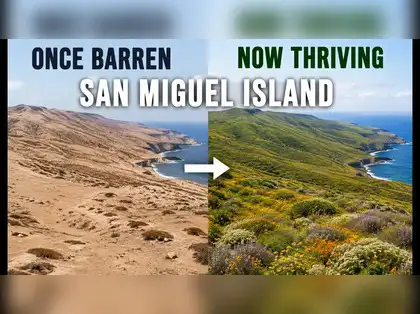
Surtsey, a volcanic island formed off Iceland in 1963, began as barren lava. Seeds arrived via wind, water, and birds. Over decades, pioneer species established, followed by grasses and shrubs. Today, Surtsey hosts over 60 plant species, illustrating nature’s capacity for rapid recovery (Surtsey Wikipedia).
The ongoing study of Surtsey demonstrates the stages of ecological succession and the critical role of dispersal, survival strategies, and environmental triggers in ecosystem development.
Human-assisted Restoration Of Barren Landscapes
Modern ecological restoration relies on understanding natural seed dispersal and establishment processes. Humans now play a vital role in rehabilitating degraded land.
Aerial Seeding And Reforestation
Aerial seeding delivers large quantities of seeds to remote or inaccessible barren areas.
- Drones and airplanes distribute seeds efficiently.
- Used in post-fire restoration, mining reclamation, and desert greening.
Aerial seeding is particularly valuable in regions where manual planting is impractical due to scale or inaccessibility. For example, in the aftermath of wildfires in North America and Australia, aerial seeding is often used to quickly stabilize soils, reduce erosion, and initiate ecological recovery.
Advances in drone technology have made it possible to target specific areas with precision, dropping seed “bombs” that contain not only seeds but also nutrients and protective coatings to enhance germination.
Soil Amendments And Irrigation
Restoration projects often use soil amendments and irrigation to improve seedling survival.
- Compost, mulch, and fertilizers enhance soil fertility.
- Drip irrigation supports seedlings in arid regions.
Soil amendments can transform unproductive, compacted, or eroded soils into environments capable of supporting plant growth. Organic matter improves water retention and nutrient availability, while mulches protect seedlings from temperature extremes and evaporation. In severely arid landscapes, drip irrigation systems are sometimes employed during the critical establishment phase, gradually reduced as plants mature and become self-sustaining.
Native Species Selection
Selecting native species ensures long-term ecosystem stability.
- Native plants are adapted to local conditions.
- Reduce invasive species risk and promote biodiversity.
The importance of using native species cannot be overstated. Native plants are inherently better suited to withstand local stresses, require less maintenance, and support local wildlife. Their use also minimizes the risk of introducing invasive species, which can disrupt ecosystem balance.
Restoration ecologists often conduct detailed surveys of remnant vegetation and historical records to guide species selection, ensuring that revegetated areas reflect the natural diversity and structure of the original ecosystem.
Case Study: Greening The Loess Plateau
China’s Loess Plateau restoration involved aerial seeding, soil improvement, and native species planting. Over two decades, vegetation cover increased from 20% to over 50%, reducing erosion and improving livelihoods (World Bank – Loess Plateau Project).
| Restoration Technique | Area Treated (km2) | Vegetation Increase (%) | Time to Establishment (Years) |
|---|---|---|---|
| Aerial Seeding | 1,000 | 30 | 5 |
| Soil Amendment | 800 | 40 | 4 |
| Native Species Planting | 1,200 | 50 | 6 |
The Loess Plateau project is a prime example of how integrating scientific knowledge with community participation and policy support can restore degraded landscapes at scale.
Challenges And Limitations In Seed Arrival And Growth
Despite nature’s ingenuity, not all seeds succeed in barren landscapes. Several challenges and limitations hinder successful colonization.
Harsh Environmental Conditions
Extreme temperatures, drought, and poor soil limit seed survival.
- High mortality rates among seedlings.
- Only highly adapted species persist.
Even with optimal dispersal and germination strategies, many seedlings fail to survive the rigors of the environment. Limited water availability, nutrient-poor soils, and exposure to intense sunlight or wind can quickly overwhelm young plants. In some cases, entire cohorts of seedlings perish during extended droughts, requiring repeated cycles of seed arrival and germination before stable populations become established.
Lack Of Symbiotic Partners
Absence of mycorrhizal fungi or pollinators can impede growth.
- Some seeds fail to germinate without symbiotic support.
- Restoration may require inoculation with beneficial microbes.
The absence of essential biotic partners, such as soil microbes or specific pollinators, can severely limit plant establishment. For example, many orchids require specific fungal partners to germinate and grow. In restoration projects, the introduction of appropriate microbial communities is sometimes necessary to facilitate successful revegetation.
Invasive Species Threat
Invasive plants can outcompete native seedlings, reducing biodiversity.
- Restoration projects must monitor and control invasives.
- Invasive dominance can alter ecosystem function.
Invasive species often possess traits—such as rapid growth, prolific seed production, and high tolerance for disturbance—that enable them to dominate recovering landscapes. Their presence can suppress native vegetation, reduce habitat quality for wildlife, and alter ecosystem processes such as fire regimes and nutrient cycling.
Human Disturbance
Continued human activity—mining, construction, pollution—can reverse progress.
- Requires ongoing management and protection.
- Legal frameworks and community engagement are vital.
Ongoing disturbance, whether from land use change, pollution, or recreational activities, can undermine restoration efforts. Long-term success depends on securing legal protections for recovering areas, engaging local communities in stewardship, and implementing adaptive management strategies to respond to emerging challenges.
Real-world Examples And Case Studies
Examining real-world scenarios highlights the resilience and adaptability of seeds in colonizing barren landscapes.
Mount St. Helens Regrowth
After the catastrophic 1980 eruption, Mount St. Helens was left nearly lifeless. Within months, wind- and animal-dispersed seeds began to colonize the ash-covered land. Over decades, vegetation recovered, with diverse plant communities now thriving (National Park Service – Mount St. Helens).
The regrowth at Mount St. Helens demonstrates the interplay of dispersal mechanisms, survival strategies, and ecological succession. Pioneer species such as fireweed and lupine established the first green patches, stabilizing soils and adding nitrogen. This facilitated the arrival of grasses, shrubs, and eventually trees, restoring a complex ecosystem over time.
Surtsey Island Formation
Surtsey’s emergence as a volcanic island provided scientists a unique opportunity to study colonization. Seeds arrived via wind, water, and seabirds, gradually establishing a stable plant community. The island remains a living laboratory for ecological succession (Nature – Surtsey Study).
Research on Surtsey continues to yield valuable insights into the processes of primary succession and the roles of dispersal and symbiosis in ecosystem development.
Atacama Desert Bloom
During rare rain events, the Atacama Desert’s dormant seeds germinate, creating a phenomenon known as “desierto florido.” This rapid transformation underscores seed resilience and the importance of environmental triggers (Scientific American – Atacama Desert Flowering).
The Atacama’s flowering events support a burst of ecological activity, attracting pollinators, birds, and other wildlife, and highlighting the interconnectedness of seeds, environment, and broader ecosystems.
Frequently Asked Questions
How Do Seeds Survive In Extremely Dry Or Hot Landscapes?
Seeds in arid environments often possess dormancy mechanisms and hard coats that prevent water loss and shield against heat. Some can remain viable for years, waiting for rare rain events to trigger germination. Additionally, many desert seeds are capable of rapid germination and growth, completing their life cycles in just a few weeks to take advantage of brief periods of moisture.
Can Seeds Grow In Landscapes Devoid Of Soil?
Yes. Pioneer species like lichens and mosses can colonize bare rock, gradually breaking it down to create soil. Once a thin layer forms, more complex plants can establish themselves. Over time, this process leads to the development of increasingly fertile soils capable of supporting diverse vegetation.
What Role Do Animals Play In Seed Arrival In Barren Landscapes?
Animals can carry seeds internally or externally, depositing them far from their origin. Birds, mammals, and even insects are crucial in dispersing seeds to new areas, especially after disturbances like fires or eruptions. Some animals, such as ants, even cultivate small gardens, moving seeds to protected sites where they are more likely to survive.
How Do Human Restoration Projects Support Seed Growth In Barren Areas?
Restoration projects use aerial seeding, soil amendments, and native species planting to facilitate seed arrival and establishment. These efforts are guided by ecological principles and aim to mimic natural processes. In some cases, restoration also involves the reintroduction of soil microbes or mycorrhizal fungi to improve seedling survival and growth.
Are Invasive Species A Threat In The Revegetation Of Barren Landscapes?
Yes. Invasive species can outcompete native seedlings, alter nutrient cycles, and reduce biodiversity. Restoration projects must monitor, manage, and prevent invasives to ensure successful ecosystem recovery. Ongoing vigilance and adaptive management are essential to maintain the integrity of restored landscapes.
Nature’s ability to transform barren landscapes into thriving ecosystems is a testament to the resilience and adaptability of seeds. Through diverse dispersal strategies, survival mechanisms, and environmental triggers, seeds overcome immense challenges to establish life where none seemed possible. Real-world examples—from volcanic islands to deserts—demonstrate this remarkable process.
Harnessing these insights, humans can restore degraded land, promote biodiversity, and help combat climate change. Ultimately, the journey of seeds in barren landscapes is a powerful reminder of the enduring strength and ingenuity of life itself. For more on this, see our guide on Landscaping .