How Big Are Brugmansia Angel Trumpet Bonsai Roots Really?
Brugmansia Angel Trumpet bonsai roots are a fascinating and challenging aspect of this dramatic plant’s cultivation. Their size, vigor, and unique growth patterns set them apart from traditional bonsai species, demanding specialized care and attention. By understanding root anatomy, measuring and managing root growth, and applying expert strategies, you can unlock the full potential of your Brugmansia bonsai and enjoy healthy, abundant blooms for years to come.
Brugmansia Angel Trumpet Bonsai Roots: Anatomy And Natural Growth Patterns
Brugmansia Root Structure Overview
Brugmansia’s adaptation to its native subtropical habitat is evident in its roots, which are capable of rapid expansion and deep penetration into the soil. This natural propensity ensures the plant can survive periods of drought and support its massive, pendulous flowers.
In their native environments, Brugmansia roots commonly reach depths of up to 3–4 feet and can spread horizontally several feet beyond the canopy. This ability is driven by the plant’s need to anchor itself and access water from deep reserves, allowing for sustained growth even in challenging conditions.
In bonsai culture, this innate vigor must be contained. While the taproot is often removed early in bonsai development to encourage lateral root growth and facilitate miniaturization, Brugmansia’s lateral and fibrous roots remain highly active. Over time, the lateral roots become woody and increase in diameter, providing structural support and facilitating nutrient uptake.
The fibrous roots, densely packed and fine, are responsible for absorbing moisture and nutrients efficiently, which is critical given the constraints imposed by the bonsai pot.
Root Size In Bonsai Conditions
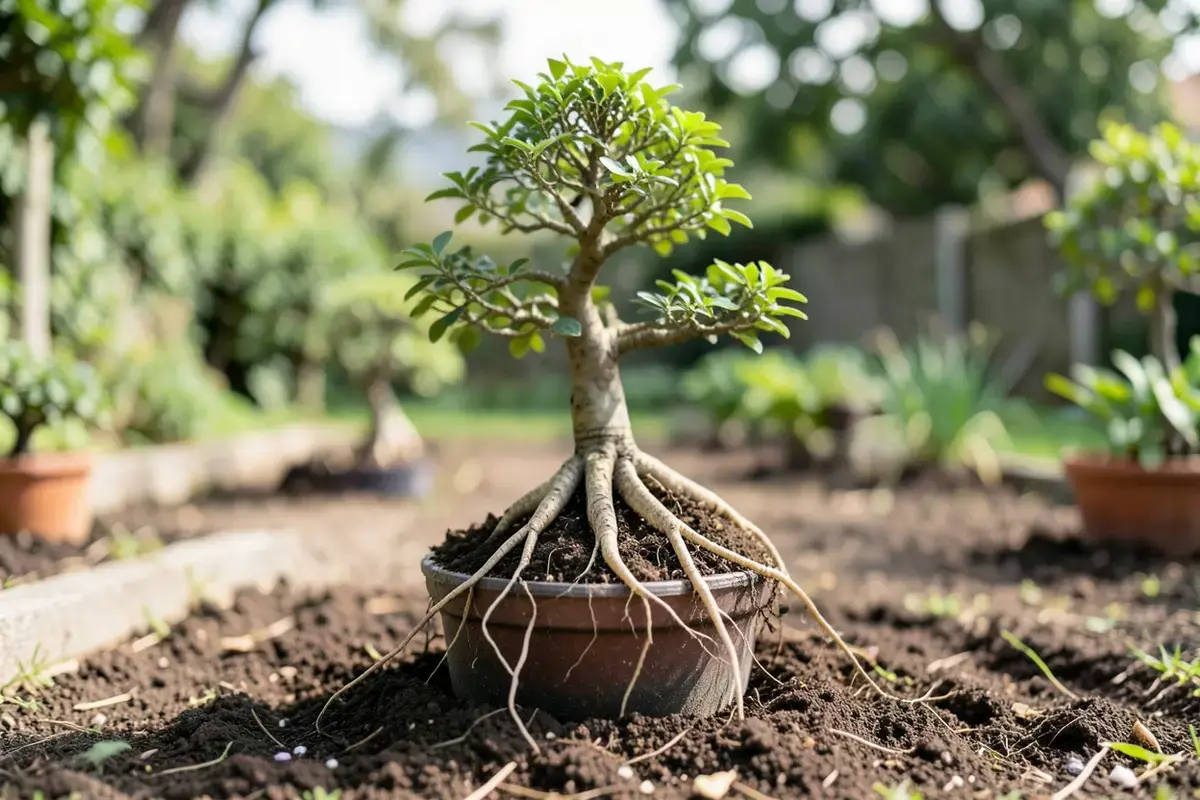
The size of Brugmansia roots in bonsai is dictated by both biological factors and horticultural practices. Younger Brugmansia bonsai, especially those under three years, typically exhibit roots ranging between 6–8 inches in length, primarily composed of fine, flexible roots. As the bonsai matures and receives regular pruning, the roots become more robust and woody. Mature specimens, especially those kept in larger containers, can see roots reach up to 18 inches. This expansion is not only horizontal; roots also seek depth, curling along the bottom of the pot and sometimes appearing at the soil surface.
Root pruning and pot selection play a pivotal role in regulating root size. For example, Brugmansia bonsai grown in 8-inch pots will tend to have roots maxing out around 8 inches, while those in 14-inch pots can stretch closer to the upper limit of 18 inches.
The interplay between root length and root mass is crucial—a root system that is too dense can become root-bound, while a sparse system may not support vigorous flowering.
Adaptations To Pot Culture
Brugmansia roots exhibit several adaptations when grown in containers:
- Roots often grow in tight, circular patterns, hugging the pot’s walls and base.
- The density of roots increases, leading to the formation of a dense root ball which, if left unmanaged, can impede water and nutrient movement.
- Secondary roots emerge from primary woody roots, creating a network that supports the trunk and branches.
This adaptation is essential for bonsai artists, as it allows for creative shaping and miniaturization. However, it also poses risks. High root density can lead to insufficient oxygenation, promoting root rot and reducing the bonsai’s lifespan. Careful monitoring and routine maintenance are required to balance root containment with plant health.
Impact Of Environmental Factors
Environmental factors—such as temperature, humidity, and soil composition—directly influence Brugmansia root growth. In regions with high humidity and warm temperatures, root growth accelerates, often doubling in mass within a single growing season. Conversely, in cooler climates or during winter dormancy, root activity slows dramatically.
Soil composition is equally important; dense, poorly drained soils inhibit root expansion, while well-aerated, nutrient-rich mixes promote healthy, fine roots.
For example, Brugmansia bonsai grown in southern California, with its warm, dry climate, require frequent watering and repotting due to rapid root expansion. In contrast, those grown in cooler, northern climates may need less frequent maintenance but should be protected from freezing to avoid root damage.
| Species | Typical Bonsai Root Length | Root Vigour | Repotting Frequency |
|---|---|---|---|
| Brugmansia Angel Trumpet | 8–18 inches | Very High | Every 1–2 years |
| Juniper | 6–10 inches | Moderate | Every 2–4 years |
| Japanese Maple | 5–12 inches | High | Every 2–3 years |
| Ficus | 8–15 inches | High | Every 1–3 years |

Credit: www.pixiesgardens.com
Measuring Brugmansia Bonsai Roots: Methods And Data
Direct Root Measurement Techniques
Accurate measurement of Brugmansia bonsai roots is essential for proper maintenance and pot selection. During repotting, roots can be gently unraveled and measured using a tape measure, providing an objective assessment of their length and density. Root tracing, where roots are laid flat and traced onto paper, is a useful technique for recording growth patterns over time and comparing year-to-year changes.
Photographic analysis, often employed by advanced bonsai growers, involves taking high-resolution images of the root ball and overlaying digital measurements. This method allows for precise tracking of root expansion and can highlight areas of concern, such as dense clusters or dead zones.
Data From Bonsai Growers And Researchers
Bonsai communities and horticultural researchers regularly share data on Brugmansia root growth. For instance, a survey conducted by the International Bonsai Society revealed that Brugmansia bonsai roots in 10–12 inch pots consistently reached lengths of 10–15 inches within two years, with fine roots forming a dense mat at the soil surface. Botanical gardens report similar findings, noting that Brugmansia’s root mass can fill nearly the entire pot volume, demanding frequent intervention.
The Royal Horticultural Society’s studies emphasize the importance of root pruning, finding that annual removal of up to 30% of root mass prevents root-bound conditions and encourages healthier, more prolific flowering.
Root Volume Vs Root Length
Root health is not solely determined by length; volume and density are equally important. Brugmansia roots, renowned for their rapid mass accumulation, can quickly lead to root-bound conditions in bonsai pots. This restricts water and nutrient uptake, resulting in symptoms such as leaf drop, reduced flowering, and stunted growth.
A healthy Brugmansia bonsai root system should balance length with density. Fine, fibrous roots should dominate, providing ample surface area for absorption without overwhelming the pot.
Comparison With Other Bonsai Species
The aggressive growth of Brugmansia roots starkly contrasts with slower-growing species like pine or juniper. Brugmansia’s roots increase in mass by 30–40% per year, necessitating larger pots and more frequent repotting. In comparison, pines may only see a 10–15% increase, requiring less maintenance.
| Species | Root Mass Increase/Year | Root Length/Year | Pot Size Required |
|---|---|---|---|
| Brugmansia Angel Trumpet | 30–40% | 6–10 inches | 10–12 inches minimum |
| Pine | 10–15% | 2–4 inches | 8–10 inches |
| Azalea | 20–25% | 4–6 inches | 10 inches |
Case Study: Measuring Brugmansia Roots In A 5-year Bonsai
A Florida grower’s 5-year-old Brugmansia bonsai exemplifies the species’ root vigor:
- Pot size: 12 inches diameter
- Longest roots: 17 inches, curling along the pot base
- Root mass: Occupied 95% of pot volume
- Pruning interval: Every 18 months
After each repotting, the bonsai produced a flush of new flowers, indicating improved health and vitality. This case demonstrates the necessity of regular root management for Brugmansia bonsai success.
Managing Brugmansia Bonsai Roots: Pruning, Repotting, And Soil Selection
Root Pruning Best Practices
Root pruning is more than just cutting away excess roots; it’s an art form in bonsai cultivation. For Brugmansia, the process involves:
- Removing up to one-third of the root mass during repotting, focusing on thick, woody roots that may impede water movement.
- Trimming fine roots, especially those that have become tangled or dense, to stimulate new growth and prevent root-bound conditions.
- Disinfecting tools before and after pruning to prevent the spread of fungal or bacterial diseases.
Seasoned bonsai artists recommend root pruning in early spring, just before new growth begins. This timing ensures rapid recovery and minimizes stress.
Repotting Frequency And Signs
Brugmansia bonsai require repotting every 1–2 years, with some specimens needing annual intervention. Signs that repotting is needed include:
- Roots visible at the soil surface or through drainage holes
- Water draining either too quickly (indicating root-bound soil) or too slowly (suggesting dense, compacted roots)
- Decreased flowering or leaf yellowing
- Soil that becomes compacted or develops a sour odor
Neglecting repotting can result in stunted growth, increased susceptibility to disease, and eventual death of the bonsai.
Soil Selection For Root Health
Soil choice is pivotal for Brugmansia bonsai root health. The best mixes are:
- Rich in organic matter, providing nutrients for rapid root growth
- Well-drained, preventing waterlogging and root rot
- Incorporating perlite, pumice, and pine bark for aeration
A typical Brugmansia bonsai soil recipe:
- 40% organic compost for nutrients
- 30% perlite for aeration
- 20% pine bark for structure
- 10% sand for drainage
This blend ensures a balance between moisture retention and drainage, supporting robust root systems.
Watering And Fertilization Strategies
Brugmansia roots are sensitive to both drought and overwatering. Watering should be consistent, allowing the top inch of soil to dry before rewatering. Monthly fertilization with a balanced, slow-release fertilizer is recommended, but avoid high-nitrogen formulas, as they can promote excessive foliage at the expense of flowers.
Proper watering and fertilization not only support root health but also enhance flowering and overall plant vigor.
Case Study: Root Management Success
A California bonsai artist documented a dramatic improvement in their Brugmansia bonsai after switching to a well-aerated soil mix and increasing repotting frequency. Flower production doubled, leaf drop decreased, and roots remained healthy with minimal signs of rot. This case underscores the importance of soil selection and regular root maintenance.
Challenges Unique To Brugmansia Bonsai Roots
Root-bound Stress And Its Symptoms
Brugmansia bonsai are particularly prone to root-bound stress due to their vigorous growth. Symptoms include:
- Stunted growth and smaller leaves
- Wilting despite adequate watering
- Reduced flower size and number
- Roots visibly circling the pot’s base and sides
Addressing root-bound conditions through prompt repotting and root pruning is essential for maintaining plant health.
Root Rot And Disease Management
Root rot is a common issue in Brugmansia bonsai, particularly when grown in poorly drained soil or overwatered. Prevention involves:
- Using sterile soil mixes and tools
- Ensuring pots have adequate drainage holes
- Avoiding overwatering and allowing the soil to dry between waterings
If root rot occurs, affected roots should be removed, and the bonsai repotted in fresh soil. Fungicide treatments may be necessary, but improving drainage is the most effective long-term solution.
Pest Problems Affecting Roots
Brugmansia roots can fall victim to pests such as root aphids, nematodes, and fungus gnats. These pests compromise root health, leading to reduced growth and flowering. Integrated pest management includes soil drenching with insecticides, removing affected soil, and introducing beneficial nematodes to control populations.
Winter Dormancy And Root Care
During winter dormancy, Brugmansia bonsai roots slow their growth. It’s important to:
- Reduce watering to prevent root rot
- Avoid fertilization, as the plant’s nutrient needs decrease
- Protect the bonsai from freezing temperatures, which can damage roots
Proper winter care ensures roots remain healthy and ready for vigorous spring growth.
Case Study: Overcoming Root Rot In Brugmansia Bonsai
A grower in Oregon successfully revived their Brugmansia bonsai after severe root rot by removing all affected roots, repotting in a well-drained mix, and reducing watering frequency. Within six months, the bonsai regained vigor and produced abundant blooms, demonstrating the plant’s resilience with proper care.
Root Size And Its Impact On Bonsai Aesthetics And Longevity
Influence On Trunk And Branch Development
Healthy roots are the foundation of impressive trunk and branch development in Brugmansia bonsai. Vigorous roots support thicker trunks, stronger branches, and more prolific flowering. Bonsai artists often manipulate root growth to enhance the visual appeal of the plant, using pruning and training to create dramatic, miniature trees.
Pot Selection And Display Considerations
The size and shape of the pot directly impact both root health and aesthetics. Shallow pots are suitable for younger bonsai with smaller roots, while deeper pots are needed for mature specimens with thicker, woodier roots. The pot’s color and style should complement the plant, enhancing its display without compromising root health.
Flowering Performance And Root Constraints
Root constraints can limit flowering, but proper management ensures abundant blooms. By balancing root size with pot capacity, bonsai artists can maximize both aesthetics and plant health. Frequent repotting and pruning support a cycle of vigorous growth and spectacular flowering.
Longevity: How Root Management Extends Bonsai Life
With careful root management, Brugmansia bonsai can live for decades, becoming more impressive with age. Regular repotting, pruning of thick roots, and maintaining soil health are essential practices for longevity. Long-lived Brugmansia bonsai develop dramatic trunks and branches, supported by healthy, compact root systems.
Comparing Brugmansia Bonsai Roots With Other Bonsai Species
Brugmansia Vs Classic Bonsai Roots
Brugmansia roots are notably more vigorous, thicker, and woodier than classic bonsai species like juniper or pine. This necessitates larger pots, more frequent repotting, and specialized soil mixes to prevent root-bound conditions and disease.
Data Table: Brugmansia Vs Juniper Vs Maple
| Species | Root Growth Rate | Repotting Needs | Root Pruning Tolerance |
|---|---|---|---|
| Brugmansia Angel Trumpet | High | Annual/Biennial | Moderate |
| Juniper | Low | Every 3–4 years | High |
| Japanese Maple | Moderate | Every 2–3 years | High |
Practical Implications For Bonsai Artists
Bonsai artists working with Brugmansia must adapt their techniques to account for the plant’s unique requirements. This includes selecting larger pots, monitoring soil and water closely, and employing more frequent root pruning and repotting.
Case Study: Brugmansia Bonsai In Comparison To Ficus
A Texas collector compared Brugmansia and Ficus bonsai over two growing seasons. Brugmansia roots filled the pot in 12 months, necessitating repotting, while Ficus roots took 24 months. Brugmansia produced larger flowers but required more maintenance. The collector noted that Brugmansia’s rewards—dramatic blooms and striking form—justified the additional effort.
Real-world Examples And Expert Insights
Example 1: Brugmansia Bonsai In A 14-inch Pot
A 7-year-old Brugmansia bonsai in a 14-inch pot had roots measuring up to 18 inches, curling along the pot base. The dense fibrous root network required annual repotting to maintain health and vigor. The owner observed that skipping repotting led to rapid decline in flowering and overall plant vitality.
Example 2: Brugmansia Bonsai Display At Botanical Garden
At the Missouri Botanical Garden, Brugmansia bonsai specimens showcased visible roots at the soil surface, with pot-bound roots trimmed annually. The soil mix was carefully optimized for drainage, and staff emphasized that diligent root management was key to maintaining show-quality plants.
Example 3: Brugmansia Bonsai In Outdoor Collection
A California enthusiast maintained their Brugmansia bonsai outdoors, with roots reaching pot walls within 15 months. Frequent watering was necessary due to the dense root mass, and spring pruning improved flowering and overall plant health. This example highlights the impact of environment and maintenance on root development.
Expert Tip: Root Training For Miniaturization
Bonsai masters advise early root pruning to encourage fine roots, avoiding deep pots to maintain compact root systems, and using soil screens to prevent root escape. These techniques support miniaturization while preserving plant health, making Brugmansia bonsai both visually striking and sustainable.
Brugmansia Bonsai Root Care: Step-by-step Guide
Preparing For Root Pruning
- Gather sterilized tools: Scissors, root rake, pruning saw.
- Prepare new soil mix as outlined above.
- Water bonsai thoroughly before removal to ease root extraction.
Removing The Bonsai From Pot
- Gently loosen soil around the edges.
- Remove bonsai and shake off excess soil.
- Inspect root ball for dead, diseased, or circling roots.
Pruning Roots
- Trim thick, woody roots by up to 1/3.
- Remove circling roots to prevent future root-bound conditions.
- Prune fine roots to stimulate new, healthy growth.
Repotting And Aftercare
- Place bonsai in new soil mix, spreading roots evenly.
- Water thoroughly to settle soil.
- Place bonsai in a shaded area for 2–3 weeks to recover.
Monitoring Recovery
- Watch for new root and leaf growth.
- Resume fertilization after four weeks.
- Check for signs of stress or disease.
Brugmansia Bonsai Roots And Pot Selection: Data-driven Choices
Pot Size Recommendations
- Young Brugmansia bonsai: 8–10 inch pots for early development
- Mature specimens: 12–14 inch pots to accommodate thicker roots
- Avoid pots smaller than 8 inches to prevent root stress and stunted growth
Pot Material And Drainage
- Ceramic pots retain moisture but must have adequate drainage holes.
- Plastic pots are lightweight and suitable for frequent repotting.
- Unglazed clay pots are breathable, supporting root health and preventing rot.
Pot Shape And Root Behavior
- Shallow pots encourage horizontal root spread and miniaturization.
- Deep pots support thicker roots but may reduce bonsai aesthetics.
Table: Pot Size Vs Root Expansion
| Pot Size | Max Root Length | Repotting Frequency | Flowering Potential |
|---|---|---|---|
| 8 inches | 6–8 inches | Annually | Moderate |
| 12 inches | 12–15 inches | Every 18 months | High |
| 14 inches | 15–18 inches | Every 2 years | Very High |
Case Study: Pot Selection Impact
A bonsai grower transitioned from an 8-inch to a 12-inch pot, resulting in a 40% increase in root growth and a doubling of flowering in the first season. The larger pot allowed the roots to expand and improved overall plant health, reducing the frequency of repotting.
Root Health And Troubleshooting: Common Problems And Solutions
Signs Of Unhealthy Roots
- Brown, mushy roots indicate rot
- Dry, brittle roots signal underwatering
- Foul odor from soil suggests disease or poor drainage
Solutions For Root Issues
- Repot in fresh, well-drained soil to improve oxygenation.
- Prune affected roots to remove diseased tissue.
- Adjust watering regimen to match environmental conditions.
Preventive Measures
- Use sterile tools and soil for every repotting.
- Ensure pots have adequate drainage.
- Inspect roots during each repotting for early signs of trouble.
External Resources
For more detailed information on root health and Brugmansia care, visit Wikipedia: Brugmansia and Royal Horticultural Society.
Advanced Techniques: Root Training And Miniaturization
Root Pruning For Shape And Structure
Strategic root pruning allows bonsai artists to match root structure with desired trunk and branch development. Using root screens and mesh pots can direct growth, ensuring roots remain compact and healthy.
Air Pruning Methods
Air pots and mesh pots are innovative solutions that encourage fine root development by exposing roots to air, naturally pruning them and preventing circling. This technique results in a denser, healthier root system that supports miniaturization.
Root Grafting And Enhancements
Root grafting, often used in advanced bonsai cultivation, enhances stability and aesthetics. By grafting roots at strategic locations, artists can create dramatic forms and strengthen the plant.
Expert Tips
- Begin root training early in the bonsai’s development.
- Monitor for signs of stress after advanced techniques, and provide extra care as needed.
For further guidance, consult Bonsai Empire and Bonsai Outlet.
Frequently Asked Questions
How Big Can Brugmansia Angel Trumpet Bonsai Roots Get In A Pot?
Brugmansia bonsai roots can reach 12–18 inches in length in larger pots, often filling the pot and curling along the base and sides. Root mass increases rapidly, requiring regular pruning and repotting to maintain health.
How Often Should I Repot My Brugmansia Bonsai To Manage Root Size?
Repotting is recommended every 1–2 years for Brugmansia bonsai due to their vigorous root growth. Signs of needed repotting include roots circling the pot, poor drainage, and decreased flowering.
What Soil Mix Is Best For Brugmansia Bonsai Roots?
A well-drained, organic-rich mix is ideal. Combine compost, perlite, pine bark, and sand to promote healthy roots and prevent rot. Avoid compacted or waterlogged soils, which can cause root rot.
Can Root-bound Brugmansia Bonsai Recover With Proper Care?
Yes, root-bound Brugmansia bonsai can recover if roots are pruned, the plant is repotted in fresh soil, and watering is adjusted. Recovery may take several months, but flowering and health will improve with proper care.
Are Brugmansia Roots More Aggressive Than Other Bonsai Species?
Absolutely. Brugmansia roots are much more vigorous than classic species like juniper or maple, filling pots faster and requiring more frequent maintenance. Proper root care is essential for successful Brugmansia bonsai cultivation.
External Links And Further Reading
- Wikipedia: Brugmansia
- Royal Horticultural Society
- Bonsai Empire
- Bonsai Outlet
- Missouri Botanical Garden
- Gardeners’ World
Brugmansia Angel Trumpet bonsai roots are a complex, dynamic system that demands attention, skill, and patience. By mastering root management—through measurement, pruning, soil selection, and pot optimization—bonsai artists can enjoy the spectacular blooms and dramatic forms that make Brugmansia one of the most rewarding bonsai species.
With proper care, your Brugmansia bonsai will thrive, delighting with its fragrance and flowers for many years to come.