Does Mitosis Occur in Root Tips in Plants? Clear Answer
The humble root tip is often overlooked in discussions about plant biology, yet it’s a powerhouse of growth and cellular activity. At the heart of this activity lies mitosis, the process by which cells divide to produce new cells—driving the expansion and health of nearly every plant on Earth. But does mitosis actually occur in root tips? The answer is unequivocal: yes. Root tips are among the most active sites of mitosis, playing a critical role in plant development, nutrient uptake, and adaptation to environmental challenges.
Understanding how and why mitosis happens in root tips isn’t just an academic exercise; it’s a window into plant vitality, agricultural innovation, and even environmental resilience. This article dives deep into the science behind mitosis in root tips, breaking down the cellular mechanics, exploring real-world examples, and comparing root tip mitosis to cell division in other plant tissues.
Whether you’re a student, researcher, or plant enthusiast, you’ll discover practical insights and authoritative answers to one of the most fundamental questions in botany.
Key Takeaways
- Mitosis is highly active in root tips, making them essential for plant growth and development.
- Root tip cells are a model system for studying mitosis due to their accessibility and rapid division rates.
- Mitosis in root tips enables root elongation, nutrient acquisition, and plant adaptation.
- Comparison with other plant tissues shows root tips have the highest mitotic activity.
- Research, agriculture, and biotechnology rely on understanding root tip mitosis for innovations and improved crop yields.
- Root tips are used in educational and laboratory settings to visualize and analyze mitosis.
The Biology Of Mitosis In Root Tips
The Structure Of Root Tips
Root tips are composed of several distinct regions, each serving a unique function. At the very tip is the root cap, which protects the delicate cells as the root pushes through soil. Just behind the root cap lies the apical meristem, a zone of undifferentiated cells that undergo rapid mitosis. This region is responsible for the majority of root growth.
The root tip can be divided into:
- Root cap: Protects the meristematic tissue.
- Meristematic zone: Where mitosis is most active.
- Elongation zone: Cells increase in size, pushing the root further into the soil.
- Maturation zone: Cells differentiate into specialized types.
This structural organization ensures that mitosis is concentrated in the meristematic zone, producing new cells that are pushed forward as the root grows.
Expanding further, the meristematic zone itself is highly organized, with cells arranged in tightly packed clusters. These cells are characterized by their small size, thin cell walls, and prominent nuclei, which indicate their readiness for division. The root cap, composed of parenchyma cells, not only acts as a physical shield but also secretes mucilage to lubricate the root’s passage through soil particles.
As new cells form in the meristem, older cells are pushed outward into the elongation zone, where they begin to stretch and increase in length, providing the mechanical force necessary for root penetration.
In the maturation zone, cells begin to acquire specialized functions such as water and nutrient absorption, forming root hairs and vascular tissues. This gradation from undifferentiated to specialized cells is a hallmark of plant development, and the root tip’s distinct zones provide an ideal system for studying how mitosis underpins growth and differentiation.
The Role Of Mitosis In Plant Growth
Mitosis is essential for:
- Root elongation: New cells are created, allowing the root to grow and explore soil for water and nutrients.
- Repair and regeneration: Damaged root cells are replaced efficiently.
- Adaptation: Plants respond to environmental stresses by increasing mitotic activity.
The process involves several phases:
- Prophase: Chromosomes condense and spindle fibers form.
- Metaphase: Chromosomes align at the cell’s equator.
- Anaphase: Chromosomes separate and move to opposite poles.
- Telophase: Nuclear membranes reform and the cell divides.
This cycle is repeated continually in the root tip, fueling plant growth.
Expanding on this, mitosis not only produces new cells but also maintains genetic stability. Each daughter cell receives a complete set of chromosomes, ensuring the proper functioning of root tissues. In rapidly growing plants, such as grasses and cereal crops, mitosis in the root tip can occur multiple times per day, with cycles lasting only a few hours.
This rapid turnover enables roots to quickly adapt to changing soil conditions, such as the presence of new nutrients or water sources.
Mitosis also plays a crucial role in wound healing. If a root is damaged by pests or mechanical injury, meristematic cells initiate mitosis to replace lost cells. This regenerative capacity is vital for plant survival, particularly in challenging environments where roots face frequent disturbances.
Moreover, mitosis in the root tip supports the formation of lateral roots. As cells divide and differentiate, some become part of the pericycle, from which new lateral roots emerge. This branching increases the root system’s surface area, enhancing the plant’s ability to absorb water and nutrients.
Cellular Dynamics In The Meristematic Zone
Meristematic cells are unique:
- They have dense cytoplasm and large nuclei.
- They lack vacuoles, unlike mature plant cells.
- Their cell walls are thin, allowing easy division.
These features make root tip cells ideal for mitosis, as they can rapidly divide and differentiate.
Delving deeper, meristematic cells exhibit high metabolic activity, with abundant mitochondria and ribosomes to fuel the energy-intensive process of cell division. The absence of large vacuoles ensures that resources are directed toward mitosis rather than storage. These cells are also highly responsive to plant hormones such as auxins and cytokinins, which regulate the rate and orientation of division.
As cells progress through mitosis, they undergo dramatic changes in shape and internal structure. Chromatin condenses into visible chromosomes, the mitotic spindle assembles, and the cytoskeleton reorganizes to facilitate cytokinesis. These dynamic events are tightly controlled by cell cycle checkpoints, which ensure that division proceeds only when conditions are favorable.
The meristematic zone’s cellular architecture makes it a prime target for research into cell cycle regulation, genetic expression, and developmental biology. Scientists often use molecular markers to track mitotic activity and identify key genes involved in cell division, providing insights into how plants grow and adapt.
Data-driven Example: Onion Root Tip
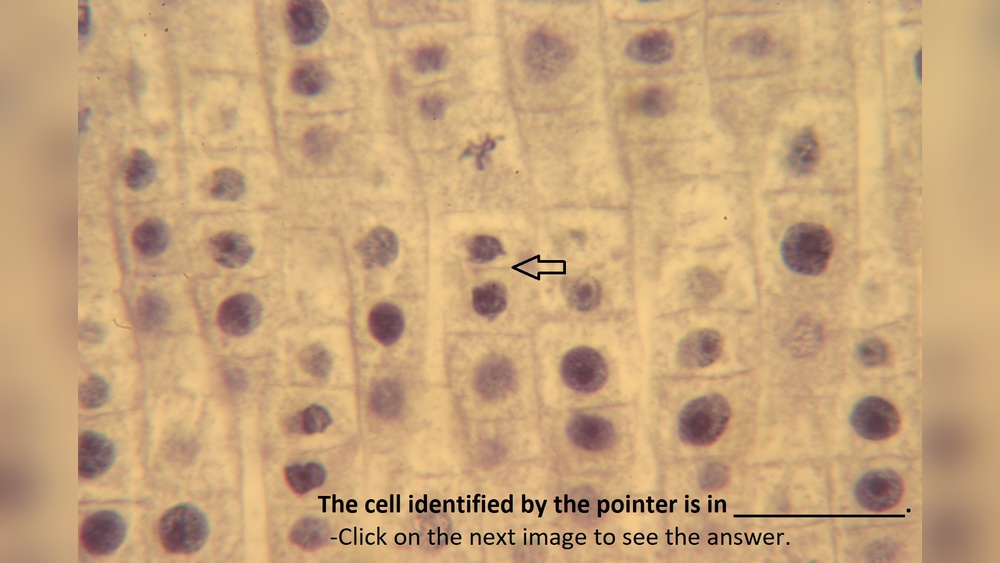
The onion (Allium cepa) is a classic model for studying mitosis. Research shows that onion root tips have a mitotic index (percentage of cells in mitosis) of about 10-12%, significantly higher than other tissues. This makes them perfect for laboratory visualization and teaching.
| Tissue Type | Mitotic Index (%) | Common Use in Research |
|---|---|---|
| Root Tip (Onion) | 10-12 | Educational, Cytology Studies |
| Leaf Tissue | 0.5-1 | Limited, Mostly Photosynthesis Research |
| Stem Tissue | 2-4 | Developmental Studies |
Onion root tips are particularly useful because their cells are large and the chromosomes are easily stained and observed under a microscope. This has enabled educators and researchers to develop standardized protocols for mitosis visualization, such as the “squash technique,” which spreads root tip cells on a slide for clear examination.
The high mitotic index also means that a single slide often contains cells at every stage of mitosis, making it possible to study the full cycle in detail.
Why Mitosis Is Concentrated In Root Tips
The Need For Continuous Growth
Roots must continually grow to:
- Access water deeper in the soil.
- Anchor the plant securely.
- Explore new areas for nutrients.
This requires a constant supply of new cells, provided by active mitosis in the root tip.
Expanding, plants rely on root growth not only for anchorage but also for competitive advantage. In ecosystems where multiple plants vie for resources, those with more active root tip mitosis can expand their root systems faster, outcompeting neighbors for water and nutrients.
This is especially important in annual crops, which must establish robust root systems quickly to maximize yield within a single growing season.
Continuous growth also allows roots to respond to environmental changes. For example, if a dry patch of soil is encountered, roots can redirect their growth toward moister regions, a process known as hydrotropism. This adaptability is driven by differential mitosis in the root tips, with cells dividing more rapidly on the side closest to the water source.
Environmental Responses And Root Adaptation
Root tips adjust their growth rate in response to:
- Soil moisture: Drier conditions stimulate more mitosis.
- Nutrient availability: Roots proliferate in nutrient-rich zones.
- Physical barriers: Roots grow around obstacles, requiring new cells.
This adaptability is powered by meristematic mitosis.
To illustrate, roots exposed to uneven soil conditions can change their growth patterns through localized increases in mitotic activity. If nutrients like nitrogen or phosphorus are concentrated in one area, roots will generate more cells in that direction, optimizing resource uptake.
Similarly, in compacted soils, roots may increase mitosis to produce more robust cells capable of penetrating hard substrates.
Environmental cues are detected by specialized sensors in the root cap and meristem, which trigger signaling pathways to modulate mitosis. For example, auxins are redistributed in response to gravity and water gradients, influencing the orientation and rate of cell division.
This finely tuned response allows plants to survive and thrive in diverse environments.
Comparison With Other Growth Sites
While mitosis occurs in other plant regions, root tips have the highest activity due to their role in:
- Primary growth: Extending roots and stems.
- Secondary growth: Increasing thickness (in woody plants).
Leaf and stem tissues have lower mitotic indices, focusing more on cell expansion and differentiation.
Expanding, primary growth is essential for young plants, enabling them to increase in length and access new resources. Secondary growth, which occurs in the vascular cambium, is more important in mature, woody plants, where the focus shifts to increasing girth and structural support.
However, even in trees, root tip mitosis remains critical for exploring new soil regions and maintaining overall health.
In contrast, leaves primarily expand through cell enlargement rather than division. Most mitotic activity in leaves occurs during early development, after which cells specialize for photosynthesis and gas exchange. Stem tissues show intermediate mitotic rates, supporting both elongation and branching but not at the level seen in root tips.
Case Study: Corn Root Tips
In corn (Zea mays), studies show that root tips exhibit a mitotic index of 8-10%, compared to only 2% in stem tissues. Corn roots grow rapidly, sometimes several centimeters per day, thanks to vigorous mitosis in the root tip.
| Plant Species | Root Tip Mitotic Index (%) | Stem Mitotic Index (%) |
|---|---|---|
| Onion | 11 | 3 |
| Corn | 9 | 2 |
| Arabidopsis | 8 | 2 |
In addition to rapid growth, corn roots are capable of forming extensive lateral systems, increasing their ability to absorb nutrients and water. This is particularly important in agricultural settings, where competition for resources is intense and optimal root growth is essential for high yields.
Real-world Example: Wheat Root Tips
In wheat (Triticum aestivum), drought stress triggers increased mitosis in root tips, enabling roots to penetrate deeper soils and access water. This is a key adaptation for crop survival and yield improvement.
Wheat varieties bred for enhanced root tip mitosis show greater resilience under adverse conditions, maintaining productivity even during dry spells. Researchers monitor root tip mitosis as part of breeding programs, selecting plants with superior cell division rates to improve crop performance.

How Scientists Study Mitosis In Root Tips
Laboratory Techniques
Root tips are ideal for studying mitosis due to:
- Easy accessibility: Simple to harvest and prepare.
- High mitotic index: Easier to observe dividing cells.
Common techniques include:
- Staining: Dyes like acetocarmine or Feulgen stain chromosomes for visualization.
- Microscopy: Light and electron microscopes reveal mitotic stages.
- Cell counting: Researchers quantify mitotic index for statistical analysis.
Expanding, scientists often use advanced staining techniques to differentiate between mitotic stages. Feulgen staining, for example, specifically binds to DNA, allowing clear visualization of chromosomes. Acetocarmine stains the entire nucleus, making it easier to identify cells undergoing division. These stains are applied after fixing the root tips in a preservative solution, followed by squashing the tissue onto slides.
Microscopy has evolved significantly, with modern digital imaging enabling high-resolution visualization and automated cell counting. Electron microscopy reveals ultrastructural details such as spindle fibers and centrosomes, providing insights into the mechanics of mitosis.
Researchers also employ molecular probes and fluorescent markers to track specific proteins involved in mitosis. This allows for detailed analysis of cell cycle regulation and identification of mutations that affect division rates.
Educational Applications
Root tips are frequently used in classrooms:
- Onion root tip slides are standard for teaching mitosis.
- Students can identify prophase, metaphase, anaphase, and telophase.
This approach is recommended by the Nature Journal for its effectiveness in science education.
Expanding, interactive labs often encourage students to estimate the mitotic index by counting cells at each stage of division. This hands-on approach fosters a deeper understanding of cell biology and the importance of mitosis in plant growth. Digital platforms and virtual microscopes now allow remote learning, enabling students worldwide to observe mitosis in root tips using high-quality images and instructional videos.
Advances In Imaging Technology
Modern techniques include:
- Fluorescent labeling: Highlights specific proteins involved in mitosis.
- Confocal microscopy: Provides 3D images of dividing cells.
- Time-lapse videos: Show real-time mitosis in root tips.
These innovations drive research in plant development and genetics.
Fluorescent dyes and antibodies can tag components like microtubules, kinetochores, and chromosomes, revealing their behavior during division. Confocal microscopy allows researchers to construct three-dimensional models of dividing cells, facilitating the study of spatial relationships and structural changes.
Time-lapse imaging enables observation of mitosis as it unfolds, capturing dynamic events such as chromosome movement and cytokinesis. These techniques are invaluable for uncovering the effects of environmental stress, genetic mutations, or chemical treatments on cell division.
Case Study: Arabidopsis Root Tip Research
Arabidopsis thaliana, a model organism, is used in genetic studies of mitosis. Researchers at Wikipedia report that Arabidopsis root tips reveal gene mutations affecting mitosis, informing plant breeding and biotechnology.
Expanding, Arabidopsis offers unique advantages due to its small genome, short life cycle, and ease of genetic manipulation. Scientists have identified numerous genes that regulate mitosis, such as those encoding cyclins, kinases, and cell cycle checkpoints. Mutant analysis allows researchers to pinpoint the effects of specific genes on root tip division, providing valuable information for crop improvement.
Gene editing technologies like CRISPR are now being used to modify mitosis-related genes in Arabidopsis and other crops, opening new avenues for enhancing root growth and stress resistance.

The Importance Of Mitosis In Root Tips For Agriculture
Crop Yield And Root Health
Healthy root tips, fueled by active mitosis, are critical for:
- Efficient nutrient uptake
- Robust plant anchorage
- Disease resistance
Agronomists monitor root tip health as an indicator of overall crop vigor.
Expanding, root tip mitosis is closely linked to yield potential in major crops. Plants with vigorous root systems can access more water and nutrients, translating into stronger growth and higher productivity. Conversely, poor mitotic activity in root tips often results in stunted roots, reduced nutrient absorption, and lower yields.
Root health is also vital for disease resistance. Many soil-borne pathogens attack the root tip, and rapid mitosis enables plants to quickly replace damaged cells and maintain a protective barrier. Monitoring root tip mitosis helps agronomists diagnose problems early and implement corrective measures.
Breeding And Biotechnology
Understanding mitosis aids in:
- Developing drought-resistant varieties
- Enhancing root growth
- Genetic engineering for improved yields
The ScienceDirect Journal highlights advances in root tip biotechnology for sustainable agriculture.
Expanding, modern breeding programs use molecular markers and genomic selection to identify plants with superior root tip mitosis. Genetic engineering can introduce traits such as enhanced cell division, improved hormone sensitivity, and resistance to environmental stress.
Biotechnological advances also enable the manipulation of signaling pathways that control mitosis. For example, modifying auxin transport genes can increase root tip division, leading to larger root systems. Such innovations are critical for developing crops that thrive under challenging conditions and support sustainable agriculture.
Soil Management Strategies
Farmers optimize soil conditions to support root tip mitosis:
- Fertilization: Ensures nutrients for cell division.
- Irrigation: Maintains moisture for healthy roots.
- Tillage: Reduces soil compaction, enabling root penetration.
These practices maximize crop performance.
Expanding, precision agriculture techniques now allow farmers to monitor soil conditions in real time and adjust management practices accordingly. Sensors can detect moisture levels, nutrient concentrations, and compaction, providing data that inform irrigation schedules and fertilization rates.
Soil amendments such as compost, biochar, and organic fertilizers improve soil structure and nutrient availability, promoting healthy root tip mitosis. Reduced tillage and cover cropping minimize soil disturbance, preserving the integrity of the meristematic zone and supporting continuous growth.
Real-world Example: Rice Root Tip Growth
In rice (Oryza sativa), research shows that phosphorus fertilization boosts mitosis in root tips, leading to greater root biomass and higher yields. This underscores the practical value of understanding mitosis in root tips.
Expanding, rice farmers often conduct soil tests to determine phosphorus levels and apply targeted fertilizers to stimulate root tip mitosis. Enhanced root growth not only supports higher yields but also improves resilience against flooding and drought, common challenges in rice cultivation.
Comparing Mitosis In Root Tips With Other Plant Tissues
Root Tips Vs. Shoot Tips
Both root tips and shoot tips contain apical meristems, but their mitotic rates differ. Root tips usually have higher mitotic indices due to their constant need for growth and exploration.
| Feature | Root Tips | Shoot Tips |
|---|---|---|
| Mitotic Index | 8-12% | 5-8% |
| Main Function | Root elongation | Stem and leaf growth |
| Adaptability | Responsive to soil conditions | Responsive to light and gravity |
Expanding, shoot tips must adapt to changing light conditions, gravity, and environmental signals, which can influence their mitotic activity. However, the requirement for constant exploration of the soil by roots means that mitosis is more sustained and intense in root tips.
Shoot tip mitosis is critical during periods of active growth, such as springtime in temperate climates, but often slows during dormancy.
Root Tips Vs. Leaf Tissues
Leaf tissues have low mitotic activity since their main function is photosynthesis, not growth.
- Root tips: High mitosis for growth
- Leaf tissues: Low mitosis, focus on cell expansion and photosynthesis
Expanding, mitosis in leaf tissues is primarily restricted to early development and wound repair. As leaves mature, their cells specialize for photosynthetic efficiency, gas exchange, and water regulation. The majority of leaf growth occurs through cell expansion, a process driven by vacuole enlargement rather than division.
Root Tips Vs. Lateral Roots
Lateral roots form from the pericycle, another site of mitosis, but at a lower rate compared to root tips. They contribute to root branching and increased surface area.
Expanding, the initiation of lateral roots involves localized mitotic activity in the pericycle, triggered by hormonal signals such as auxin. Once lateral roots are established, their own tips become sites of active mitosis, further expanding the root system. This process is essential for maximizing nutrient and water uptake, especially in crops grown in nutrient-poor soils.
Case Study: Mutant Analysis In Plant Tissues
A study in Arabidopsis found that mutations affecting mitosis in root tips led to stunted root growth, while similar mutations in leaf tissues caused minimal impact. This confirms the critical role of root tip mitosis.
Expanding, such mutant studies provide valuable information for crop improvement. By identifying genes essential for root tip mitosis, researchers can target breeding and genetic engineering efforts toward enhancing root growth and resilience.
Factors Affecting Mitosis In Root Tips
Environmental Influences
- Water availability: Drought reduces mitosis, causing slower root growth.
- Nutrient levels: Deficiency limits cell division.
- Temperature: Optimal temperatures increase mitotic activity.
Expanding, extreme temperatures can disrupt mitosis by affecting enzyme activity and cellular structures. Cold stress may slow down the cell cycle, while heat stress can cause abnormal division or cell death. Soil salinity and pH also influence mitotic rates, with high salt concentrations or acidic conditions inhibiting cell division and root growth.
Genetic Regulation
Genes control the rate and timing of mitosis. Key regulators include:
- Cyclins and CDKs: Proteins that drive cell cycle progression.
- Auxin: A plant hormone promoting mitosis in root tips.
Mutations or genetic modifications can alter mitotic rates, impacting plant growth.
Expanding, recent studies have identified additional regulators such as transcription factors, microRNAs, and signal transduction pathways that modulate mitosis in response to environmental cues. Manipulating these genetic elements offers potential for optimizing root growth and improving stress tolerance.
Chemical Interference
Certain chemicals inhibit mitosis:
- Herbicides: Target mitotic activity to kill weeds.
- Growth regulators: Used in biotechnology to modify root growth.
The NCBI Journal discusses how chemicals affect root tip mitosis and plant health.
Expanding, herbicides like dinitroanilines disrupt microtubule formation, halting mitosis and killing target plants. Growth regulators such as gibberellins can stimulate or inhibit mitosis depending on their concentration and the plant species. Scientists use chemical treatments to study cell cycle control and develop new strategies for weed management and crop improvement.
Real-world Example: Heavy Metal Stress
In polluted soils, heavy metals like cadmium reduce mitosis in root tips, causing root stunting. Remediation strategies focus on restoring healthy mitotic activity.
Expanding, researchers monitor root tip mitosis as an indicator of soil health in contaminated areas. Phytoremediation techniques, using plants to extract or neutralize toxins, rely on maintaining active mitosis in root tips for effective cleanup. Breeding and engineering plants with enhanced tolerance to heavy metals can improve remediation outcomes.
Mitosis In Root Tips: Practical Applications
Educational Visualization
Root tips are used in:
- High school and college labs
- Online microscopy tutorials
- Textbook illustrations
This supports hands-on learning about cell division.
Expanding, digital resources now provide interactive simulations and 3D models of mitosis in root tips, making cell biology accessible to a wider audience. Educational kits and virtual labs allow students to explore mitosis remotely, reinforcing concepts with visual and practical experience.
Plant Breeding And Genetic Engineering
Researchers manipulate mitosis in root tips to:
- Create robust root systems
- Enhance drought and disease resistance
- Improve nutrient uptake
These innovations drive agricultural progress.
Expanding, biotechnologists use gene editing tools to enhance mitotic activity in root tips, selecting for traits such as increased cell division and improved hormonal sensitivity. These advances support the development of crops capable of thriving in marginal soils and adapting to climate change.
Environmental Monitoring
Root tip mitosis serves as a bioindicator for:
- Soil toxicity
- Pollution levels
- Environmental stress
Scientists use root tip analysis to assess ecosystem health.
Expanding, environmental agencies employ root tip mitosis assays to monitor the impact of industrial pollution, agricultural runoff, and urban development on soil quality. These assessments inform policy decisions and guide remediation efforts.
Case Study: Urban Gardening
Urban gardeners use soil amendments to stimulate root tip mitosis, promoting healthy root growth in container plants and rooftop gardens. This enables successful cultivation in challenging urban environments.
Expanding, techniques such as vertical gardening and hydroponics rely on optimizing root tip mitosis for healthy plant growth. Soil conditioners, organic fertilizers, and careful watering practices support active cell division, ensuring robust roots and vibrant plants even in space-limited settings.
Frequently Asked Questions
Does Mitosis Occur In All Parts Of The Root?
Mitosis is most active in the meristematic zone of the root tip. Other regions, like the elongation and maturation zones, have lower mitotic activity, as cells are either expanding or differentiating. The root cap itself doesn’t undergo mitosis; it primarily protects the meristem.
Expanding, mitosis may also occur in the pericycle, particularly during lateral root formation, but rates are much lower than in the apical meristem. Mature regions focus on specialized functions such as absorption and transport, with cell division largely absent.
Why Are Onion Root Tips Commonly Used To Study Mitosis?
Onion root tips have a high mitotic index and are easy to harvest and prepare. Their large cells and distinct chromosomes make them ideal for visualizing mitotic stages in the laboratory. This is why onion root tips are widely used in educational settings and cytology research.
Expanding, standardized protocols for onion root tip preparation allow for reproducible results, making them a benchmark for mitosis studies. Their consistent growth patterns and ease of staining ensure reliable observations across educational and research labs.
How Does Mitosis In Root Tips Affect Plant Health?
Active mitosis in root tips is crucial for root growth, nutrient uptake, and overall plant vigor. Healthy root tips enable plants to adapt to environmental stresses, resist diseases, and achieve higher yields. Poor mitotic activity can lead to stunted growth and reduced productivity.
Expanding, monitoring root tip mitosis is a key diagnostic tool in agriculture, allowing for early detection of problems such as nutrient deficiency, disease, or environmental stress. Interventions can be tailored to restore healthy cell division and optimize plant performance.
Can Environmental Factors Change Mitosis Rates In Root Tips?
Yes. Factors such as soil moisture, nutrient availability, temperature, and pollution can influence mitotic rates. For example, drought or nutrient deficiency slows mitosis, while optimal conditions promote vigorous cell division. Heavy metals or toxins may inhibit mitosis and damage roots.
Expanding, farmers and researchers use environmental monitoring to adjust management practices, such as irrigation and fertilization, to support optimal mitosis. Breeding programs select for varieties with resilient mitotic activity under variable conditions.
What Is The Significance Of Studying Mitosis In Root Tips For Agriculture?
Understanding mitosis in root tips helps farmers and researchers optimize crop yields, develop stress-resistant varieties, and improve soil management. Insights from root tip mitosis drive innovations in plant breeding, biotechnology, and sustainable agriculture.
Expanding, studies of root tip mitosis inform strategies for climate adaptation, soil remediation, and urban agriculture, ensuring food security and environmental sustainability.
References And External Links
- Wikipedia: Mitosis
- Encyclopedia Britannica: Root Tips
- Nature Journal: Mitosis in Root Tips
- ScienceDirect: Root Tip Biotechnology
- Wikipedia: Arabidopsis thaliana
- NCBI: Effects of Chemicals on Root Tips
Whether you’re cultivating crops, advancing plant science, or simply appreciating the marvels of nature, the root tip stands as a testament to the dynamic power of mitosis. Root tip mitosis not only answers the question of where cell division occurs most actively in plants, but it also unlocks the secrets of growth, adaptation, and resilience across the plant kingdom.
By understanding and harnessing this process, we pave the way for sustainable agriculture, innovative research, and a deeper appreciation of the living world.