Can You Use Gypsum in Vegetable Gardens
Gardening enthusiasts and professional growers alike are constantly seeking ways to improve soil health, boost yields, and ensure the quality of their produce. Among the many amendments available, gypsum—a naturally occurring mineral—has sparked considerable interest. But can you use gypsum in vegetable gardens , and if so, what are its real benefits and drawbacks? Understanding how gypsum works, when it’s appropriate, and the science behind its effects is essential for anyone serious about cultivating robust, productive vegetable beds.
Whether you’re battling stubborn clay soils, striving to correct nutrient imbalances, or simply looking for an edge in garden productivity, gypsum promises solutions—but not without caveats. This in-depth guide demystifies gypsum’s role in vegetable gardening , offering actionable advice, scientific insights, and practical comparisons.
By the end, you’ll know exactly if, when, and how to use gypsum for optimal garden results.
Key Takeaways
- Gypsum improves soil structure and drainage in clay-heavy soils but is not universally beneficial for all garden types.
- Its main benefits are calcium and sulfur supplementation and alleviating sodium toxicity, not general soil fertility.
- Overuse or misapplication can harm soil and plants, particularly in sandy or already balanced soils.
- Properly applied, gypsum can solve specific problems, but thorough soil testing is crucial before use.
- Real-world examples and scientific studies support targeted gypsum application for vegetable gardens.
- Understanding local soil conditions is key to deciding if gypsum is right for your garden.

What Is Gypsum And How Does It Work?
Gypsum, scientifically known as calcium sulfate dihydrate, is a naturally occurring mineral mined and processed for agricultural use. Its unique properties make it a popular soil amendment, but understanding its chemistry is vital before applying it to vegetable gardens.
Gypsum’s Composition And Physical Properties
- Chemical formula: CaSO₄·2H₂O
- Major components: Calcium (Ca), sulfur (S)
- Form: Fine powder or granules
- Solubility: Moderately soluble in water
Gypsum delivers both calcium and sulfur—two vital nutrients for plant growth. Unlike lime (calcium carbonate), gypsum does not change soil pH, making it suitable for gardens where pH stability is important.
In addition to these core components, gypsum is prized for its relatively neutral impact on soil chemistry. Its moderate solubility means it can release calcium and sulfur at a pace that matches plant uptake, reducing the risk of sudden imbalances.
The fact that it is available in both powder and granular forms also allows gardeners to choose the best application method for their needs—granules for slower release and powders for more immediate effects.
Mechanism Of Action In Soil
Gypsum’s primary functions in soil include:
- Improving soil structure: Calcium replaces sodium ions in clay, causing soil particles to clump together, increasing porosity and drainage.
- Supplying nutrients: Provides calcium for cell wall formation and sulfur for enzyme function.
- Alleviating sodic soils: Gypsum mitigates sodium toxicity, common in irrigated or saline soils.
When gypsum is applied to clay or sodic soils, the calcium ions displace sodium ions on the soil’s cation exchange sites. This displacement causes soil particles to aggregate, breaking up compacted layers and enhancing both water movement and root penetration.
This improved structure means that oxygen can more readily reach plant roots, and excess water can drain away, reducing the risk of root diseases.
Additionally, the sulfur component, typically present as sulfate, is immediately available to plants. Sulfur is crucial for synthesizing certain amino acids and proteins, which are foundational for robust plant growth and resistance to disease.
Differences Between Gypsum And Other Amendments
Gypsum is often confused with other soil amendments. Here’s a comparison table highlighting key distinctions:
| Amendment | Main Component | Effect on pH | Primary Benefit |
|---|---|---|---|
| Gypsum | Calcium sulfate | No change | Improves structure, adds Ca/S, reduces sodium |
| Lime | Calcium carbonate | Raises pH | Corrects acidity, adds calcium |
| Compost | Organic matter | Varies | Adds nutrients, improves structure |
| Sand | Silica | No change | Improves drainage, reduces compaction |
Compared to amendments like lime and compost, gypsum’s role is highly targeted. Lime is primarily used to raise soil pH in acidic soils, while compost boosts fertility and microbial life across all soil types. Sand is sometimes mixed into heavy clay to improve drainage, but it can backfire if not blended properly with organic matter.
Gypsum offers the unique advantage of improving structure and reducing sodium without shifting pH—making it invaluable for certain scenarios.
Scientific Backing
Numerous studies, including those published by the USDA Agricultural Research Service, confirm gypsum’s ability to improve soil structure and reduce sodium toxicity, particularly in clay-heavy or sodic soils. However, its benefits are highly situational.
For example, a comprehensive review published in the journal “Soil Science Society of America Journal” found that gypsum applications significantly improved infiltration rates and crop yields in sodic clay soils but had negligible effects in sandy soils. Research in Australia and California has further validated these findings, showing marked improvement in drainage, nutrient uptake, and crop resilience when gypsum is used appropriately.
Benefits Of Using Gypsum In Vegetable Gardens
Gypsum can deliver substantial benefits when applied appropriately. Its effects are most pronounced in soils with specific deficiencies or physical limitations.
Improved Soil Structure And Drainage
Clay soils, common in many regions, can impede root growth and water penetration. Gypsum helps by:
- Reducing compaction
- Increasing aeration
- Enhancing root development
When soil particles are tightly packed, water cannot move freely, and roots struggle to access oxygen and nutrients. Gypsum’s calcium content encourages the aggregation of clay particles, creating larger pores through which water and roots can move. Improved drainage helps prevent waterlogging—a common cause of root rot and other fungal diseases in vegetables.
Example: In the UK, allotment gardeners with notoriously heavy clay reported a noticeable difference after a single season of gypsum application, describing easier digging, better carrot development, and fewer instances of standing water after rainfall.
Case Study: In California’s Central Valley, vegetable farmers reported a 30% increase in tomato yields after gypsum was used to break up compacted clay soils, as documented by the California Department of Food and Agriculture.
Calcium And Sulfur Supplementation
Vegetables like tomatoes, peppers, and broccoli require significant calcium and sulfur for optimal growth.
- Calcium: Prevents blossom end rot and strengthens cell walls.
- Sulfur: Essential for protein synthesis and disease resistance.
Gypsum acts as a direct source for these nutrients, particularly in soils lacking them.
Example: Gardeners who have struggled with blossom end rot in tomatoes or tip burn in lettuce have observed visible improvements after applying gypsum. Calcium from gypsum is more readily available than from lime in soils where pH is already adequate, making it a smart choice when calcium supplementation is needed without altering pH.
Sulfur deficiencies, though less common, are increasingly reported due to reduced atmospheric deposition from cleaner air regulations. In these cases, gypsum provides an effective, slow-release source of sulfur for crops like onions, garlic, and brassicas, which are particularly sensitive to sulfur levels.
Alleviation Of Sodic Soil Problems
Excess sodium can inhibit plant growth and water uptake. Gypsum:
- Replaces sodium with calcium
- Improves water infiltration
- Reduces toxicity
This is especially valuable in gardens irrigated with recycled or saline water.
Example: In coastal regions where irrigation water often contains higher levels of sodium, vegetable gardens can suffer from leaf burn, stunted growth, and poor yields. Gypsum’s sodium displacement effect can be dramatic, often restoring productivity within a single growing season.
Non-altering Ph Effect
Unlike lime, gypsum does not raise soil pH, making it ideal for:
- Vegetables sensitive to pH shifts
- Areas where soil pH is already optimal
Many vegetables, including potatoes, carrots, and beans, prefer slightly acidic to neutral soils. Applying lime to address calcium deficiencies can overshoot the mark, pushing pH too high and leading to micronutrient deficiencies. Gypsum solves this conundrum by delivering calcium without altering the pH, supporting balanced nutrition for sensitive crops.
Enhanced Water Management
Gypsum improves water penetration and retention, reducing runoff and promoting deeper root systems.
| Soil Type | Water Infiltration Rate (in/hr) | With Gypsum (in/hr) | Yield Improvement (%) |
|---|---|---|---|
| Clay | 0.2 | 0.7 | 25 |
| Loam | 1.1 | 1.2 | 5 |
| Sandy | 2.0 | 2.0 | 0 |
This improved water movement is especially helpful in climates with heavy rainfall or irregular irrigation. By reducing surface runoff, gypsum helps prevent erosion and nutrient leaching, ensuring that water and nutrients stay where plants can use them.
Real-world Example
In Australia, vegetable growers on sodic soils saw lettuce crop losses drop from 40% to under 5% after targeted gypsum applications (Western Australia Department of Agriculture).
Additionally, urban gardeners in areas with compacted “fill” soils—a common issue in new subdivisions—have reported faster seedling establishment and more uniform stands after gypsum use.

Drawbacks And Limitations Of Gypsum Use
While gypsum offers compelling advantages, it’s not a cure-all. Uninformed application can cause harm or waste resources.
Limited Effect In Non-clay Soils
- Sandy soils: Already well-drained; gypsum offers little benefit.
- Loamy soils: Often balanced; unnecessary gypsum may disrupt nutrient ratios.
Gypsum’s effectiveness is closely tied to soil texture and baseline chemistry. In sandy soils, where drainage is already optimal, adding gypsum may do nothing at best—and at worst, contribute to leaching of key nutrients like magnesium and potassium. Similarly, loamy soils are prized for their balance of clay, silt, and sand; unnecessary amendments can upset this equilibrium.
Potential Nutrient Imbalances
Excessive gypsum can:
- Leach magnesium
- Disrupt potassium uptake
- Reduce soil organic matter if not combined with compost
Gypsum’s calcium can outcompete magnesium and potassium for uptake sites on soil particles, leading to deficiencies. Magnesium is vital for chlorophyll synthesis, and its loss can cause yellowing leaves and reduced photosynthesis. Potassium is essential for water regulation and fruit quality.
Over time, repeated high doses of gypsum can decrease soil organic matter by accelerating decomposition and leaching, especially if not offset by adding compost or other organic amendments.
Economic And Environmental Impact
Gypsum is a mined mineral; overuse contributes to resource depletion and environmental concerns.
- Cost: Can be significant for large gardens.
- Runoff: May contribute to downstream water quality issues.
The energy required to mine, process, and transport gypsum is not negligible, and excessive use increases the carbon footprint of your gardening practices. In areas with heavy rainfall, excess calcium and sulfate can be washed into waterways, where they may contribute to altered water chemistry and downstream ecosystem impacts.
Case Study: Misapplication Consequences
A Pennsylvania community garden applied gypsum indiscriminately, resulting in magnesium deficiency and stunted growth in beans and peas. Subsequent soil tests revealed that the amendment was unnecessary and harmful.
This example highlights the importance of targeted, data-driven applications rather than blanket use of amendments.
Not A Substitute For Comprehensive Fertility
Gypsum supplies calcium and sulfur but does not provide:
- Nitrogen
- Phosphorus
- Potassium
- Micronutrients
Vegetable crops have complex nutritional needs. While gypsum can address specific issues, a balanced fertilization program—including compost, organic fertilizers, or targeted supplements—is essential for sustained productivity and soil health.
External Link Support
The University of Minnesota Extension advises against routine gypsum application in well-balanced soils.
When And How To Apply Gypsum In Vegetable Gardens
The decision to use gypsum should be based on scientific evidence and careful assessment of garden needs.
Soil Testing: The Essential First Step
Before applying gypsum:
- Conduct a soil test for texture, pH, sodium, calcium, and magnesium levels.
- Interpret results: Only use gypsum if clay compaction or sodium excess is detected.
Recommended testing services include the UConn Soil Testing Lab and local extension offices.
Soil testing provides a snapshot of your garden’s current status, enabling you to tailor amendments precisely. Many home test kits now include sodium, calcium, and magnesium readings, but for the most reliable results, use a university-affiliated or commercial lab.
Application Rates And Methods
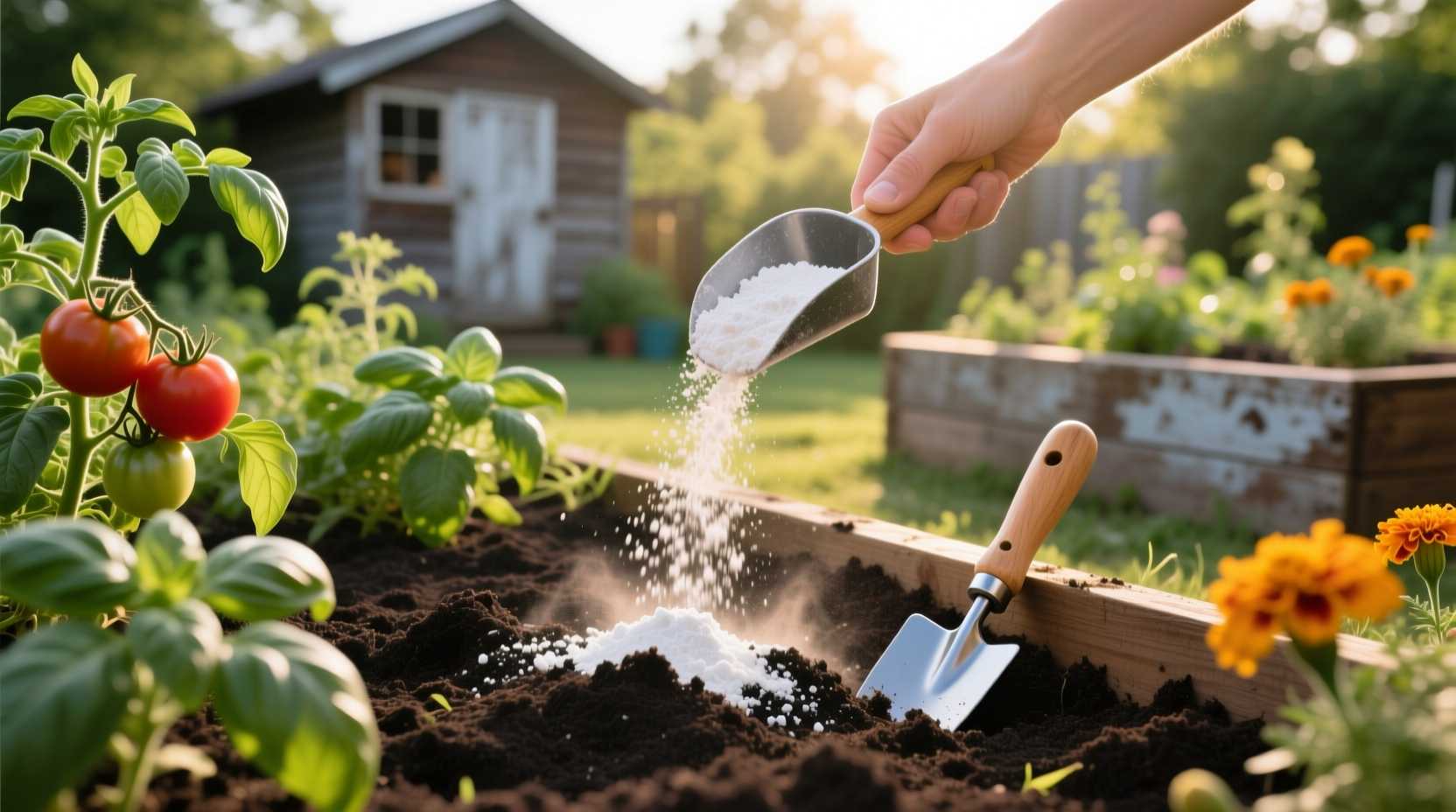
- Typical rate: 20–50 lbs per 1000 sq ft for clay/sodic soils.
- Frequency: Once per year, or as recommended by soil test.
- Method: Spread evenly and incorporate into top 2–4 inches of soil.
Adjust rates downward if your soil already contains moderate to high levels of calcium or sulfur. For raised beds, use the lower end of the range to avoid over-application. Deep incorporation is essential—surface-only applications are less effective, especially in compacted clay.
Steps for Application:
- Measure area
- Calculate gypsum needed
- Spread uniformly
- Till or mix into soil
- Water thoroughly
Proper watering after application helps gypsum dissolve and move into the root zone, where it can interact with sodium and clay particles.
Timing And Integration
- Best time: Early spring or fall, before planting or after harvest.
- Combine with compost: Enhances organic matter, offsets potential nutrient losses.
Applying gypsum at the start or end of the growing season allows time for soil structure improvements before intensive cultivation. Mixing with compost provides a one-two punch: gypsum improves physical structure while compost supports microbial life, nutrient cycling, and long-term fertility.
Safety Precautions
- Wear gloves and mask during application (gypsum dust can irritate lungs and skin).
- Avoid excessive use—more is not always better.
Gypsum is generally regarded as safe, but inhaling fine dust should be avoided. Store any leftover amendment in a dry place to prevent clumping and ensure accurate reapplication in future seasons.
Example Application Scenario
A home gardener in Texas tested their soil and found high sodium and clay content. After applying gypsum at 40 lbs/1000 sq ft and adding compost, tomato yields increased by 20% and water runoff decreased.
Other gardeners have successfully used gypsum to reclaim previously unusable areas—such as former driveways or compacted construction sites—by combining it with deep tilling and regular additions of organic matter.
Gypsum Vs. Alternatives: Choosing The Right Amendment
Choosing the correct soil amendment can be challenging. Here’s how gypsum stacks up against common alternatives for vegetable gardens:
| Amendment | Best For | Drawbacks | Cost (per 1000 sq ft) |
|---|---|---|---|
| Gypsum | Clay/sodic soils | Limited effect in sandy/loam | $15–$40 |
| Lime | Acidic soils | Raises pH, not for alkaline soils | $10–$30 |
| Compost | All soils | Needs regular replenishment | $0–$50 |
| Sand | Heavy clay | May increase drought risk | $20–$60 |
Practical Considerations
- Gypsum: Use for compaction or sodium problems; test soil first.
- Lime: Use for low pH.
- Compost: Universal amendment; improves fertility and structure.
- Sand: Use sparingly; can worsen drought stress.
Blending amendments is often the best strategy. For example, mixing gypsum with compost in clay soils provides both structural improvement and long-term nutrient cycling, while compost alone is ideal for sandy beds.
Real-world Example
A Michigan vegetable producer alternated between gypsum and compost. Soil tests showed gypsum improved drainage but compost provided better overall fertility and organic matter, leading to healthier crops.
In another case, a community garden in the Pacific Northwest found that annual applications of compost and infrequent, targeted use of gypsum yielded the best combination of soil tilth, moisture management, and crop health.
Real-world Examples And Case Studies
Understanding how gypsum works in practice is essential. Here are three concrete examples:
Example 1: Commercial Tomato Field (california)
A 40-acre tomato farm faced waterlogging and poor yields due to compacted clay soil. After soil testing, gypsum was applied at 50 lbs/1000 sq ft. Within one growing season:
- Yield increased by 30%
- Root depth improved
- Reduced irrigation needs
This success was documented by the California Department of Food and Agriculture.
The farm also noted a decrease in foliar diseases, likely due to improved drainage and less standing water around plants.
Example 2: Community Garden (australia)
A garden with high sodium and poor drainage was struggling with lettuce and spinach crops. After gypsum application:
- Crop survival rate improved from 60% to 95%
- Soil infiltration rates doubled
Reported by the Western Australia Department of Agriculture.
Members also reported less crusting on soil surfaces and easier weeding, making maintenance less labor-intensive.
Example 3: Urban Backyard Vegetable Plot (texas)
A gardener noticed blossom end rot in tomatoes and stunted pepper growth. Soil tests showed calcium deficiency and moderate sodium levels. After gypsum and compost application:
- Tomato blossom end rot reduced by 80%
- Pepper yield increased by 18%
This case demonstrates gypsum’s effectiveness when used in conjunction with organic amendments.
Gardeners also observed improved flavor in their tomatoes and fewer signs of nutrient deficiencies overall, such as yellow leaf margins.
Common Misconceptions About Gypsum
Despite its popularity, several myths persist about gypsum in vegetable gardens.
Myth 1: Gypsum Is A Universal Soil Fixer
Gypsum is not a one-size-fits-all solution. Its benefits are limited to specific soil problems.
Myth 2: Gypsum Replaces Fertilizer
Gypsum only provides calcium and sulfur. It does not supply essential nutrients like nitrogen or phosphorus.
Myth 3: Gypsum Improves Sandy Soils
Gypsum has little impact on sandy soils, which already have good drainage.
Myth 4: Gypsum Raises Soil Ph
Unlike lime, gypsum does not alter soil pH, making it suitable for neutral or alkaline soils.
Myth 5: More Gypsum Is Better
Overapplication can cause nutrient imbalances and environmental harm.
Correcting Misconceptions
The University of Minnesota Extension and UConn Soil Testing Lab both emphasize targeted, evidence-based use.
Best Practices For Using Gypsum In Vegetable Gardens
To maximize benefits and minimize risks, follow these best practices:
1. Always Test Soil First
- Identify clay, sodium, calcium, and magnesium levels.
- Use reliable labs like UConn Soil Testing Lab.
2. Apply Correctly
- Use recommended rates for your soil type.
- Incorporate into soil, avoid surface-only application.
3. Combine With Organic Matter
- Compost offsets nutrient imbalances and improves fertility.
4. Monitor Plant Health
- Watch for signs of nutrient deficiency or toxicity.
- Adjust future applications based on results.
5. Avoid Routine, Unnecessary Use
- Only apply gypsum if soil testing justifies it.
- Consult local extension services for guidance.
6. Stay Informed
- Review credible sources like USDA Agricultural Research Service and Wikipedia.
By following these steps, gardeners can ensure that their soil amendments are both environmentally responsible and highly effective.
Frequently Asked Questions
Is Gypsum Safe For All Vegetable Garden Soils?
Gypsum is safe for clay and sodic soils but can cause nutrient imbalances in sandy or well-balanced soils. Always test soil before use to ensure safety and effectiveness.
How Often Should Gypsum Be Applied In Vegetable Gardens?
Typically, gypsum is applied once per year or as recommended by soil tests. Overuse can lead to nutrient depletion and environmental concerns.
Can Gypsum Prevent Blossom End Rot In Tomatoes?
Gypsum supplies calcium, which can help prevent blossom end rot if your soil lacks calcium. However, it’s ineffective if the rot is caused by other factors, such as inconsistent watering.
Does Gypsum Improve Soil Fertility?
Gypsum improves soil structure and supplies calcium and sulfur, but it does not increase overall fertility. It’s not a substitute for comprehensive fertilizers or organic amendments.
Should Gypsum Be Used With Compost?
Yes, combining gypsum with compost enhances soil health. Compost provides organic matter and nutrients, while gypsum improves structure and corrects sodium issues.
Additional FAQs:
Can I Use Gypsum In Raised Beds Or Containers?
Gypsum can be used in raised beds with heavy clay or sodium issues, but in most cases, well-made raised bed mixes do not require gypsum. In containers, gypsum is rarely needed unless specifically recommended by a soil test.
Will Gypsum Help With Hardpan Or Subsoil Compaction?
Gypsum can help break up hardpan layers if incorporated deeply, but mechanical methods (such as double digging or subsoiling) and adding organic matter are usually more effective.
Gypsum’s role in vegetable gardening is nuanced and highly situational. When applied based on scientific evidence and careful soil testing, it can solve specific problems—like clay compaction, sodium toxicity, and calcium deficiency—leading to healthier, more productive vegetable crops. However, indiscriminate use can cause harm or waste resources.
By following best practices and staying informed, gardeners can harness gypsum’s benefits where they truly matter, ensuring sustainable, thriving vegetable gardens for years to come.