How to Identify and Treat Powdery Mildew on Vegetables
Powdery mildew on vegetables shows up as white, powdery spots on leaves and stems; prune lightly infected growth, spray susceptible crops early, and pull plants when infection covers most foliage or fruiting is already failing. Wait too long, and leaves yellow, yields drop fast, and the disease can spread to nearby crops. This guide shows how to identify it on common vegetables and decide, crop by crop, when to prune, spray, or remove plants.
What powdery mildew looks like
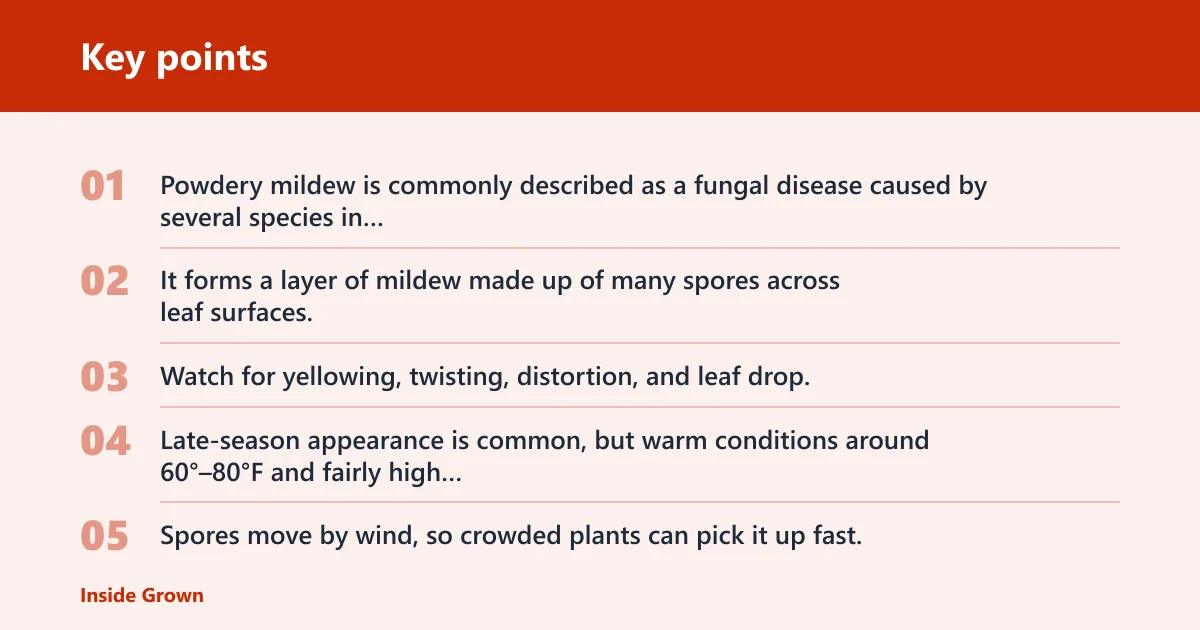


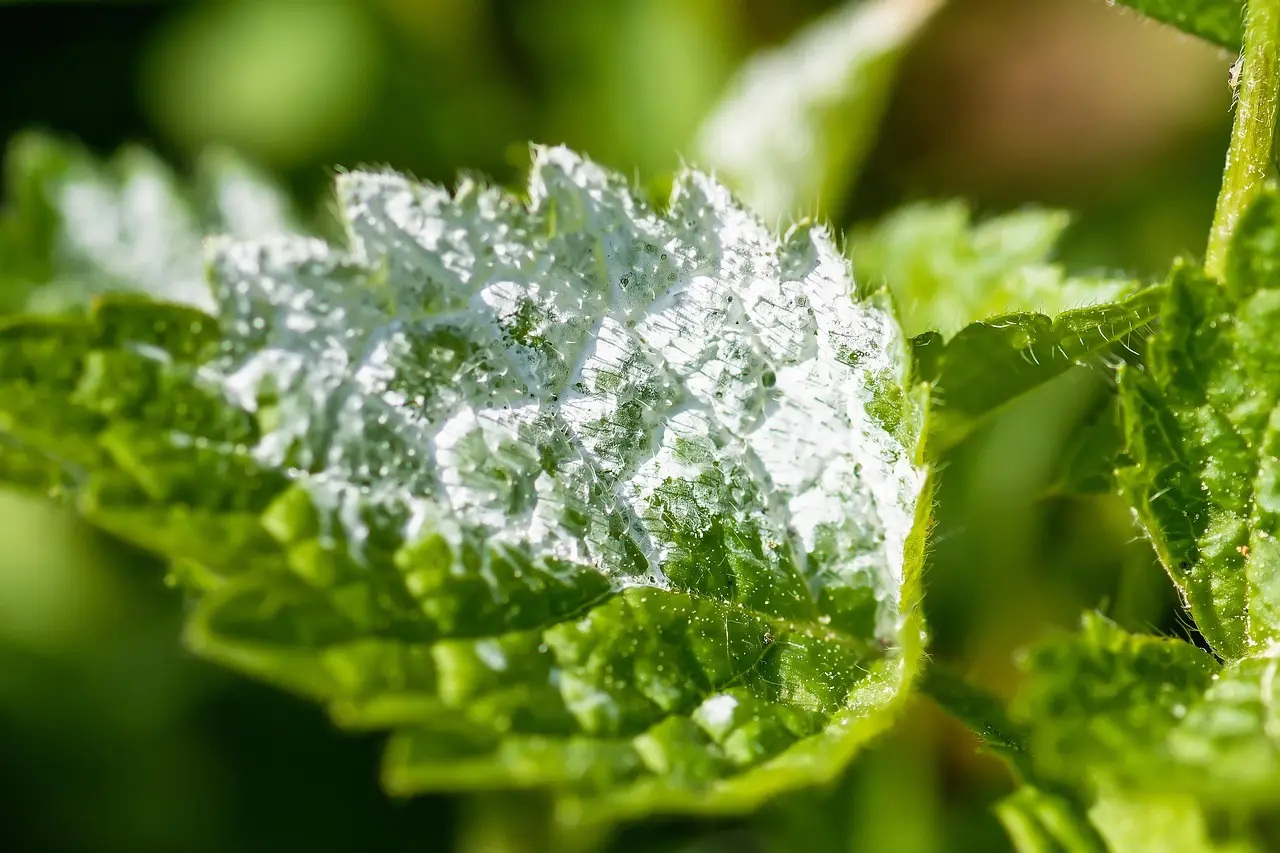
Powdery mildew is commonly described as a fungal disease caused by several species in the Erysiphaceae family. It forms a layer of mildew made up of many spores across leaf surfaces, and it often appears as white or gray powder on the top of leaves, though it can also show on stems, leaf undersides, flowers, and fruit.
Watch for yellowing, twisting, distortion, and leaf drop. Late-season appearance is common, but warm conditions around 60°–80°F and fairly high relative humidity around the plant can let it spread earlier than expected. Spores move by wind, so crowded plants can pick it up fast.
How to tell it from normal squash leaf patterning
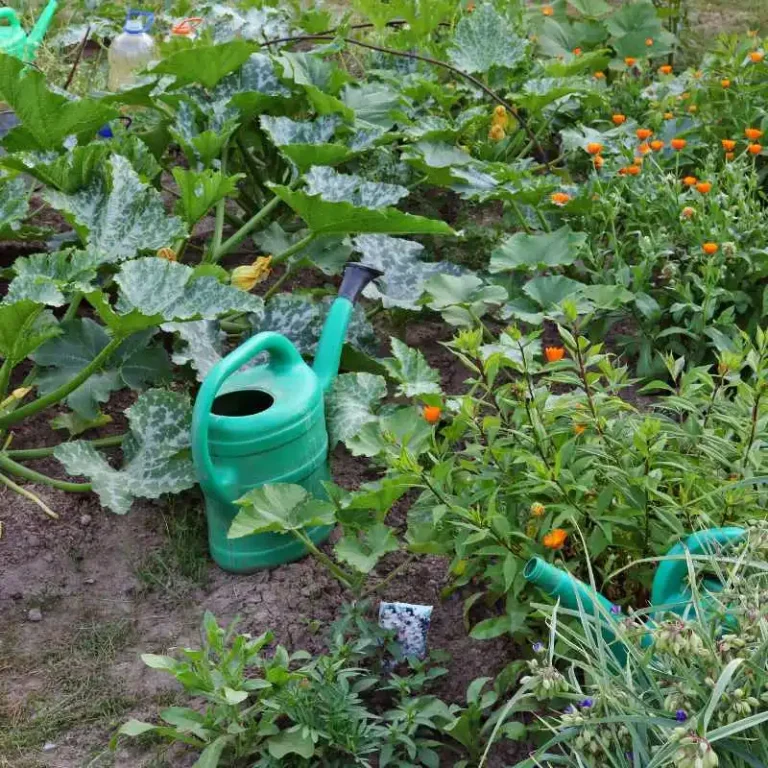
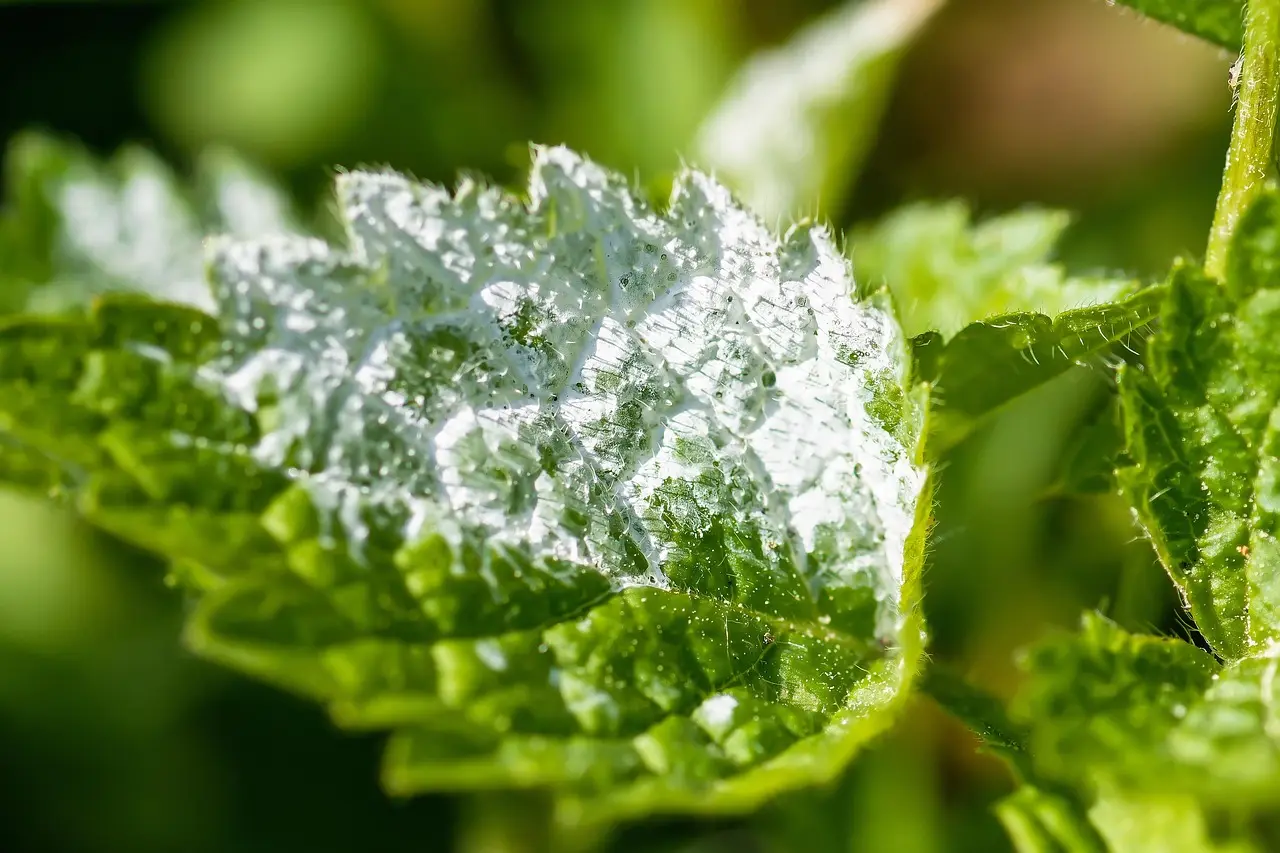
Some squash leaves have natural light-and-dark markings. That pattern stays part of the leaf tissue. Powdery mildew wipes on like dust, sits on top of the leaf, and often spreads in patches that expand over days. If the white area can be brushed or rubbed off, check whether it is spreading like mildew rather than assuming it is normal variegation or surface residue.
Check the leaf top first, then the underside and the inner canopy. New white patches on shaded, crowded growth need attention sooner than pale markings that have been there since the leaf expanded.
What you’ll need
- Pruners and gloves
- Paper bags or a covered bin for infected debris
- A labeled fungicide or home-spray ingredients
- A bucket or sprayer and clean water
- A way to isolate and discard infected debris
- Soap and disinfectant for tool cleanup
Check cucurbits first: zucchini, squash, cucumbers, melons, and pumpkins are common early hosts. Nightshades such as tomatoes, eggplants, and peppers can also be infected, and beans and peas may show it too. The disease often starts in crowded inner leaves where air stays still.
Look at leaf tops, undersides, stems, and any fruiting shoots. On cucurbits, the first signs are often on older leaves near the base. On tomatoes and beans, watch the lower canopy and shaded stems, where white growth can hide until yellowing starts.
Symptoms to check
- White or gray powder on the leaf surface
- Powder on stems or leaf undersides
- Yellowing around infected patches
- Twisted or distorted new growth
- Leaf drop, especially on older leaves
Powdery mildew triage for vegetables
| Crop | Symptom severity | Action now | Repeat interval | When to remove the plant entirely |
|---|---|---|---|---|
| Zucchini | First few leaves | Prune the worst leaves and spray all leaf surfaces | Every 7 days | When more than 25% of foliage is covered or new leaves keep emerging spotted |
| Squash | About 25% leaf cover | Remove infected leaves only if the plant still has a strong green canopy; otherwise treat the whole row | Every 7 days | When fruiting is slowing and most older leaves are affected |
| Cucumber | First sign on lower leaves | Prune low infected growth, open up spacing, and spray the remaining canopy | Every 5 to 7 days | When the disease has moved into the middle and top canopy and the vines are declining |
| Tomato | Light spotting on shaded foliage | Remove crowded inner leaves and spray the plant if fruit is still setting | Every 7 to 10 days | When leaf loss is severe enough to expose fruit to sun and the plant has little new growth |
| Beans | Early spotting during flowering or pod set | Prune lightly, keep the row open, and spray if infection is still near the first leaves | Every 7 days | When pod fill is poor and most leaves are coated |
How should you treat it?
Begin by pruning and spacing plants so air moves through the canopy. Remove the most infected leaves first, then thin nearby growth so sun and air reach the plant. Trellising cucumbers and some squash can lower humidity around foliage, and sunny sites help keep leaves drier.
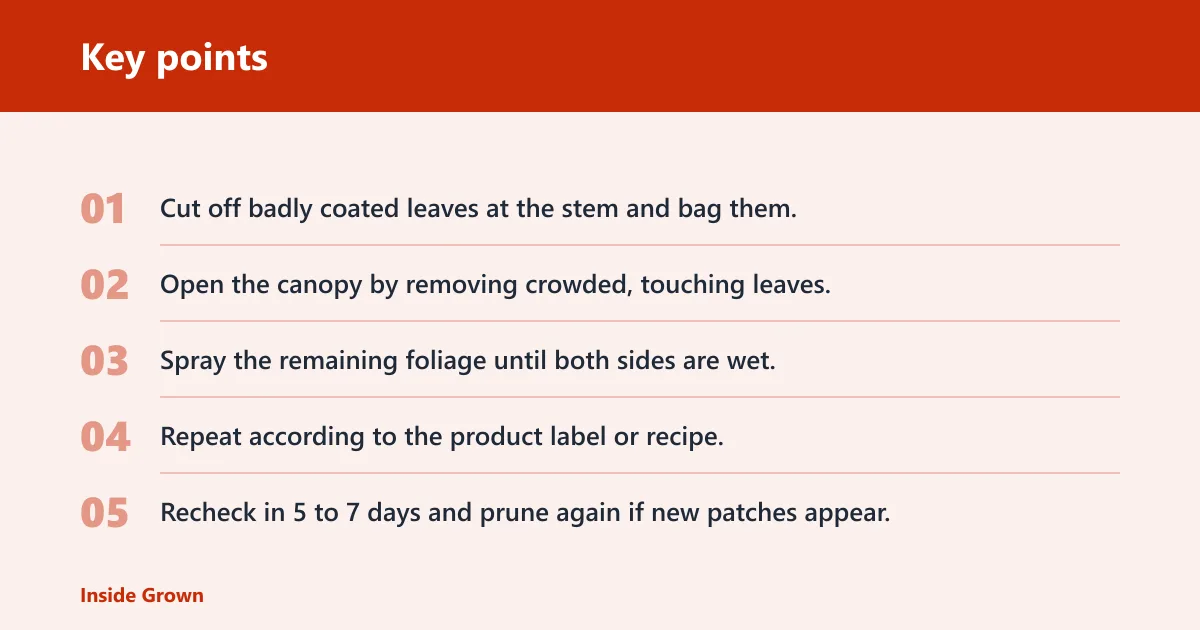
- Cut off badly coated leaves at the stem and bag them.
- Open the canopy by removing crowded, touching leaves.
- Spray the remaining foliage until both sides are wet.
- Repeat according to the product label or recipe.
- Recheck in 5 to 7 days and prune again if new patches appear.
Use baking soda spray only at the first sign or on lightly infected leaves. A common recipe uses 1 teaspoon per quart of water, and many gardeners also use a spreader-sticker. Because some DIY sprays can scorch leaves and may not be labeled for food crops in all areas, test carefully and use only where appropriate. Milk spray is also used early, often diluted 1:10 with water. Both work best when they hit the fungus directly.
Neem oil and sulfur fungicides are better for prevention and very early infection than for plants that are already heavily covered. Follow the label for edible crops, because pre-harvest interval rules apply. Spray in cool conditions; hot sun can raise the risk of leaf scorch, especially on tender cucurbits.
Common mistakes
Missing the underside of leaves is the biggest one. Another is spraying once and stopping. Powdery mildew needs repeat applications because contact sprays do not move through the plant. A third mistake is treating healthy squash leaf patterning as disease and removing productive foliage too early.
When is a plant too far gone?
Once plants are heavily infected, it is very difficult to get rid of the disease. If most older leaves are coated, new growth is already distorted, or fruiting has slowed sharply, removing the plant often saves the rest of the bed. That is especially true for cucurbits that have already passed peak harvest.
Suppose a zucchini vine has powder on the first few leaves and on the lowest stem, but the tip is still pushing new buds. Prune, spray, and monitor. If the same plant is covered a week later and the new leaves arrive spotted, pull it and move on.
- Cut the plant at the base if infection is widespread.
- Remove infected foliage from the bed.
- Wipe pruners with disinfectant after cutting.
- Remove fallen leaves from the bed surface.
How can you keep it from coming back?
Choose resistant varieties when available, especially among cucurbits. Resistant zucchini and squash varieties often hold up longer, which matters because these crops are high-risk and often show symptoms first. For tomatoes, peppers, and beans, give each plant room so foliage dries faster after dew or watering.
Sun, spacing, and trellising matter more than most quick sprays. Plant in a sunny site, keep rows open, and avoid crowding. Clean tools after cutting infected plants, and clear residue so spores do not stay in the bed or blow onto nearby crops.
Frequently asked questions
How do I know if my squash has powdery mildew?
Check for white or gray powder on the leaf surface, especially older leaves near the base of the plant. Natural squash variegation stays in the tissue and does not rub off. If the coating spreads, yellowing follows, and the plant may drop leaves early.
Is it safe to eat vegetables with powdery mildew?
Usually yes, if the edible part is sound and you wash it well or trim off affected tissue. The issue is the plant disease on the foliage, not a poison in the crop itself. Do not eat produce that is rotten, heavily damaged, or covered with secondary decay.
Can you eat cucumbers with powdery mildew?
Yes, if the cucumber itself is firm and unspoiled. Wash it before peeling or slicing. If the vine is collapsing, harvest what is usable right away, because fruit quality can drop fast once the canopy loses too many leaves.
Does baking soda work on powdery mildew on vegetables?
It can help when used early and sprayed onto all affected surfaces. A common recipe uses 1 teaspoon per quart of water. It only works where it lands, so repeat applications matter, and coverage has to include leaf tops, undersides, and stems.
How do I treat powdery mildew on tomatoes?
Remove crowded inner leaves first, then spray the remaining foliage if fruit is still setting. Tomatoes can be infected, and yield and quality can drop when the disease moves through the canopy. Check product labels and pre-harvest intervals before using any fungicide on edible crops.
When is a plant too far gone to save from powdery mildew?
Pull it when most foliage is coated, new growth is distorted, and pruning no longer slows spread. If the plant has little green leaf area left to feed fruit, treatment usually buys too little time. Remove the plant, remove infected foliage, and clean tools before moving on.