Bonsai pest control guide for aphids, scale, and mites
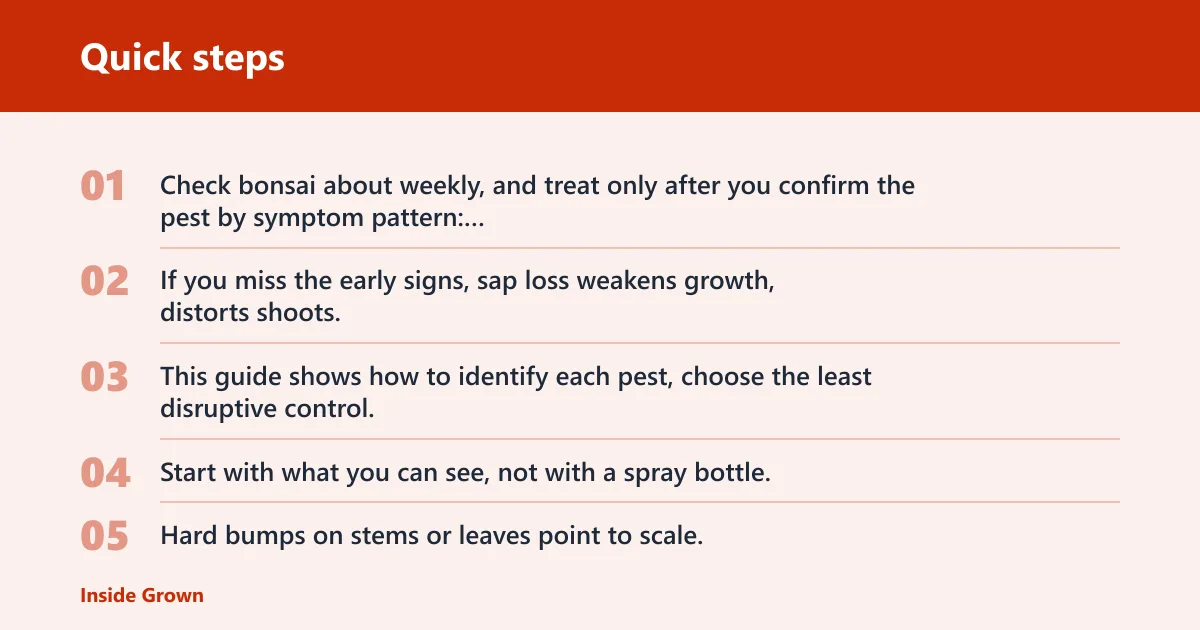
Check bonsai about weekly, and treat only after you confirm the pest by symptom pattern: aphids often cluster on new growth, scale tends to stay fixed on stems or leaves, and mites can cause fine stippling plus webbing. If you miss the early signs, sap loss weakens growth, distorts shoots, and can trigger leaf drop or branch dieback. This guide shows how to identify each pest, choose the least disruptive control, and follow a practical recheck schedule.
How to triage bonsai pest symptoms


Use symptom clusters first
Start with what you can see, not with a spray bottle. Sticky residue usually points to aphids. Hard bumps on stems or leaves point to scale. Fine speckling, dull leaves, and thin webbing point to spider mites. Distorted new growth can happen with aphids, while mites often leave foliage looking dusty or flat.
A bonsai pot magnifies trouble. Early identification matters because a small cluster can spread fast in a bonsai pot. Check the top and underside of leaves for pests. Regular inspection every few weeks during the growing season increases detection chances.
When a pest problem is likely and when another issue may fit better
Not every yellowing leaf is a pest. Overwatering, overfeeding, or underfeeding can cause leaves to slowly yellow and die. A nutrient or watering problem usually affects the plant more evenly, while pests leave patterns: clusters, bumps, stippling, or residue. Mite damage can also be confused with drought stress, so check the canopy before changing fertilizer or watering again.
Say your juniper has pale, speckled foliage after a week of warm indoor air. If the needles also show fine webbing near branch tips, mites are a stronger match than nutrition. If a ficus has sticky leaves and curled new shoots, aphids are more likely than watering stress.
What the one-page triage table should map
The table below turns the first look into action. It maps symptom clusters to the most likely pest, the least disruptive first step, the follow-up interval, and the point where you should escalate. Use it before choosing a product.
| Symptom cluster | Likely pest | Immediate action | Follow-up interval | Escalation trigger |
|---|---|---|---|---|
| Sticky residue, curling new shoots, distorted tips | Aphids | Isolate the tree, rinse growth, then apply insecticidal soap to affected shoots | Recheck in 3 to 7 days | New clusters appear after spraying or residue returns |
| Small, hard bumps on branches or leaves | Scale insects | Remove visible bumps with a soft brush or cotton swab, then apply horticultural oil | Recheck in 7 days, then again in 7 to 14 days | Fresh crawlers appear, or bumps remain fixed after treatment |
| Fine speckling, dull foliage, thin webbing | Spider mites | Increase humidity around the tree, improve airflow, and apply a targeted spray if needed | Recheck in 3 to 5 days | Stippling spreads, webbing increases, or new leaves emerge damaged |
| Mixed symptoms with sooty residue or fungal spotting after pest stress | Pest stress with secondary fungus | Treat the pest first, then use fungicide spray on infected parts if guidance calls for it | Recheck in 7 days | Spots expand, spread, or persist after pest control |
How to identify aphids on bonsai
Aphids are sap-feeding insects that often gather on tender growth, especially on new shoots. On bonsai, they may leave sticky residue, curl leaves, and distort soft tips before the rest of the tree shows obvious stress. A small cluster can spread fast in a compact canopy.
Where aphids usually gather on bonsai
Look first at new shoots, leaf joints, and soft branch tips. Aphids like tissue that is still expanding, which is why the newest growth often twists before older leaves show damage. Common bonsai pests include aphids, spider mites, scale insects, and mealybugs.
Symptoms that point to aphids
The classic signs are sticky residue, curled leaves, and distorted new growth. The residue comes from feeding, not from the potting mix. If ants are present, that can be another clue, but the main test is visual: clustered insects on the tender parts of the tree.
Immediate action and the first spray option
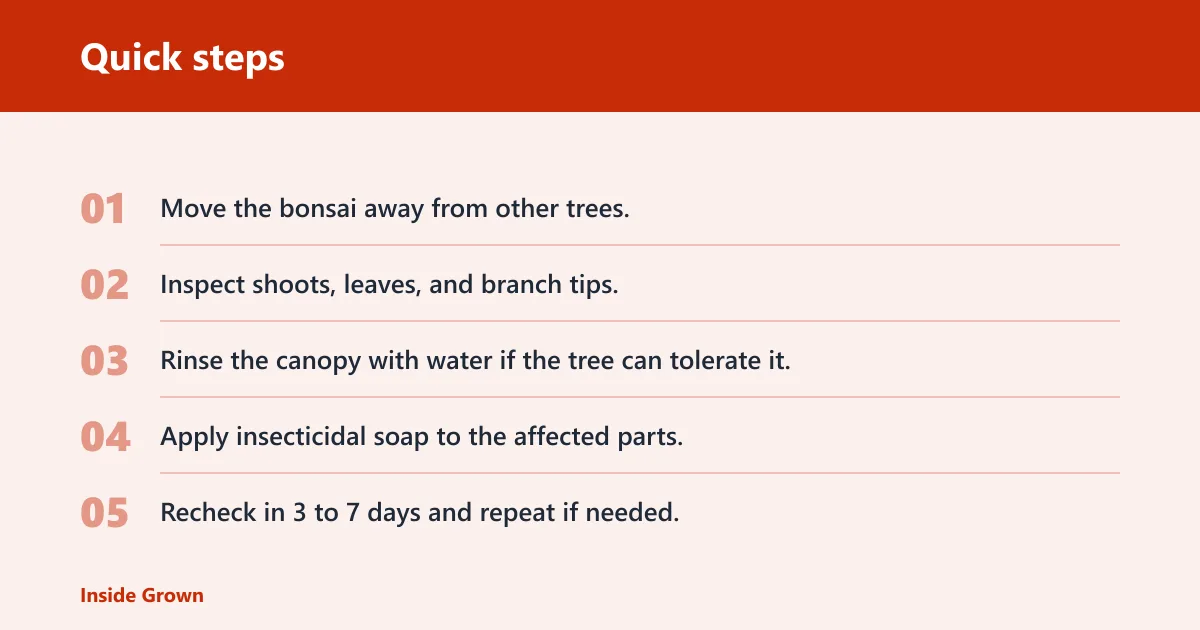
Start with isolation, then rinse the affected growth to knock off loose insects. After that, insecticidal soap is the targeted first spray for aphids and other soft-bodied pests. It often needs repeat applications because hidden insects and newly hatched individuals can survive the first pass.
- Move the bonsai away from other trees.
- Inspect shoots, leaves, and branch tips.
- Rinse the canopy with water if the tree can tolerate it.
- Apply insecticidal soap to the affected parts.
- Recheck in 3 to 7 days and repeat if needed.
How do you spot scale insects on bonsai?
Scale insects look like small, hard bumps on bonsai branches and leaves. They often stay in place and blend into bark or petioles, so they are easy to miss until the tree starts to weaken. Because eggs and crawlers may survive the first pass, scale usually needs removal plus follow-up treatment.
What scale looks like on branches and leaves
Scale is often mistaken for bark texture or debris. Run your eyes along stems, leaf midribs, and undersides of leaves. Scale insects appear as small, hard bumps on bonsai. If the bumps do not move when touched, scale is far more likely than aphids.
Why physical removal comes before repeat treatment
Scale treatment usually starts with physical removal using a soft brush or cotton swab. That first step matters because the shell-like body protects the insect from light sprays. Once visible scale is removed, horticultural oil can reach exposed survivors and remaining stages more effectively.
Why eggs and crawlers can survive the first pass
Even if the adult bump is gone, eggs may remain protected. Newly hatched crawlers can also move to fresh spots after the first treatment. Horticultural oil is a recommended follow-up treatment for scale. Recheck after 7 days, then again in 7 to 14 days, because one round is often not enough.
How do you know if your bonsai has spider mites?
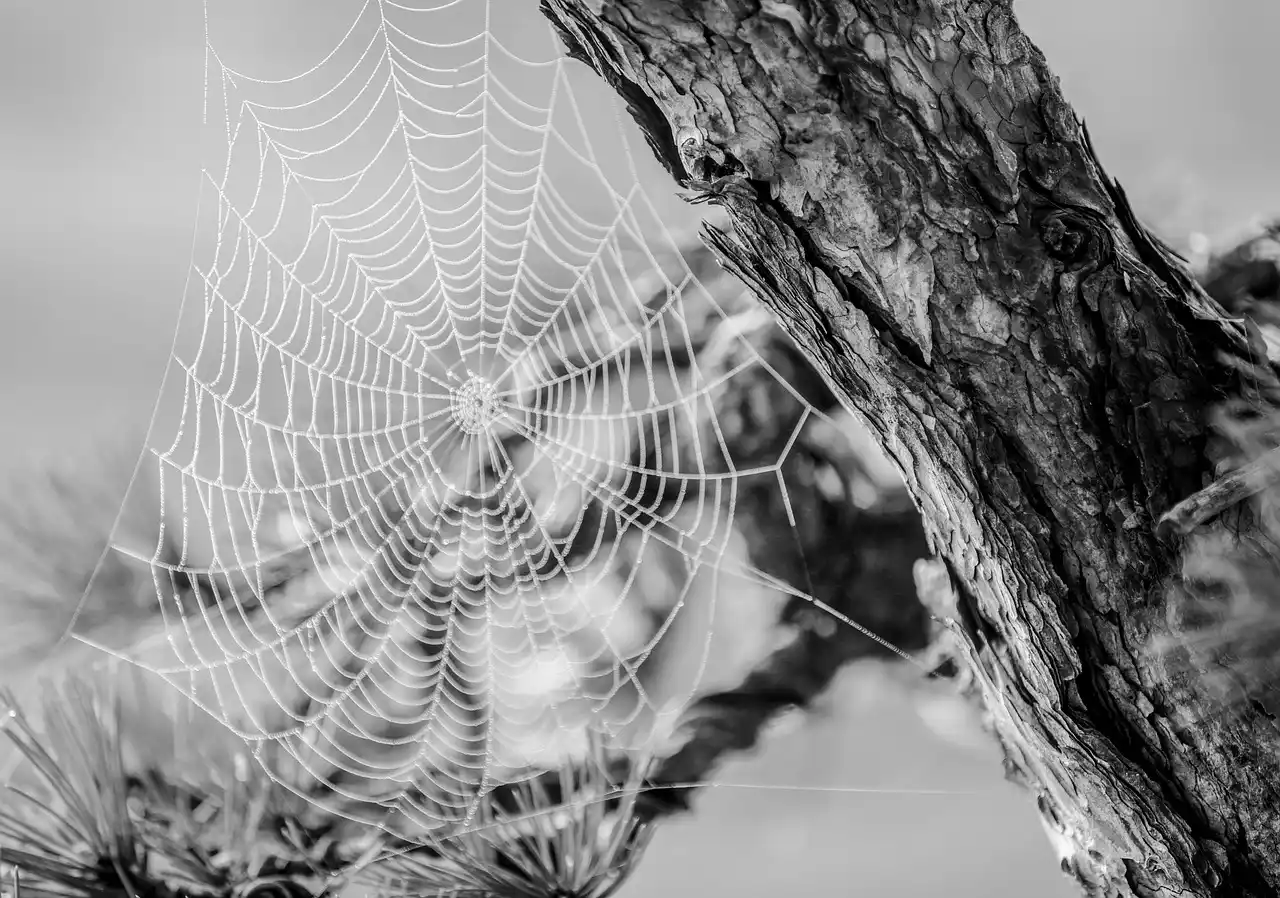
Spider mites usually show up as fine speckling, dull foliage, and thin webbing on a tree that sits in warm, dry air. Spider mites thrive in warm, dry conditions. They often worsen when humidity is low, so the tree’s environment matters as much as the spray you choose.
Fine speckling, dull foliage, and thin webbing
Mite feeding leaves tiny pale dots where cells were damaged. As the problem grows, leaves look flat, dusty, or bronzed. Thin webbing may appear between needles or along branch tips. The damage is spread out, which is why it can be mistaken for general stress at first.
Why warm, dry conditions and low humidity make mites worse
Warm indoor air and low humidity give mites an advantage. Dry conditions help them multiply faster and can make the plant less able to recover. That is why mite pressure often rises in tight indoor spaces, on windowsills, or near heat vents.
How to correct humidity and airflow without overcorrecting
Raise humidity in a modest way and keep air moving around the canopy. Do not seal the tree in still, wet air, because that can invite other problems. Pest prevention depends on good airflow and proper watering. Correct the environment, then recheck the leaves within 3 to 5 days.
Picture a small juniper on an indoor shelf with gray-green needles that look dusty by the end of the week. If a close look reveals webbing at the branch tips, the problem is more consistent with mites than with fertilizer, and the environment should change at once.
What treatment should you use first?
Choose the mildest treatment that fits the pest. For aphids and other soft-bodied insects, insecticidal soap is usually the first spray. For scale, remove visible insects first, then use horticultural oil. If fungal spotting appears alongside pest stress, fungicide spray belongs only on infected parts and only as directed.
Insecticidal soap for aphids and soft-bodied pests
Insecticidal soap is a targeted pest treatment used on bonsai insects. It works best on exposed, soft-bodied pests and needs full coverage, including undersides of leaves and shoot tips. Repeat applications are normal because missed clusters can survive the first round.
Horticultural oil for scale after removal
For scale, the sequence matters: remove visible bumps first, then apply horticultural oil. Horticultural oil is a recommended follow-up treatment for scale. That second step matters because hidden survivors and late-emerging crawlers can restart the infestation after a single cleaning.
When fungicide spray is appropriate if fungal stress is also present
Fungicide spray is not the first answer to aphids, scale, or mites. Use it when fungal issues accompany pest stress, such as spotting or surface growth on damaged tissue. Apply it to infected parts according to product guidance, after the pest pressure is under control.
Should you isolate a bonsai with pests?
Yes. Infected trees should be placed separately to prevent cross-contamination, even if the pest seems minor. Infected trees should be placed separately to prevent cross-contamination. Isolation gives you space to inspect, treat, and recheck without spreading eggs, crawlers, or stray insects to nearby bonsai.
Quarantine steps for one infected tree
Move the bonsai away from the collection as soon as you suspect a pest. Keep tools, gloves, and spray equipment separate until the tree is treated. If the tree sits indoors, do not place it beside a healthy specimen on the same shelf or tray.
How to inspect nearby bonsai for spread
Check the top and underside of leaves, the branch line, and new growth on every nearby tree. Look for the same symptom clusters, not just the same pest. A clean-looking tree can still carry early-stage crawlers or mites, so inspect it even if damage is not obvious.
When to return a treated tree to the collection
Return the tree only after you have had at least one clean recheck. For aphids and mites, that usually means no new activity at the next inspection. For scale, wait until the tree has been checked twice after removal and oiling, because protected stages may appear later.
How do you prevent aphids, scale, and mites on bonsai?
Prevention comes from routine inspection and steady care. Healthy bonsai are less likely to get pests, and early identification matters. Healthy bonsai care includes the right soil mixture and correct watering frequency. Pest prevention depends on good airflow and proper watering.
Inspection routine for top and underside of leaves, branches, and new growth
Inspect both the top and underside of leaves, along with branches and new growth, every few weeks during the growing season. Regular inspection every few weeks during the growing season increases detection chances. In practice, weekly checks are better when a tree has already had a pest problem.
Why consistent watering, good airflow, and stable humidity matter
Stress invites pests. Overwatering can weaken roots, while underwatering can stall recovery and make leaf damage look worse. Stable humidity helps with mite pressure, and open airflow reduces the conditions that let infestations spread quietly through a crowded collection.
Why indoor bonsai often need tighter monitoring
Indoor bonsai often face warmer, drier air, less airflow, and closer spacing than outdoor trees. That combination favors mites and makes spread easier. They also receive fewer environmental checks from rain and wind, so a small pest colony can go unnoticed for longer.
Frequently asked questions
How do I get rid of aphids on a bonsai tree?
Start by isolating the tree, then rinse off visible aphids and spray the affected growth with insecticidal soap. Focus on new shoots and tender tips, where aphids gather most often. Recheck in 3 to 7 days, because hidden insects or fresh hatchlings may need a second treatment.
What is the best treatment for scale insects on bonsai?
The best first step is physical removal of the visible bumps with a soft brush or cotton swab. After that, apply horticultural oil to the same areas. Reinspect in 7 days, then again in 7 to 14 days, because eggs and crawlers may survive the first pass.
Can spider mites kill a bonsai tree?
Yes, especially on small container trees where repeated feeding quickly weakens foliage. Mites may not kill a bonsai overnight, but a heavy infestation can strip vigor, reduce new growth, and leave the tree unable to recover. Fast correction of humidity, airflow, and pest pressure is essential.
Should I isolate a bonsai with pests from my other trees?
Yes. Move it away from healthy bonsai as soon as you suspect aphids, scale, or mites. Separation lowers the chance of cross-contamination and gives you room to inspect the whole plant. Keep it isolated until you have had at least one clean follow-up inspection.
How often should I inspect bonsai for pests?
Inspect every few weeks during the growing season at minimum, and weekly if a tree has already had pests or is indoors in dry air. Check the top and underside of leaves, branches, and new growth. Short, frequent inspections catch colonies before they spread.