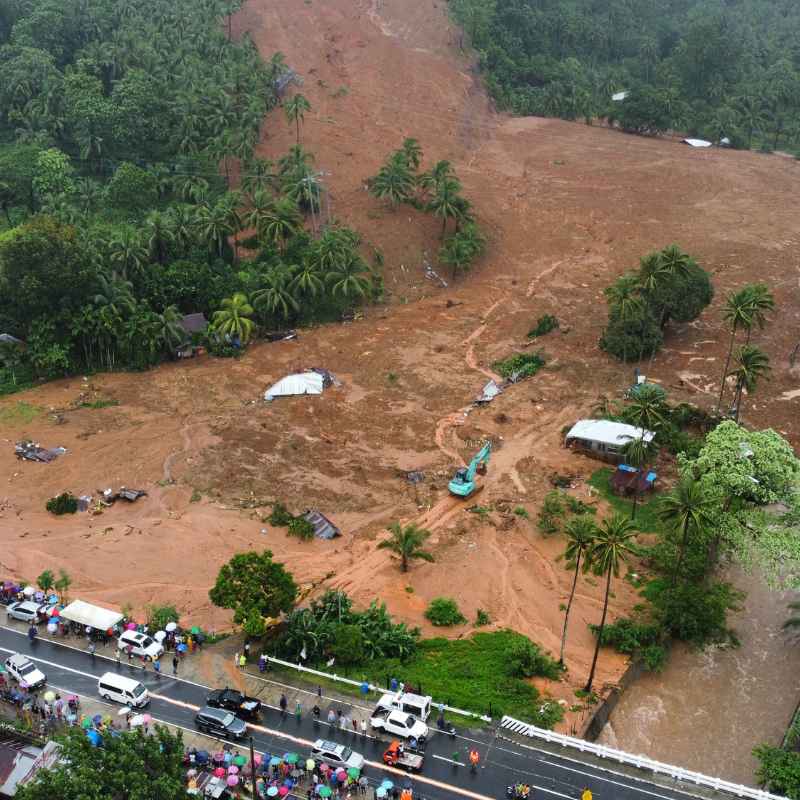

It’s a scary thought, isn’t it? Nature can be beautiful, but sometimes it flexes its muscles in ways that are hard to understand and even harder to deal with. When we think about landslides, we often picture huge mountains tumbling down.
For a related follow-up, Which Of These Is Most Likely To Minimize Soil Erosion? Answered gives readers a useful next step.
For a related follow-up, Which Climate Type Is Most Beneficial To Soil Formation? Revealed gives readers a useful next step.
Readers comparing bonsai options may also find Who Destroyed The Bonsai In Trees And Other Entanglements? useful before choosing a tree or pot.
But the truth is, they can happen in many places, and knowing where they’re most likely to occur can help keep us safe.
The landscapes most prone to generating landslides are those with steep slopes, loose soil or rock, and significant water saturation. These conditions are often found in mountainous regions, areas with high rainfall, near coastlines, and places with recent geological activity or human disturbance. Understanding these factors is key to recognizing and mitigating landslide risks.
Understanding Landslide-Prone Landscapes
Landslides are essentially the downhill movement of rock, earth, or debris. They’re a natural part of our planet’s geology. But certain places are just more likely to experience them.
Think of it like this: some houses are built on a hill that’s always a bit wobbly after rain. Others are on flat, solid ground. It’s the same idea with land.
Several things make a landscape more likely to slip and slide. The most obvious is a steep slope. Gravity is always pulling things down.
The steeper the hill, the stronger that pull feels for loose material. If there isn’t enough stable ground or strong roots holding things in place, it’s just waiting for a push.
Water plays a huge role. When soil or rock gets soaked, it becomes much heavier. Imagine trying to carry a bag of wet sand versus a bag of dry sand.
The wet sand is much harder to lift and easier to spill. Water also acts like a lubricant between particles. This makes it easier for layers of earth to slide over each other.
So, areas that get a lot of rain or snowmelt are often at higher risk.
The type of ground matters too. Some soils are naturally loose and crumbly. Rocks that are fractured or weathered can also break apart easily.
If these materials are on a steep slope and get wet, they have a much higher chance of moving downhill. Sometimes, the geology itself creates weak layers. These can be like a weak spot in a piece of fabric.
Human activities can also change a landscape. Building roads on hillsides, cutting down trees, or changing how water flows can all make a place more unstable. It’s like loosening screws on a wobbly table.
You’re making the situation worse without even realizing it.
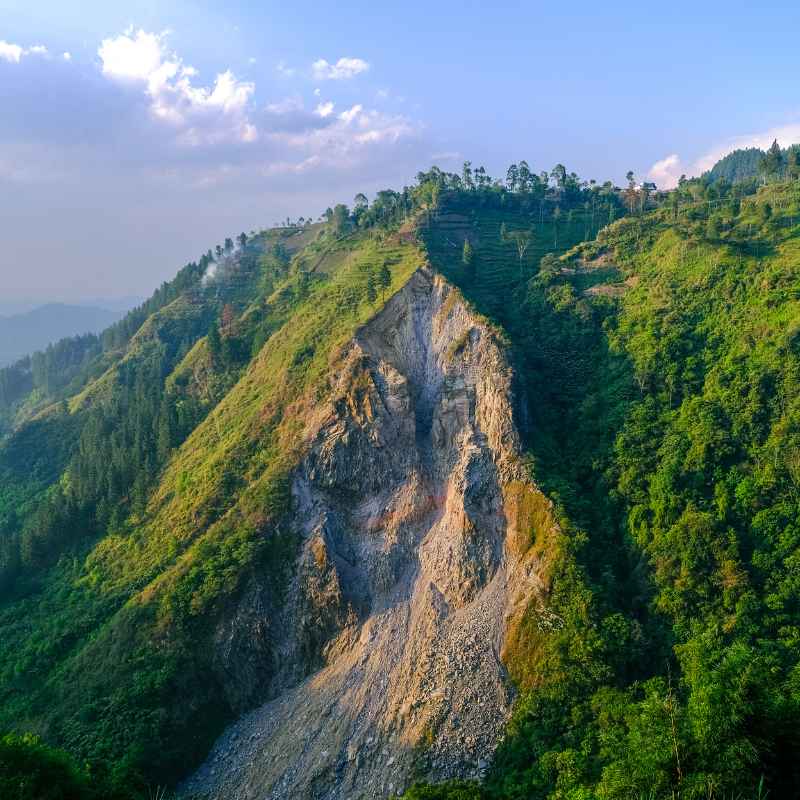
My Own “Close Call” With Unstable Ground
I remember one time, a few years back, I was hiking in a region known for its beautiful rolling hills. I’d seen some news reports about heavy rains causing minor mudslides in the general area, but nothing too alarming. The trail I was on seemed pretty standard.
It wound its way up a moderately steep incline through a forest.
I was feeling good, enjoying the crisp air and the quiet. Around midday, I reached a section where the trail had been cut into the side of a hill. On one side was the forest floor, sloping upwards.
On the other side, the path dropped off sharply into a small ravine. It looked perfectly normal, though maybe a bit damp from the morning mist.
As I walked, I noticed a slight shift under my feet. It wasn’t a big slip, more like a soft settling. I paused, listening.
The only sound was the wind in the trees. Then, I heard a faint crunching noise from uphill. I looked towards the forest floor above the trail and saw a small section of earth, maybe a few feet wide, starting to slide gently down towards the path.
It wasn’t a torrent of mud, but a slow, steady creep of soil and roots. My heart jumped. I quickly moved to the far side of the trail, away from the moving earth.
The slide wasn’t fast, but it was definitely happening. Within a minute or two, a good amount of debris had spilled onto the path, making it narrower and trickier to navigate. It made me realize how quickly things could change, even on what looked like a safe trail.
That was my little reminder that nature is always in charge.
Common Landslide Triggers
Heavy Rainfall: This is a big one. Rain adds weight and can saturate the soil, making it weaker. Think of a sponge getting too full of water.
Rapid Snowmelt: Similar to rain, melting snow adds a lot of water to the ground quickly.
Earthquakes: Shaking from an earthquake can destabilize slopes, causing slides.
Volcanic Eruptions: These can cause similar effects to earthquakes and can also trigger mudflows (lahars).
Human Activity: Cutting into hillsides for roads, mining, or construction can remove support from slopes.
Erosion: Natural erosion by rivers or waves can undermine the base of a slope, making it unstable.
The Top Landscapes Where Landslides Love to Happen
So, where do we find these risky conditions most often? Let’s break it down into common types of landscapes.
1. Mountainous Regions and Steep Hillsides
This is probably the most obvious answer. Mountains have the steep slopes needed for gravity to do its work. Think of the Rockies, the Appalachians, or the Sierra Nevada.
These areas are also prone to heavy snowfall and rainfall, which adds the water element.
In these regions, you often find loose rock and soil that has been broken down over time by freezing and thawing. When water seeps into these cracks and then freezes, it expands, pushing the rocks apart. This makes the slopes even more unstable.
Tree roots help hold soil together, but if forests are cleared or if rocks are the primary material, the slope has less natural support.
The geology of mountains can also play a role. Layers of different rock types can mean that a weaker layer lies beneath a stronger one. If the weaker layer becomes saturated, the stronger layer above can slide off it.
Quick Scan: Mountain Slope Factors
| Factor | Impact |
|---|---|
| Steepness | Increases gravitational pull. |
| Precipitation | Adds weight and acts as a lubricant. |
| Rock/Soil Type | Loose, fractured materials are more prone to failure. |
| Vegetation Cover | Roots help stabilize soil; lack of it increases risk. |
2. Coastal Areas and Riverbanks
It might seem surprising, but coastlines and riverbanks can be very prone to landslides. This is often due to erosion. Waves crashing against a cliff face or a river constantly wearing away at its banks can undermine the ground above.
This removes the natural support holding the soil or rock in place.
In coastal areas, the soil can also become saturated with saltwater. This can weaken certain types of soil, like clay. When the tide goes out, the ground can dry and shrink, causing cracks.
Then, the next high tide brings more water, and the weakened soil is more likely to give way.
Along rivers, especially after heavy rains or during floods, the water level rises. This can saturate the soil on the banks and also exert pressure from below. If the bank is steep, it can collapse.
This is often seen as bank slumping or erosion, but can escalate into a larger landslide.
Think about communities built right along wide rivers or on sea cliffs. They are beautiful places, but they are also constantly battling the forces of water wearing away the land. Sometimes, the land just can’t hold on anymore.
3. Areas With Clay Soil
Clay soil is a common culprit in many landslide events. Clay particles are very small and stick together when dry. However, when clay gets wet, it can absorb a lot of water.
It becomes heavy and slippery. This process is called swelling.
Some types of clay are particularly problematic. They can expand significantly when wet and then shrink and crack when dry. This constant swelling and shrinking weakens the ground over time.
If a layer of this type of clay is present on a slope, it can act like a slippery surface for the soil or rock above.
Even gentle slopes can experience landslides if there’s a significant layer of clay underneath. Imagine a cake where the bottom layer is very moist and slippery. The top layers might start to slide off, even if the tilt isn’t extreme.
Clay Soil vs. Other Soils
Clay Soil: Absorbs a lot of water, becomes heavy and slippery. Can swell and shrink, weakening the ground.
Sandy Soil: Drains water well but can be unstable if not held together. Can cause debris flows if saturated.
Loam Soil: A mix of sand, silt, and clay. Often more stable, but depends on the exact mix and conditions.
4. Regions Prone to Earthquakes
Earthquakes are a powerful trigger for landslides. When the ground shakes violently, it can break apart rock and soil. It can also liquefy soil that is saturated with water (this is called liquefaction).
This makes the ground behave like a liquid for a short time, and anything on top can sink or slide.
Even if the soil doesn’t liquefy, the shaking can dislodge materials on steep slopes. Think of a pile of pebbles on a table; a strong shake will send them scattering. Landslides caused by earthquakes can be sudden and very destructive.
Areas along fault lines, like California, are particularly at risk.
The U.S. Geological Survey (USGS) maps areas known for seismic activity and often highlights their landslide susceptibility. These maps show where the ground is more likely to shake and, therefore, where landslides are a significant hazard.
5. Areas With Significant Human Development
This might not be a natural landscape, but human construction can create landslide-prone areas. When we build roads, homes, or other structures on hillsides, we often change the natural drainage patterns. We might also cut into the slope, removing material that was supporting the ground above.
Mining operations, for instance, often involve moving huge amounts of earth and creating steep waste piles, which can become unstable. Forestry activities that remove large numbers of trees can also reduce the soil’s stability.
Even simple things like poor drainage from a driveway or leaky pipes can saturate the ground and contribute to a slide. It’s about disturbing the natural balance. The U.S.
Environmental Protection Agency (EPA) has guidelines on how construction can impact land stability.
Human Impact Checklist
Road Cuts: Removing the base of a slope.
Deforestation: Losing tree roots that hold soil.
Water Diversion: Changing how water flows, sometimes concentrating it.
Heavy Loads: Adding weight to a slope with buildings.
Mining: Altering large areas and creating unstable piles.
Signs to Watch For: Early Warnings
The good news is that landslides often give warning signs. If you live in or are visiting a potentially risky area, knowing these signs can be crucial. They are like the land’s way of saying, “Hey, something’s not quite right here.”
1. Cracks and Changes in the Ground
Look for new cracks in the ground, walls, or even sidewalks. These can appear on hillsides, near trees, or in yards. A widening crack is a serious sign.
Also, pay attention to fences, utility poles, or trees that start to lean in an unusual way.
Sometimes, you might see soil that looks like it’s bulging or pulling away from a hillside. This means the ground is shifting. It’s like seeing a wrinkle form on a piece of paper that’s being pulled apart.
2. Water Issues
Sudden changes in water levels or new springs appearing where they didn’t exist before can be a warning. If water starts pooling on the ground or running down a hillside in a way it didn’t before, it could mean the soil is becoming saturated and unstable.
Muddy water in streams or creeks when it hasn’t been raining heavily is also a concern. This suggests that sediment is being stirred up and moving downhill. The U.S.
Forest Service often provides information on water-related land stability.
3. Strange Noises
Landslides can sometimes make noises before they happen. You might hear sounds like cracking, groaning, or rolling. These sounds often come from trees or rocks breaking or shifting.
It’s the land itself groaning under the strain.
4. Movement of Objects
If fences, decks, utility poles, or trees start to move downhill, even slightly, it’s a clear sign that the ground beneath them is unstable. This is often one of the most direct indicators that a slide is imminent or already in progress.
Landslide Warning Signs Summary
- New or widening cracks in the ground, walls, or pavement.
- Leaning trees or utility poles.
- Sudden appearance of water springs or muddy water in streams.
- Unusual sounds like cracking or groaning.
- Bulging or pulling away of soil from a hillside.
- Sudden loss of vegetation on a slope.
Real-World Context: Where You See This Happening
We see these landscapes in action all the time, though sometimes we don’t connect them. Think about:
- The Pacific Northwest: With its steep, forested mountains, heavy rainfall, and coastal cliffs, this region experiences frequent landslides, especially after wet winters.
- The Appalachian Mountains: These older mountains have steep slopes and can be affected by heavy rain and snowmelt.
- California’s Coastlines and Mountains: The combination of steep terrain, seismic activity, and occasional heavy rains makes areas like Big Sur particularly vulnerable.
- Areas near major rivers: Like the Mississippi River valley, where bank erosion can lead to slumping and larger slides.
- Suburban developments on hillsides: Where construction has altered natural slopes, creating potential instability.
The Federal Emergency Management Agency (FEMA) offers guidance on preparing for various natural disasters, including landslides, for homeowners in these vulnerable areas.
What This Means for You: Knowing Your Risk
Understanding which landscapes are most prone to landslides is about being informed. It’s not about living in constant fear, but about being aware.
When it’s normal: Small soil shifts after heavy rain on a steep slope can be common in some areas. A bit of erosion along a riverbank is also a natural process. These are usually minor and don’t pose a major threat.
When to worry: Rapid, large-scale movement of earth is a serious concern. Any of the warning signs mentioned earlier appearing suddenly or worsening quickly should be a cause for alarm. If you notice significant, continuous movement, it’s time to be concerned.
Simple checks: If you live on or near a slope, take a walk around your property after heavy rains. Look for new cracks, water pooling, or leaning structures. Talk to your neighbors; they might have noticed something too.
For many people, the biggest factor is whether they live in a known landslide hazard area. Local government websites or emergency management agencies often have maps showing these zones.
Quick Tips for Landslide Awareness
While we can’t prevent all landslides, we can be more aware. Here are a few pointers:
- Stay informed about local weather: Pay attention to heavy rain or snowmelt warnings.
- Observe your surroundings: Notice any changes in the ground or water flow.
- Plant deep-rooted vegetation: On slopes around your home, if appropriate, to help stabilize the soil.
- Ensure good drainage: Keep gutters clean and make sure water from your roof and yard flows away from your house and any slopes.
- If you see warning signs: Move to higher ground if you feel it’s unsafe to stay.
Frequent Questions About Landslide-Prone Landscapes
What is the single most important factor making a landscape prone to landslides?
While several factors contribute, steep slopes combined with unstable soil or rock and water saturation are the most critical combination that makes a landscape prone to landslides. Gravity’s pull is strongest on steep inclines.
Are forests safe places, or can landslides happen in wooded areas?
Forests can help stabilize slopes because tree roots bind the soil together. However, landslides can still happen in wooded areas, especially after very heavy rain, earthquakes, or if the forest is on a naturally very unstable slope or has very shallow soil.
How does water cause landslides?
Water adds weight to the soil and rock, making it heavier. It also seeps into cracks and between particles, acting like a lubricant. This reduces the friction that holds the material together, making it easier to slide downhill.
Can landslides happen on very gentle slopes?
Yes, they can, especially if there is a layer of very slick material, like certain types of clay, beneath the surface soil. Human activities that undercut a gentle slope or add significant weight can also trigger a slide.
Are new developments more prone to landslides?
Yes, new developments, particularly those built on or near hillsides, can be more prone to landslides. This is because construction often involves cutting into slopes, altering drainage, and removing vegetation, which can all destabilize the ground.
What should I do if I suspect a landslide is about to happen?
If you notice any warning signs of an imminent landslide, such as rapid ground movement, cracking, or unusual noises, evacuate the area immediately. Move to higher ground and away from the path of potential debris. Contact emergency services if possible.
Conclusion: Respecting the Slopes
Understanding which landscapes are most prone to landslides helps us appreciate the power of nature. It’s about recognizing the combination of steepness, water, and ground conditions that create risk. By staying aware and observant, we can better respect these powerful natural forces and keep ourselves and our communities safer.