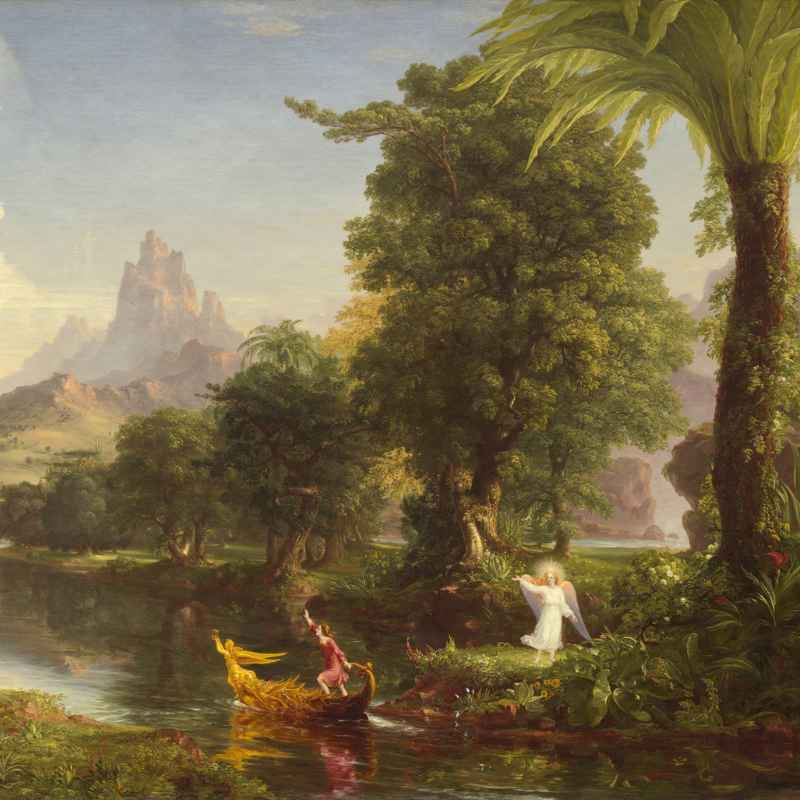

The “master” of the romantic landscape is not one single artist, but a constellation of influential figures who defined the era. Key artists like J.M.W. Turner and Caspar David Friedrich are often cited for their profound emotional depth and groundbreaking techniques.
For a related follow-up, How Does Runoff Contribute To Shaping The Earth'S Landscape? gives readers a useful next step.
They shaped how we see nature’s grandeur and our place within it.
The Soul of Romantic Landscape Art
Romantic landscape art is more than just pretty pictures of nature. It’s about feelings. Think big emotions like awe, wonder, and sometimes even a bit of fear.
This art style grew in the late 1700s and into the 1800s. It was a reaction to hard science and industrial growth. People wanted to feel connected to something bigger than themselves.
Nature was seen as a powerful force. It could be beautiful and inspiring. But it could also be wild and dangerous.
Artists wanted to show this duality. They painted stormy seas, vast mountains, and dramatic skies. They aimed to stir the viewer’s soul.
It was about the sublime. This is the feeling of being small before something immense and powerful. It’s both thrilling and a little scary.
This art movement valued imagination and emotion. It pushed back against strict rules. Artists sought to express their inner feelings.
They used color and light in new ways. They wanted to create a mood. Their paintings often tell a story.
They invite you to step into the scene and feel its energy.
Meet the Trailblazers: Artists Who Defined an Era
When we talk about masters, we often think of names that echo through history. In romantic landscape painting, several artists stand out. Their work shaped the movement.
It continues to inspire artists and art lovers alike. These painters didn’t just copy nature. They interpreted it.
They poured their hearts into their canvases. Their vision brought a new kind of life to art.
Joseph Mallord William Turner is a name that always comes up. He was an English painter. Turner was known for his bold use of color.
He also loved light and atmosphere. His seascapes are legendary. They often show ships battling fierce storms.
You can almost feel the spray and hear the wind.
Turner didn’t shy away from showing nature’s raw power. But he also found beauty in it. His paintings are full of energy.
They seem to vibrate with life. He experimented a lot. Some say he was ahead of his time.
His approach was very personal. He wanted to capture the essence of a moment. It was about the feeling, not just the look.
Another giant in this field is Caspar David Friedrich. He was a German painter. Friedrich’s work often feels more quiet and contemplative.
He painted solitary figures. These figures often look out at grand, sweeping landscapes. They seem lost in thought.
His paintings evoke a sense of solitude and reflection.
Friedrich loved to paint mist and fog. He used it to create a mysterious, spiritual mood. His mountains and ruins often have a somber beauty.
He was deeply religious. His art reflects a search for meaning. He saw nature as a divine creation.
His work invites us to ponder our own existence.
Then there’s John Constable. He was also an English painter. Constable focused on the English countryside.
He painted familiar scenes. His work is often gentler than Turner’s. But it’s just as powerful in its own way.
He loved to capture the changing light. He studied clouds and weather with great care.
Constable wanted to show the beauty of everyday nature. He saw divinity in the ordinary. His paintings are full of life.
You can see the wind rustling the leaves. You can almost smell the damp earth after rain. He brought a new realism to landscape painting.
But it was always infused with his deep love for his subject.
These artists, and many others, each brought their unique voice. They explored different facets of the romantic spirit. They showed us nature in all its glory.
They also showed us its power over our emotions. Their work became the standard. It defined what romantic landscape art could be.
Key Characteristics of Romantic Landscapes
Emotional Depth: Focus on feelings like awe, fear, wonder, and melancholy. Art aims to stir the viewer’s soul.
Nature’s Power: Depicts nature as grand, wild, and sometimes untamed. It shows both beauty and danger.
The Sublime: Evokes the feeling of being small and overwhelmed by immense natural forces.
Individualism: Emphasizes personal emotion and imagination over strict rules.
Spiritual Connection: Views nature as a source of inspiration and a link to the divine or profound.
A Personal Encounter with the Sublime
I remember one trip I took a few years back. It was to the Scottish Highlands. The weather was wild.
Clouds hung low over the mountains. It felt like the world was about to end. I was standing on a cliff edge.
The wind was howling. Below me, the sea crashed against the rocks.
It wasn’t a calm, sunny day. It was dramatic. It was powerful.
I felt a mix of excitement and a little bit of fear. My little car looked tiny on the road behind me. The vastness of the landscape made me feel so small.
This is what romantic artists tried to capture. It’s not just seeing a mountain. It’s feeling its presence.
It’s feeling your own place in the world.
I pulled out my phone to take a picture. But I knew no photo could truly capture that feeling. The spray on my face.
The roar of the wind. The sheer scale of it all. That moment stuck with me.
It made me understand romantic art on a deeper level. It’s about experiencing something that transcends the ordinary. It’s about the raw, untamed beauty of our planet.
The Evolution of a Vision
Romantic landscape art didn’t just appear overnight. It grew from earlier art traditions. But it brought a fresh perspective.
Artists started looking at nature differently. Before, nature was often just a backdrop. It was there to frame a portrait or a historical scene.
The focus was on humans.
During the Romantic era, nature took center stage. Artists began to travel more. They explored wilder places.
They sketched and painted outdoors. This direct experience was crucial. They wanted to capture the fleeting effects of light.
They studied the way clouds moved. They observed how storms gathered.
Turner, for example, was fascinated by the industrial age. He painted steam trains and ships. He showed how these new machines interacted with nature.
His famous painting “Rain, Steam and Speed – The Great Western Railway” is a great example. It shows a train moving through a misty landscape. It’s both modern and deeply romantic.
Friedrich’s landscapes often had a symbolic meaning. A lone tree might represent endurance. A ruined abbey could speak of the past and eternity.
His paintings were often like quiet meditations. They invited the viewer to think about deeper truths.
Constable’s focus on the everyday made his work relatable. He showed that beauty isn’t just in exotic locations. It’s in your own backyard.
His “The Hay Wain” is a classic example. It depicts a simple scene of rural life. But it’s filled with atmosphere and light.
It feels alive.
These different approaches show the richness of the romantic movement. It wasn’t just one style. It was a shared spirit.
It was a new way of seeing the world. It celebrated emotion, imagination, and the profound power of nature. This legacy continues to influence art today.
Styles Within Romanticism
The Sublime: Focuses on the awesome, terrifying, and overwhelming aspects of nature. Think dramatic storms, vast mountains, and roaring seas. Artists like Turner excelled here.
The Picturesque: Celebrates irregularity, variety, and gentle beauty. It aims for a pleasing, often idealized view of nature, like a lovely countryside scene. Constable touched on this.
The Idealized: Presents nature in a perfected, often spiritual way. It’s about nature as a source of peace and divine inspiration. Friedrich often leans into this.
The Enduring Appeal: Why We Still Love It
Why do these old paintings still capture our attention? In a world that’s more connected than ever, we often feel disconnected. We spend a lot of time indoors.
We stare at screens. Romantic landscapes offer an escape. They remind us of a world that is vast and beautiful.
These paintings tap into a deep human need. We need to feel awe. We need to feel wonder.
We need to feel connected to something larger than our daily lives. The sheer scale and power depicted in these works can be grounding. They put our own worries into perspective.
Also, the emotional aspect is key. We all experience strong feelings. These paintings give form to those feelings.
They show us that it’s okay to be moved by beauty. It’s okay to feel small before the grandeur of nature. It’s a very human experience.
Think about it. When you see a stunning sunset, you feel something, right? When you’re out in a forest, or by the ocean, you feel a sense of peace or excitement.
Romantic landscapes capture that. They validate those feelings. They say, “Yes, this is important.
This is powerful.”
The techniques these artists used also contribute. The dramatic use of light and shadow. The swirling brushstrokes.
They create a sense of movement and drama. It’s like the painting is alive. It pulls you in.
You can get lost in the details. You can imagine yourself in that scene.
In our fast-paced world, these paintings offer a moment of pause. They invite contemplation. They remind us of the beauty that exists outside our immediate concerns.
They are a testament to the enduring power of art to connect us to our emotions and to the natural world.
Real-World Contexts: Where the Magic Happens
Romantic landscape art wasn’t just born in a vacuum. It was influenced by real places and real experiences. Artists looked to specific regions for inspiration.
These places often had a wild, untamed quality. They offered the dramatic scenery that fueled the romantic imagination.
For the British artists like Turner and Constable, the English countryside was a major muse. Constable, in particular, loved his home county of Suffolk. He painted it over and over.
He showed its rolling hills, rivers, and quaint villages. But even in these familiar scenes, he captured a sense of natural beauty and peace. He showed the weather changing the light.
He captured the life of the land.
Turner, on the other hand, was drawn to more dramatic coastal areas. The storms and shipwrecks of the English Channel were frequent subjects. He also traveled extensively across Europe.
He was fascinated by the Alps. The towering peaks and rugged terrain offered endless inspiration for his powerful seascapes and mountain views.
In Germany, Caspar David Friedrich found his inspiration in the landscapes of his homeland. The forests, coastlines, and mountains of Northern Europe played a big role. His often somber and misty scenes reflect the moodier aspects of the German romantic sensibility.
He sought out places that evoked a sense of mystery and spirituality.
The appeal of these natural settings wasn’t just about their visual drama. It was also about a feeling. As industrialization grew, people began to feel disconnected from nature.
They saw it as something pure and unspoiled. These wild places became symbols of freedom and escape. They offered a contrast to the growing cities and factories.
Artists also drew inspiration from literature and poetry of the time. Works by poets like Wordsworth and Coleridge celebrated nature. They spoke of its power to heal and inspire.
This cultural context amplified the emotional impact of landscape paintings. They weren’t just pictures; they were reflections of a broader cultural mood.
Nature’s Influence on Romantic Artists
English Countryside: Gentle, familiar landscapes that showed the beauty of rural life and changing light. (Constable)
Dramatic Coastlines: Powerful seas, storms, and shipwrecks that highlighted nature’s raw force. (Turner)
Majestic Mountains: Towering peaks and rugged terrain that evoked awe and the sublime. (Turner, Friedrich)
Mysterious Forests: Deep woods and misty scenes that fostered a sense of introspection and spirituality. (Friedrich)
Literary Inspiration: Poems and stories that romanticized nature and its emotional impact.
When to Appreciate and When to Worry
Romantic landscape art celebrates nature’s power. But not all natural scenes are meant to be viewed with awe. Some require caution.
Understanding this difference is key. It helps us appreciate the art and stay safe in real life.
When it’s awe-inspiring (like the art): Think of a vast, open vista from a safe overlook. A dramatic sunset seen from your porch. A powerful waterfall viewed from a marked trail.
These are moments where nature’s grandeur can be enjoyed safely. The art captures this feeling of wonder. It’s about appreciating beauty from a secure position.
When to worry (and be cautious): If you find yourself near a raging river during a flood. If you’re caught in a sudden, fierce thunderstorm without shelter. If you’re hiking in treacherous mountain terrain without proper gear.
These are situations where nature’s power is a genuine threat.
Simple checks for safety: Always check the weather forecast before going outdoors. Let someone know where you’re going and when you expect to be back. Wear appropriate clothing and footwear.
Stick to marked trails. Never underestimate the power of nature. Respect its limits.
The art often romanticizes danger. A ship battling a storm can look thrilling on canvas. In reality, a storm at sea is terrifying and deadly.
It’s important to distinguish between artistic representation and real-world risk. The feeling of the sublime in art can be exhilarating. The actual experience of being in peril is dangerous.
So, enjoy the dramatic skies and powerful seas in paintings. They are meant to evoke strong emotions. But when you’re out in nature, be smart.
Be prepared. Your safety is more important than any artistic thrill.
Quick Tips for Experiencing Romantic Landscapes
Appreciating romantic landscape art doesn’t require a museum visit. You can connect with its spirit in many ways. Here are a few ideas:
- Go for a walk: Find a local park or nature trail. Pay attention to the light, the sounds, and the smells. What emotions do you feel?
- Watch the weather: Notice how clouds form and move. See how storms approach. Try to capture the mood in words or a simple sketch.
- Read poetry: Explore poems that celebrate nature and emotion. Let the words paint pictures in your mind.
- Listen to music: Classical music, especially pieces inspired by nature, can evoke similar feelings of grandeur and emotion.
- Look at photos: Find stunning nature photography online or in books. What makes a picture feel powerful or moving?
Frequent Questions About Romantic Landscape Masters
Who is most often called the “master” of romantic landscape painting?
There isn’t one single artist universally called “the master.” However, J.M.W. Turner and Caspar David Friedrich are frequently considered the most influential and defining figures of the romantic landscape movement. Their work epitomizes the style’s emotional depth and focus on nature’s power.
What makes a landscape painting “romantic”?
A landscape painting is considered “romantic” if it emphasizes emotion, imagination, and the power of nature. It often depicts dramatic scenes, evokes feelings of awe or melancholy, and shows nature as a force that can inspire or overwhelm the human spirit. It’s about the feeling it creates, not just what it looks like.
How did romantic artists paint nature differently from earlier artists?
Earlier artists often used landscapes as a background for human figures or events. Romantic artists made nature the main subject. They focused on nature’s emotional impact, its wildness, and its spiritual qualities.
They also experimented with color and light to create mood and atmosphere, aiming to express their personal feelings about nature.
Were J.M.W. Turner and John Constable friends or rivals?
J.M.W. Turner and John Constable were contemporaries and fellow Royal Academicians in England. While they were both celebrated landscape painters, their styles were quite different.
Constable focused on the gentle beauty of the English countryside, while Turner often depicted more dramatic and energetic scenes. They respected each other’s work but weren’t necessarily close friends in a competitive sense.
What is “the sublime” in art?
The sublime is a feeling of awe mixed with a little bit of fear or terror. It’s what you feel when you witness something incredibly vast, powerful, or overwhelming. Think of standing at the edge of a huge canyon or watching a massive storm.
Romantic artists aimed to capture this feeling in their paintings of grand nature.
Did romantic landscape art only show wild, untouched nature?
Not always. While many romantic paintings feature wild and untamed nature, artists like John Constable also found beauty in the cultivated English countryside. They showed the interaction between humans and nature, like farms and villages.
The key was still the emotional connection and the sense of nature’s presence, even in more settled areas.
Conclusion: The Enduring Spirit of Romantic Landscapes
So, who is the master? It’s a collective of visionaries. Turner, Friedrich, Constable, and many others gifted us with powerful visions.
They showed us nature’s raw beauty and its profound effect on our souls. Their art speaks of wonder, awe, and our place in the grand scheme of things. It reminds us to connect with the world around us.