What is the Difference between Penjing And Bonsai
Penjing and bonsai are both celebrated art forms that capture the beauty and majesty of nature in miniature. While many people use these terms interchangeably, each tradition has a unique history, philosophy, and aesthetic. Understanding the differences between penjing and bonsai reveals a fascinating journey across cultures, centuries, and artistic sensibilities.
Whether you are a gardening enthusiast, an art lover, or simply curious about East Asian traditions, exploring these living sculptures will deepen your appreciation for the intricate interplay between nature and human creativity.
From imperial Chinese gardens to the serene courtyards of Japanese temples, penjing and bonsai have evolved along distinct paths. Yet, the allure of shaping trees and landscapes to reflect the grandness of nature endures. This article will guide you through the origins, philosophies, technical differences, and global impact of these art forms.
By the end, you’ll have a clear understanding of what sets penjing and bonsai apart—and why both continue to enchant admirers around the world.
Key Takeaways
- Penjing is the ancient Chinese art of creating miniature landscapes, often incorporating rocks, water, and multiple plants, while bonsai is the Japanese art of cultivating small trees in containers, focusing on individual trees.
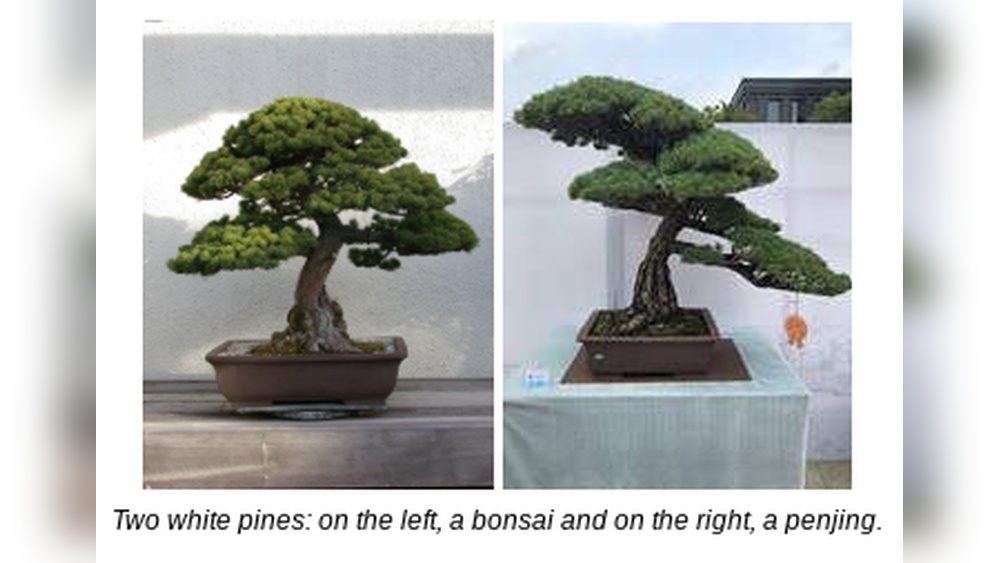
- The two art forms differ in philosophy, design principles, and styling techniques, with penjing emphasizing natural landscapes and bonsai prioritizing idealized tree forms.
- Historical development diverged: Penjing dates back over 1,300 years in China, while bonsai evolved from penjing after its introduction to Japan in the 12th century.
- Tools, containers, and plant species used for each art form reflect their unique cultural backgrounds and aesthetic goals.
- Penjing often tells a narrative through its composition, while bonsai seeks to capture the essence of a single tree.
- Both penjing and bonsai have had a significant influence on global horticulture and garden art.

Origins And Historical Evolution
The Roots Of Penjing In Ancient China
Penjing, also known as pénjǐng (盆景), translates to “tray scenery” or “potted landscape.” Its roots can be traced back to the Tang Dynasty (618–907 CE) in China. The earliest references to penjing appear in poetry and paintings from this era, depicting scholars and nobles cultivating miniature landscapes as a reflection of their connection to nature and philosophical beliefs. Imperial records from the Song Dynasty (960–1279 CE) describe elaborate penjing arrangements in royal gardens, emphasizing their status as symbols of refinement and enlightenment.
Penjing was not just an artistic pursuit; it was intertwined with Daoist and Buddhist philosophies, symbolizing harmony between humans and the natural world. The creation of miniature mountains, rivers, and forests allowed practitioners to express spiritual ideals and evoke the majesty of nature within a confined space.
The Emergence Of Bonsai In Japan
Bonsai, written as 盆栽 in Japanese, means “planted in a container.” The art of bonsai arrived in Japan via Buddhist monks and Chinese scholars around the 12th century. Over time, Japanese artists adapted and refined the techniques, giving rise to a distinct tradition.
While penjing focused on miniature landscapes, bonsai developed a singular focus on individual trees. Japanese aesthetics, such as wabi-sabi (the beauty of imperfection and transience), heavily influenced bonsai design. By the Edo period (1603–1868), bonsai had become a prestigious art form, associated with samurai, nobility, and Zen temples.
Key Historical Milestones
- Tang Dynasty (618–907 CE): Penjing emerges as a courtly art in China.
- Song Dynasty (960–1279 CE): Penjing gains popularity among scholars and elites.
- Kamakura Period (1185–1333 CE): Penjing is introduced to Japan, forming the foundation of bonsai.
- Edo Period (1603–1868): Bonsai develops its own identity and widespread appeal in Japan.
- 19th–20th centuries: Both art forms gain international recognition, with exhibitions and societies forming worldwide.
For more on the history of penjing and bonsai, see the Wikipedia entry on Penjing and Wikipedia entry on Bonsai.
Philosophical And Aesthetic Foundations
Penjing: Embracing Naturalism And Narrative
Penjing is rooted in Chinese landscape painting and classical garden design. Its compositions often feature multiple elements—trees, rocks, water, moss, and sometimes miniature figurines or animals. The goal is to evoke a natural scene or narrative, capturing the grandeur of mountains, rivers, and forests in a single tray.
The philosophy behind penjing is deeply influenced by Daoist ideals: balance, spontaneity, and harmony with the Tao (the Way). The artist serves as a mediator, guiding the forces of nature rather than dominating them. In penjing, asymmetry, contrast, and suggestion of movement are highly valued.
Bonsai: Pursuit Of Idealized Beauty And Simplicity
Bonsai, in contrast, is shaped by Japanese aesthetics, especially the principles of simplicity, restraint, and subtle beauty. The emphasis is on the individual tree, which is styled to reflect an idealized, mature specimen found in nature. While landscapes may be implied, the focus remains on a single living organism.
The philosophy of wabi-sabi—finding beauty in imperfection and the passage of time—permeates bonsai. Bonsai artists strive to reveal the inner character of the tree, often through techniques that highlight age, weathering, and graceful form. The absence of ornamentation and figurines underscores the minimalist approach.
Key Differences In Aesthetic Approach
- Penjing: Narrative, complex, multiple elements, embraces natural chaos.
- Bonsai: Minimalist, focused, singular tree, controlled and refined.
Symbolism And Meaning
Both art forms carry deep symbolic meanings. Penjing landscapes may represent philosophical ideas, historical events, or personal stories. Bonsai trees symbolize resilience, patience, and the cycle of life.
For a deeper look at aesthetic philosophies, see the Britannica article on Penjing and Britannica article on Bonsai.

Design Principles And Techniques
Composition And Layout
Penjing arrangements often use a “three-distance” perspective (foreground, middle ground, background), mimicking classical Chinese landscape paintings. Elements are placed to guide the viewer’s eye through a miniature world, sometimes creating dramatic or theatrical scenes.
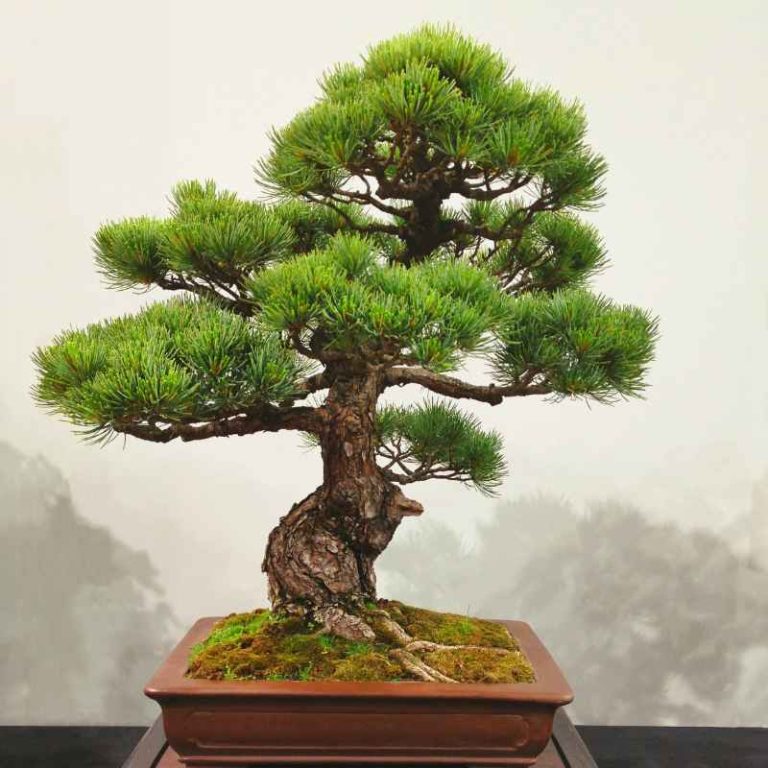
Bonsai compositions prioritize the silhouette and branch structure of a single tree. The design aims to evoke strength, age, and harmony. Trees are typically styled in one of several traditional forms, such as upright (Chokkan), slanting (Shakan), or cascade (Kengai).
Pruning And Shaping
Both penjing and bonsai rely on careful pruning, wiring, and root trimming. However, their methods and goals differ:
- Penjing: Pruning is used to achieve natural, flowing forms. Artists may deliberately allow some wildness or irregularity.
- Bonsai: Pruning and wiring are precise, aiming for balance and proportion. The artist strives for an idealized vision.
Use Of Containers
Penjing containers are often deeper and may feature irregular shapes or naturalistic slabs. Bonsai pots are generally shallow, simple, and unadorned, chosen to complement rather than dominate the tree.
Incorporation Of Rocks, Water, And Accessories
A key distinction is the frequent use of rocks, water features, and figurines in penjing. These elements help build narrative and context. Bonsai, by contrast, rarely includes such accessories, except in the case of saikei (a Japanese miniature landscape similar to penjing).
Comparison Table: Penjing Vs. Bonsai Techniques
| Aspect | Penjing | Bonsai |
|---|---|---|
| Focus | Landscape & multiple elements | Single tree |
| Container | Deep, irregular, naturalistic | Shallow, simple, understated |
| Accessories | Rocks, water, figurines | Rarely used (except in saikei) |
| Pruning style | Natural, flowing, less strict | Controlled, precise, stylized |
| Philosophy | Harmony with nature, narrative | Simplicity, idealized beauty |
For more on styling techniques, visit the Bonsai Empire: Penjing History & Styles.

Species, Tools, And Materials
Plant Species: Diversity And Tradition
Penjing artists enjoy a wide palette of plant species, reflecting China’s vast biodiversity. Popular choices include:
- Chinese elm (Ulmus parvifolia)
- Serissa (Serissa foetida)
- Trident maple (Acer buergerianum)
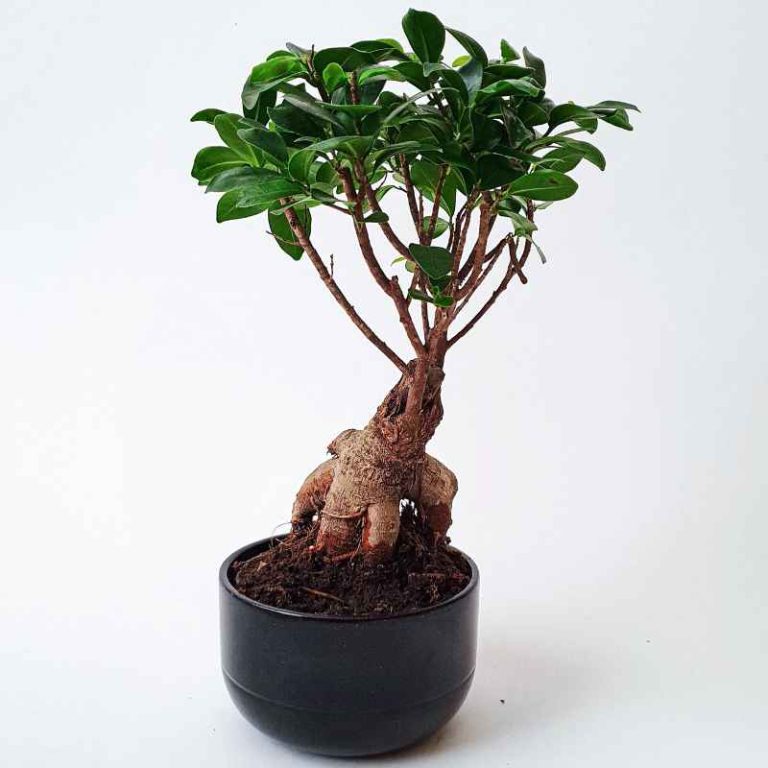
- Ficus species
- Pine, cypress, and juniper varieties
Bonsai, while also diverse, often favors species adapted for Japanese climate and aesthetics:
- Japanese maple (Acer palmatum)
- Japanese black pine (Pinus thunbergii)
- Juniper (Juniperus spp.)
- Azalea (Rhododendron indicum)
- Cherry and plum trees
Some species, like junipers and maples, are common to both traditions.
Tools And Equipment
Both arts use specialized tools, but Japanese bonsai tools are particularly renowned for their precision and craftsmanship. Typical tools include:
- Shears and scissors for fine pruning
- Concave cutters to remove branches cleanly
- Wire for shaping branches
- Root rakes and hooks for repotting
- Tweezers for detailed work
Penjing practitioners may also use chisels and hammers for shaping rocks, and often employ larger or more rustic tools for their landscape compositions.
Containers And Display
Penjing containers can be ceramic, stone, or even natural slabs, sometimes custom-made to fit the scene. Bonsai pots tend to be unglazed and subdued, chosen to harmonize with the tree’s shape and color.
The display of bonsai is highly ritualized in Japan, often accompanied by scrolls or accent plants on a tokonoma (display alcove). Penjing displays are less formal but often tell a story through their arrangement.
Table: Species And Tools Comparison
| Category | Penjing | Bonsai |
|---|---|---|
| Popular Species | Chinese elm, Serissa, Ficus | Japanese maple, Black pine, Azalea |
| Tools | Shears, chisels, hammers, wire | Precision scissors, concave cutters, wire |
| Containers | Deep, irregular, naturalistic | Shallow, understated, unglazed |
| Display | Storytelling, less formal | Ritualized, often with scrolls and stands |
For further reading, visit the Royal Horticultural Society: Penjing & Bonsai.
Styles, Forms, And Classification
Penjing Styles
Penjing is categorized into three main styles:
- Tree Penjing (Shumu Penjing): Focuses on the form and arrangement of trees, similar to bonsai but often includes multiple specimens.
- Landscape Penjing (Shanshui Penjing): Depicts entire landscapes with rocks representing mountains and miniature water features.
- Water and Land Penjing (Shuihan Penjing): Combines terrestrial and aquatic elements, creating scenes with both land and water.
Each style seeks to evoke the grandeur of China’s natural scenery and often incorporates narrative or poetic themes.
Bonsai Styles
Japanese bonsai recognizes several traditional forms, each mimicking a tree’s growth pattern in nature:
- Formal upright (Chokkan)
- Informal upright (Moyogi)
- Slanting (Shakan)
- Cascade (Kengai)
- Semi-cascade (Han-kengai)
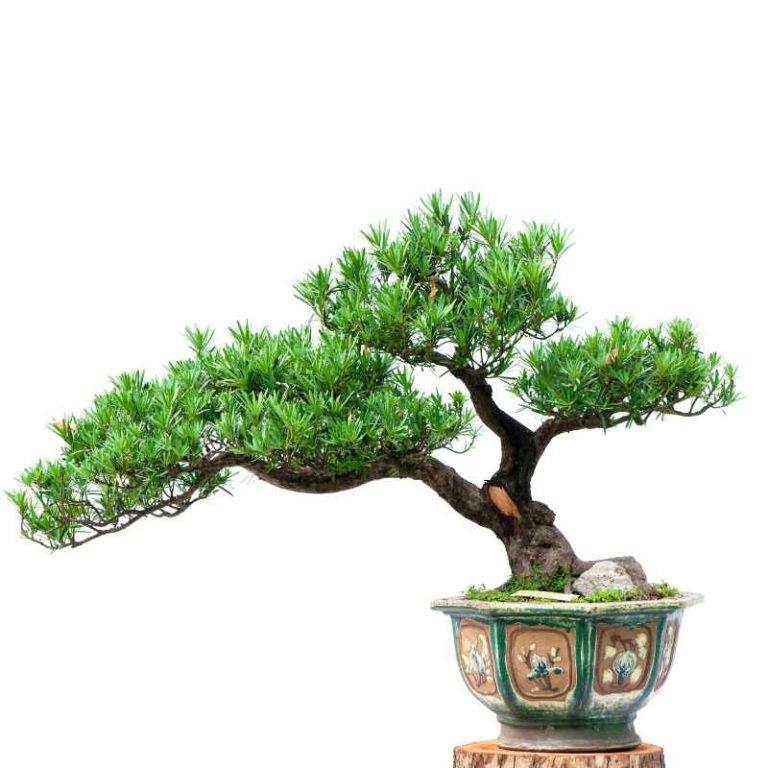
- Windswept (Fukinagashi)
- Multiple-trunk (Kabudachi)
Each style is defined by rules governing trunk shape, branch placement, and overall silhouette, reflecting Japanese attention to detail and discipline.
Classification And Judging
In competitions and exhibitions, penjing is judged on its evocation of mood, narrative power, and naturalness. Bonsai is assessed on criteria such as trunk taper, nebari (surface root spread), branch placement, and overall balance.
Table: Styles And Classification
| Aspect | Penjing | Bonsai |
|---|---|---|
| Primary Styles | Tree, Landscape, Water & Land | Formal upright, Informal upright, Cascade, etc. |
| Judging Criteria | Narrative, mood, naturalness | Trunk, roots, balance, proportion |
| Element Focus | Multiple elements/scenes | Single tree form |
To learn more about bonsai and penjing styles, see the National Bonsai Foundation: Penjing vs Bonsai.
Real-world Examples And Case Studies
The Lingnan Penjing Gardens, China
The Lingnan Penjing Garden in Guangzhou is renowned for its breathtaking landscapes. Visitors can see hundreds of penjing displays, from sprawling river valleys to misty mountain scenes. These compositions use indigenous species and local rocks, highlighting the regional diversity of penjing art. The gardens serve as a living museum, preserving ancient techniques and inspiring new generations of artists.
The Omiya Bonsai Village, Japan
Located near Tokyo, Omiya Bonsai Village is home to some of the world’s finest bonsai nurseries and museums. Many specimens are over 500 years old, showcasing the longevity and meticulous care bonsai requires. Annual exhibitions attract enthusiasts globally, and the village is a hub for research and education.
Saikei: A Bridge Between Traditions
Saikei is a Japanese art form inspired by penjing, blending elements of landscape and tree cultivation. Developed in the 20th century, saikei uses rocks, soil, and multiple plants to create miniature vistas. While less formalized than bonsai, saikei illustrates the ongoing dialogue between Chinese and Japanese traditions.
Western Adaptations
In recent decades, both penjing and bonsai have influenced artists worldwide. The National Bonsai & Penjing Museum in Washington, D.C., for example, displays masterpieces from Asia and the West, highlighting the universality of these arts. Western practitioners often blend styles, combining penjing’s narrative flair with bonsai’s disciplined elegance.
Cultural Impact And Global Spread
Influence On Art And Design
Penjing and bonsai have shaped not only horticulture but also landscape architecture, painting, and interior design. Their principles inspire everything from Japanese rock gardens to modern terrariums. The art forms have featured in movies, literature, and even fashion, symbolizing tranquility, patience, and mastery.
Societal And Spiritual Roles
In both China and Japan, penjing and bonsai are more than hobbies. They are seen as spiritual practices, fostering mindfulness and a deep appreciation for nature. Many practitioners view the art as a lifelong journey, with trees and landscapes evolving over decades.
International Exhibitions And Societies
Major cities around the world host bonsai and penjing exhibitions, drawing thousands of visitors annually. International organizations, such as the World Bonsai Friendship Federation and the China Penjing Artists Association, promote cross-cultural exchange and education.
According to the World Bonsai Friendship Federation, bonsai societies now exist in over 60 countries, a testament to the art’s universal appeal.
Conservation And Sustainability
Both art forms have contributed to plant conservation. By cultivating rare and ancient species, artists help preserve genetic diversity. Bonsai and penjing also promote sustainable gardening practices, encouraging urban dwellers to engage with nature on a manageable scale.
Technical Challenges And Skills
Time, Patience, And Mastery
Cultivating penjing and bonsai is a test of patience and commitment. Trees may take decades to mature, and the process demands constant attention—watering, pruning, repotting, and pest control. Mistakes can set back years of progress or even kill a cherished specimen.
Skill Development
Mastery requires knowledge of botany, soil science, horticulture, and artistic design. Practitioners often apprentice for years under experienced mentors. Competitions and exhibitions serve as opportunities to showcase skills and learn new techniques.
Common Difficulties
Some of the most frequent challenges include:
- Root rot due to improper watering
- Branch dieback from poor pruning or wiring
- Pest infestations (aphids, spider mites)
- Weather damage (frost, wind)
- Container limitations affecting tree health
Tools And Training
Advanced practitioners invest in high-quality tools and may attend workshops or join clubs to improve their techniques. The rise of online tutorials and digital communities has made learning more accessible, though hands-on experience remains irreplaceable.
For aspiring artists, the American Bonsai Society offers resources and guidance: American Bonsai Society.
Frequently Asked Questions
What Is The Primary Difference Between Penjing And Bonsai?
The primary difference lies in their focus and philosophy. Penjing is a Chinese art form that creates miniature landscapes using multiple trees, rocks, and sometimes figurines to tell a story or evoke a scene. Bonsai, developed in Japan from penjing, centers on cultivating a single tree in a pot, emphasizing simplicity, idealized beauty, and the essence of a mature tree.
Can You Use The Same Tree Species For Both Penjing And Bonsai?
Yes, many species—such as junipers, elms, and maples—are suitable for both penjing and bonsai. However, the choice of species often reflects regional preferences and available flora. Penjing may utilize a broader variety, including tropical and subtropical species, while bonsai tends to favor species adapted to Japanese aesthetics and climate.
Do Penjing And Bonsai Require Different Care Techniques?
While both require similar basic horticultural practices (watering, pruning, repotting), penjing arrangements may need more attention to the health of multiple plants and elements, such as rocks or water features. Bonsai care is usually focused on a single tree, with meticulous attention to its shape, roots, and health.
Are Rocks And Figurines Allowed In Bonsai?
Traditional bonsai rarely includes rocks, figurines, or other accessories, except in the related art of saikei. In contrast, penjing often features these elements to build a narrative scene or landscape.
Which Art Form Is More Popular Globally?
Both penjing and bonsai enjoy worldwide popularity, but bonsai has a larger global following, partly due to Japan’s promotion of the art at international exhibitions and through media. However, penjing is gaining recognition as more people appreciate its narrative and landscape-driven approach.
Closing Paragraph
Penjing and bonsai offer two distinct yet interconnected visions of nature in miniature. Their differences in history, philosophy, technique