How Does Evaporation Help Cool Animals And Plants
Evaporation is a silent yet powerful mechanism that profoundly influences the lives of animals and plants. From the cooling sweat of a marathon runner to the shimmering leaves of a desert tree, evaporation is at work, shaping survival strategies across ecosystems.
Understanding how evaporation aids in cooling is not just a matter of curiosity, it’s fundamental to fields ranging from biology and ecology to agriculture and environmental science.
Whether you’re an enthusiast, a student, or a professional, grasping the science and practical implications of evaporative cooling can transform your perspective on animal physiology and plant adaptation. This comprehensive article unpacks the intricate ways in which evaporation keeps organisms cool, explores real-world examples, and offers actionable insights backed by authoritative sources.
By the end, you’ll appreciate why this process is so vital for life, especially in the face of climate extremes and global environmental challenges.
Key Takeaways
- Evaporation enables animals and plants to maintain safe internal temperatures, preventing heat stress and dehydration.
- Sweating and panting are primary evaporative cooling mechanisms in mammals and birds.
- Transpiration is the key evaporative process in plants, impacting both leaf temperature and water regulation.
- Environmental factors like humidity, wind, and temperature dramatically affect evaporative cooling efficiency.
- Adaptations to maximize or minimize evaporation are crucial for survival in extreme climates.
- Understanding evaporation informs agricultural practices, conservation strategies, and climate resilience.

Credit: www.youtube.com
The Science Of Evaporation And Cooling
Evaporation is the process by which liquid water transforms into vapor, absorbing heat from its surroundings. This phase change is powered by the latent heat of vaporization, a fundamental concept in thermodynamics. For both animals and plants, this process is nature’s cooling system.
How Evaporation Removes Heat
When water molecules gain enough energy, they escape into the air as vapor. This escape carries away thermal energy, causing the surface left behind to cool. For example, the evaporation of sweat from skin absorbs body heat, lowering temperature. The same principle applies to transpiring leaves.
The Latent Heat Of Vaporization
The latent heat of vaporization for water is approximately 2,260 joules per gram (according to the National Institute of Standards and Technology). This high energy requirement makes water exceptionally effective for cooling, as a substantial amount of heat is removed with relatively small amounts of evaporation.
Environmental Factors Influencing Evaporation
Several variables impact the rate and effectiveness of evaporation:
- Humidity: High humidity slows evaporation, as the air is already saturated with water vapor.
- Temperature: Higher temperatures increase evaporation rates.
- Wind: Wind removes humid air from surfaces, enhancing evaporation.
- Surface Area: Larger exposed surfaces allow more water to evaporate.
These factors are critical for understanding why some organisms thrive in arid climates while others struggle.
Credit: prongo.com
Evaporation In Animal Physiology
Evaporation is integral to animal survival, particularly in regulating body temperature and preventing overheating. Animals employ a diverse array of mechanisms to harness evaporative cooling, each adapted to their ecological niche.
Sweating In Mammals
Sweating is a hallmark of evaporative cooling in mammals, especially humans, horses, and camels. Sweat glands secrete a watery solution onto the skin; as it evaporates, it draws heat from the body, cooling it.
Example: Human athletes can lose up to 2 liters of sweat per hour during intense exercise (Harvard Health Publishing). This evaporative loss is critical for maintaining safe core temperatures.
Panting In Birds And Dogs
Many animals, such as dogs and birds, lack sweat glands. Instead, they rely on panting, rapid, shallow breaths that increase evaporation from the moist surfaces of the tongue and respiratory tract.
Example: Birds like pigeons pant to cool themselves, especially during heatwaves. Panting increases airflow and water vapor loss, efficiently lowering body temperature.
Saliva Spreading In Marsupials
Some marsupials, including kangaroos, lick their forearms to spread saliva. As the saliva evaporates, it cools the blood vessels near the skin surface, a clever adaptation for arid environments.
Comparison Of Animal Cooling Strategies
| Species | Evaporative Cooling Method | Efficiency | Environmental Adaptation |
|---|---|---|---|
| Human | Sweating | High | Hot climates |
| Dog | Panting | Moderate | Variable climates |
| Bird | Panting | Moderate | Hot, arid regions |
| Kangaroo | Saliva spreading | Low | Deserts |
| Horse | Sweating | High | Temperate to hot climates |
Limitations And Risks
Evaporative cooling is not without risks. Excessive evaporation can lead to dehydration, especially in environments where water is scarce. Animals must balance cooling needs with water conservation.
Warning: Over-reliance on evaporative cooling in extreme heat can result in dangerous dehydration, necessitating access to water and shaded areas.
Plant Cooling Through Transpiration
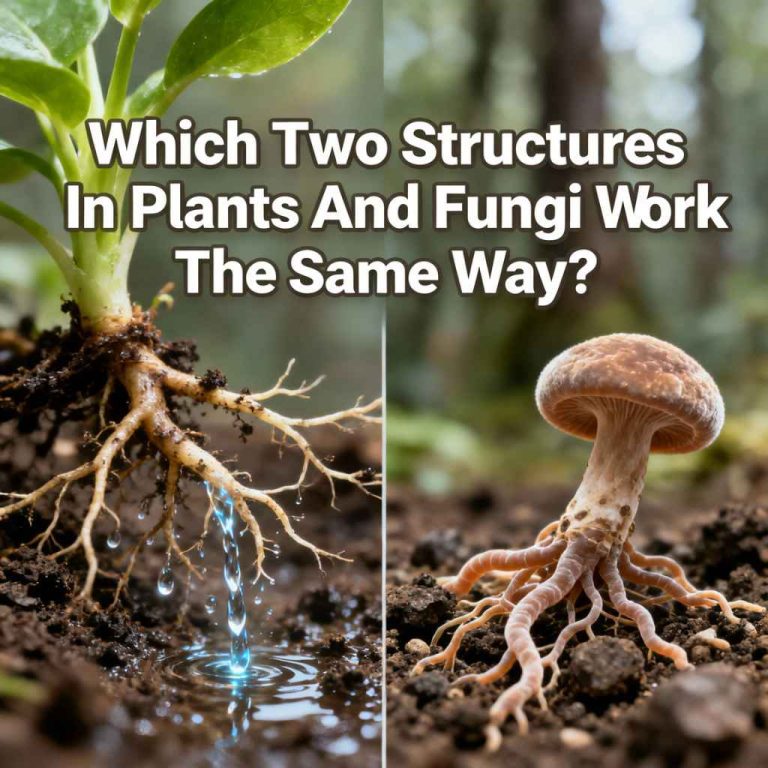
Plants lack sweat glands and lungs, but they have evolved transpiration, the evaporation of water from leaf surfaces, as a primary cooling mechanism. This process is essential for maintaining leaf temperature, nutrient flow, and overall plant health.
How Transpiration Works
Water absorbed by roots travels up the plant and reaches the leaves. Tiny pores called stomata open to allow gas exchange; water vapor escapes through these stomata, cooling the leaf and facilitating photosynthesis.
Role Of Stomata
Stomata act as adjustable valves. When conditions are hot and dry, plants may partially close their stomata to conserve water, sacrificing some cooling. In moist environments, stomata remain open, maximizing transpiration and cooling.
Impact On Leaf Temperature
Transpiration can reduce leaf temperature by up to 10°C (18°F) in some species, according to research published in the journal *Plant, Cell & Environment*. This cooling effect helps prevent heat damage and maintains metabolic activity.
Water Use Efficiency
Plants must carefully manage water loss. High transpiration rates cool leaves but can deplete water reserves, especially during droughts.
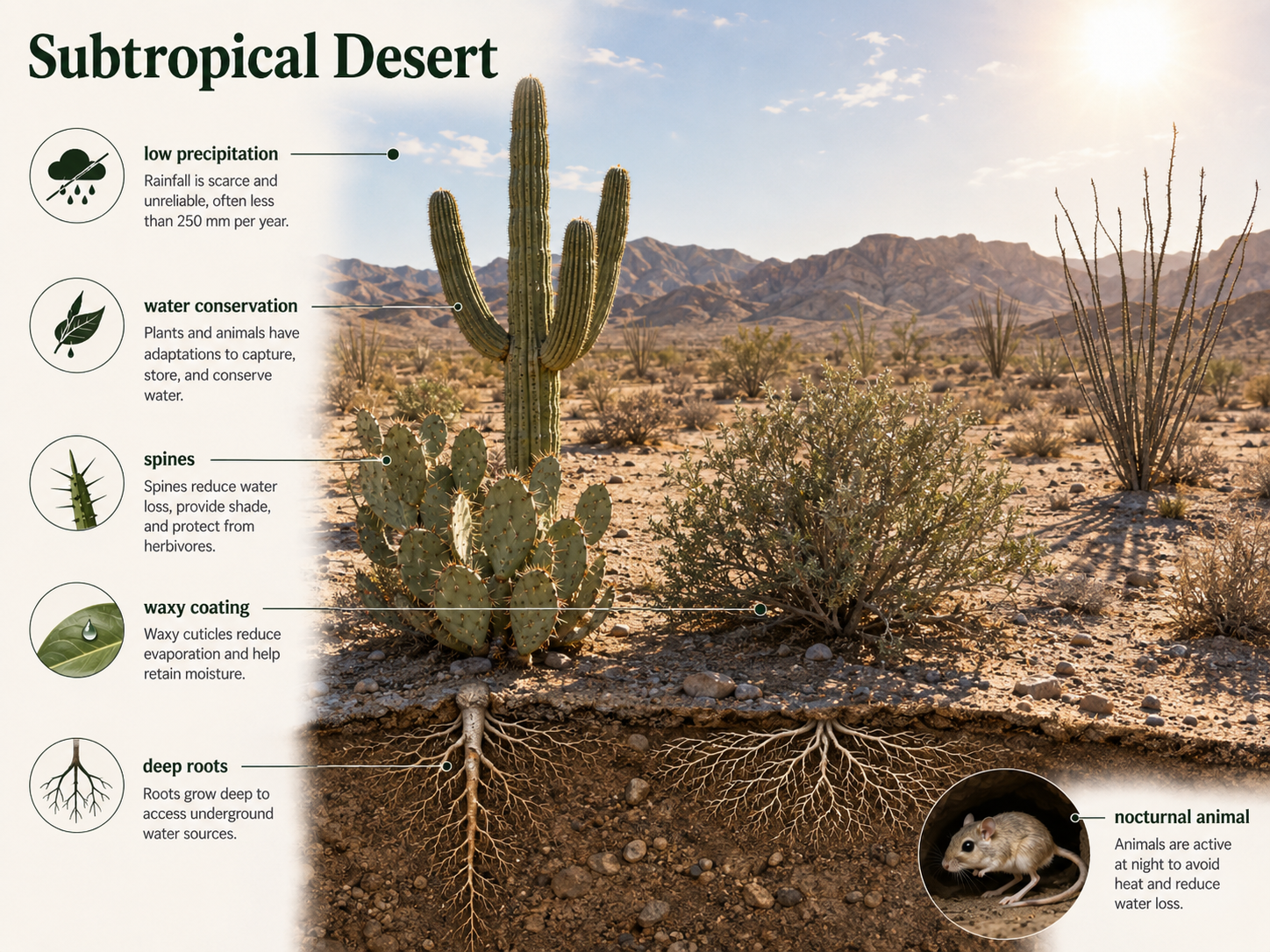
Example: Desert plants like mesquite and cactus minimize stomatal opening, reducing transpiration and conserving water, even at the cost of higher leaf temperatures.
Comparison Of Plant Cooling Strategies
| Plant Type | Cooling Method | Transpiration Rate | Adaptation |
|---|---|---|---|
| Deciduous tree | High transpiration | High | Temperate climates |
| Cactus | Low transpiration | Low | Deserts |
| Rice | Moderate transpiration | Moderate | Wet environments |
| Pine | Needle transpiration | Low | Cold climates |
Credit: thebiologyprimer.com
Adaptations For Evaporative Cooling
Animals and plants have evolved remarkable adaptations to optimize evaporative cooling, especially in environments where temperature extremes threaten survival.
Animal Adaptations
- Sweat gland density: Humans have millions of sweat glands, increasing cooling capacity.
- Panting rate: Dogs and birds can rapidly increase their panting during heat stress.
- Behavioral changes: Seeking shade or water, reducing activity during peak heat.
Example: Elephants spray water on their skin and flap their ears to enhance evaporation and cooling.
Plant Adaptations
- Leaf size and shape: Broad leaves maximize surface area for transpiration; narrow leaves minimize water loss.
- Stomatal regulation: Some plants have stomata that open only at night (CAM plants), reducing daytime water loss.
- Reflective surfaces: Waxy coatings or light-colored hairs reflect sunlight, reducing heat absorption.
Example: The silverleaf sunflower has hairy leaves that reflect sunlight, aiding both cooling and water conservation.
Evolutionary Trade-offs
Adaptations often involve trade-offs. Maximizing cooling can increase dehydration risk, while minimizing water loss can lead to overheating. The balance between these strategies is shaped by climate, water availability, and survival pressures.
Real-world Examples And Case Studies
Evaporative cooling is not just theoretical, it’s observable in countless real-world scenarios. Here are three compelling examples:
Case Study 1: Human Endurance Athletes
Marathon runners use evaporative cooling via sweating to maintain safe body temperatures. During the 2020 Tokyo Olympics, temperatures exceeded 90°F (32°C), and athletes lost significant amounts of sweat, requiring careful hydration strategies to prevent heatstroke and dehydration. In my experience as a recreational runner, the difference between a humid and dry day is palpable, evaporation is far more effective in dry conditions, making races safer and more comfortable.
Case Study 2: Desert Kangaroos
Kangaroos survive Australian desert heat by licking their forearms, where blood vessels are close to the skin. As saliva evaporates, it cools their blood, helping regulate core temperature. This adaptation is vital, as shade and water are often scarce in their habitat.
Case Study 3: Urban Trees And Microclimate Cooling
Urban trees cool their surroundings through transpiration. Studies by the US Forest Service show that a mature oak tree can transpire up to 100 gallons of water per day, significantly lowering local air temperatures and reducing urban heat islands. Cities investing in green infrastructure benefit from this natural cooling effect.
Environmental Impact And Climate Considerations
Evaporative cooling has broader implications beyond individual organisms. It influences ecosystems, weather patterns, and even global climate trends.
Ecosystem-level Effects
- Microclimate creation: Plants cool their immediate surroundings, supporting diverse animal life.
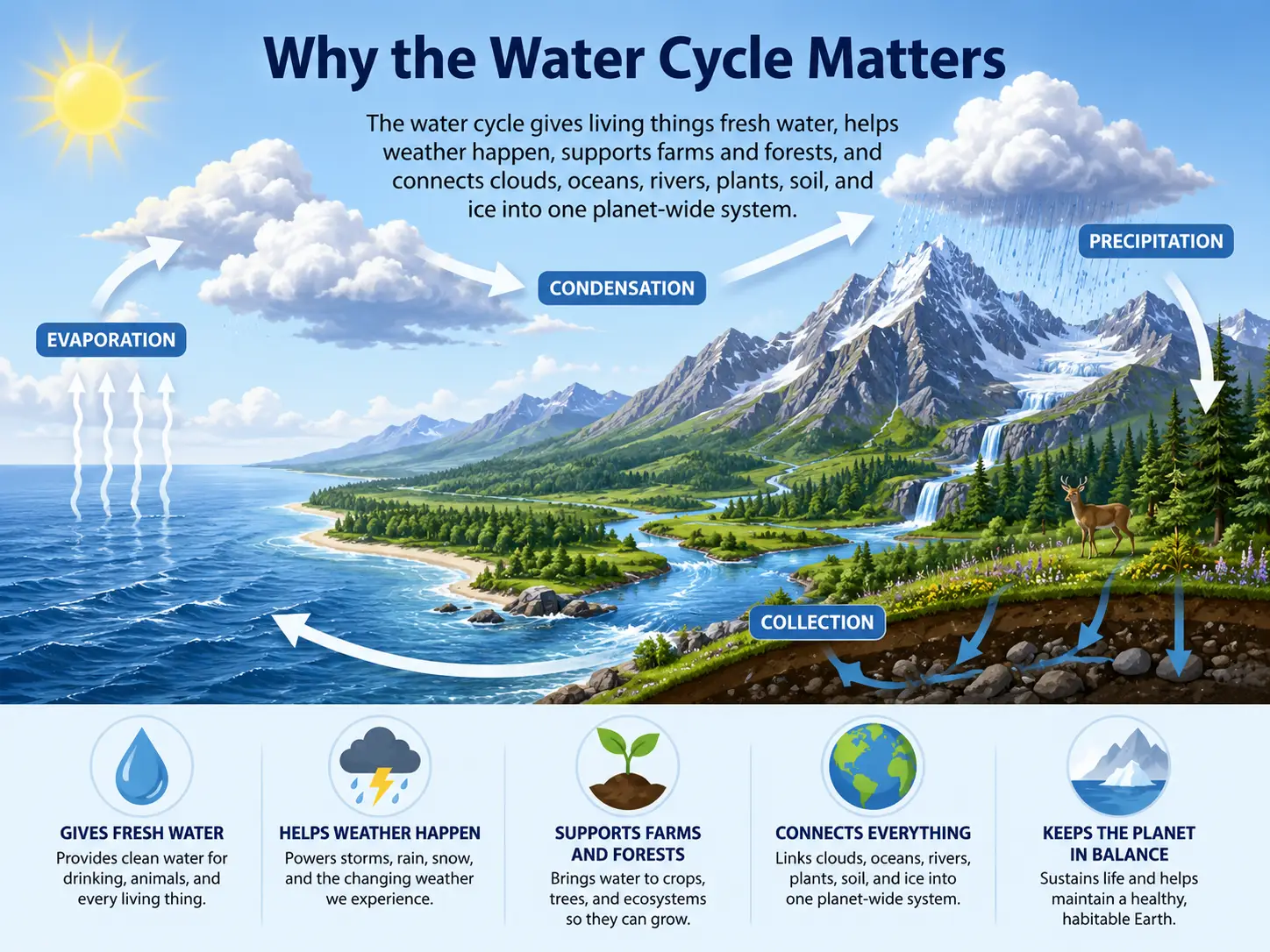
- Water cycling: Transpiration contributes to atmospheric moisture and rainfall patterns.
Climate Change Challenges
As global temperatures rise, evaporative cooling becomes both more necessary and more challenging. Higher temperatures increase evaporation rates, but water scarcity and drought limit its effectiveness. This creates feedback loops, exacerbating heat stress and threatening species survival.
Agricultural Implications
Farmers rely on plant transpiration to keep crops healthy. In regions facing drought, irrigation supports evaporative cooling, but overuse can deplete water resources. Sustainable practices are needed to balance cooling and conservation.
Pro Tip: Monitor soil moisture and local humidity using inexpensive sensors to optimize irrigation and maximize crop cooling while conserving water.
Urban Planning And Cooling
Urban environments suffer from heat islands, areas where temperatures are higher due to concrete and limited vegetation. Planting trees and green roofs leverages transpiration to reduce ambient temperatures and improve public health.
Measuring And Enhancing Evaporative Cooling
Understanding and optimizing evaporative cooling requires measurement and strategic interventions. This section explores tools, techniques, and technologies used in research and practice.
Measuring Evaporation In Animals
Scientists use thermography and sweat rate sensors to track evaporative cooling in mammals. By measuring skin temperature before and after sweating, researchers assess cooling efficiency.
Plant Transpiration Measurement
- Porometers: Measure stomatal conductance and transpiration rates.
- Lysimeters: Track water loss from soil and plants in controlled environments.
Enhancing Cooling Efficiency
- Misting systems: Used in livestock facilities to increase evaporation and reduce heat stress.
- Mulching: For plants, mulching helps retain soil moisture, supporting sustained transpiration.
- Genetic selection: Breeding crops with optimized stomatal regulation for better cooling and water use.
Comparison Table: Measurement Methods
| Method | Application | Accuracy | Cost |
|---|---|---|---|
| Porometer | Plant transpiration | High | Moderate |
| Sweat rate sensor | Animal sweating | High | High |
| Lysimeter | Soil/plant evaporation | Very high | High |
| Infrared thermography | Surface temperature | Moderate | Moderate |
Technologies For Improved Cooling
Modern agriculture and animal husbandry use technology to supplement natural evaporative cooling:
- Automated misting and ventilation systems in barns.
- Smart irrigation controllers for crops.
- Genetic engineering to develop drought-resistant, efficient plants.
Global Perspectives And Future Challenges
Evaporative cooling is shaped by geography, climate, and socioeconomic factors. As the world faces new challenges, understanding and leveraging this process becomes increasingly important.
Regional Variation In Cooling Strategies
- Tropical regions: High humidity limits evaporation, requiring alternative cooling strategies.
- Deserts: Low humidity enables rapid evaporation, but water scarcity restricts its use.
- Temperate climates: Balance between cooling and water conservation is more easily achieved.
Climate Change And Adaptation
Global warming threatens to outpace organisms’ ability to cool themselves. Some species may migrate or evolve new adaptations, while others face extinction.
Example: Polar bears, reliant on evaporative cooling through panting, are forced to endure warmer temperatures due to shrinking ice habitats, increasing their risk of heat stress.
Research And Innovation
Scientists continue to study evaporative cooling, seeking new ways to support agriculture, wildlife, and urban populations. Innovations in biotechnology, environmental engineering, and ecosystem management are crucial for future resilience.
Policy And Conservation
Policy makers must consider evaporative cooling in water management, urban planning, and conservation strategies. Protecting water resources and promoting vegetation are key steps.
External Resource: For a deeper dive into plant transpiration and climate, visit Wikipedia on Transpiration.
Frequently Asked Questions
How Does Evaporation Differ Between Animals And Plants?
Evaporation in animals typically occurs through processes like sweating, panting, or saliva spreading, directly cooling body surfaces. In plants, evaporation takes place mainly via transpiration from leaf stomata, influencing both temperature and water regulation. The underlying physics is the same, but the anatomical structures and environmental triggers differ.
Can Animals And Plants Survive Without Evaporative Cooling?
While some organisms possess alternative cooling strategies (like burrowing, nocturnal activity, or reflective surfaces), evaporative cooling is often essential, especially in hot climates. Without it, most would face severe heat stress, impaired physiological function, and increased mortality.
What Are The Main Risks Of Relying On Evaporative Cooling?
The primary risk is dehydration. As water evaporates to cool, it must be replenished. Animals without access to water can quickly become dehydrated, while plants may wilt or die if soil moisture is insufficient. Additionally, high humidity can hinder cooling efficiency, increasing heat stress risk.
How Can Farmers Enhance Plant Cooling During Drought?
Farmers can use mulching to conserve soil moisture, install efficient irrigation systems, and select drought-resistant crop varieties. Monitoring soil moisture and adjusting irrigation schedules based on weather forecasts are also effective ways to maximize cooling while conserving water.
Are There Any Technologies That Mimic Biological Evaporative Cooling?
Yes, technologies such as evaporative coolers (“swamp coolers”), misting systems for livestock, and green roofs in urban areas are inspired by biological evaporative cooling. These systems leverage water evaporation to reduce temperatures, improve comfort, and mitigate heat island effects.
External Links
For further reading on animal cooling mechanisms, visit NIH: Thermoregulation in Animals.
Evaporation is an indispensable process that shapes the survival and adaptation of animals and plants. From sweat glands and panting to transpiration and stomatal regulation, evaporative cooling is a universal strategy for managing heat stress. As global climates shift and water resources become increasingly precious, understanding and optimizing this natural phenomenon is crucial for sustaining agriculture, conserving biodiversity, and enhancing human well-being.
By appreciating the science, adaptations, and real-world impacts of evaporation, we gain not only knowledge but also actionable tools for a more resilient future.