Which Criteria Are Used for Classifying Plants? Full Guide
The diversity of the plant kingdom is both astonishing and vital to life on Earth. From towering redwoods to microscopic algae, plants have evolved into a vast array of forms, functions, and ecological roles. But how do scientists make sense of this overwhelming variety? The answer lies in plant classification—a rigorous scientific process that organizes plants into hierarchical categories based on a set of well-defined criteria.
Understanding these criteria is not only essential for botanists and researchers, but also for students, gardeners, farmers, and anyone interested in nature. Accurate plant classification underpins fields like agriculture, medicine, ecology, and even climate science. This comprehensive guide unpacks the main criteria used for classifying plants, tracing their historical development, exploring their modern applications, and highlighting the critical impact these systems have across industries and disciplines.
Key Takeaways
- Plant classification relies on a combination of morphological, anatomical, physiological, genetic, and biochemical criteria.
- Modern taxonomy increasingly utilizes molecular and genetic data to resolve complex relationships.
- Historical systems laid the groundwork, but new technologies continue to refine plant classification.
- Understanding plant classification enhances fields like agriculture, medicine, and ecology.
- Real-world examples and case studies demonstrate the practical importance of accurate classification.

The Evolution Of Plant Classification Systems
The history of plant classification is a story of scientific discovery, debate, and technological advancement. Over centuries, the criteria for grouping plants have shifted from simple observations to complex genetic analyses.
Early Classification Methods
Early civilizations, including the Ancient Greeks and Chinese herbalists, grouped plants by utility—edible, medicinal, or poisonous. Theophrastus, known as the “Father of Botany,” began classifying plants by form, such as trees, shrubs, and herbs. These early systems were practical but lacked scientific rigor.
In ancient India, the Ayurveda system also classified plants based on their medicinal properties and effects on human health, which influenced early herbal medicine traditions. Indigenous cultures around the world often developed unique, localized systems of plant classification, reflecting their environments and cultural practices.
The Linnaean System
A revolution in classification came with Carl Linnaeus in the 18th century. Linnaeus introduced binomial nomenclature and grouped plants based on reproductive structures, especially the arrangement and number of stamens and pistils. This provided a standardized approach, forming the backbone of modern taxonomy.
Linnaeus’s system made it possible to catalog plants consistently across different regions and languages. For example, the common daisy is universally known as *Bellis perennis* regardless of local names. This universality greatly improved scientific communication and record-keeping.
The Rise Of Evolutionary Classification
The publication of Darwin’s “On the Origin of Species” in 1859 shifted focus to evolutionary relationships (phylogeny). Botanists began to classify plants according to their ancestral lineages, not just physical similarities.
This approach recognized that similar traits could arise independently through convergent evolution, and that true relationships are better understood by tracing the evolutionary paths of different groups. The development of evolutionary trees, or phylogenies, marked a turning point in biological classification.
Modern Molecular Systems
Today, molecular phylogenetics leverages DNA sequencing to classify plants. Organizations like the Angiosperm Phylogeny Group (APG) have reshaped plant taxonomy using genetic relationships, resolving ambiguities that morphological data alone could not address.
Molecular data has provided clarity in many problematic groups, where morphological features were insufficient or misleading. The APG system is updated as new molecular data become available, making plant taxonomy a dynamic and continuously evolving field.
Example: Orchidaceae Classification Over Time
The Orchidaceae family has seen major reclassifications. Initially grouped by flower structure, DNA analysis has revealed new relationships, splitting and merging genera as genetic evidence accumulates.
For example, the reclassification of *Cymbidium* and *Dendrobium* genera, once thought to be closely related based on flower form, now reflect deeper genetic divisions. This ongoing refinement highlights the importance of integrating multiple lines of evidence in plant taxonomy.
Main Criteria For Classifying Plants
Plant classification relies on a hierarchy of criteria, each offering distinct insights into plant relationships and evolution.
Morphological Criteria
Morphology remains a foundational tool in taxonomy, focusing on physical characteristics:
- Habit and form: Tree, shrub, herb, vine, etc.
- Leaf structure: Simple vs. compound, venation patterns.
- Root type: Taproot, fibrous, adventitious.
- Flower structure: Number of petals, symmetry, ovary position.
- Fruit and seed types: Dehiscent, indehiscent, fleshy, dry.
Morphological traits are especially valuable for field identification and fossil classification.
Morphology also helps botanists quickly recognize new species in the field. For example, the distinctive pitcher-shaped leaves of the *Nepenthes* genus (pitcher plants) immediately signal their carnivorous nature, while the compound leaves and winged fruits of maples (*Acer* species) are instantly recognizable.
However, morphological traits can sometimes be misleading due to convergent evolution, where unrelated species develop similar adaptations (such as succulent leaves in desert plants from different families).
Anatomical Criteria
Anatomical features include internal structures observable under a microscope:
- Vascular tissue arrangement: Xylem and phloem patterns (e.g., monocots vs. dicots).
- Stomata type and distribution
- Trichomes and secretory cells
- Wood anatomy: Vessel elements, fibers, rays.
Anatomy helps distinguish closely related species with similar external features.
For example, the internal arrangement of vascular bundles can quickly differentiate monocots (scattered bundles) from dicots (bundles in a ring). Wood anatomy is vital in identifying timber species and understanding their mechanical properties—important in fields like forestry and archaeology.
Microscopic examination of seed coats, pollen grains, and leaf epidermis can reveal subtle differences that are not apparent externally. These features are often used to resolve disputes in taxonomy or to identify plant remains in archaeological sites.
Physiological And Biochemical Criteria
Physiological processes and biochemical markers also inform classification:
- Photosynthetic pathways: C3, C4, CAM.
- Secondary metabolites: Alkaloids, terpenoids, flavonoids.
- Enzyme profiles
- Pigmentation: Presence of specific chlorophylls, carotenoids, anthocyanins.
Such traits are crucial in identifying cryptic species and understanding ecological adaptations.
For instance, C4 and CAM photosynthesis have evolved in response to arid environments, and their presence can help distinguish closely related genera or families. The presence or absence of certain alkaloids has long been used in the classification and identification of medicinal plants, such as the distinction between the Solanaceae (nightshades) and Apiaceae (carrots and relatives).
Modern chromatography and spectroscopy techniques allow the rapid profiling of plant metabolites, aiding in the discovery of new compounds and supporting phylogenetic analyses.
Genetic And Molecular Criteria
Genetic analysis is now central to plant taxonomy:
- DNA barcoding
- Chloroplast and mitochondrial genomes
- Gene sequencing and phylogenetic trees
- Molecular markers: RAPD, AFLP, SSR.
Genetic data resolve complex relationships, especially among plants with convergent morphologies.
For example, DNA barcoding distinguishes between morphologically similar species by analyzing a short DNA sequence from a standard part of the genome. Advances in next-generation sequencing have made it possible to analyze entire chloroplast genomes, providing high-resolution data for constructing phylogenies.
Molecular markers are also used in plant breeding and conservation biology, enabling the tracking of genetic diversity in populations and the identification of rare or endangered taxa.
Reproductive Criteria
Reproductive traits often define higher taxonomic ranks:
- Sexual vs. asexual reproduction
- Flowering patterns
- Seed development and dispersal mechanisms
- Pollination strategies: Wind, insect, bird, water.
These criteria are particularly important in distinguishing major plant groups like angiosperms and gymnosperms.
For example, gymnosperms produce seeds without flowers or fruit, while angiosperms have flowers and seeds enclosed in fruit. Pollination mechanisms also provide clues to relationships; wind-pollinated grasses (Poaceae) share distinct floral traits adapted to this strategy, setting them apart from insect-pollinated relatives.
Reproductive isolation—when populations can no longer interbreed—is a key criterion for defining species boundaries. Botanists often study flowering time, pollinator specificity, and seed viability to determine whether populations represent distinct species or varieties.
Example: Classifying Poaceae (grass Family)
The Poaceae family is classified based on a combination of flower structure (small, wind-pollinated florets), anatomical features (unique leaf sheath and ligule), C4 photosynthesis, and DNA sequences confirming evolutionary relationships.
Within Poaceae, subfamilies like Bambusoideae (bamboos) and Pooideae (temperate grasses) are differentiated by inflorescence structure, leaf anatomy, and molecular data. This multi-criteria approach enables a more nuanced understanding of grass diversity and evolution.

Major Plant Classification Systems In Use
Multiple classification systems coexist, reflecting ongoing scientific debate and new discoveries. Each system prioritizes different criteria, influencing scientific research, agriculture, and conservation.
Artificial Systems
Artificial classification is based on easily observable traits, such as habit or leaf shape. Linnaeus’s sexual system is a classic example.
Pros
- Simple and quick for identification.
- Useful for non-specialists.
Cons
- Overlooks evolutionary relationships.
- May group unrelated plants together.
Artificial systems are still used in field guides and horticulture, where rapid identification is more important than evolutionary accuracy. For example, garden centers often group plants by flower color or growth habit for customer convenience.
Natural Systems
Natural systems group plants by overall similarities and differences, reflecting evolutionary relationships as understood in the pre-Darwinian era.
Key Features
- Use multiple morphological and anatomical traits.
- Aim for balanced groupings that reflect ‘natural’ affinities.
The Bentham & Hooker system, widely used in the 19th century, was a natural system that laid the groundwork for later evolutionary models. Natural systems are particularly useful for teaching and museum collections.
Phylogenetic Systems
Phylogenetic classification arranges plants according to evolutionary ancestry, using genetic, morphological, and biochemical evidence.
Leading Systems
- Angiosperm Phylogeny Group (APG): Regularly updated, DNA-based.
- Cronquist System: Morphology-focused, still influential.
- Takhtajan System: Combines morphology and geography.
Phylogenetic systems are constantly updated as new data become available, and they are now considered the gold standard in botanical science. The APG system, in particular, has led to major reorganization of plant families and orders, reflecting true evolutionary relationships.
Cladistics
Cladistics uses shared derived characteristics (synapomorphies) to construct evolutionary trees (cladograms). It emphasizes branching patterns rather than degree of difference.
Cladistic analysis is especially valuable for resolving complex groups where traditional taxonomy has struggled, such as large, diverse families or genera with parallel evolution.
Example: Cladistics In Legume Classification
DNA data revealed that traditional legume subfamilies were not all monophyletic. Cladistic analysis prompted reorganization, creating new subfamilies based on shared genetic traits.
For instance, the former subfamily Mimosoideae is now nested within Caesalpinioideae, reflecting new insights from genetic studies. This ensures that all recognized groups accurately represent evolutionary lineages.
Comparison Table: Major Plant Classification Systems
| System | Main Criteria | Advantages | Limitations | Example |
|---|---|---|---|---|
| Linnaean (Artificial) | Flower structure | Simple, easy identification | Not evolutionary | Grouping by stamen number |
| Natural | Multiple morphological traits | Reflects overall similarity | Not always evolutionary | Families by leaf, flower, fruit |
| Phylogenetic (APG) | Genetic, morphological, biochemical | Evolutionary accuracy | Complex, changing | DNA-based family trees |
| Cladistics | Shared derived traits | Clear branching pattern | May split familiar groups | Monophyletic legume clades |
For further details, the Wikipedia page on Plant Classification offers a broad overview.
Key Taxonomic Ranks And Their Defining Criteria
Botanical taxonomy organizes plants into a hierarchy of ranks, each defined by specific criteria. These ranks help structure our understanding of the plant kingdom.
Kingdom Plantae
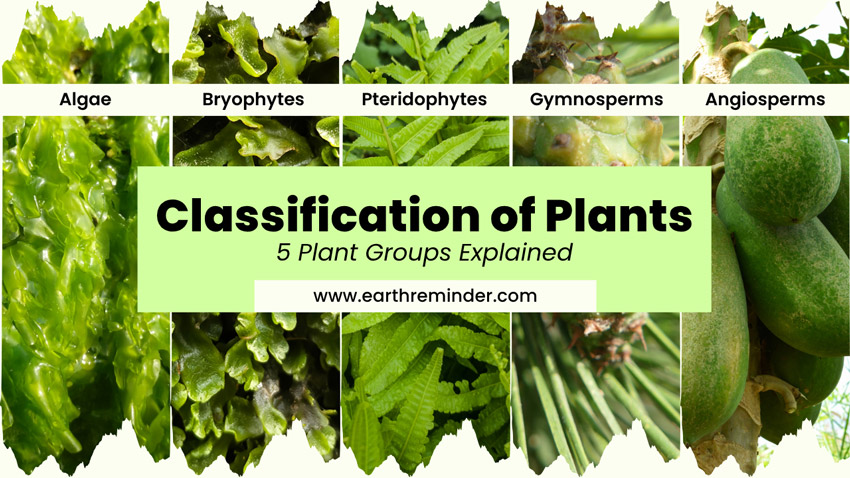
Kingdom Plantae includes all multicellular photosynthetic organisms with cell walls of cellulose. It is divided into major groups such as algae, bryophytes, ferns, gymnosperms, and angiosperms.
Algae, although photosynthetic, are sometimes classified separately due to their simpler structures and lack of true roots, stems, or leaves. Bryophytes (mosses and liverworts) are non-vascular, while ferns, gymnosperms, and angiosperms have complex vascular systems.
Division (phylum)
Divisions (or phyla) are based on fundamental features:
- Vascular tissue presence: Vascular vs. non-vascular.
- Seed production: Spore vs. seed plants.
- Reproductive structures: Flowers, cones, or spores.
Example: Ferns Vs. Flowering Plants
Ferns (Pteridophyta) reproduce by spores and lack seeds, while angiosperms (Magnoliophyta) produce seeds enclosed in fruits.
Gymnosperms (like pines) produce seeds in cones without flowers or fruit. These distinctions are crucial in understanding plant evolution and adaptation.
Class
Classes further subdivide divisions:
- Monocots vs. Dicots: Based on embryo leaf number, vascular bundle arrangement, leaf venation.
- Gymnosperms: Divided into cycads, ginkgo, conifers, gnetophytes.
Monocots (e. g. , grasses, lilies) have one seed leaf (cotyledon), parallel leaf veins, and scattered vascular bundles. Dicots (e. g. , roses, oaks) have two cotyledons, net-like venation, and vascular bundles in a ring.
Order And Family
Order groups related families; family unites genera with shared characteristics.
- Rosaceae family: Unified by flower structure, fruit type, and DNA markers.
- Poales order: Grasses, sedges, and rushes—similar flower and inflorescence forms.
Families such as Fabaceae (legumes) and Asteraceae (daisies) are defined by unique floral arrangements and reproductive structures, as well as genetic evidence.
Genus And Species
Genus groups closely related species, while species is the basic unit, defined by:
- Morphological consistency
- Ability to interbreed
- Genetic similarity
Example: Quercus (oaks)
The genus Quercus contains hundreds of oak species, differentiated by leaf shape, acorn type, and DNA barcodes.
Species boundaries can sometimes be blurry due to hybridization, especially in groups like oaks and willows. Genetic studies are increasingly used to clarify these relationships.
Table: Criteria At Key Taxonomic Ranks
| Rank | Main Criteria | Example |
|---|---|---|
| Kingdom | Multicellularity, photosynthesis, cell wall | Plantae |
| Division | Vascular tissue, seed/spore reproduction | Angiosperms, Gymnosperms |
| Class | Embryo leaves, vascular bundles | Monocots, Dicots |
| Order | Flower/fruit/leaf traits | Rosales, Poales |
| Family | Detailed morphological/genetic traits | Rosaceae, Poaceae |
| Genus | Very close morphology/genetics | Quercus |
| Species | Interbreeding, unique traits | Quercus robur |
To learn more about plant taxonomy, visit the Royal Horticultural Society.
The Role Of Genetics And Molecular Data In Modern Plant Classification
With the rise of molecular biology, genetics has become central to plant classification. DNA sequencing can reveal relationships hidden from traditional methods.
Dna Barcoding
DNA barcoding uses short, standardized genetic markers to identify and classify plants—often using chloroplast genes like rbcL and matK.
Barcoding is especially useful for identifying unknown or fragmentary plant material, such as roots, leaves, or seeds in environmental samples. It is a fast, reliable way to support conservation efforts, monitor biodiversity, and combat illegal trade in endangered species.
Example: Identifying Medicinal Plants
DNA barcoding is used to authenticate medicinal plant materials, reducing adulteration and ensuring safety in herbal products (NCBI PMC).
For example, in Traditional Chinese Medicine, DNA barcoding has uncovered misidentification and substitution of species, helping to safeguard consumer health.
Phylogenomics
Phylogenomics analyzes whole genomes to reconstruct evolutionary trees, clarifying relationships among large groups such as the grasses or orchids.
Whole-genome studies have resolved long-standing questions about the origins of major plant groups and have revealed unexpected relationships, such as between parasitic plants and their hosts.
Resolving Complex Taxa
Genetic data can split or merge species, reveal hybrids, and clarify cryptic diversity. For example, the Acacia genus was split after DNA studies showed Australian and African species were less closely related than previously thought.
In addition, genetic analysis has uncovered instances of ancient hybridization and introgression, where genes from one species enter the gene pool of another, further complicating traditional classifications.
Advantages And Limitations
- Advantages: Greater accuracy, detects convergent evolution, reveals hidden relationships.
- Limitations: Cost, need for technical expertise, incomplete genetic databases.
While genetic data has transformed plant taxonomy, it must be interpreted alongside morphological and ecological information for a holistic understanding.
For an in-depth look at plant genetics, the Kew Gardens DNA Barcoding Project is a valuable resource.
Real-world Applications And Case Studies
Plant classification impacts many fields, from agriculture to conservation and medicine.
Agriculture
Accurate classification helps breeders develop new crop varieties, manage pests, and conserve wild relatives. For instance, understanding the genetic relationships among wheat species enables breeders to transfer disease resistance.
Classification also allows for the identification of wild relatives, which are reservoirs of traits like drought tolerance or pest resistance. These relatives are critical for breeding resilient crops, especially in the face of climate change.
Case Study: Rice (oryza) Improvement
Modern rice breeding relies on the classification of Oryza species. DNA analysis has revealed hidden genetic diversity, leading to the development of high-yield, disease-resistant rice.
Wild *Oryza* species have provided genes for flood tolerance and improved nutrient content, demonstrating the practical value of accurate plant taxonomy in food security.
Conservation
Endangered species lists depend on precise classification. Molecular taxonomy has identified new species in threatened habitats, guiding conservation priorities.
Accurate classification helps target conservation resources to genetically distinct species and populations, rather than wasting effort on groups that are not truly separate. It also aids in the restoration of native habitats by matching the right plant species to their ecological niches.
Example: Amazonian Trees
Genetic studies doubled the estimated number of tree species in the Amazon, altering strategies for biodiversity protection (Nature).
This new understanding has informed conservation planning, highlighting the need to protect areas of high undiscovered diversity.
Medicine
Medicinal plant research depends on correct identification. Misclassified plants can lead to ineffective or dangerous remedies.
Pharmacological studies often rely on precise taxonomy to ensure reproducibility and safety. DNA-based authentication of medicinal plants is now a standard practice in the herbal supplement industry.
Case Study: Ginseng Authentication
DNA barcoding distinguishes authentic Panax ginseng from substitutes, ensuring efficacy and safety in herbal medicine (ScienceDirect).
This approach has also been applied to other high-value species, such as saffron (*Crocus sativus*) and goji berry (*Lycium barbarum*).
Ecology And Climate Science
Plant community classification informs habitat restoration, climate modeling, and invasive species management. For example, classifying C4 grasses helps predict responses to rising CO2 levels.
Plant classification also underpins ecosystem services assessments, carbon sequestration studies, and the monitoring of invasive species, which often require rapid and accurate identification.
Table: Practical Benefits Of Accurate Plant Classification
| Field | Benefit | Example |
|---|---|---|
| Agriculture | Crop improvement, pest control | Wheat, rice breeding |
| Conservation | Species protection, habitat management | Amazon tree diversity |
| Medicine | Safe, effective remedies | Ginseng authentication |
| Ecology | Habitat restoration, climate models | C4 grass distribution |
For more applications, see the Botanic Gardens Conservation International.
Challenges And Future Directions In Plant Classification
Despite advances, plant taxonomy faces ongoing challenges, especially as new technologies and discoveries reshape our understanding.
Hybridization And Polyploidy
Plants frequently hybridize and form new species via polyploidy (whole genome duplication). This blurs species boundaries and complicates classification.
Hybridization is common in many plant groups, such as oaks, willows, and orchids. It can result in the formation of stable hybrid species or ongoing gene flow between species, making it difficult to draw clear taxonomic lines.
Example: Tragopogon In North America
European goat’s-beard species introduced to North America hybridized and formed new polyploid species within a century—an ongoing challenge for taxonomists.
These rapid evolutionary events highlight the dynamic nature of plant speciation and the importance of integrating genetic, morphological, and ecological data.
Cryptic Species
Some plants appear identical but are genetically distinct. Molecular tools are revealing many cryptic species, especially in ferns, grasses, and orchids.
Cryptic diversity has important implications for conservation, as failing to recognize distinct species may leave them vulnerable to extinction.
Rapid Discoveries
Advances in remote sensing and DNA sequencing are accelerating plant discovery. Over 2,000 new plant species are described each year (Royal Botanic Gardens, Kew).
Many of these new species are found in biodiversity hotspots, often in regions threatened by habitat loss. Rapid documentation is crucial for their protection.
Integrating Data
Combining morphological, genetic, ecological, and biochemical data creates more robust classifications but requires interdisciplinary collaboration and standardized databases.
Integrative taxonomy is increasingly the norm, with collaborative projects bringing together botanists, geneticists, ecologists, and bioinformaticians. Large, openly accessible databases facilitate this work but require ongoing maintenance.
Digital Taxonomy
Online resources and databases like The Plant List and World Flora Online are making taxonomy more accessible and dynamic, but require constant updates and global coordination.
Digital tools also enable citizen science, allowing naturalists and amateur botanists to contribute observations and specimens, expanding the reach of formal taxonomy.
For ongoing developments, visit the World Flora Online.
Frequently Asked Questions
What Is The Most Important Criterion For Classifying Plants?
There is no single “most important” criterion—modern plant classification uses a combination of morphological, anatomical, physiological, biochemical, and genetic criteria. In recent years, genetic and molecular data have become especially influential due to their ability to clarify evolutionary relationships that morphology alone cannot resolve.
How Has Dna Sequencing Changed Plant Classification?
DNA sequencing allows taxonomists to compare genetic material directly, revealing relationships that may not be apparent from physical characteristics. This has led to the reclassification of many plant families and genera, the discovery of cryptic species, and a better understanding of plant evolution. DNA barcoding also enables rapid and accurate species identification.
Why Are Some Plants Reclassified Over Time?
Plants are reclassified as new data—especially molecular and genetic evidence—emerges. Improved methods can reveal that traditional groupings based on appearance do not reflect true evolutionary history. As a result, genera and families may be split, merged, or reorganized to better represent their phylogeny.
What Is The Difference Between Artificial, Natural, And Phylogenetic Classification Systems?
- Artificial systems group plants by a few easily observed traits, like flower parts, for convenience.
- Natural systems use multiple characteristics, aiming for groupings that reflect overall similarities.
- Phylogenetic systems focus on evolutionary relationships, often using genetic data to construct family trees. Phylogenetic systems are now considered the most accurate.
How Do Botanists Handle Plants That Hybridize Or Look Identical (cryptic Species)?
Hybridization and cryptic species pose challenges. Botanists use a combination of morphological analysis, ecological studies, and especially molecular techniques (like DNA sequencing) to distinguish species, identify hybrids, and clarify relationships.
The criteria used for classifying plants have evolved from simple observations to sophisticated molecular analyses, reflecting both the diversity of the plant kingdom and advances in science. Today, a robust classification system draws on multiple sources of evidence—morphology, anatomy, physiology, biochemistry, and genetics—to build a dynamic, accurate framework.
This framework not only satisfies scientific curiosity, but also underpins practical fields like agriculture, conservation, medicine, and climate science. As technology continues to advance and new species are discovered, plant classification will remain a cornerstone of biological science—helping us understand, protect, and sustainably use the green foundation of our planet. For more on this, see our guide on Planting.