Gardening Techniques for Hardening Off Young Plants
Harden young plants off over about 7–10 days by starting with 1–2 hours of shade and shelter, then adding a little sun and wind each day until they can stay out overnight. Transplant only after stems are stout, leaves are not limp at midday, and nights stay above the plant’s safe minimum. Skipping this step can scorch leaves, stall growth, or kill tender seedlings outright. This guide gives a day-by-day schedule, a readiness checklist, and crop exceptions for tomatoes, peppers, brassicas, herbs, and cold-tolerant seedlings.
This guide is part of our Gardening techniques series.
What hardening off does
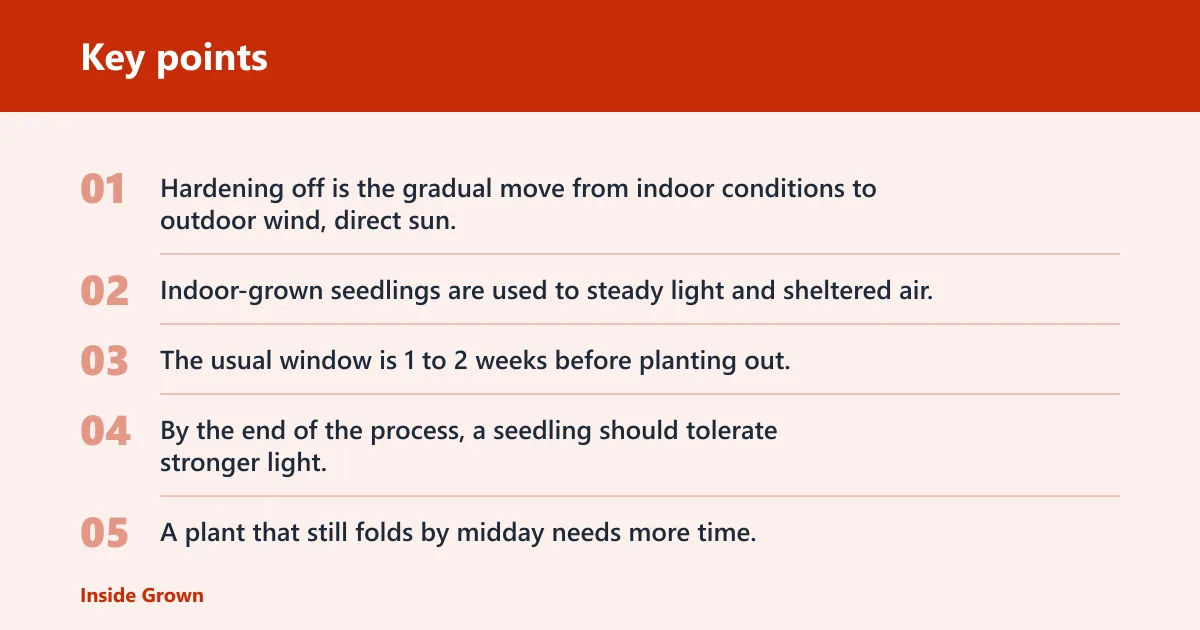


Hardening off is the gradual move from indoor conditions to outdoor wind, direct sun, and temperature swings before transplanting. Indoor-grown seedlings are used to steady light and sheltered air, so a sudden move outside can cause sunburn, leaf collapse, and slow recovery. The usual window is 1 to 2 weeks before planting out.
By the end of the process, a seedling should tolerate stronger light, stiffer air movement, and cooler nights without wilting hard or losing color. That is the real target. A plant that still folds by midday needs more time.
What readiness looks like
Look for firmer stems, thicker leaves, and quicker bounce-back after outdoor exposure. Leaves should feel less soft than they did indoors, and the plant should hold itself upright without leaning toward the light. Recovery matters too: if a plant perks up within a short time after a sunny, breezy day, it is closer to transplant-ready.
What you’ll need
- A sheltered outdoor spot, such as bright shade beside a wall, fence, or porch
- Shade cloth or another cover for the first few days
- A way to track outdoor hours and overnight lows
- Watering can or hose with a gentle setting
- Light row cover, frost cloth, or buckets for cold snaps
- Labels or notes for warm-season and cool-season seedlings
When should I start hardening off seedlings?
Start 1 to 2 weeks before your planned transplant date, and anchor that date to the last frost timing for your area. Begin once outdoor weather is steady enough for short daytime outings, but do not wait until the bed is already ready. Hardening off should start before planting out, not after the transplant window opens.
If planting gets delayed, hold seedlings in the schedule rather than jumping ahead. Extra days outdoors at the same stage are safer than a sudden increase in sun or wind.
Timing cues for the start
- Last frost risk is close to passing
- Daytime highs are not swinging sharply
- You can place seedlings in a protected spot each day
- You can bring them back inside at night if needed
7-day hardening-off schedule
This schedule gives a practical progression. Adjust by a day or two if weather turns windy, cold, or very bright. The pattern stays the same: shade first, then more sun, then more time outside, then overnight exposure near the end.
| Day | Hours outside | Sun exposure | Wind exposure | Overnight treatment | Stop-sign warnings for warm-season seedlings | Stop-sign warnings for cool-season seedlings |
|---|---|---|---|---|---|---|
| 1 | 1 to 2 | Bright shade only | Light shelter | Back indoors | Any direct midday sun or chilly breeze | Any hard wind or sudden temperature drop |
| 2 | 2 to 3 | Bright shade, brief dappled sun | Light shelter | Back indoors | Leaf paling or wilt after return indoors | Leaf curl or slowed recovery |
| 3 | 3 to 4 | Early sun, then shade | Gentle breeze | Back indoors | Sun scorch on tender leaves | Cold-stress droop after the outing |
| 4 | 4 to 5 | More morning sun | Moderate exposure | Back indoors unless nights are mild | Stem flop or leaf burn | Slow leaf movement or dull color |
| 5 | 5 to 6 | Half-day sun | Moderate exposure | Optional short overnight stay if safe | Any sign of cold stress | Do not leave out if frost is still possible |
| 6 | 6 to 8 | Most of the day in sun | Normal outdoor air | Outside with protection if nights are cool | Watch for stalled growth after strong sun | Watch for wilt after a breezy evening |
| 7 | All day | Full sun if recovery has been steady | Normal outdoor air | Outside near the end only if nights are safe | Do not plant out if leaves still scorch by midday | Do not skip cover if a late cold snap is forecast |
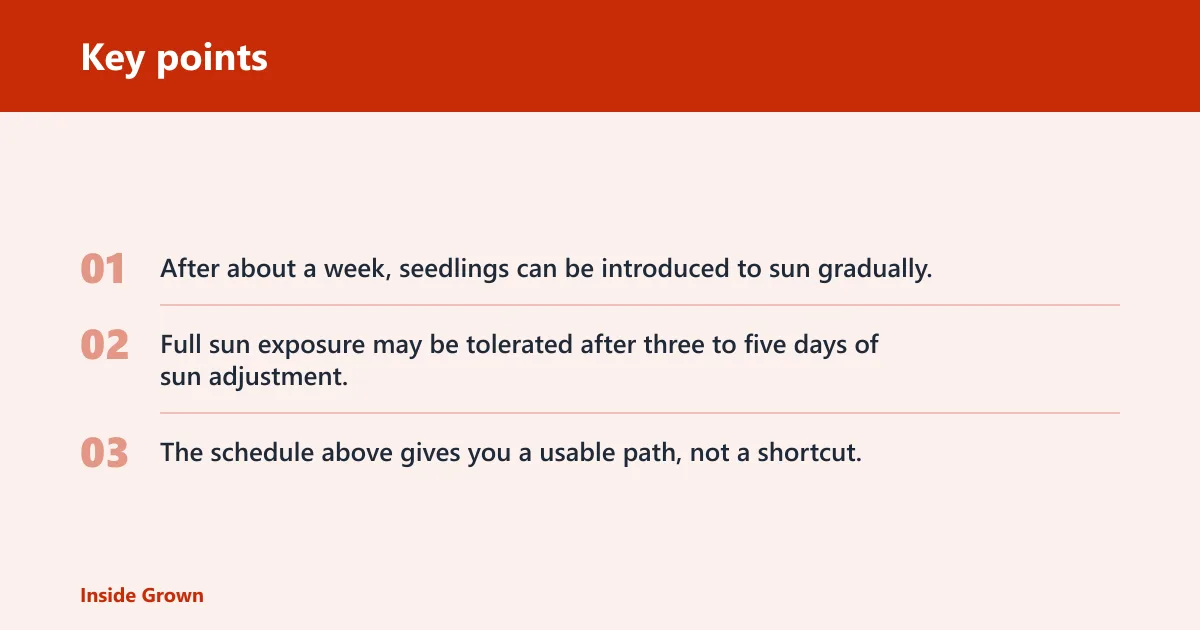
After about a week, seedlings can be introduced to sun gradually. Full sun exposure may be tolerated after three to five days of sun adjustment, but only if the plant is already handling the earlier steps well. The schedule above gives you a usable path, not a shortcut.
How do you judge readiness?
A seedling is ready when its stems are firmer, its leaves are thicker and less soft, and it recovers quickly after outdoor exposure. It should not stay limp for hours after coming in from shade or sun. If the plant still collapses at midday, or if the newest leaves look bleached, it needs more time.
Readiness is not just about date count. It is about how the plant behaves after exposure.
Quick readiness check
- Pinch the stem lightly near the top; it should feel stout, not flimsy.
- Check the leaves after a few hours outside; they should stay upright, not curl hard.
- Look again the next morning; healthy seedlings recover fast.
- Delay planting if color fades, edges crisp, or growth stalls.
Suppose tomato seedlings have spent 5 days outside and look fine in the morning, but by noon they droop in direct sun. That plant is not ready for full bed exposure yet. Keep it in partial shade for a few more days and reduce the sun jump before transplanting.
Step 1: Start in shade
Place seedlings in a sheltered, bright shade spot for the first exposure. Use a porch, fence line, or shade cloth to cut direct sun and wind stress. Bring the plants back inside or under cover overnight early on, since nighttime temperature can still drop enough to slow them or damage tender tissue.
This first step matters most for indoor-started seedlings. Their leaves are not yet built for strong ultraviolet light, and sudden sun can scorch them fast. Shade first gives them a safer start.
Step 2: Add sun and wind gradually
Increase outdoor hours a little each day. Move from bright shade to dappled light, then to morning sun, then to longer sun exposure as the leaves adapt. The change should be steady, not abrupt. A common rule of thumb is to add about 1 to 2 hours per step, then recheck the plant later the same day.
That gradual shift helps with UV acclimation and lets the plant build protective pigments that reduce sunburn risk. At the same time, brief wind exposure toughens stems without snapping them.
A common first-timer mistake is placing peppers in full afternoon sun on day 1 because the bed is already warm. The seedlings may look fine for an hour, then bleach or wilt hard by evening. Move them back to shade, then resume the schedule at the previous step for several days.
Crop differences to keep in mind
Warm-season crops such as tomatoes, tomatillos, peppers, chillies, eggplants, squash, melon, cucumber, and zucchinis need the most caution. The cited guidance says these crops go outdoors after the Ice Saints from mid-May, and they are especially sensitive to cold. Cool-season transplants such as lettuce, kohlrabi, chard, and herbs still benefit from hardening off, but the focus is different: cold acclimation matters more than heat acclimation.
Leafy greens can tolerate partial shade better than heat-loving crops. Warm-season seedlings need more protection from cold snaps. Cool-season plants need protection from abrupt changes, too, but they usually tolerate a less sunny start.
Common mistakes
Most hardening-off failures come from moving too fast. Full sun on day one can burn leaves. Strong wind can bend or dry young stems. Leaving tender seedlings out overnight too early can expose them to cold stress, especially when frost is still possible.
What goes wrong and how to avoid it
- Too much sun too soon: Start in shade, then move toward morning sun over several days.
- Too much wind: Use a wall, fence, or cloth screen until stems stiffen.
- Cold nights too early: Bring plants inside at first; cover them if a late frost is forecast.
- No crop distinction: Keep warm-season crops more protected than cool-season transplants.
- Skipping recovery checks: If leaves stay limp at midday, repeat the previous day’s exposure instead of advancing.
Say your lettuce trays sit outside for 4 hours in partial shade and look fine at dusk. If a cold front is due overnight, cover them or bring them in anyway. Cooling tolerance is not the same as frost tolerance.
Do not plant seedlings out just because the calendar says so. A hardening-off window missed by a few days can still be salvaged by slowing the schedule and using overnight protection.
Frequently asked questions
How long do young plants need to harden off before transplanting?
Most seedlings need 1 to 2 weeks, with the first part in shade and the later part in more sun and wind. Some plants adjust faster, but the safest rule is to watch the plant, not the calendar. Full sun may come after several days, not on day one.
Do seedlings need full shade or sun when hardening off?
Start in bright shade or a sheltered spot. Then add partial sun, then stronger sun after several days. Full sun exposure can be tolerated only after the plant has already adapted. A shaded start reduces leaf burn and wind stress during the first exposures.
Can I leave seedlings outside overnight while hardening off?
Near the end of the process, yes, if nighttime temperatures are safe and frost is not expected. Early on, bring seedlings in at night. If a cold snap is forecast, use frost cloth or move the containers to shelter, even if they have already handled daytime sun well.
Which plants need hardening off before planting out?
All indoor-grown seedlings do, including tomatoes, peppers, eggplants, chillies, squash, melon, cucumber, zucchini, lettuce, kohlrabi, chard, and herbs. Warm-season crops need the most protection from cold. Cool-season plants still need a gradual move to outdoor light and wind.
What temperature or frost risks can damage hardened-off plants?
Late frost can still be a risk even after several days outdoors. Warm-season crops are especially vulnerable, and the cited guidance places outdoor planting for them after the Ice Saints from mid-May. If frost is possible, keep covers ready and delay transplanting until the weather window is steady.
How do I protect seedlings from wind, cold, and sunburn during hardening off?
Use a sheltered bright spot first, add shade cloth if the sun is intense, and move seedlings into morning sun before afternoon sun. Bring them inside at night at first, and use frost cloth during cold snaps. If leaves bleach or curl, step back one stage for a few days.
What should I do if I miss the hardening-off window before transplanting?
Slow the transition instead of planting immediately. Give seedlings several days in a sheltered outdoor spot, then extend sun and wind exposure again. If overgrown seedlings must go out soon, pick a cloudy day, protect them from afternoon sun, and water them well after transplanting.