Can I Use Burlap Instead of Landscape Fabric? Honest Answer
The debate between using burlap versus landscape fabric for weed control and soil management is more than just a matter of preference—it impacts garden health, sustainability, and long-term maintenance. Homeowners, landscapers, and eco-conscious gardeners are increasingly seeking alternatives to synthetic landscape fabric, hoping for a more natural solution. Burlap, a coarse woven fabric made from jute or sisal fibers, is often proposed as an eco-friendly substitute. But does it truly measure up in performance and longevity?
Whether you’re prepping a vegetable patch, flower bed, or a large-scale commercial landscape, the choice of ground cover is pivotal. Should you rely on burlap’s biodegradable nature or stick to the durability of commercial landscape fabric? This article dives deep into the pros, cons, and real-world outcomes of using burlap instead of landscape fabric, backed by data, expert opinions, and practical examples.
We’ll tackle not just theory but how these materials behave in the field, so you can make the best decision for your unique gardening situation.
Key Takeaways
- Burlap is a biodegradable, natural alternative to synthetic landscape fabric, but its effectiveness depends on climate, intended use, and maintenance.
- Landscape fabric offers longer-term weed suppression and durability but may negatively impact soil health and ecosystem balance.
- Burlap excels in short-term projects, erosion control, and eco-friendly gardening, while landscape fabric is favored for long-term weed management.
- Real-world case studies show burlap’s benefits for soil health but highlight its limitations in weed suppression compared to commercial landscape fabric.
- The best choice depends on your goals: Sustainability, longevity, or ease of installation and maintenance.

Credit: lifetips.alibaba.com
Understanding Burlap And Landscape Fabric
What Is Burlap?
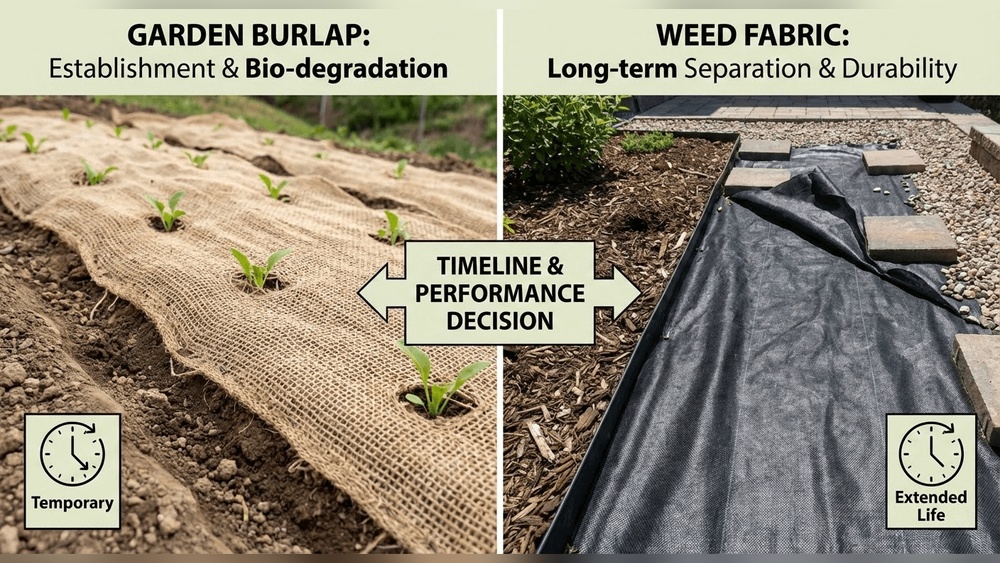
Burlap is a woven textile typically made from jute or sisal fibers. Its rustic appearance and eco-friendly composition make it popular for gardening, agriculture, and packaging. Burlap is:
- Biodegradable
- Breathable
- Affordable
- Easy to install
- Used for plant protection, soil erosion control, and temporary weed suppression
It is available in rolls, sheets, and bags, suitable for covering soil, wrapping trees, or lining garden beds.
The loose weave of burlap allows it to conform to uneven surfaces, making it an excellent choice for irregularly shaped beds, slopes, and embankments. This adaptability also means that burlap can be easily cut to size and layered for extra coverage, which is particularly helpful in large or oddly shaped garden areas.
Burlap’s natural color blends into the landscape, making it a subtle choice for gardeners who want to maintain a natural aesthetic. Its texture and breathability also mean it won’t suffocate plant roots or inhibit the movement of beneficial insects and microorganisms.
What Is Landscape Fabric?
Landscape fabric is a synthetic material, usually composed of polypropylene or polyester. Designed specifically for gardening and landscaping , it is engineered to:
- Suppress weeds by blocking sunlight
- Allow water and air to pass through
- Last for years before breaking down
- Reduce maintenance in flower beds, paths, and vegetable gardens
Landscape fabric comes in various thicknesses and grades, each offering different levels of weed resistance and durability.
Some landscape fabrics are woven, providing strength and longevity, while others are non-woven, designed for improved permeability. High-end commercial fabrics may include UV inhibitors for added longevity or be combined with layers of biodegradable materials for specific applications.
While most landscape fabrics are black or dark gray for maximum light blockage, some newer products are available in brown or green to better blend with mulch or soil. Installation typically involves cutting the fabric to fit garden beds, overlapping seams, and securing with pins or stakes.
Historical Context And Usage
Burlap has been used for centuries in agriculture, especially for erosion control and as a protective wrap for tree roots. Its use in gardening predates synthetic alternatives by hundreds of years. Farmers traditionally used burlap sacks for transporting crops and then repurposed worn sacks as mulch or soil covers, maximizing the resource’s utility and minimizing waste.
Synthetic landscape fabric became popular in the late 20th century as gardens became more ornamental and weed control more pressing. Advances in petrochemical manufacturing enabled the production of durable, affordable, and widely available landscape fabrics. Today, both materials are widely available, but their roles and reputations differ, with burlap seen as the more environmentally conscious choice and landscape fabric as the performance-driven solution.
| Feature | Burlap | Landscape Fabric |
|---|---|---|
| Material | Natural fibers (jute/sisal) | Synthetic fibers (polypropylene/polyester) |
| Biodegradable | Yes | No |
| Durability | 6-18 months | 5-15 years |
| Weed Suppression | Moderate | High |
| Cost | $0.20–$0.50/sq ft | $0.30–$0.75/sq ft |
| Environmental Impact | Low | Moderate to High |
Credit: lifetips.alibaba.com
Pros And Cons: Burlap Vs Landscape Fabric
Advantages Of Burlap
- Eco-Friendly: Burlap decomposes naturally, adding organic matter to the soil.
- Breathability: Allows air and water to reach plant roots easily, promoting healthy growth.
- Erosion Control: Effective in stabilizing soil on slopes and embankments.
- Cost-Effective: Generally cheaper than high-grade landscape fabric.
- Easy Installation: Lightweight and easy to cut, lay, and secure.
Burlap also has the advantage of being non-toxic and safe for children, pets, and wildlife. It does not leach chemicals into the soil or water supply, making it suitable for organic and edible gardens. Its decomposition process helps support beneficial soil fungi and bacteria, which are critical for nutrient cycling and plant resilience.
Disadvantages Of Burlap
- Short Lifespan: Usually lasts 6–18 months depending on climate and exposure.
- Limited Weed Suppression: Weeds can grow through burlap, especially if not layered thickly.
- Prone to Rot: Decomposes quickly in moist environments; may attract pests.
- Maintenance Needs: Requires regular replacement, especially in high-traffic areas.
In addition to these limitations, burlap can sometimes be disturbed or displaced by heavy rain or wind if not properly secured or covered with mulch. In some cases, rodents or birds may use decomposing burlap for nesting material, which can disturb its effectiveness as a mulch layer.
Advantages Of Landscape Fabric
- Long-Term Weed Control: Blocks sunlight, significantly reducing weed growth.
- Durability: Can last 5–15 years with proper installation and maintenance.
- Low Maintenance: Reduces time spent on weeding and garden upkeep.
- Versatility: Suitable for various applications—paths, beds, shrubbery.
Some landscape fabrics include treatments that resist mold, mildew, and UV degradation, increasing their lifespan in harsh climates. They can be used under inorganic mulches like gravel or stone, where burlap would quickly break down. When properly installed and covered, they create a clean, well-defined look that is highly valued in commercial and residential landscapes.
Disadvantages Of Landscape Fabric
- Environmental Impact: Non-biodegradable; contributes to landfill waste.
- Soil Health Concerns: May restrict water and air flow over time, impacting soil microorganisms.
- Difficult Removal: Degrades into small pieces, making removal challenging.
- Potential Root Issues: Roots may grow above or entangle with fabric, complicating plant health.
Over time, the build-up of organic matter on top of landscape fabric can create a new substrate for weed seeds to germinate, especially if mulch is not regularly replenished. In perennial beds, plant roots may become tangled in the fabric, making division or removal difficult and increasing labor during future renovations.
Comparison Table: Pros And Cons
| Criteria | Burlap | Landscape Fabric |
|---|---|---|
| Eco-Friendly | Yes | No |
| Weed Control | Moderate | High |
| Longevity | Short-term | Long-term |
| Ease of Removal | Easy | Difficult |
| Cost | Lower | Higher |
| Soil Health | Improves | May degrade |
Credit: lifetips.alibaba.com
Real-world Examples And Case Studies
Example 1: Community Garden In Portland, Oregon
A community garden project in Portland opted for burlap as a temporary weed barrier during soil restoration. The garden, consisting of 20 raised beds, used burlap rolls to cover newly amended soil in spring. Within 8 months, the burlap had decomposed, leaving rich organic matter and minimal weed regrowth. However, after decomposition, maintenance volunteers reported increased weed pressure, requiring additional mulch application.
This outcome highlights that while burlap is effective in the short term, its biodegradable nature necessitates follow-up weed management. Garden coordinators noted improved soil structure and moisture retention where burlap had been used, which benefited subsequent planting. They also observed increased earthworm activity, a sign of healthy soil ecology.
Example 2: Commercial Landscaping In Dallas, Texas
A commercial landscaping company in Dallas experimented with burlap versus landscape fabric for a corporate campus. Burlap was used in shaded, low-traffic areas, while landscape fabric covered pathways and ornamental beds. After two years, the landscape fabric still provided effective weed suppression, but in burlap areas, weeds returned after a year.
The company concluded burlap works best for short-term projects or when environmental impact is prioritized.
In addition, landscape fabric under gravel walkways showed no signs of breakdown, even with heavy foot traffic, demonstrating the material’s durability. However, in beds with shrubs and perennials, some roots began to grow laterally along the fabric’s surface, indicating potential long-term concerns for plant health.
The maintenance team noted that mulch atop the landscape fabric needed periodic replenishment to prevent weed growth in accumulated organic matter.
Example 3: Erosion Control On Rural Roadsides
A rural county in Tennessee used burlap mats for erosion control along newly cut slopes. Burlap’s rapid decomposition helped stabilize soil and fostered growth of native grasses. Within a year, the slopes were covered in vegetation, and the burlap had fully decomposed, leaving no synthetic residue. This method proved successful for soil stabilization but not for long-term weed suppression.
Officials also noted that burlap was easy to install over uneven terrain and could be anchored with simple wooden stakes. The presence of natural fibers encouraged the establishment of beneficial soil fungi and facilitated seed germination. This project demonstrated that burlap excels where temporary soil stabilization and ecological restoration are the primary goals.
Additional Example: Urban School Garden In Chicago
An urban elementary school in Chicago piloted the use of burlap in their teaching garden, aiming to create a safe, sustainable environment for students. They found that burlap not only suppressed weeds for the growing season but also made it easy for students to plant directly through the material.
By the next spring, the decomposed burlap had enriched the soil, and students learned first-hand about composting and sustainable materials. Teachers praised burlap’s safety and ease of handling, as it posed no risk of splinters or chemical exposure.
Environmental Impact And Sustainability
Burlap’s Eco-friendly Credentials
Burlap is made from renewable resources like jute, which is grown primarily in India and Bangladesh. The jute industry supports millions of farmers and is considered one of the most sustainable crops, requiring minimal pesticides and fertilizers. Burlap:
- Breaks down naturally within a year
- Adds organic matter to soil
- Leaves zero synthetic waste
According to a study by the Journal of Cleaner Production, jute-based products have a carbon footprint up to 60% lower than synthetic alternatives.
Jute cultivation also supports biodiversity and improves soil health through crop rotation. Burlap products are manufactured with minimal processing and energy compared to the chemical-intensive processes required for producing synthetic landscape fabric.
Landscape Fabric And Plastic Pollution
Synthetic landscape fabric, while effective, contributes to microplastic pollution. When it breaks down, it leaves fragments that persist in soil and waterways. The US Environmental Protection Agency warns of increasing microplastic contamination from garden and agricultural products.
These microplastics can enter the food chain through soil organisms and water runoff, posing risks to both human health and the broader environment. In addition, the production and disposal of landscape fabric rely heavily on fossil fuels, further increasing greenhouse gas emissions and resource depletion.
Soil Health And Microbial Activity
Burlap’s decomposition encourages microbial activity and enhances soil structure. As burlap fibers break down, they provide a food source for beneficial soil microbes, which in turn promote nutrient cycling and plant health. This natural process can reduce the need for synthetic fertilizers and soil amendments over time.
Landscape fabric, on the other hand, can form an impermeable barrier over time, reducing oxygen exchange and harming beneficial soil organisms. A report by USDA Soil Health emphasizes the importance of organic matter and permeability for healthy soils.
Long-term use of synthetic fabric may also lead to compaction and a decrease in earthworm populations, further diminishing soil vitality. Without the input of organic material, the soil can become less resilient to drought and extreme temperatures.
Sustainability Considerations
- Burlap is ideal for gardeners seeking organic practices and minimal environmental impact.
- Landscape fabric suits those prioritizing weed control and low maintenance over sustainability.
When considering the full lifecycle, burlap’s sustainable production and decomposition far outweigh the ecological costs associated with synthetic fabrics, especially for projects where long-term weed suppression is not essential.
Performance In Different Climate And Soil Conditions
Burlap In Humid And Wet Climates
Burlap decomposes rapidly in humid climates, often lasting less than a year. This is advantageous for erosion control but may require frequent replacement for ongoing weed suppression. In wet regions like the Southeast US, burlap is preferred for temporary projects.
For gardeners in the Pacific Northwest or Gulf Coast, burlap works well as a seasonal mulch or for protecting overwintering plants, but it should not be expected to last more than one growing season. Frequent rainfall accelerates decomposition, but also means that nutrients from the burlap are quickly incorporated into the soil.
Landscape Fabric In Dry And Arid Regions
Landscape fabric performs well in dry climates, maintaining structure and weed control for years. However, in arid soils, the lack of organic matter addition can result in poor soil health over time.
In the Southwestern US, landscape fabric is commonly used under decorative gravel or stone mulches to prevent aggressive weed growth. However, gardeners must be vigilant about replenishing mulch and monitoring soil moisture, as synthetic fabric can increase evaporation and soil temperature, stressing plants during heat waves.
Soil Types And Material Behavior
- Sandy soils: Burlap helps retain moisture and reduce erosion, providing a buffer against wind and rain.
- Clay soils: Both burlap and landscape fabric can be difficult to install; landscape fabric is often favored for weed control, but burlap can improve soil texture as it breaks down.
- Loamy soils: Both materials perform well, but burlap enhances soil quality by adding organic matter and supporting beneficial organisms.
In compacted or poorly drained soils, the breathability of burlap can help prevent waterlogging and root rot, especially for sensitive crops. In contrast, landscape fabric may exacerbate drainage issues if not installed with proper grading and aeration.
Temperature Impact
High temperatures accelerate burlap decomposition. Synthetic landscape fabric is resistant to temperature changes but can become brittle after years of sun exposure. In areas with intense sun, uncovered landscape fabric may degrade prematurely, releasing plastic fragments into the soil. Covering with mulch or stone is essential for maintaining longevity and performance.
Installation And Maintenance Considerations
Installing Burlap
- Clear Area: Remove weeds and debris.
- Lay Burlap: Roll out sheets, overlap edges by 4–6 inches for thorough coverage.
- Secure Edges: Use garden staples or pins every 12–18 inches; in windy areas, consider additional weights or a thin layer of soil.
- Cover with Mulch (optional): For added weed suppression, aesthetics, and to help keep the burlap in place.
- Water: Lightly water the burlap to help it conform to the soil surface and encourage early decomposition.
Burlap is easy to cut with scissors or a utility knife, and it’s forgiving if you need to move or re-lay it. For best results, replace burlap at the start of each season or after heavy rains.
Installing Landscape Fabric
- Clear Area: Remove all weeds, roots, and rocks to create a flat surface.
- Lay Fabric: Cut to fit, overlap edges by 2–4 inches to prevent weed intrusion.
- Secure with Stakes: Place stakes every 12–18 inches, and more frequently on slopes.
- Cut Holes for Plants: Use an X-shaped slit for each planting location, being careful not to tear the fabric excessively.
- Cover with Mulch or Gravel: Essential for UV protection, improved appearance, and weed suppression.
Proper installation is critical for landscape fabric’s performance. Gaps or misaligned edges can allow weeds to establish, while insufficient mulch coverage can lead to premature breakdown.
Maintenance Tips
- Burlap: Monitor for decomposition, replace as needed (usually annually). Remove large weeds before relaying burlap to prevent regrowth.
- Landscape Fabric: Inspect for tears, replenish mulch, replace after 5–10 years. Remove accumulated organic matter from the surface to prevent weed germination.
Common Mistakes
- Using a single layer of burlap for heavy weed areas—multiple layers are often necessary.
- Not covering landscape fabric with mulch, leading to UV degradation and an unsightly appearance.
- Failing to overlap edges, allowing weed growth in seams and gaps.
- Planting too closely without adjusting fabric, which can stress root systems.
Cost Analysis And Long-term Value
Material Costs
- Burlap: $0.20–$0.50 per square foot, with bulk discounts available for large projects.
- Landscape Fabric: $0.30–$0.75 per square foot, with premium grades costing more.
Installation Costs
- Burlap installation is faster and requires less specialized labor. It can be a DIY project for most homeowners or community groups.
- Landscape fabric may require professional installation for large or complex areas, especially when multiple plantings or irrigation systems are involved.
Replacement And Maintenance Costs
- Burlap needs annual replacement in most climates. Over a five-year period, material and labor costs may exceed those of a single landscape fabric installation.
- Landscape fabric can last up to 15 years, reducing long-term costs, but eventual removal and disposal can be time-consuming and may incur additional fees.
Return On Investment
- Burlap provides immediate soil health benefits but requires more frequent maintenance. This can be offset by improved plant growth and reduced fertilizer needs.
- Landscape fabric offers better weed control and lower labor costs over time, but may contribute to soil degradation and increased replanting costs if plant health declines.
Comparative Table: Cost And Value
| Factor | Burlap | Landscape Fabric |
|---|---|---|
| Initial Cost | Lower | Higher |
| Installation Labor | Minimal | Moderate |
| Replacement Frequency | 1–2 years | 5–15 years |
| Long-Term Value | Soil health, sustainability | Weed suppression, low maintenance |
When Should You Use Burlap Instead Of Landscape Fabric?
Best Situations For Burlap
- Temporary weed suppression: During soil restoration or before planting.
- Erosion control: On slopes, embankments, and construction sites.
- Eco-friendly gardening: Organic gardens, permaculture projects.
- Tree and shrub protection: Wrapping roots or trunks in winter.
- Seasonal beds: Annual flower or vegetable beds where soil enrichment is desired.
Burlap is also a good choice for gardeners who enjoy regularly amending their soil and want to avoid the hassle of removing synthetic materials between plantings.
Best Situations For Landscape Fabric
- Permanent beds and pathways: Where weed suppression is critical.
- High-traffic areas: Under gravel, mulch, or walkways.
- Large-scale landscaping: Commercial properties, parks, or municipal plantings.
- Low-maintenance gardens: Where infrequent labor and long-term coverage are priorities.
Landscape fabric is preferred in situations where regular access for soil amendment is not needed and where long-term weed control outweighs soil health considerations.
Hybrid Approaches
Some gardeners use burlap as an initial layer, followed by mulch or landscape fabric for long-term projects. This method combines the soil health benefits of burlap with the durability of synthetic fabric.
For instance, using burlap under a thick layer of mulch can provide immediate weed suppression and soil improvement, while a subsurface layer of landscape fabric in pathways or under stones ensures long-term weed prevention.
Factors To Consider
- Climate: Humid regions favor burlap for rapid decomposition; dry regions favor fabric for longevity.
- Soil health goals: Burlap for organic matter; landscape fabric for maintenance.
- Budget: Burlap for short-term, low-cost projects; fabric for long-term investment.
- Garden type: Food gardens and pollinator habitats benefit more from burlap, while ornamental beds and commercial landscapes may favor fabric.
Expert Opinions And Scientific Research
Expert Insights
Dr. Linda Chalker-Scott, horticulturist at University of Washington, emphasizes that organic mulch and biodegradable fabrics like burlap improve soil quality and promote root health. She warns against the long-term use of synthetic fabric due to soil compaction and reduced microbial activity.
The Royal Horticultural Society recommends burlap for erosion control and temporary weed suppression, noting its eco-friendly qualities. Their guidance suggests that while landscape fabric is effective for permanent installations, biodegradable options provide critical benefits for soil restoration and ecosystem health.
Professional landscape architects often specify burlap for projects that must meet sustainability standards or environmental certifications, such as LEED.
Scientific Research
A 2018 study in the Science of the Total Environment journal found that biodegradable mulches (including burlap) improved soil microbial activity and organic content compared to synthetic landscape fabric.
A 2026 review by NCBI concluded that microplastic pollution from landscape fabric poses a risk to soil and plant health, urging gardeners to consider natural alternatives.
The Soil Science Society of America Journal also reported that plots covered with natural mulches had greater moisture retention and higher yields in vegetable crops compared to those with synthetic fabric, highlighting the importance of organic ground covers for productive gardens.
Key Takeaways From Experts
- Burlap is superior for short-term projects and soil health.
- Landscape fabric excels in weed suppression but may harm soil ecology.
- Sustainability-minded gardeners should favor burlap or organic mulches.
- Professional recommendations increasingly favor biodegradable materials for edible and pollinator-focused gardens.
Frequently Asked Questions
Is Burlap As Effective As Landscape Fabric For Weed Suppression?
Burlap provides moderate weed suppression but does not block sunlight as effectively as landscape fabric. Weeds can grow through burlap, especially if it is thin or decomposes quickly. Landscape fabric is more effective for long-term weed control.
For best results, use multiple layers of burlap and cover with a thick mulch. For highly invasive weeds or areas with persistent rhizomes, landscape fabric may be the better choice.
How Long Does Burlap Last Compared To Landscape Fabric?
Burlap typically lasts 6–18 months, depending on climate and soil conditions. Landscape fabric can last 5–15 years if properly installed and maintained.
Extreme temperatures, moisture, and soil microbial activity can all impact the lifespan of both materials.
Does Burlap Improve Soil Health?
Yes. Burlap adds organic matter to the soil as it decomposes, supporting microbial activity and improving soil structure. Landscape fabric does not offer these benefits and may restrict soil health over time.
This makes burlap especially valuable for food gardens, pollinator beds, and restoration projects.
Can I Use Burlap Under Gravel Or Mulch?
Burlap can be used under gravel or mulch for short-term projects or erosion control. However, it will eventually decompose, so it’s not suitable for permanent pathways or high-traffic areas where long-term weed suppression is needed.
For decorative gravel paths or seating areas, landscape fabric is the more durable option.
What Is The Environmental Impact Of Using Landscape Fabric?
Landscape fabric is non-biodegradable and contributes to microplastic pollution when it breaks down. Burlap, on the other hand, is environmentally friendly, decomposing naturally and leaving no synthetic residue.
Disposal of synthetic fabric at the end of its lifespan also adds to landfill waste, while decomposed burlap enriches the soil.
The choice between burlap and landscape fabric ultimately comes down to your gardening goals, budget, and environmental priorities. Burlap offers clear benefits for soil health, erosion control, and sustainability, making it ideal for eco-conscious and short-term projects. Landscape fabric is unmatched for durable weed suppression and low maintenance, but at the cost of environmental impact and potential soil degradation. By understanding the strengths and limitations of both materials, you can tailor your approach to suit your garden’s needs and your values.
If your priority is to build healthy, living soil and support a thriving garden ecosystem, burlap is the clear winner. For long-term, low-maintenance weed control in high-traffic or ornamental areas, landscape fabric remains a practical, if less eco-friendly, solution. Consider your climate, soil type, and garden goals—and don’t hesitate to use both materials strategically for maximum benefit.