
It’s a question many players ask, especially with newer games coming out all the time. You want to know if your virtual plant-shooting or zombie-stomping adventures can connect across different gaming systems. Will your efforts on one device carry over to another?
Let’s break down what that means for Plants vs. Zombies: Battle for Neighborville.
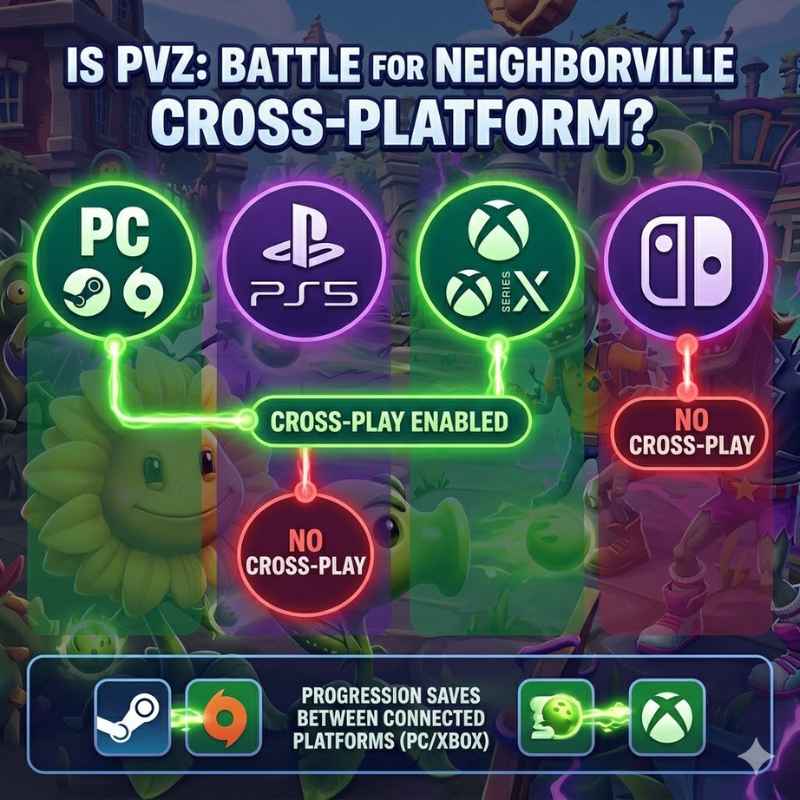
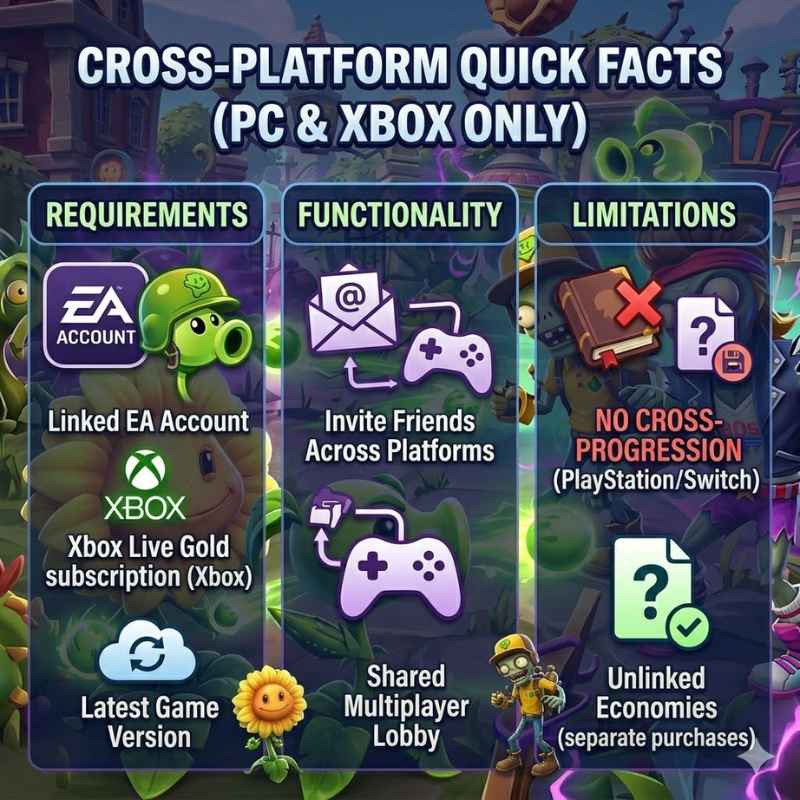
While Plants vs. Zombies: Battle for Neighborville is available on multiple platforms, it does not currently support cross-platform play. This means players on PC, PlayStation, Xbox, and Nintendo Switch cannot play together in the same matches. Similarly, there is no cross-progression, so your progress on one platform will not transfer to another.
What Does Cross-Platform Mean?
Cross-platform play, often called cross-play, is a big deal in gaming. It lets players use different devices to play the same game together. Think about it.
You might have a powerful PC. Your friend might love their PlayStation. Another friend might prefer the Nintendo Switch.
Without cross-play, these friends can’t join the same game. They are stuck playing only with others on their exact system. This really limits who you can play with.
Cross-play breaks down those walls. It makes it easier to find a game and play with anyone you want. It makes the gaming world feel much smaller and more connected.
It’s like being able to call anyone on any phone, no matter who makes it. Cross-play aims for that level of freedom for gamers. It’s about more than just convenience.
It’s about building bigger, more active game communities. This way, no player is left out because they chose a different console or computer.
My Own Cross-Platform Quest
I remember this one time vividly. My nephew had just gotten the newest Xbox. I was still rocking my PC.
He was so excited about Plants vs. Zombies: Battle for Neighborville. He told me all about the awesome new characters and game modes.
I wanted to jump in and play with him.
I booted up my PC, ready for some zombie-smashing fun. I couldn’t find him in any lobby. I searched for his username.
Nothing. It was like we were playing in different universes. I felt a pang of disappointment.
All that excitement, and we couldn’t even share a game.
I spent about an hour trying to figure it out. I looked at settings. I checked online forums.
That’s when I learned the hard truth: no cross-play. It was a bit of a letdown. We ended up playing separate games that day.
But it also made me realize how important this feature is for so many players.
Understanding Plants vs. Zombies: Battle for Neighborville
Plants vs. Zombies: Battle for Neighborville is a colorful and energetic third-person shooter. It’s part of the popular Plants vs.
Zombies series. Developed by PopCap Games and published by Electronic Arts (EA), it came out in 2019. It offers a fun, cartoony world filled with plant characters fighting off zombie hordes, and vice versa.
The game features various playable characters. Each has unique abilities and playstyles. You can play as a peashooter, a chomper, a sunflower, or a kernel corn for the plants.
For the zombies, you can be a foot soldier, a scientist, a super brainz, or an imp. There are also many different game modes.
These modes include objective-based team battles like Garden Ops and Turf Takeover. There are also more casual modes. Players can explore vibrant maps.
They can also customize their characters with tons of unlockable items. This deep level of engagement makes wanting to play with friends even stronger.
Why Cross-Platform Play Matters
For players, cross-platform play means flexibility. It means you’re not locked into one system. Your gaming circle can grow.
You can always find someone to play with. This is super important for games that rely on multiplayer. A healthy player base keeps matches active and fun.
Imagine a game that only a few people on each platform own. If cross-play isn’t enabled, finding a match could take ages. Or you might only play with the same few people over and over.
That gets boring fast. Cross-play helps solve this by pooling players together.
It also helps players who might have older consoles. They can still play with friends who have the latest hardware. It’s a way to keep games alive longer.
It fosters a more inclusive gaming environment. Everyone gets to enjoy the fun, no matter their chosen device.
Cross-Play vs. Cross-Progression
It’s easy to mix up these two terms. Let’s make them clear:
- Cross-Play: This lets you play in the same game with friends on different devices. Your PC friend can join your PlayStation game.
- Cross-Progression: This lets you keep your game progress across different devices. If you unlock items on Xbox, you can find them on PC.
Plants vs. Zombies: Battle for Neighborville has neither of these features currently.
Platform Availability
Plants vs. Zombies: Battle for Neighborville is available on several major gaming platforms. This wide availability is part of why players hope for cross-play.
Having the game on these systems means many people can buy and play it. This includes:
- PC (Origin and Steam)
- PlayStation 4
- Xbox One
- Nintendo Switch
Each version offers the full game experience. The gameplay is largely the same across these platforms. The core mechanics, characters, and game modes are identical.
The differences usually come down to performance and graphics. PC users might have higher frame rates. The Switch version might have slightly less detailed graphics due to hardware limits.
The fact that the game is so widespread makes the lack of cross-play a bit more noticeable. Many players would love to bridge these platform gaps. It would open up the game to a much larger player base.
This is a common desire for many modern multiplayer titles.
Why No Cross-Platform for Battle for Neighborville?
Several reasons can contribute to a game not having cross-platform support. Sometimes, it’s a technical challenge. Each platform has its own way of doing things.
Making them talk to each other can be very complex. Developers need to build special systems for it.
There can also be business reasons. Console manufacturers like Sony and Microsoft sometimes have different policies. They might charge fees for cross-play integration.
Or they might have their own networks that are hard to connect. EA and PopCap have to weigh these factors.
Security and cheat prevention are also big concerns. Different platforms have different security measures. Ensuring a fair game across all of them is a huge task.
Developers need to be confident that they can stop cheaters. This is especially true for competitive online games.
Finally, sometimes it’s just a development priority. Building cross-play takes time and resources. Developers might decide to focus on other game features.
They might prioritize new content or bug fixes instead. For Plants vs. Zombies: Battle for Neighborville, it seems that cross-play was not a top priority during its development.
Key Differences Between Platforms
While the game is the same, you might notice small things:
- PC: Often offers the best graphics and performance. Mouse and keyboard give precise aiming.
- PlayStation/Xbox: Standard console experience. Controllers are intuitive for many.
- Nintendo Switch: Portable option. Graphics might be less detailed. Performance can vary.
The lack of cross-play means your friends’ experiences might be tied to their chosen hardware.
What About Cross-Progression?
Cross-progression is another feature that many players want. This means your game progress saves across different platforms. If you buy cosmetics or unlock characters on your PlayStation, you can continue with them on your PC.
You don’t have to start over.
For a game like Battle for Neighborville, where you can earn and unlock a lot of customization items, cross-progression would be fantastic. It lets you invest time and effort without worrying about being tied to one system forever. If you upgrade from a PS4 to a PS5, or switch from Xbox to PC, your progress stays with you.
However, this feature also comes with its own set of technical and business challenges. Developers need to link player accounts across different systems. They need robust server infrastructure to store this data.
EA and PopCap have not enabled cross-progression for this title.
This means if you play on PC, all your unlocks and progress are just for the PC version. If you later get the game on Switch, you’ll be starting from scratch. It’s another reason players wish for better connectivity between platforms.
It’s a big consideration for dedicated players.
Player Experiences and Frustrations
Many players have shared their desire for cross-play and cross-progression for this game. On gaming forums and social media, you can find discussions about it. People often express disappointment when they can’t play with friends who own the game on a different console.
One player mentioned on a forum, “I got Battle for Neighborville on PC, but my whole family plays on Xbox. We really wanted to play together during the holidays, but it was impossible. We ended up playing a different game that supports cross-play instead.”
Another common sentiment is about the value of progression. “I’ve spent so much time unlocking all the gear for my favorite characters on PlayStation,” one gamer wrote. “If I ever switch to PC, I’d have to do it all over again.
That’s a real shame.”
These stories highlight how important these features have become. Players expect them now, especially in multiplayer-focused games. When they aren’t available, it can lead to frustration and missed opportunities for connection.
It’s a reminder that gaming is often a social activity.
Quick Scan: Cross-Features in P vs. Z: BFN
| Feature | Status | Impact |
|---|---|---|
| Cross-Platform Play | No | Cannot play with friends on different consoles/PC. |
| Cross-Progression | No | Progress does not carry between platforms. |
| Cross-Generational Play (e.g., PS4 to PS5) | Yes (within console families) | PlayStation users can play with other PlayStation users (PS4/PS5). Xbox users can play with other Xbox users (Xbox One/Series X|S). |
Note: Cross-generational play is standard within a console ecosystem and is not the same as true cross-platform play (e.g., PlayStation to Xbox).
Cross-Generational Play vs. Cross-Platform
It’s important to distinguish between cross-platform play and cross-generational play. While Battle for Neighborville doesn’t have cross-play between different console brands (like PlayStation and Xbox), it does support play within the same console family.
This means if you have a PlayStation 4 and a friend has a PlayStation 5, you can play together. The PS4 and PS5 are part of the same PlayStation ecosystem. They use the same underlying technology and network services.
Similarly, Xbox One and Xbox Series X|S players can play together.
This type of play is common. Developers often ensure that players on older and newer versions of a console can still connect. It helps keep the player base active for longer.
It’s a helpful feature, but it’s not the same as being able to play with someone on a PC or a competing console.
So, while you can team up with friends who have the next-gen PlayStation or Xbox if you have the current one, you can’t bridge that gap to PC or the other console brand. This is a key limitation for many players looking to connect with the widest possible group.
Real-World Scenarios
Let’s imagine a few scenarios where this lack of cross-play comes up:
Scenario 1: The Family Game Night. Mom plays on Xbox. Dad plays on PlayStation. The kids play on PC.
Everyone wants to play Battle for Neighborville together as a family. Unfortunately, they can’t. Mom can only play with other Xbox users.
Dad with other PlayStation users. The kids with other PC users. The family has to pick one person’s platform or find a different game.
Scenario 2: The College Dorm. Two roommates. One has a gaming PC. The other bought a PS5 because they thought it was more social.
They both buy Battle for Neighborville. They quickly realize they can’t join each other’s games. The PC gamer plays with other PC players.
The PS5 gamer plays with other PlayStation players. They end up with separate gaming experiences in the same room.
Scenario 3: The Gift Dilemma. You want to get your friend a copy of the game. You know they play on Nintendo Switch. But you play on PC.
You buy them the Switch version so you can play together. Then you find out you can’t. Your gift is well-intentioned, but it doesn’t lead to shared gameplay in this title.
These situations are common. They highlight how players often assume modern games will connect them. The reality for Battle for Neighborville is different.
Common Misconceptions
Many players assume cross-play is standard. Here’s what’s often misunderstood:
- “All EA games have cross-play.” This is false. Cross-play is game-specific.
- “If it’s on multiple platforms, it has cross-play.” Not true. Developers must actively enable it.
- “Cross-play means cross-progression.” These are separate features. One doesn’t guarantee the other.
It’s important to check the specific game’s features.
What Does This Mean for You?
For players of Plants vs. Zombies: Battle for Neighborville, the lack of cross-platform play means you need to be strategic about which platform you choose. If your primary goal is to play with specific friends or family members, you’ll need to ensure you’re all on the same system.
Consider your gaming habits. Do you primarily play alone or with a small group that already uses the same platform? If so, the lack of cross-play might not affect you much.
However, if you often find yourself wanting to connect with a wider circle of friends, or people you meet online, this limitation is significant.
It also means that if you play on multiple systems, you’ll have separate save files. Your achievements and unlocks on PC will not appear on your PlayStation, and vice versa. This can be a deterrent for players who like to have all their progress in one place.
When purchasing the game or recommending it to others, it’s crucial to communicate this limitation. Transparency is key. Make sure everyone knows they’ll be playing within their own platform’s ecosystem.
This avoids potential disappointment down the line.
Quick Tips for Playing
Since cross-play isn’t an option, here are a few tips for enjoying Plants vs. Zombies: Battle for Neighborville:
- Coordinate with Friends: If you want to play with specific people, agree on which platform you will all use before buying the game.
- Explore Single-Player Content: The game has plenty of fun modes that don’t require multiplayer. Garden Ops and the story campaigns are great for solo play.
- Join Platform-Specific Communities: Look for online communities or forums dedicated to the platform you play on. You can find like-minded players there.
- Enjoy the Customization: With no cross-progression, focus on enjoying the journey of unlocking and customizing characters on the platform you choose.
- Stay Updated: While unlikely, game developers sometimes add features like cross-play post-launch. Keep an eye on official announcements from EA and PopCap.
These small steps can help ensure you have the best possible experience, even within the platform’s boundaries.
Frequently Asked Questions
Can I play Plants vs. Zombies: Battle for Neighborville on PS5 if I own it on PS4?
Yes, if you own the game on PlayStation 4, you can typically play it on PlayStation 5 as well. This is due to cross-generational play within the PlayStation ecosystem. Your game progress should also carry over between PS4 and PS5.
Will Plants vs. Zombies: Battle for Neighborville ever get cross-play?
As of now, there have been no official announcements from EA or PopCap Games regarding the addition of cross-play for Plants vs. Zombies: Battle for Neighborville. It remains a non-cross-platform title.
Can PC players play with Xbox players in Battle for Neighborville?
No, PC players cannot play with Xbox players in Plants vs. Zombies: Battle for Neighborville. The game does not support cross-platform play between PC and Xbox.
They are separate player pools.
Is there cross-progression between PC and PlayStation for this game?
No, there is no cross-progression between PC and PlayStation for Plants vs. Zombies: Battle for Neighborville. Your progress, unlocks, and customizations are tied to the platform you play on.
Does the Nintendo Switch version support cross-play with other consoles?
No, the Nintendo Switch version of Plants vs. Zombies: Battle for Neighborville does not support cross-play with PC, PlayStation, or Xbox. Switch players can only play with other Switch players.
What are the main reasons a game might not have cross-play?
Games might lack cross-play due to technical complexity in connecting different systems, business decisions by platform holders, security concerns to prevent cheating, or simply because it wasn’t a development priority for the game’s creators.
Final Thoughts
It’s clear that Plants vs. Zombies: Battle for Neighborville is a fun game. However, its lack of cross-platform play and cross-progression is a notable limitation for many.
It means your gaming experiences are confined to your chosen device.
While cross-generational play within console families offers some flexibility, the ability to connect with friends across different major platforms is not here. If playing with friends on varied systems is a top priority, you’ll need to ensure everyone is on the same console or PC. It’s a piece of information crucial for any gamer looking to team up for some plant-versus-zombie action.