
How To Price And Quote Landscaping Jobs
Landing landscaping jobs in a competitive market is only half the battle, pricing and quoting those jobs profitably is what determines your business’s long-term success. The right pricing strategy not only keeps your company afloat but also builds trust with clients, helps you win more bids, and supports growth.
Yet, many landscaping business owners struggle to balance costs, market rates, and customer expectations, especially as material prices, labor rates, and project scopes fluctuate.
If you’ve ever wondered whether you’re leaving money on the table or risking lost jobs by over-quoting, you’re not alone. Pricing landscaping work is both an art and a science, requiring a keen eye for detail, a solid understanding of your costs, and the ability to communicate value to clients.
In this comprehensive guide, we’ll break down each step of the quoting process, share real-world pricing examples, and provide actionable frameworks for building profitable, competitive quotes that win contracts and grow your reputation.
Key Takeaways
- Accurate pricing starts with understanding and tracking all direct and indirect costs.
- Quoting should balance competitive market rates with your business’s profit goals.
- Using standardized estimating templates and software streamlines the process and improves accuracy.
- Clear, transparent quotes build trust and credibility with clients.
- Adjusting for project complexity, site conditions, and seasonality is essential to avoid hidden losses.
- Regularly reviewing and updating your pricing strategy keeps your business resilient and profitable.
Credit: www.etsy.com
Understanding Your Costs
A profitable landscaping quote is built on a foundation of precise cost analysis. Overlooking hidden expenses or miscalculating overhead can quickly erode your margins.
Direct Vs. Indirect Costs
Direct costs are expenses that can be traced specifically to a job, such as:
- Labor wages
- Materials and plants
- Equipment rental
Indirect costs (overhead) are not directly tied to a single job but are necessary to run your business:
- Office rent
- Insurance premiums
- Utilities
- Marketing expenses
Without accurately allocating indirect costs into your quotes, you risk underpricing your work.
Calculating Labor Costs
Labor is often the largest single expense. To calculate:
- Estimate hours required for each task.
- Multiply by wage rate, including payroll taxes and benefits.
- Add a buffer (typically 10-20%) for unexpected delays or inefficiencies.
Example: If a planting job is estimated at 16 crew hours at $20/hour, labor cost = $320. Adding 15% for buffer = $368.
Material And Supply Costs
Always use current supplier prices for materials, and factor in:
- Delivery charges
- Waste/spoilage (add 5-10% as a contingency)
- Price fluctuations for seasonal plants or mulch
Pro Tip: Request bulk pricing from your suppliers if you frequently use the same materials.
Allocating Overhead
Spread your annual overhead across your billable hours or jobs. For example, if your annual overhead is $50,000 and you expect 2,000 billable hours per year, add $25/hour to every project to cover these expenses.
| Cost Category | Example Items | How to Allocate |
|---|---|---|
| Direct Labor | Crew wages, payroll taxes | Per hour/project |
| Materials | Soil, plants, mulch | Per project |
| Equipment | Mower, excavator rental | Per use/hour |
| Overhead | Insurance, rent, admin | Per hour/project |
Factoring In Profit Margin
Profit is not what’s left over, it must be built into your quote. Industry standards suggest a 10-20% margin on top of total costs, but high-complexity or high-risk jobs may require more. For more on margins, see Landscape Management Magazine.

Credit: fieldcamp.ai
Assessing The Scope Of Work
A detailed scope of work is crucial to accurate pricing and avoids misunderstandings with clients.
Site Visit And Measurements
Conduct an in-person site assessment to:
- Measure all relevant areas (lawn, beds, hardscape)
- Note access issues (gates, slopes, obstacles)
- Identify potential challenges (tree removal, irrigation)
Example: A steep backyard may require extra labor and specialized equipment, increasing your costs.
Defining Client Expectations
Discuss with the client:
- Their vision and priorities
- Desired materials and features
- Maintenance expectations
Clear communication here prevents costly revisions later.
Breaking Down Tasks
List every task needed to complete the job, such as:
- Site clearing and prep
- Planting and mulching
- Installing irrigation or lighting
- Hauling debris
This granular approach ensures nothing is missed in your quote.
Documenting Project Complexity
Complex projects (multi-level patios, custom water features) require extra time and expertise. Assign a complexity factor or add a contingency line to your quote for these elements.
| Project Type | Complexity Level | Example Considerations |
|---|---|---|
| Basic Lawn Mowing | Low | Flat area, minimal obstacles |
| Garden Bed Installation | Medium | Soil amendment, plant selection |
| Paver Patio with Retaining Wall | High | Grading, drainage, permits |

Credit: www.invoiceowl.com
Market Research And Competitive Analysis
To price landscaping jobs competitively, it’s vital to understand your local market and adjust for demand, seasonality, and service differentiation.
Researching Local Pricing
Review:
- Online pricing guides (e.g., HomeAdvisor, Angi)
- Competitors’ advertised rates
- Local industry association surveys
Example: In 2026, the average cost for professional landscaping in the US ranged from $50 to $100 per hour, according to HomeAdvisor.
Adjusting For Seasonality
Peak seasons (spring/fall) allow for higher rates due to increased demand, while off-peak discounts can help fill your schedule.
Positioning Your Services
Differentiate based on:
- Specialized expertise (e.g., sustainable landscaping, native plants)
- Quality of materials
- Warranty or maintenance guarantees
Clients will often pay more for proven expertise and added value.
Example: Competitive Bid Breakdown
Let’s compare three hypothetical bids for a 2,000 sq ft sod installation:
| Company | Labor Cost | Material Cost | Overhead | Profit Margin | Total Quote | Notes |
|---|---|---|---|---|---|---|
| GreenScapes | $1,000 | $700 | $300 | 15% | $2,415 | Includes 1-year warranty |
| BudgetLawn | $900 | $650 | $250 | 10% | $1,980 | No warranty, basic service |
| Elite Outdoors | $1,200 | $800 | $400 | 20% | $2,880 | Premium sod, expedited service |
This table illustrates how service level and value-added features (warranties, premium materials) affect pricing.
Building A Professional Quote
A well-structured, transparent quote not only increases your chances of winning the job but also protects your business legally.
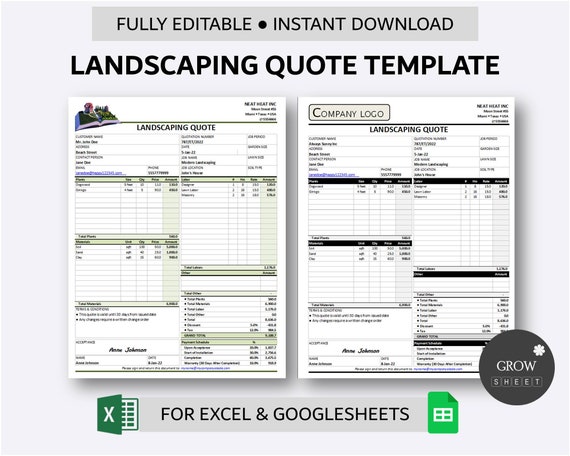
Standardizing Your Quote Template
Every quote should include:
- Business name, address, and contact info
- Client’s details
- Detailed description of work and materials
- Clear pricing breakdown (labor, materials, overhead, profit)
- Timeline and payment terms
- Terms and conditions (warranties, exclusions, change order policy)
Pro Tip: Use digital estimating software to standardize templates and minimize errors.
Transparency And Itemization
Clients appreciate clear, itemized quotes that show exactly what they are paying for. Avoid lump-sum pricing unless the client specifically requests it.
Legal And Insurance Considerations
Include clauses about:
- Liability insurance coverage
- Work guarantees
- Dispute resolution
Consult a legal professional to ensure your quotes protect both you and the client.
Presenting The Quote
Deliver your quote promptly, ideally within 48 hours of your site visit. Accompany the quote with a brief summary that reiterates your understanding of the client’s needs and the value you bring.
Example: “Our team will install premium Kentucky bluegrass sod, amend the soil for optimal root growth, and provide a 1-year establishment warranty.”
Following Up
If you haven’t received a response within a week, follow up with a courteous message offering to answer questions or discuss adjustments.
Pricing Strategies For Different Types Of Landscaping Jobs
Not all landscaping jobs are priced the same way. Tailoring your approach to the project type maximizes accuracy and profit.
Fixed-price Vs. Time And Materials
Fixed-price quotes are best for clearly defined projects with predictable costs (e.g., patio installation).
Time and materials billing is preferable for complex or evolving projects, where exact requirements may change (e.g., large-scale garden restoration).
Maintenance Contracts
For recurring services like mowing or seasonal cleanups, offer:
- Monthly or annual contracts with set rates
- Discounts for prepayment or bundled services
- Escalator clauses for annual price increases
Design-build Projects
When offering design and installation as a package:
- Charge a separate design fee (often $500, $2,500 depending on complexity)
- Credit part of the design fee toward installation if the client proceeds
One-off Vs. Ongoing Work
Ongoing clients may warrant loyalty discounts or priority scheduling, but never at the expense of profitability. Track these discounts to ensure they do not erode your margins.
Example: Residential Vs. Commercial Quoting
Residential projects typically emphasize customization and aesthetics, while commercial jobs focus on efficiency and compliance.
Residential job: 1,500 sq ft garden bed installation, custom plant selection, and decorative mulch
Commercial job: 10,000 sq ft lawn maintenance for office complex, weekly mowing, and fertilization
| Job Aspect | Residential | Commercial |
|---|---|---|
| Customization | High | Low |
| Frequency | One-off/occasional | Recurring |
| Price Sensitivity | Variable | High (bid-driven) |
| Contract Length | Short | Long-term |
| Quote Complexity | Moderate | High (detailed specs) |
Avoiding Common Pricing Mistakes
Many landscaping businesses fall into predictable traps that eat away at profits. Awareness and proactive planning can prevent these pitfalls.
Underestimating Labor
Failing to accurately gauge how long tasks take is the most frequent reason for underpricing. Always factor in:
- Site-specific challenges
- Setup and cleanup time
- Weather delays
Ignoring Overhead
Don’t assume that only direct costs matter. Overhead must be recouped on every job to keep your business sustainable.
Discounting Too Quickly
Offering discounts to win business can backfire if you don’t first understand your minimum break-even price.
Not Accounting For Change Orders
Clients often request changes mid-project. Clearly define your process and pricing for change orders in your quote.
Failing To Update Prices
Material and labor costs change frequently. Review and update your pricing at least twice a year to stay ahead.
Pro Tip: Keep detailed records of actual vs. estimated costs for each job and use this data to refine future quotes.
Tools And Technology For Accurate Quoting
Leverage technology to improve the speed and accuracy of your estimates and quotes.
Estimating Software
Modern landscaping estimating software can:
- Auto-calculate materials based on site dimensions
- Store pricing data for fast updates
- Generate professional, branded quotes
- Integrate with scheduling and invoicing systems
Popular solutions include LMN, Jobber, and Aspire.
Digital Takeoff Tools
Use apps to measure site areas from photos or satellite imagery, reducing the need for multiple site visits.
Cost Tracking And Analytics
Track actual job costs vs. estimates to identify trends and improve future pricing accuracy.
Mobile Quoting
Mobile apps allow you to generate and send quotes on-site, impressing clients and speeding up sales cycles.
Example: Using Software To Win More Bids
In my experience, switching from manual spreadsheets to dedicated estimating software reduced quoting errors and cut turnaround time by 50%. Clients commented on the clarity and professionalism of the new digital quotes, and our win rate improved notably.
Real-world Case Studies
Examining real-world scenarios illustrates how smart pricing and quoting can benefit both landscapers and clients.
Case Study 1: Avoiding Losses Through Detailed Site Assessment
A landscaping firm quoted a backyard renovation based on client photos, missing a steep grade that required costly retaining walls. The initial quote was $8,000, but the actual cost soared to $12,000. After this experience, the company implemented mandatory site visits and detailed checklists, reducing underquoting incidents by 80%.
Case Study 2: Winning Commercial Bids With Transparent Pricing
A commercial landscaper competing for a municipal contract itemized every aspect of their bid, including equipment costs, labor, and a clear profit margin. While their total price was slightly higher than competitors, the transparency led to trust and won them a three-year contract.
Case Study 3: Leveraging Technology For Efficiency
A small landscaping business adopted a cloud-based quoting tool that integrated with their CRM and accounting systems. Quote turnaround dropped from two days to a few hours, and customer follow-ups were automated, resulting in a 30% increase in job conversions over six months.
Frequently Asked Questions
How Can I Handle Price Objections From Clients?
When clients question your pricing, focus on the value you provide: experience, quality materials, and guarantees. Offer to clarify line items in your quote, and be open to adjusting the scope to fit their budget rather than simply lowering your price. Sometimes, offering alternative materials or phased project options can help close the deal without compromising your profit.
What Should I Do If My Costs Increase After Submitting A Quote?
If material or labor costs rise unexpectedly after you’ve submitted a quote but before the job starts, communicate promptly with the client. Reference a clause in your quote that allows for adjustments due to market fluctuations. If you didn’t include such a clause, consider honoring the original price as a goodwill gesture, but update your quoting process for future jobs to prevent losses.
How Do I Estimate Jobs I’ve Never Done Before?
For unfamiliar projects, consult industry pricing guides, speak with suppliers, and seek advice from colleagues or mentors. Break down the project into smaller tasks you’re familiar with, and add a contingency (typically 10-20%) for unforeseen challenges. As you gain experience, refine your estimates based on actual job data.
Is It Necessary To Provide Free Quotes?
While free quotes are standard for most residential landscaping jobs, you can charge for detailed designs or consultations, especially for larger or more complex projects. Make your policy clear upfront. Charging for in-depth design ensures your expertise is valued and deters non-serious inquiries.
How Can I Ensure My Quotes Are Legally Binding?
To ensure quotes are enforceable, include a detailed scope of work, payment terms, timeline, and terms and conditions. Both parties should sign the agreement before work begins. Consulting a legal professional is advisable to ensure your documents comply with local regulations and protect your interests.
Delivering accurate, transparent, and competitive landscaping quotes is both a science and an ongoing learning process. By focusing on your true costs, understanding your market, leveraging technology, and communicating clearly with clients, you’ll build a reputation for fairness and professionalism.
This not only wins more jobs but also ensures every project supports your business’s long-term growth and sustainability.