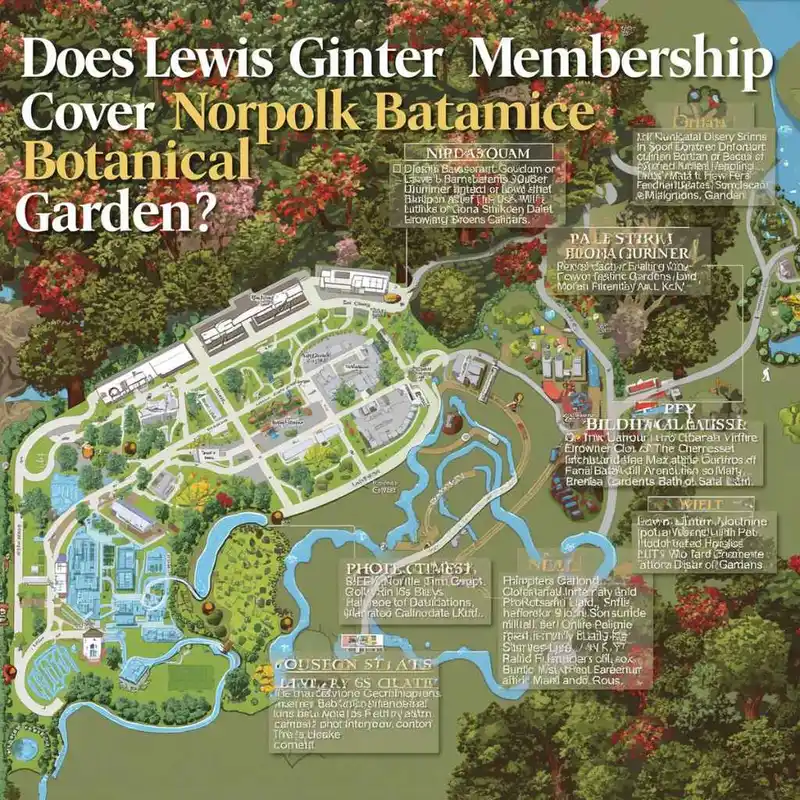
Does Lewis Ginter Membership Cover Norfolk Botanical Gardens?
This guide dives deep. We’ll look at what reciprocal memberships actually mean. We’ll explore the specific benefits, or lack thereof, for Lewis Ginter members at Norfolk Botanical Gardens.
You’ll get all the facts you need to plan your garden visits without any surprises.
Your Lewis Ginter Botanical Garden membership does not automatically include free admission to Norfolk Botanical Garden. While some garden memberships offer reciprocal benefits, this is not the case between Lewis Ginter and Norfolk Botanical Garden. You will need a separate admission ticket or membership for Norfolk Botanical Garden.
Understanding Reciprocal Garden Memberships
Reciprocal memberships are like a special handshake between gardens. They let members of one garden visit other participating gardens for free. Or sometimes, they offer a discount.
This is a great perk. It helps members explore more places without paying extra every time.
These programs usually involve gardens that are part of larger networks. Think of groups like the American Horticultural Society (AHS) Reciprocal Admissions Program. Gardens sign up for these networks.
They agree to offer benefits to members of other gardens in the same network.
The idea is to encourage more people to visit gardens. It also builds a community of garden enthusiasts. You pay for one membership, but you get access to many more places.
It’s a win-win for visitors and the gardens themselves. But not all gardens join these groups. And even if they do, the terms can vary.
Lewis Ginter Membership and Reciprocity
Lewis Ginter Botanical Garden is a fantastic place. It offers various membership levels. These usually come with perks like free admission to the garden, discounts in the gift shop, and special member events.
They are a great way to support the garden and enjoy it year-round.
Now, does Lewis Ginter’s membership give you access to other gardens? Lewis Ginter participates in the American Horticultural Society (AHS) Reciprocal Admissions Program. This is key information.
It means if you are a Lewis Ginter member, you likely get benefits at other AHS participating gardens.
This program allows free or discounted admission to over 300 gardens. You just need to show your current Lewis Ginter membership card and a photo ID. This opens up a world of floral exploration across the country.
It’s a significant benefit for those who love to travel and visit gardens.
So, if you’re a Lewis Ginter member, you should check the AHS list. See which gardens are part of the program. You might be surprised by how many amazing places you can visit thanks to your membership.
It’s always worth knowing the full extent of your membership benefits.
AHS Reciprocal Program Benefits
What it is: A network where member gardens offer free or reduced admission to members of other participating gardens.
How to use it: Present your current Lewis Ginter membership card and a photo ID at the admission desk of a participating garden.
What to expect: Free general admission for the member. Some gardens might extend benefits to guests, but this is rare.
Where to find info: Check the AHS website for the full list of participating gardens and any specific restrictions.
Norfolk Botanical Garden’s Membership Structure
Norfolk Botanical Garden (NBG) is another stunning destination. It also offers its own set of memberships. These memberships provide entry to NBG, special programs, and discounts.
They are designed to support NBG’s mission and its beautiful landscapes.
Like Lewis Ginter, Norfolk Botanical Garden is also a member of the American Horticultural Society (AHS) Reciprocal Admissions Program. This is where the overlap, or potential for confusion, lies. Because both gardens are in the AHS program, people assume their memberships are interchangeable.
However, reciprocity works on a one-way basis within the AHS program. If Garden A is in the AHS, its members get benefits at Garden B if Garden B is also in the AHS. But that doesn’t mean Garden B’s members automatically get free entry to Garden A.
It depends on whether Garden A also participates in a reciprocity agreement with Garden B, or if Garden B is part of the same network that Garden A is.
In the case of Lewis Ginter and Norfolk Botanical Garden, both are AHS members. This means a Lewis Ginter member can get benefits at Norfolk Botanical Garden. But it does not mean a Norfolk Botanical Garden member gets benefits at Lewis Ginter, or that a Lewis Ginter membership is a free pass to NBG itself without checking the AHS details.
The specific benefits offered can also differ. Some AHS gardens might offer full free admission. Others might provide a 50% discount.
Or they might only offer free entry during certain seasons or on specific days. It’s always crucial to check the AHS website or call the garden you plan to visit.
The Direct Answer: Why No Automatic Coverage
So, let’s get straight to the point. Your Lewis Ginter Botanical Garden membership does not automatically cover admission to Norfolk Botanical Garden. They are two separate institutions.
Each has its own membership structure and admission policies.
The confusion often arises because both gardens participate in the AHS Reciprocal Admissions Program. This program allows Lewis Ginter members to receive reciprocal benefits at Norfolk Botanical Garden. But it’s not a blanket coverage.
It’s a specific benefit tied to the AHS affiliation, not a direct partnership between the two gardens that makes one membership valid for the other.
To visit Norfolk Botanical Garden using reciprocal benefits, you need to:
1. Be a current member of Lewis Ginter Botanical Garden. 2.
Ensure your membership is at a level that includes AHS reciprocity (most do). 3. Bring your Lewis Ginter membership card.
4. Bring a valid photo ID that matches the name on the membership card. 5.
Verify that Norfolk Botanical Garden is currently participating in the AHS program and check for any restrictions they might have.
Without these steps, you will be treated as a general visitor. You would need to purchase a regular admission ticket or a separate Norfolk Botanical Garden membership.
Key Takeaway: Membership vs. Reciprocity
- Membership: Your direct agreement with one garden for its specific benefits.
- Reciprocity: An added perk through a third-party program (like AHS) that extends benefits to other gardens.
- Your Lewis Ginter Membership: Entitles you to Lewis Ginter’s benefits.
- AHS Reciprocity: Allows you to use your Lewis Ginter membership at other AHS gardens, like Norfolk Botanical Garden, under specific terms.
My Own Experience with Garden Visits
I remember the first time I learned about reciprocal garden memberships. I was living in a different state and had a membership to a local arboretum. I was planning a trip to visit family a few hours away.
They had a beautiful botanical garden there.
I called the garden I wanted to visit. I asked if my membership offered any discounts. The person on the phone was super helpful.
They explained that my arboretum was part of the AHS program. And yes, they offered free admission to AHS members. I was so excited!
It felt like a secret hack for exploring new places.
Later, I moved to Virginia. I got a membership at Lewis Ginter. I loved it.
I was curious about Norfolk Botanical Garden. I assumed my Lewis Ginter membership would just work there. After all, they are both major gardens in the state.
Why wouldn’t they connect?
I planned a weekend trip to Norfolk. I got to the entrance of NBG, membership card in hand. I presented it, ready to walk right in.
The person at the desk smiled kindly. “I’m sorry,” they said, “this membership is for Lewis Ginter. It doesn’t cover admission here.”
My heart sank a little. I felt a bit foolish. I hadn’t done my homework.
I just assumed. The staff member saw my disappointment. They quickly added, “However, Lewis Ginter is part of the AHS Reciprocal Program.
Do you have your AHS membership card with you?”
I didn’t have a separate AHS card. My Lewis Ginter card was my proof of AHS membership. I showed it to them.
They verified it. Then they explained the terms. I had to pay a reduced entrance fee for my guest, but my admission was covered by the AHS reciprocity.
It wasn’t completely free for everyone in my party, but it was much better than full price.
That day taught me a valuable lesson. Reciprocal benefits are wonderful, but they have rules. You can’t just assume.
Always check the specific program details. And always have your membership card and ID ready.
Navigating Reciprocal Benefits: What You Need to Know
Using reciprocal memberships can feel like being part of an exclusive club. But to make it smooth, you need to be prepared. Here’s a breakdown of how to navigate these benefits correctly.
First, identify the program. Is it the AHS? Or is it a regional network?
Knowing this helps you find the correct list of participating gardens. Lewis Ginter prominently displays its participation in the AHS program on its website. This is your first clue.
Next, check the specific garden you want to visit. Go to the website of that garden (in this case, Norfolk Botanical Garden). Look for their “Membership” or “Visit” section.
They often have a dedicated page explaining their reciprocal agreements. This page should clarify if they accept AHS members and what those benefits are.
Third, understand the limitations. Reciprocal admission is usually for the primary member only. Guests typically have to pay full price.
Some gardens might have blackout dates or only offer the benefit during certain seasons. For example, they might exclude peak holiday periods.
Fourth, always bring your membership card and a photo ID. This is non-negotiable. Garden staff need to verify your identity and your membership status.
Without these, you will be denied reciprocal benefits. It’s the same reason you need your ID to buy a drink – it proves you’re eligible.
Finally, be polite and prepared for questions. Garden staff are usually happy to help. But they also have policies to follow.
If you approach them with a clear understanding of the reciprocal program and a positive attitude, your visit will be much more pleasant. If you’re unsure, ask politely before you get to the ticket window.
Quick Scan: Using Reciprocal Benefits
| Step | Action | Why it’s important |
|---|---|---|
| 1 | Identify the program (e.g., AHS). | Helps you find the right list of gardens. |
| 2 | Check the visiting garden’s website. | Confirms their participation and specific rules. |
| 3 | Understand member-only benefits. | Guests usually pay separately. |
| 4 | Carry membership card & photo ID. | Essential for verification. |
| 5 | Be polite and ask questions. | Ensures a smooth and pleasant visit. |
Real-World Scenarios and Expectations
Let’s imagine a few scenarios to make this clearer. Picture yourself as a Lewis Ginter member planning a trip to Norfolk.
Scenario 1: The Informed Visitor. You’ve read this article. You know your Lewis Ginter membership is part of the AHS. You go to the Norfolk Botanical Garden website.
You find their “Visit” page. It clearly states, “We offer free admission to members of the American Horticultural Society.” You pack your Lewis Ginter card and your driver’s license. You arrive at NBG, present your card and ID.
You walk in with ease. Your guest pays the standard admission fee for non-members. This is the ideal scenario.
Scenario 2: The Slightly Unprepared Visitor. You have your Lewis Ginter card. You assume it works at NBG. You get to the ticket counter.
You present your card. The staff member explains, “This is a Lewis Ginter membership. While we do have reciprocity with them through the AHS, you need to show your AHS membership card or your Lewis Ginter card as proof of AHS membership.” You might not have your ID with you, or you might not know about the specific AHS terms.
This can lead to confusion or needing to buy a ticket.
Scenario 3: The Visitor Seeking Guest Benefits. You are a Lewis Ginter member. You’re visiting NBG with a group of friends. You know your admission is covered via AHS reciprocity.
But you want your friends to get in free too. You ask the NBG staff if they offer guest passes for AHS members. The staff member politely explains that AHS reciprocity typically covers only the primary member.
Your friends will need to purchase their own tickets. This is a common expectation.
These scenarios highlight the importance of preparation. Gardens rely on memberships for funding. Reciprocal programs are a generous offering, but they are managed carefully.
Understanding the rules ensures you get the most out of your membership and avoid any awkward situations.
Myth vs. Reality: Reciprocal Memberships
Myth: My membership to Garden A means free entry to any other garden.
Reality: Reciprocal benefits are part of specific programs (like AHS) and often only cover the primary member. Always check the details.
Myth: All botanical gardens in Virginia have reciprocal agreements with each other.
Reality: Participation in reciprocal programs varies. It’s based on whether gardens choose to join and the specific terms of those agreements.
Myth: I don’t need my ID if I have my membership card.
Reality: Most gardens require both your membership card and a matching photo ID for verification.
What This Means for Your Garden Visits
Knowing the ins and outs of reciprocal memberships means you can plan smarter. If you’re a Lewis Ginter member and want to visit Norfolk Botanical Garden, you have a clear path.
When it’s straightforward: If you are visiting alone or with one other person and you have your Lewis Ginter membership card and photo ID, your admission to Norfolk Botanical Garden should be covered through the AHS reciprocal program. Just present your credentials at the entrance.
When you might need to pay: If you are visiting with multiple guests, remember that typically only the primary member receives the reciprocal benefit. Your guests will likely need to purchase their own admission tickets. Always confirm this policy with Norfolk Botanical Garden when you plan your visit.
When to check for specific restrictions: While AHS reciprocity is generally reliable, some gardens may have seasonal limitations or special event exclusions. It’s a good practice to check the Norfolk Botanical Garden’s website or call them a few days before your planned visit. This ensures there are no unexpected changes or specific rules you need to be aware of.
What if you’re a Norfolk Botanical Garden member? If you are a member of Norfolk Botanical Garden, your membership primarily provides benefits at NBG. To visit Lewis Ginter Botanical Garden for free, you would need to check if NBG participates in a reciprocal program that Lewis Ginter also honors. Based on general knowledge, NBG is an AHS member, so a Lewis Ginter member can visit NBG.
However, the reverse isn’t always automatically true unless Lewis Ginter also specifically offers reciprocity to NBG members outside of the standard AHS terms.
Understanding these distinctions helps you avoid paying for admission when you don’t have to. It also helps you appreciate the value of your membership and the networks that gardens create.
Quick Tips for Maximizing Your Membership
Here are a few simple tips to make sure you get the most out of your garden memberships, especially when exploring reciprocal benefits:
- Keep your membership card safe: Treat it like your driver’s license. Don’t lose it!
- Always carry a photo ID: This is usually required alongside your membership card.
- Check the AHS website: Before traveling, visit the American Horticultural Society website to see the full list of participating gardens and any noted restrictions.
- Visit the garden’s website: Look for their specific membership page. This often details their reciprocal policies.
- Call ahead if unsure: A quick phone call can clear up any doubts and save you time and potential frustration at the gate.
- Know the guest policy: Understand if your membership covers guests or only yourself.
- Consider your travel plans: If you travel often, a membership in a large reciprocal program like AHS can save you a lot of money over time.
Reciprocal Program Checklist
Have:
- Lewis Ginter Membership Card
- Photo ID
Checked:
- Norfolk Botanical Garden website for AHS reciprocity details.
- AHS website for current garden listings.
Know:
- Reciprocal benefit is usually for the primary member only.
- Guest admission will likely require a separate ticket.
Frequently Asked Questions
Does my Lewis Ginter membership give me free entry to Norfolk Botanical Garden?
No, your Lewis Ginter membership does not automatically provide free entry to Norfolk Botanical Garden. However, Lewis Ginter participates in the American Horticultural Society (AHS) Reciprocal Admissions Program. This means as a Lewis Ginter member, you can often receive free or discounted admission to Norfolk Botanical Garden under the terms of the AHS program, provided you have your membership card and photo ID.
What is the AHS Reciprocal Admissions Program?
The AHS Reciprocal Admissions Program is a network of over 300 gardens that offer free or discounted admission to members of other participating gardens. It’s a benefit designed to encourage garden exploration and appreciation across different regions of the United States.
How do I use my Lewis Ginter membership for reciprocal benefits at Norfolk Botanical Garden?
To use your reciprocal benefits, you must present your current Lewis Ginter Botanical Garden membership card and a valid photo ID at the admission desk of Norfolk Botanical Garden. You should verify Norfolk Botanical Garden’s current participation and any specific restrictions on the AHS website or the garden’s own website.
Does the reciprocal benefit cover guests when I visit Norfolk Botanical Garden?
Typically, reciprocal admission benefits from programs like the AHS only cover the primary member listed on the membership card. Guests usually need to purchase their own admission tickets at the standard rate. It’s always best to confirm this policy directly with Norfolk Botanical Garden.
What if Norfolk Botanical Garden isn’t listed on the AHS website?
If Norfolk Botanical Garden is not currently listed on the AHS Reciprocal Admissions Program website, then your Lewis Ginter membership, even with AHS affiliation, will not provide reciprocal benefits there. Participation can change, so always check the most up-to-date lists from both the AHS and the visiting garden.
Can a Norfolk Botanical Garden member visit Lewis Ginter for free?
A Norfolk Botanical Garden membership primarily grants benefits at NBG. While both gardens are AHS members, the reciprocal benefit is typically that a Lewis Ginter member gets benefits at NBG. To visit Lewis Ginter for free as an NBG member, you would need to check if NBG membership offers reciprocity to Lewis Ginter under the AHS program or another agreement Lewis Ginter might have.
Conclusion
So, to wrap things up, while your Lewis Ginter membership is a fantastic pass to a world of beauty, it doesn’t automatically grant you entry to Norfolk Botanical Garden. The key is understanding the American Horticultural Society reciprocal program. With the right documentation and a little preparation, you can absolutely enjoy the wonders of Norfolk Botanical Garden using your Lewis Ginter membership benefits.
Happy gardening adventures!