
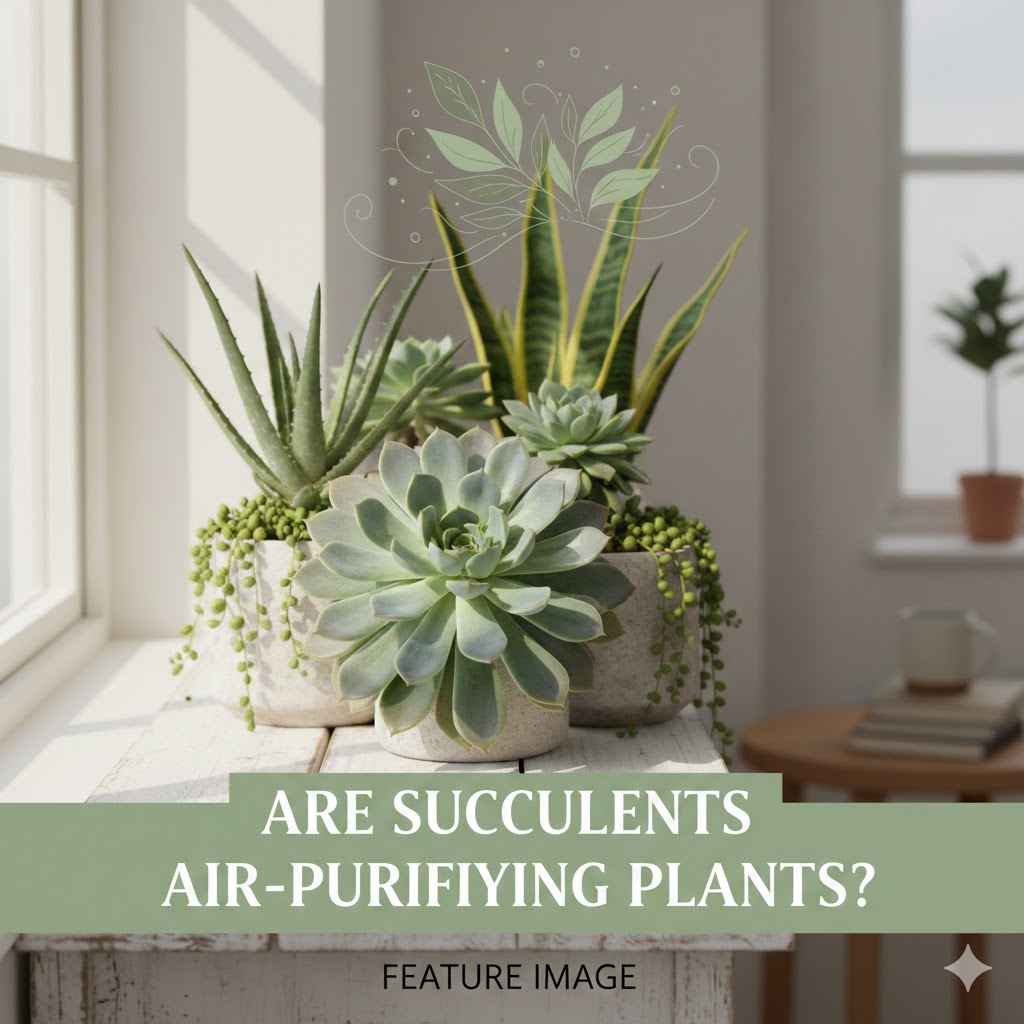
Yes, some succulents can help purify indoor air by removing certain toxins like formaldehyde and benzene, but their effect is modest in typical homes. The famous NASA Clean Air Study showed plants can filter pollutants, and a few succulents stand out, though you need many for noticeable impact. They still bring joy and minor air benefits!
Many beginners love succulents for their easy care and cute looks. But a common question pops up: do they really clean the air in your home? People hear about air-purifying plants and wonder if these low-maintenance favorites count. The good news? Some succulents do offer air-cleaning perks, though not as strongly as popular myths suggest. In this guide, I’ll walk you through the facts, which succulents work best, and how to use them to make your space healthier and prettier. Let’s dig in and clear up the confusion step by step.
What Makes a Plant “Air-Purifying”?
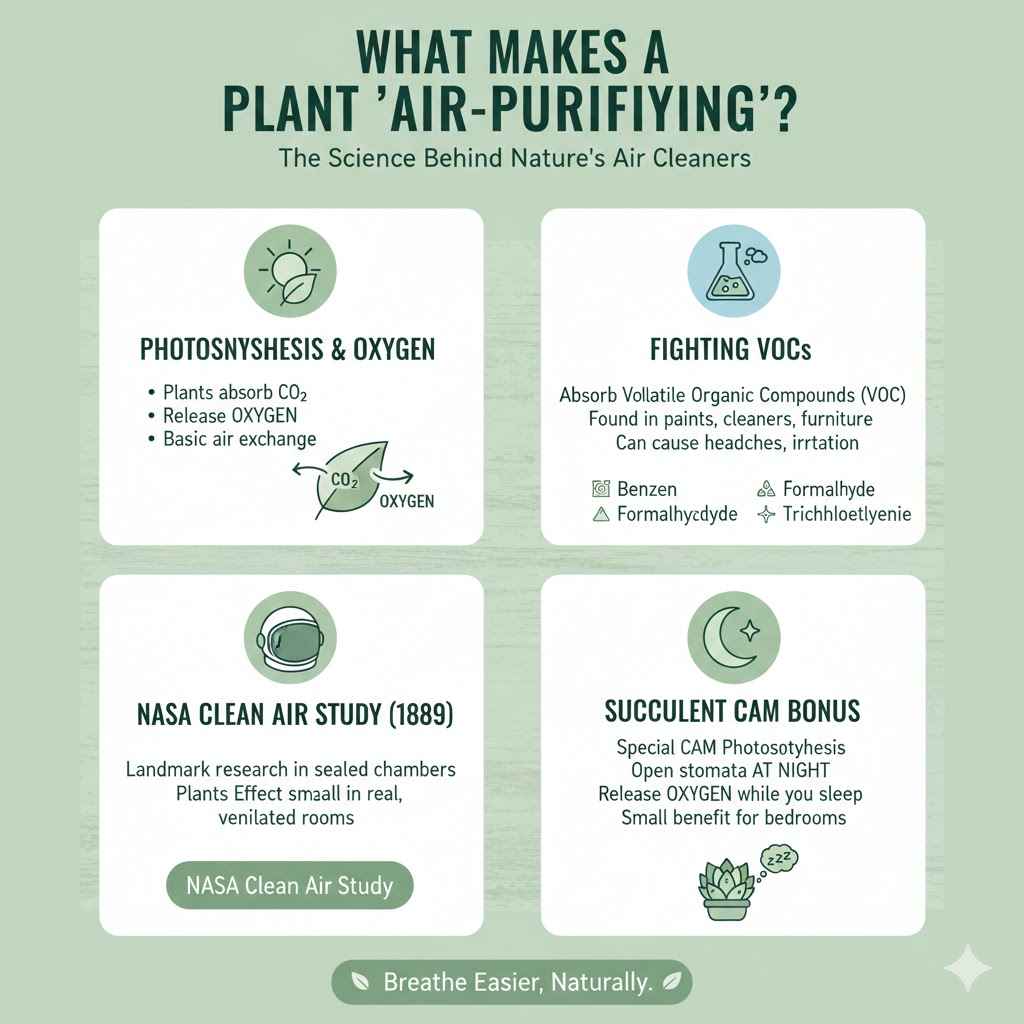
Plants clean air through photosynthesis. They take in carbon dioxide and release oxygen. Some also absorb harmful chemicals called volatile organic compounds (VOCs) through their leaves and roots. These VOCs come from paints, cleaners, furniture, and more. They can cause headaches, eye irritation, or worse over time.
The big idea comes from NASA’s 1989 Clean Air Study. Scientists tested plants in sealed spaces to see if they could remove toxins like benzene, formaldehyde, and trichloroethylene. You can read the original study here: NASA Clean Air Study. The study found certain plants help, but later research shows the effect is small in real rooms with open windows or fans.
Succulents use a special type of photosynthesis called CAM (Crassulacean Acid Metabolism). They open stomata at night to save water, which means some release oxygen while you sleep. This adds a small bonus for bedrooms.
Do Succulents Really Purify Air? The Facts
Yes, but with limits. Many blogs claim succulents remove up to 90% of toxins fast, but that’s often overstated from the NASA lab tests. In real homes, you’d need dozens or hundreds of plants for big changes. A better view: succulents add gentle air help plus beauty, stress relief, and humidity control.
They shine in low-light spots and need little water, so they’re perfect for beginners. Even small benefits add up when combined with good ventilation.
Best Succulents for Air Purification
Here are top succulents known for air-cleaning traits, based on NASA findings and other studies. Focus on these for the best mix of looks and function.
- Aloe Vera – Removes formaldehyde and benzene. Its gel soothes skin too!
- Snake Plant (Sansevieria trifasciata) – Filters many toxins and gives oxygen at night. Super tough.
- Jade Plant (Crassula ovata) – Absorbs some VOCs and grows slowly for easy care.
- ZZ Plant (Zamioculcas zamiifolia) – Though not a true succulent, it’s similar and removes toxins well.
- Peace Lily – Not a succulent but often grouped; excellent for many pollutants (use if you want variety).
Snake plant and aloe top many lists for their strong performance.
How to Choose and Place Succulents for Better Air
Start small. Pick 5-10 plants for a medium room. Place them where air flows, like near windows or desks. Group them for more impact.
| Succulent | Main Toxins Removed | Light Needs | Watering | Best Spot |
|---|---|---|---|---|
| Aloe Vera | Formaldehyde, Benzene | Bright indirect | Every 2-3 weeks | Windowsill or desk |
| Snake Plant | Formaldehyde, Benzene, Xylene | Low to bright | Every 3-4 weeks | Bedroom or corner |
| Jade Plant | Some VOCs | Bright light | Every 2 weeks | Sunny shelf |
| ZZ Plant | Toluene, Xylene | Low light | Every 3 weeks | Low-light rooms |
This table helps you match plants to your space. Remember, more plants mean better results, but start with what you can care for.
Step-by-Step: Adding Succulents to Improve Your Indoor Air
- Assess your space – Note light levels, room size, and problem areas (like near new furniture that off-gasses).
- Choose plants – Pick from the list above. Buy healthy ones from trusted sources.
- Pot them right – Use well-draining soil and pots with holes. Add perlite or sand for extra drainage.
- Place strategically – Group 3-5 together on shelves or tables. Avoid dark corners.
- Care basics – Water only when soil is dry. Wipe leaves to keep them dust-free for better air exchange.
- Combine with habits – Open windows daily, use fans, and avoid smoking indoors for real air improvement.
- Monitor and add more – Watch how they grow. Add more as you gain confidence.
Follow these steps, and you’ll see healthier plants and feel better in your space.
Common Mistakes to Avoid
- Overwatering – Leads to root rot, the top killer of succulents.
- Too little light – Plants stretch and clean less effectively.
- Ignoring dust – Dusty leaves block air purification.
- Expecting miracles – Plants help mildly; pair with ventilation.
Bonus Benefits of Growing Succulents
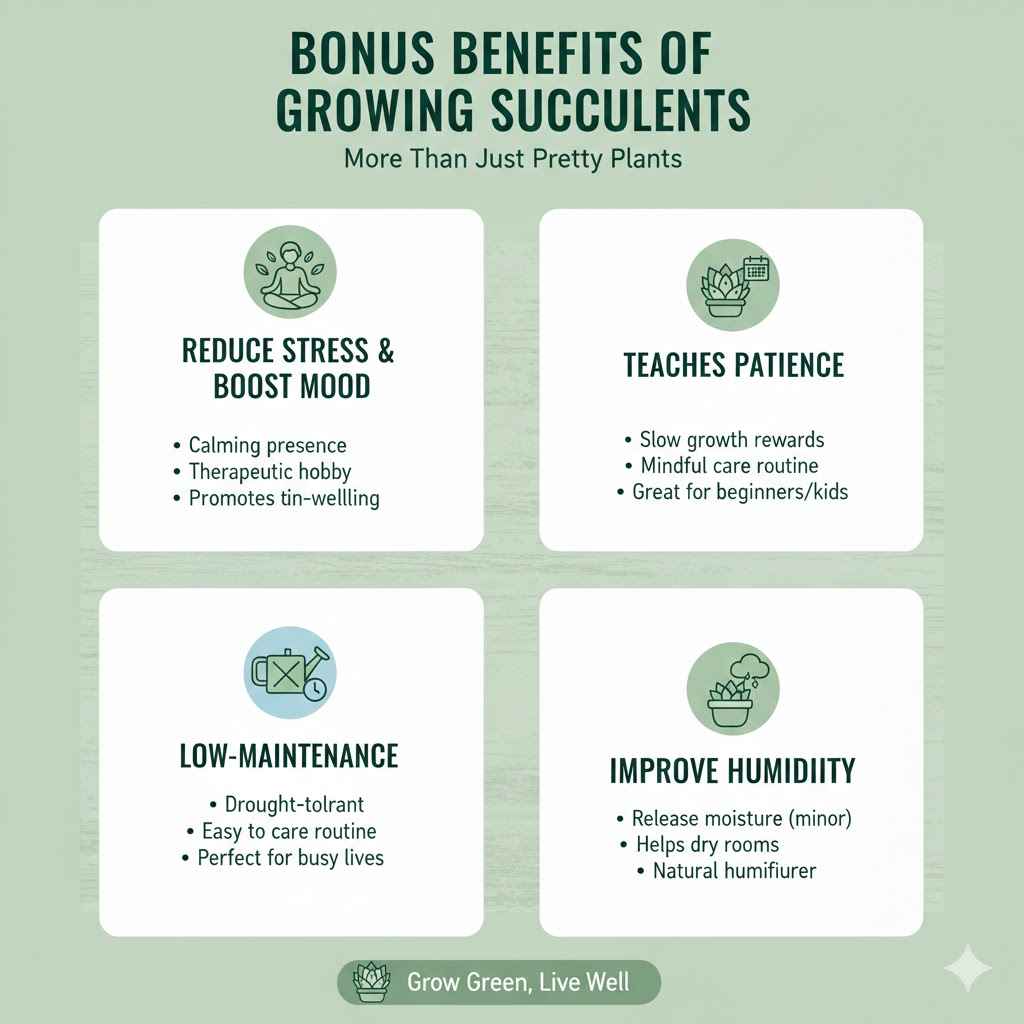
Besides minor air help, succulents reduce stress, boost mood, and teach patience. They’re great for kids or busy folks. Many improve humidity slightly in dry rooms.
FAQ
Are all succulents air-purifying?
No, but many like aloe vera and snake plant help remove toxins modestly. Most succulents focus more on oxygen at night than heavy filtering.
How many succulents do I need to purify a room?
Start with 5-10 for a small room. Studies suggest 10-100+ for real impact, but even a few add gentle benefits and beauty.
Do succulents release oxygen at night?
Yes! Thanks to CAM photosynthesis, many release oxygen while you sleep, unlike most plants.
Is the NASA study accurate for home use?
The NASA Clean Air Study (link) showed promise in labs, but real homes need ventilation too. Plants help mildly, not as a full air purifier.
Can succulents remove mold or allergens?
They don’t remove mold directly, but good care prevents excess humidity that causes mold. They may trap some dust.
Which succulent is best for beginners wanting air benefits?
Snake plant or aloe vera. Both are tough, low-care, and rank high for toxin removal.
Do succulents work better than regular houseplants for air?
Not always. Snake plant excels, but leafy plants like peace lily often filter more. Succulents win for easy care and night oxygen.
Conclusion
Succulents are wonderful additions to any home, even if their air-purifying power is gentler than some claims suggest. Plants like aloe vera and snake plant offer real, small-scale help against toxins while bringing joy and green life to your space. Start with a few, care for them simply, and watch your confidence grow along with your plants. Gardening is about enjoyment and small wins—your home will feel fresher and more alive. Happy planting! You’ve got this.