
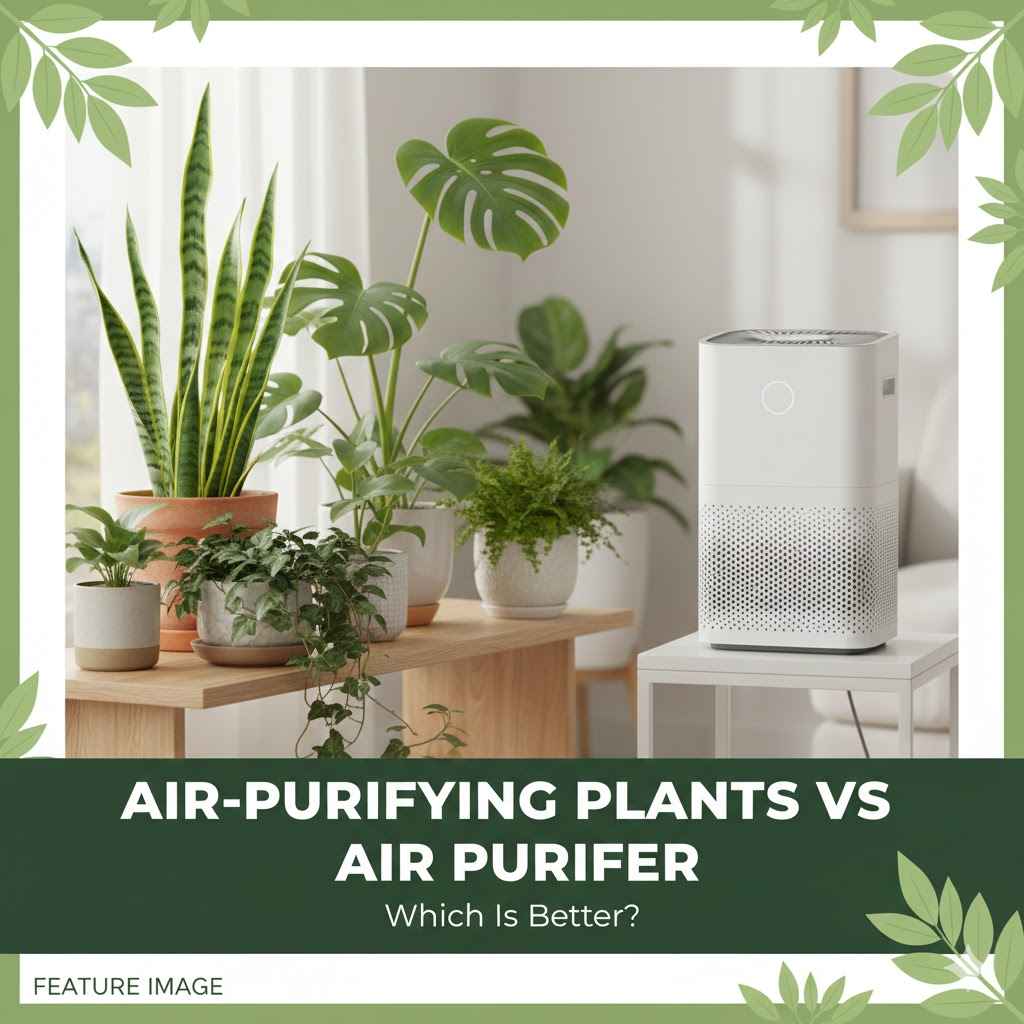
Quick Summary: Air purifiers are far better at quickly and effectively removing pollutants like dust, allergens, and particles from indoor air. Air-purifying plants offer minor benefits for certain gases, plus beauty, oxygen, and stress relief, but they can’t match a good purifier’s power. For real air cleaning, choose an air purifier; use plants as a lovely bonus!**
Many people worry about the air inside their homes. It can feel stuffy, dusty, or even harmful with smells from paints, cleaners, or furniture. You may have heard that certain houseplants can “purify” the air, thanks to old NASA studies. But is that true in real homes? And how do they compare to electric air purifiers?
Don’t worry — you’re not alone in this confusion. The good news is that both options can help in their own ways. In this guide, I’ll walk you through the facts, pros and cons, and what works best for beginners like you. By the end, you’ll know exactly what to choose for cleaner, fresher air — and maybe add some green friends too!
What Makes Indoor Air Unhealthy?
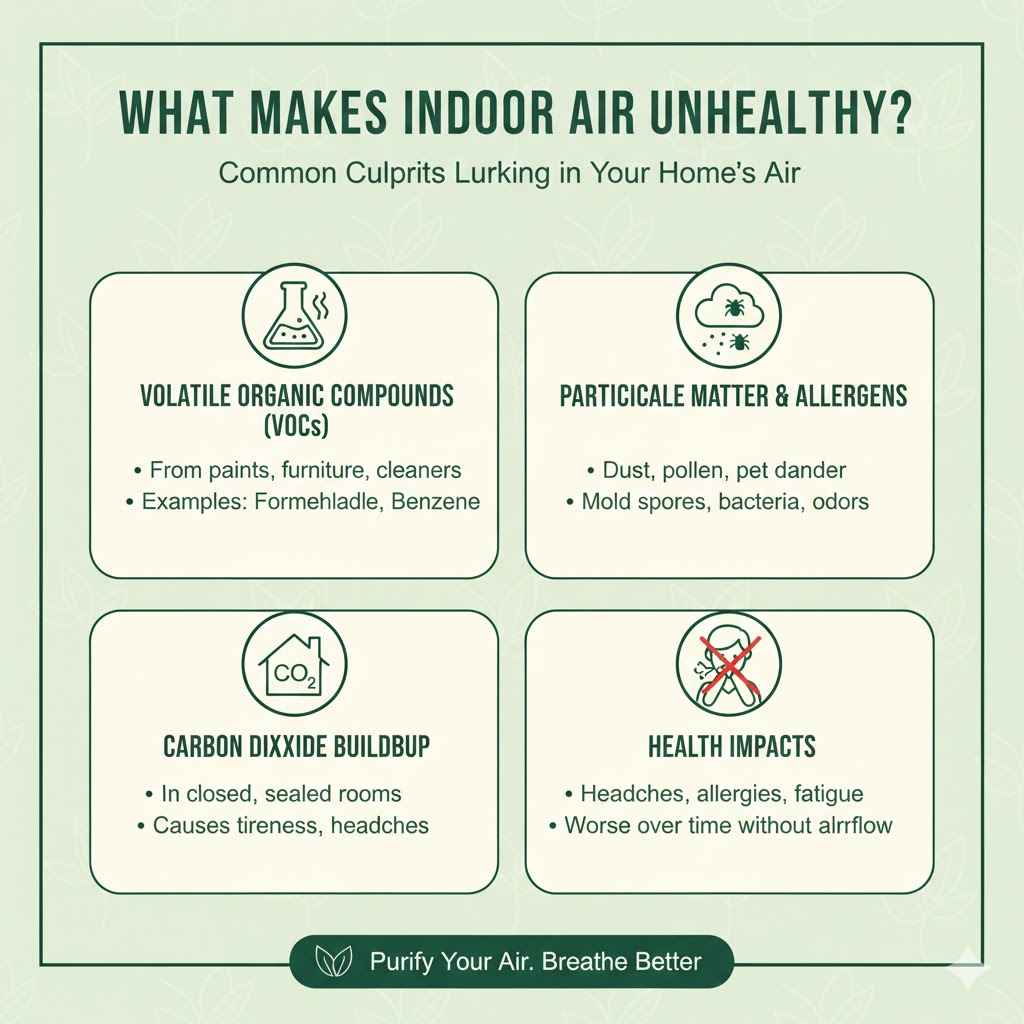
Indoor air often has more pollution than outdoor air. Common problems include:
- Volatile organic compounds (VOCs) from paints, furniture, and cleaners (like formaldehyde and benzene)
- Particulate matter (dust, pollen, pet dander)
- Carbon dioxide buildup in closed rooms
- Mold spores, bacteria, and odors
These can cause headaches, allergies, tiredness, or worse over time. Good ventilation helps, but many homes stay sealed for AC or heat. That’s where air purifiers and plants come in.
The Famous NASA Study and What It Really Means
In 1989, NASA tested plants to clean air in space stations. They found some houseplants remove VOCs like formaldehyde, benzene, and trichloroethylene in sealed chambers. You can read the original study here: NASA Clean Air Study.
But later research shows this doesn’t work the same in normal homes. A 2019 review by Drexel University found you’d need hundreds or thousands of plants per room to match lab results — way too many! Check this EPA-related info on indoor air: EPA Indoor Air Quality.
Plants do help a little with gases and add oxygen, but they are slow and limited for particles like dust.
Air Purifiers: How They Work and Why They’re Strong
Air purifiers pull air through filters to trap pollutants. Good ones use HEPA filters for tiny particles (99.97% effective on 0.3 microns) and activated carbon for gases and odors.
They clean air fast — often in minutes to hours — and work in real rooms. CADR (Clean Air Delivery Rate) measures speed; a decent purifier has 100+ CADR, while plants are under 1.
Pros and Cons of Air Purifiers
| Aspect | Pros | Cons |
|---|---|---|
| Effectiveness | Removes particles, allergens, smoke, and some gases quickly | May not catch all gases without carbon filter |
| Speed | Acts in minutes/hours | Needs electricity and filter changes |
| Maintenance | Simple — replace filters every 6-12 months | Costs for electricity and filters |
| Other Benefits | Quiet models available; targeted for allergies/asthma | No beauty or natural feel |
Air-Purifying Plants: Beauty with Some Benefits
Plants look great, boost mood, reduce stress, and add humidity. They absorb some VOCs through leaves and roots (with soil microbes). NASA favorites include snake plant and peace lily.
But science shows their impact is small in typical homes. They help more with CO2 and minor gases, not dust or pollen. Some studies show they lower NO2 slightly (University of Birmingham research).
Best Beginner-Friendly Air-Purifying Plants
- Snake Plant (Sansevieria) — Tough, low light, removes toxins, gives oxygen at night.
- Spider Plant (Chlorophytum comosum) — Easy, fast-growing, great for beginners.
- Peace Lily — Beautiful flowers, removes ammonia and more, likes shade.
- Golden Pothos — Super forgiving, trails nicely, filters VOCs.
- ZZ Plant — Almost impossible to kill, low maintenance.
Start with 1-2 per small room. Water when soil is dry, use well-draining pots.
Pros and Cons of Air-Purifying Plants
| Aspect | Pros | Cons |
|---|---|---|
| Effectiveness | Minor VOC removal, adds oxygen, reduces stress | Very limited for particles; needs hundreds for real impact |
| Speed | Slow and ongoing | Takes weeks/months for tiny changes |
| Maintenance | Low cost, no electricity | Overwatering risks mold/pests; some toxic to pets |
| Other Benefits | Decor, joy, natural humidity | May increase humidity too much in damp areas |
Head-to-Head Comparison: Plants vs Air Purifiers
For serious air cleaning — especially particles, allergens, or smoke — air purifiers win hands down. They are faster, stronger, and measurable.
Plants shine for natural appeal, mental health, and small gas removal. The best approach? Use both! An air purifier handles heavy lifting, while plants make your space feel alive and welcoming.
Which Should You Choose?
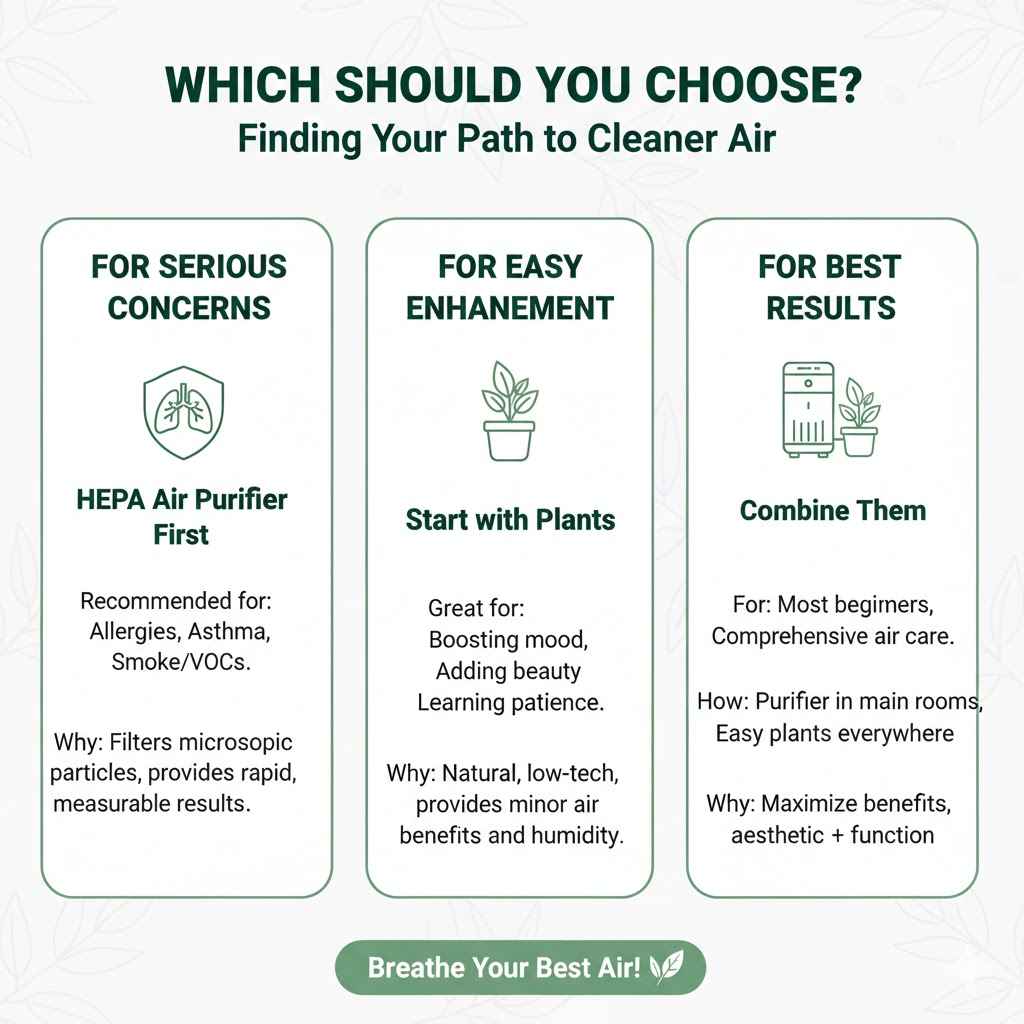
If you have allergies, asthma, or smoke concerns, get a HEPA air purifier first.
If you want easy, pretty improvements and enjoy caring for greens, start with plants.
For most beginners, combine them: a purifier in main rooms plus a few easy plants everywhere.
FAQ
Do houseplants really purify air like the NASA study says?
The NASA study was in sealed chambers, not homes. Plants help a bit with some gases, but you need tons for noticeable effects. They are great for looks and mood, though!
Can plants replace an air purifier?
No, plants can’t match an air purifier’s speed or power, especially for dust and allergens. Use plants as a supplement.
What are the easiest air-purifying plants for beginners?
Try snake plant, spider plant, or pothos. They forgive forgotten waterings and thrive in low light.
How many plants do I need to clean my room’s air?
Studies say 10-1000 per square meter for big impact — not practical. A few add charm but won’t “purify” alone.
Do air purifiers use a lot of electricity?
Most use little, like a light bulb. Look for Energy Star models to save more.
Are there any risks with too many indoor plants?
Overwatering can cause mold. Some plants are toxic to pets or kids, so choose carefully.
What’s the best way to improve indoor air naturally?
Open windows when possible, clean regularly, use plants for beauty, and add a purifier if needed.
Conclusion
Cleaner indoor air makes your home feel better and keeps you healthier. While air-purifying plants bring joy, beauty, and small natural benefits, air purifiers do the real work for fast, reliable results.
Don’t feel pressured to pick one — many happy gardeners use both. Start small: grab a beginner plant or two, and consider a purifier if air quality bothers you. Gardening is about enjoyment, so breathe easy, add some green, and watch your space thrive. You’ve got this — happy planting!