
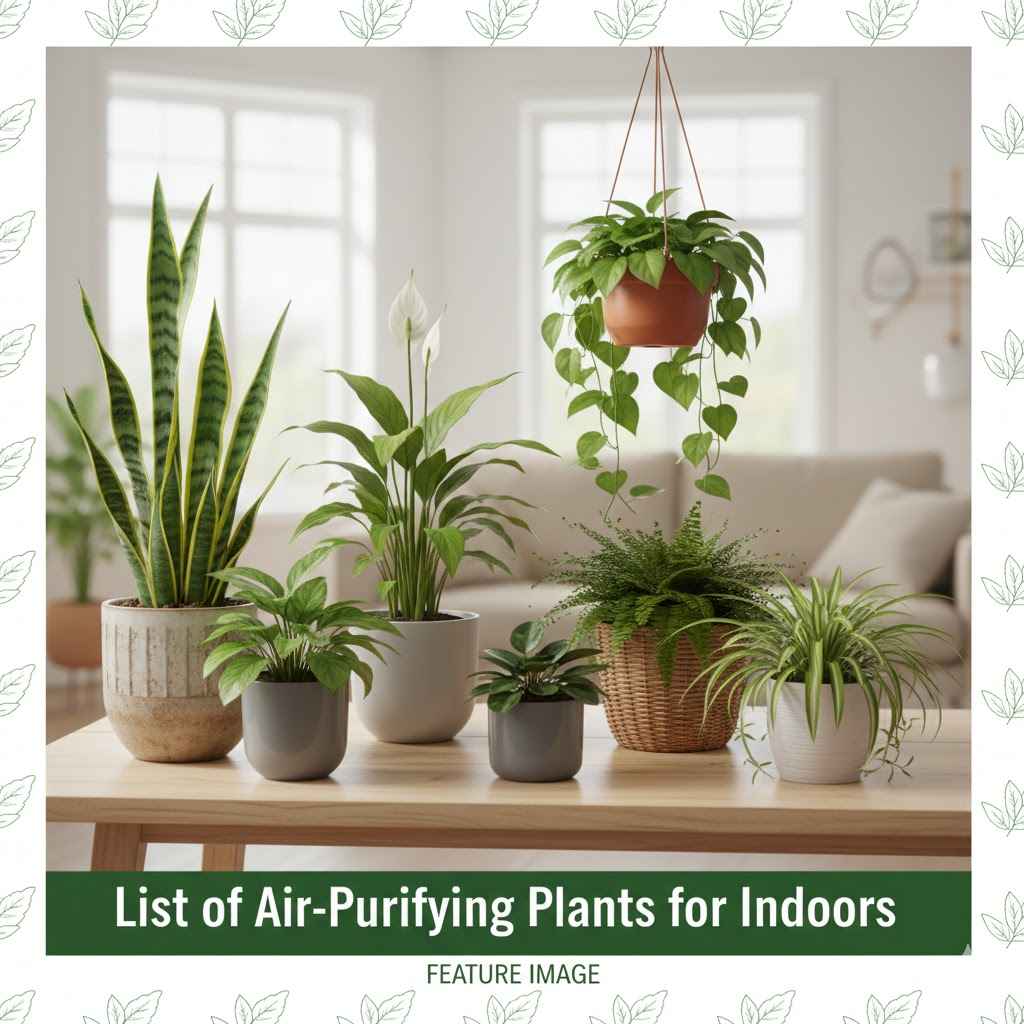
Yes, certain indoor plants can help purify your home’s air by removing common toxins like formaldehyde, benzene, and more, according to NASA’s famous Clean Air Study. Top beginner-friendly picks include snake plant, spider plant, peace lily, pothos, and bamboo palm. They’re easy to care for, add beauty, and boost your indoor environment naturally.
Do you spend a lot of time indoors? Many of us do, especially in homes or offices with closed windows. The air can feel stuffy from paints, cleaners, furniture, and everyday items that release hidden chemicals. These pollutants can make you feel tired or cause headaches. The good news? You can fight back with simple houseplants! These green friends not only look nice but also act as natural air filters. In this guide, I’ll share the best air-purifying plants for indoors. I’ll explain why they work, how to pick and care for them as a beginner, and tips to get the most benefit. Let’s make your home fresher and greener together!
Why Indoor Air Quality Matters for Your Health
Indoor air can be more polluted than outdoor air in some cases. Common toxins include formaldehyde (from furniture and carpets), benzene (from paints and smoke), and trichloroethylene (from solvents). Breathing these over time can irritate eyes, nose, and throat or cause bigger health worries. The EPA notes that good indoor air helps everyone feel better and stay healthier. Plants offer a natural, low-cost way to improve it. NASA’s 1989 Clean Air Study showed certain plants remove these toxins effectively in closed spaces. While real homes aren’t sealed like space stations, adding plants still helps, plus they boost mood and humidity.

The Science Behind Air-Purifying Plants
Plants clean air through their leaves, roots, and soil microbes. They absorb harmful gases via stomata (tiny leaf pores) and break them down. The famous NASA study tested many houseplants in sealed chambers. It found they remove up to 87% of some pollutants in 24 hours. The roots and soil do most of the work by hosting helpful bacteria that eat toxins. For best results, place one plant per 100 square feet. Combine plants with good ventilation for even better air. Check the official NASA report here for details.
Top 10 Best Air-Purifying Indoor Plants for Beginners
Here are my favorite easy-to-grow plants that also clean air well. I chose these because they’re forgiving for new gardeners, thrive in most homes, and come from trusted sources like the NASA study.
- Snake Plant (Dracaena trifasciata or Mother-in-Law’s Tongue) – Super tough, low-light champ. Removes benzene, formaldehyde, and more. Releases oxygen at night for better sleep.
- Spider Plant (Chlorophytum comosum) – Fast-growing with arching leaves. Great at removing formaldehyde and carbon monoxide. Safe for pets and kids.
- Peace Lily (Spathiphyllum) – Beautiful white flowers. Filters ammonia, benzene, and formaldehyde. Loves shade but needs regular water.
- Pothos (Epipremnum aureum or Devil’s Ivy) – Trailing vines perfect for shelves. Removes many toxins and grows in low light with little care.
- Bamboo Palm (Chamaedorea seifrizii) – Tall and tropical-looking. Excellent for filtering benzene and trichloroethylene. Adds humidity.
- Chinese Evergreen (Aglaonema) – Colorful leaves, very low-maintenance. Handles low light and purifies air quietly.
- Aloe Vera – Succulent with healing gel. Removes VOCs and is easy for dry homes.
- English Ivy (Hedera helix) – Climbing plant that tackles mold and formaldehyde. Great in hanging baskets.
- Rubber Plant (Ficus elastica) – Large leaves for big impact. Good for larger rooms and toxin removal.
- Areca Palm (Dypsis lutescens) – Feathery fronds, adds elegance. Filters toxins and humidifies air.
Comparison Table: Key Features of Top Air-Purifying Plants
| Plant Name | Light Needs | Water Needs | Best Toxins Removed | Beginner Level | Pet Safe? |
|---|---|---|---|---|---|
| Snake Plant | Low to bright indirect | Low (every 2-4 weeks) | Benzene, formaldehyde, xylene | Very easy | Yes (mildly toxic if eaten in large amounts) |
| Spider Plant | Bright indirect to medium | Medium (keep soil moist) | Formaldehyde, carbon monoxide | Easy | Yes |
| Peace Lily | Low to medium | Medium (likes moist soil) | Ammonia, benzene, formaldehyde | Easy | No (toxic to pets) |
| Pothos | Low to bright indirect | Low to medium | Benzene, formaldehyde, toluene | Very easy | No (toxic to pets) |
| Bamboo Palm | Medium to bright indirect | Medium | Benzene, trichloroethylene, formaldehyde | Easy | Yes |
This table helps you match plants to your space and lifestyle. Start with snake plant or pothos if you’re new!
How to Choose and Place Air-Purifying Plants in Your Home
Pick plants based on your room’s light, humidity, and size. Low-light spots suit snake plants and pothos. Bathrooms love peace lilies for moisture. Place 2-3 plants per small room for noticeable benefits. Group them for better humidity and looks. Rotate pots weekly for even growth.
Step-by-Step Care Guide for Air-Purifying Plants
Follow these simple steps to keep your plants healthy and working hard.
- Choose the right pot and soil: Use pots with drainage holes. Pick well-draining potting mix to avoid root rot.
- Water wisely: Check soil with your finger. Water when top inch feels dry. Most prefer room-temperature water.
- Give proper light: Avoid direct sun to prevent burns. Bright indirect light works best for most.
- Fertilize lightly: Use half-strength houseplant fertilizer in spring and summer. Skip in winter.
- Clean leaves: Wipe dust off leaves monthly to help them “breathe” and purify better.
- Watch for pests: Check for bugs like spider mites. Rinse leaves or use mild soap spray if needed.
- Repot when needed: Every 1-2 years or when roots crowd the pot.
Common Mistakes Beginners Make and How to Avoid Them
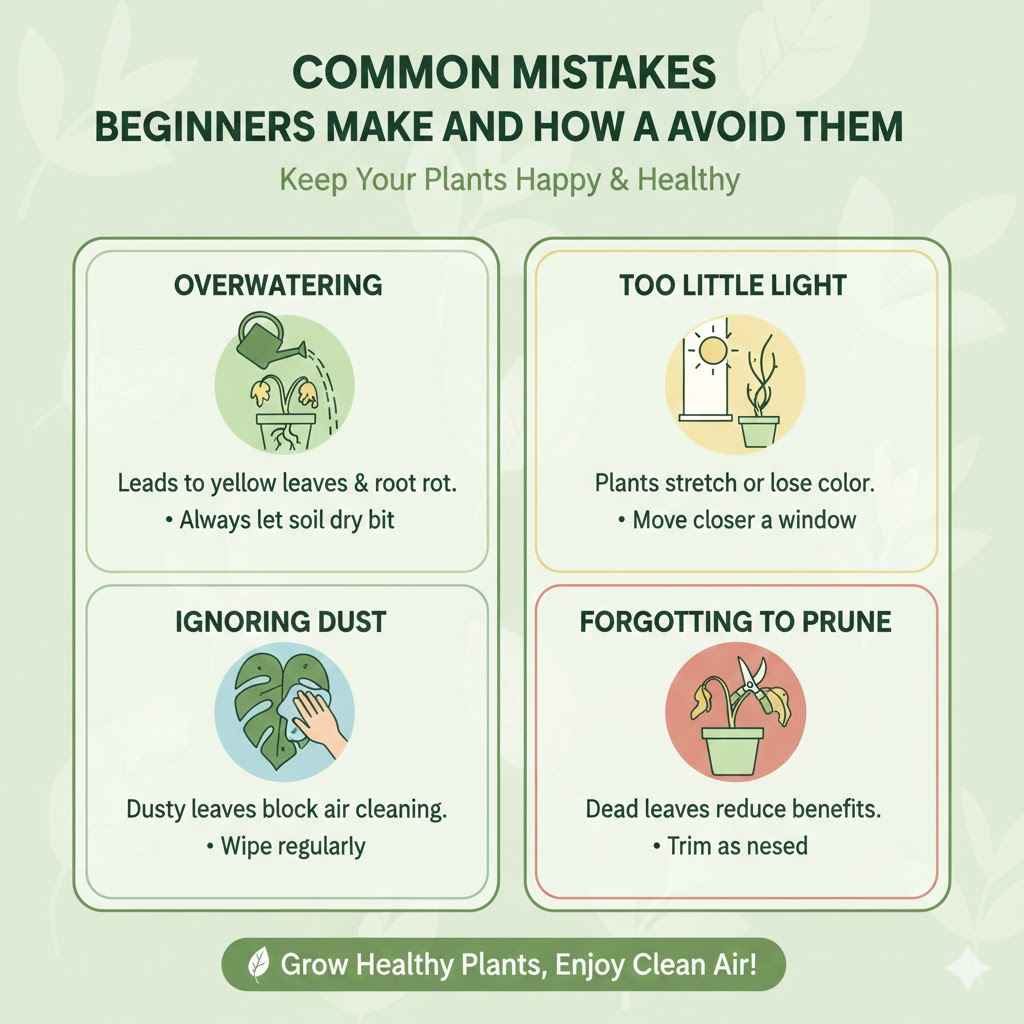
- Overwatering – Leads to yellow leaves and root rot. Always let soil dry a bit.
- Too little light – Plants stretch or lose color. Move closer to a window.
- Ignoring dust – Dusty leaves block air cleaning. Wipe regularly.
- Forgetting to prune – Dead leaves reduce benefits. Trim as needed.
FAQ
Do air-purifying plants really work in real homes?
Yes, they help remove toxins and add oxygen, though effects are modest compared to ventilation. NASA’s study shows promise, and many gardeners notice fresher air.
Which plant is best for low light and beginners?
Snake plant or pothos. They survive neglect, low light, and irregular watering while cleaning air well.
Are these plants safe around pets and kids?
Some like spider plant and bamboo palm are safe. Others like peace lily and pothos can be toxic if chewed. Choose wisely or place out of reach.
How many plants do I need to purify a room?
Start with 1-2 per 100 square feet. More plants mean better results, but combine with open windows.
Can plants remove odors like smoke or cooking smells?
Yes, plants like peace lily and spider plant help reduce odors by filtering chemicals that cause them.
Do I need special soil or fertilizer?
No, standard potting mix works. Use balanced fertilizer sparingly during growing season.
How long until I notice cleaner air?
Many feel benefits in weeks – fresher smell, less dust, better mood. Plants keep improving over time.
Conclusion
Adding air-purifying plants is one of the easiest, most enjoyable ways to improve your indoor space. These green companions not only filter out harmful toxins but also bring life, color, and calm to your home. As a beginner, start small – maybe with a snake plant or pothos on your desk. Watch them grow, care for them gently, and you’ll see how rewarding gardening can be. Your home will feel healthier, and you’ll feel proud of your thriving plants. Breathe easier, enjoy the greenery, and happy planting! If you try these, share your progress – I’d love to hear how your indoor jungle grows.