
The endoplasmic reticulum is found in both plant and animal cells. It’s a crucial organelle for making proteins and fats, and for moving them around inside the cell. This network of membranes plays a key role in the life of all eukaryotic cells.
For a related plant or gardening question, How To Tell The Difference Between Plant And Animal Cells gives readers a focused next step.
For a related plant or gardening question, How Are Vacuoles Different In Plant And Animal Cells? gives readers a focused next step.
For a related plant or gardening question, Which Organelle Belongs in Both Plant and Animal Cells? Answered gives readers a focused next step.
What is the Endoplasmic Reticulum?
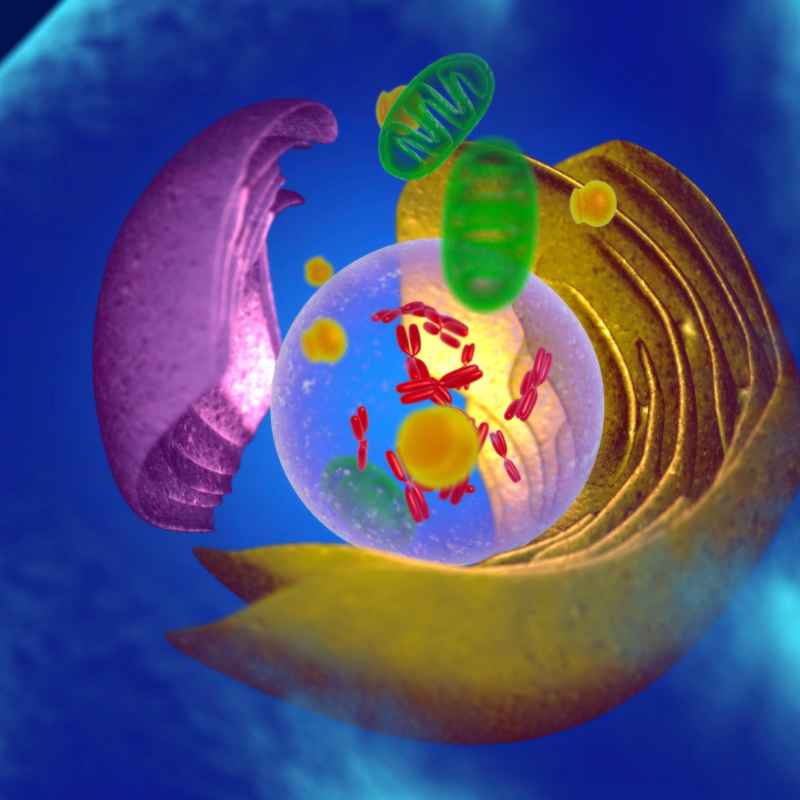
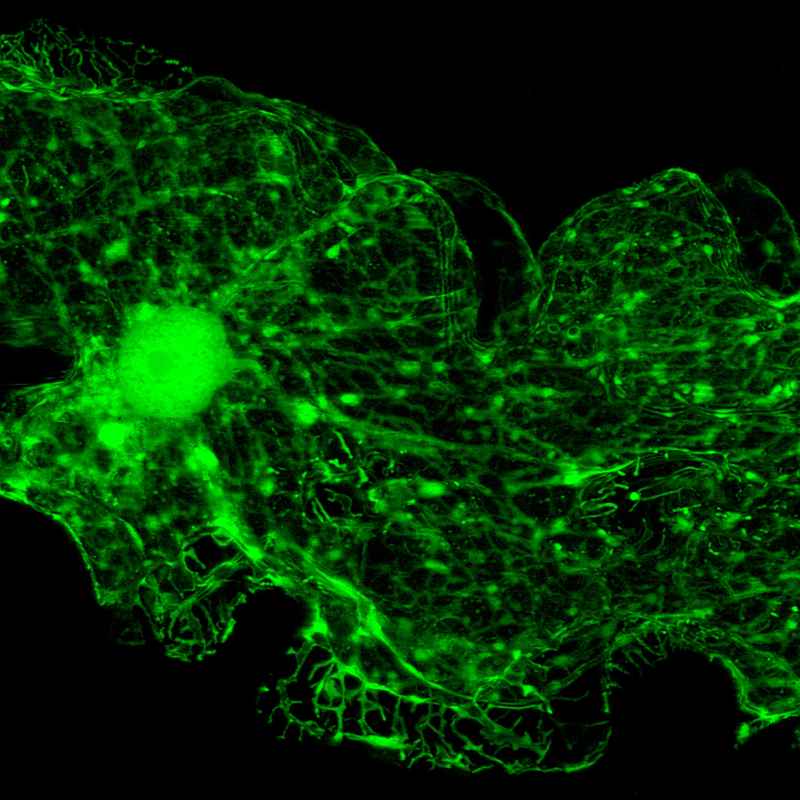
Think of the endoplasmic reticulum, or ER, as a busy factory inside your cells. It’s a network of tiny sacs and tubes. These tubes stretch all through the inside of a cell.
They are made of a thin skin, called a membrane. This membrane is like a wall that keeps things separate. It also helps move stuff around.
The ER is connected to the cell’s outer skin, the nuclear envelope. This envelope surrounds the cell’s control center, the nucleus. The ER has two main parts.
One part is the rough ER. It looks bumpy. This is because it has tiny dots called ribosomes stuck to its surface.
The other part is the smooth ER. It looks smooth. It doesn’t have ribosomes on it.
Ribosomes are like the builders. They make proteins. So, the rough ER is where a lot of protein making happens.
The smooth ER does different jobs. It helps make fats and oils. It also cleans up harmful things in the cell.
It stores calcium, which is important for many cell actions.
Is the ER in Both Plant and Animal Cells?
Yes, absolutely! The endoplasmic reticulum is a fundamental part of most eukaryotic cells. This includes both plant cells and animal cells.
Eukaryotic cells are the complex type of cells that make up plants, animals, fungi, and some tiny organisms. They have a true nucleus and other membrane-bound parts, called organelles.
The basic structure and function of the ER are very similar in both plant and animal cells. It’s a vital organelle for them to live and do their jobs. Whether it’s a cell in your skin or a cell in a leaf, the ER is there, working hard.
It helps keep the cell running smoothly.
The ER is essential for making and processing molecules. It also helps transport these molecules within the cell. This makes it a key player in cell communication and growth.
Without the ER, cells couldn’t perform many of their basic life functions. This holds true for all complex life.
Why is the ER Important?
The ER is super important because it has many jobs. One main job is making proteins. Ribosomes on the rough ER make these proteins.
Some proteins are sent to other parts of the cell. Some are sent outside the cell. The ER helps fold these proteins correctly.
This is key for them to work right.
Another big job is making fats and oils. The smooth ER does this. Fats and oils are needed for cell walls.
They are also used for energy storage. The smooth ER also helps remove toxins. It breaks down harmful chemicals that might get into the cell.
This is like a clean-up crew.
The ER also stores calcium ions. Calcium is like a signal. It tells the cell to do certain things.
For example, it’s needed for muscles to contract. It’s also used in nerve cells to send messages. The ER keeps these calcium levels just right.
This ensures the cell can respond to signals.
A Look Inside the Rough ER
The rough ER looks bumpy because of ribosomes. These ribosomes are tiny machines that build proteins. When a ribosome makes a protein, it can be threaded right into the rough ER.
Inside the ER, the protein starts to fold into its special shape. This folding is very important.
If a protein doesn’t fold right, it won’t work. It might even cause problems. The rough ER has special helpers.
These helpers are called chaperones. They assist the proteins in folding correctly. They also make sure that proteins that are damaged are dealt with.
Once proteins are folded, they are often sent to another part of the cell. This part is called the Golgi apparatus. Think of the Golgi as the cell’s post office.
It packages proteins and sends them where they need to go. This could be to another part of the cell or outside the cell.
Exploring the Smooth ER
The smooth ER has a different set of tasks. It doesn’t have ribosomes, so it doesn’t make proteins. Instead, it focuses on making lipids.
Lipids are a group of molecules that include fats, oils, and steroids. These are essential for building cell membranes. They also act as hormones and store energy.
The smooth ER is also a detox center. It has special enzymes. These enzymes can break down harmful substances.
This is especially important in cells that are exposed to toxins. For example, liver cells have a lot of smooth ER. This helps them clean poisons from the blood.
As mentioned, the smooth ER also handles calcium storage. In muscle cells, the smooth ER is called the sarcoplasmic reticulum. It releases calcium when a muscle needs to contract.
It takes calcium back up when the muscle relaxes. This constant back-and-forth is how muscles move.
ER: A Quick Scan Table
| Feature | Rough ER | Smooth ER |
|---|---|---|
| Appearance | Bumpy (due to ribosomes) | Smooth |
| Main Job | Protein synthesis and folding | Lipid synthesis, detoxification, calcium storage |
| Key Component | Ribosomes | Enzymes |
What Makes Plant Cells Different?
Plant cells have some things animal cells don’t. They have a cell wall outside their membrane. They also have chloroplasts for making food.
But when it comes to the ER, it’s quite similar. Both plant and animal cells rely on the ER for protein and lipid work.
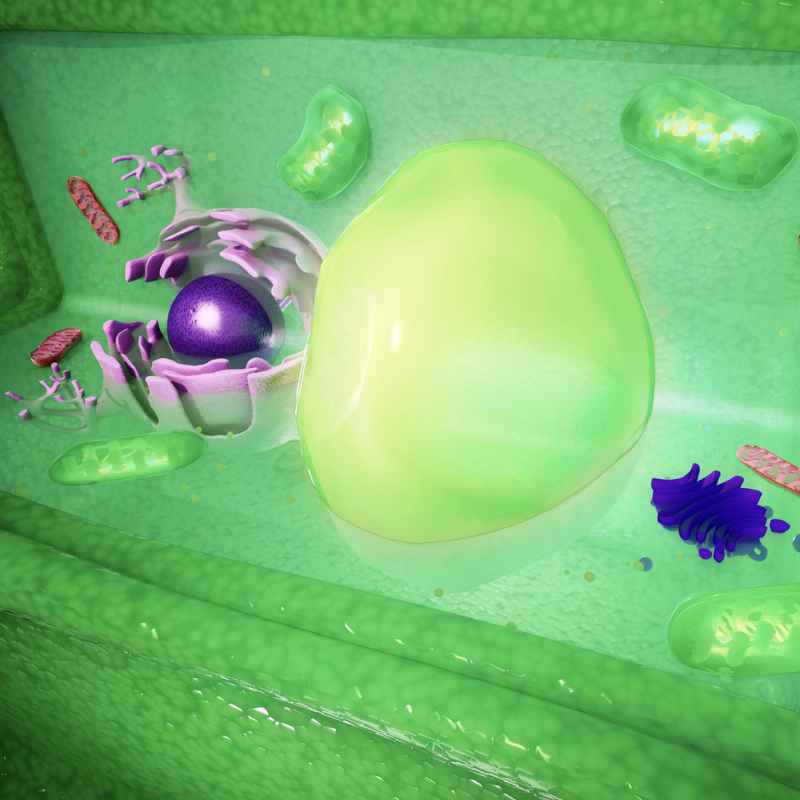
Plant cells also use the ER to move materials around. They have a large central vacuole. This is a big sac that stores water and other things.
The ER works with the vacuole. It helps in transporting molecules to and from it. This is important for plant cells to keep their shape and grow.
In plant cells, the ER can even connect from one cell to another. This happens through tiny holes in the cell walls. These connections are called plasmodesmata.
They allow molecules to pass directly between adjacent cells. This helps plants coordinate their growth and respond to their environment.
Animal Cells and Their ER
Animal cells use the ER in very much the same way. Think about your muscles. As we said, the smooth ER is key for muscle contraction.
It stores and releases calcium. This lets your muscles move smoothly. Without this, you wouldn’t be able to walk or even blink.
Nerve cells also need the ER. They send electrical signals. These signals involve chemicals moving across gaps.
The ER helps make and process some of these chemicals. It also plays a role in keeping nerve cells healthy. This allows them to function properly for years.
Cells that make a lot of proteins that will be secreted from the body have a very large rough ER. For example, cells in your pancreas make insulin. This is a protein hormone.
These cells have a huge amount of rough ER to make enough insulin for your body.
My ER Experience: A Story
I remember being in college, studying biology. We had this lab where we had to look at cells under a microscope. I was so excited to see all the different parts.
We were looking at cheek cells, which are animal cells. I was trying to find the nucleus, which is usually pretty easy to spot.
Then, our professor pointed out this network of lines and sacs all over the cell. “That,” she said, “is the endoplasmic reticulum.” It wasn’t as obvious as the nucleus, but seeing it there, this complex system within a single cell, was amazing. It felt like looking at a tiny city.
I started to grasp how much work goes on inside us all the time.
Cellular Communication and the ER
The ER plays a role in how cells talk to each other. It’s part of a system that sends messages. Proteins made in the ER are often sent to the Golgi.
Then, they might be packaged into little bubbles called vesicles. These vesicles can move to the cell’s edge. They can then release their contents outside the cell.
This process is called secretion. It’s how cells release hormones, enzymes, and other important signals. These signals can travel to other cells.
They can tell those cells what to do. So, the ER is indirectly involved in cell-to-cell communication. It helps create the messengers.
The ER also interacts with other organelles. It works closely with the nucleus. It gets instructions from DNA there.
It also works with mitochondria. Mitochondria make energy. The ER needs energy to do its jobs.
It also helps manage calcium, which is needed for energy use.
When ER Function Goes Wrong
Sometimes, the ER doesn’t work right. This can happen if a protein doesn’t fold properly. The ER tries to fix it.
But if it can’t, the cell has ways to get rid of the bad protein. If too many bad proteins build up, the cell can get stressed.
This stress can lead to cell damage or death. It can also cause diseases. Some diseases are linked to problems with protein folding in the ER.
These are called protein-folding diseases. Alzheimer’s and Parkinson’s are examples, though they are complex and involve more than just ER issues.
In plants, ER problems can affect growth and how they respond to stress, like drought or disease.
ER Structure: A Closer Look
The ER is made of a network of sacs called cisternae. These are flattened, membrane-bound sacs. The sacs are connected.
They form a continuous space inside the ER. This space is called the lumen. The lumen is where proteins are folded and processed.
The membrane of the ER is similar to the cell membrane. It’s a lipid bilayer. It has proteins embedded in it.
These proteins are involved in transporting molecules and carrying out the ER’s functions. The rough ER has ribosomes attached to its outer surface. These ribosomes are not part of the ER membrane itself.
They are either free in the cytoplasm or attached to the ER. Proteins destined for secretion or insertion into membranes are made by ribosomes attached to the rough ER. Proteins meant to stay in the cytoplasm are made by free ribosomes.
Myth vs. Reality: ER Edition
| Myth | Reality |
|---|---|
| The ER is only in animal cells. | The ER is in both plant and animal cells. It’s essential for all eukaryotic cells. |
| Rough ER makes all proteins. | Rough ER makes proteins for export or for other organelles. Free ribosomes make proteins for use within the cytoplasm. |
| Smooth ER is just for fat. | Smooth ER makes lipids, detoxifies, and stores calcium. It has multiple vital roles. |
Plant Cell ER vs. Animal Cell ER: Subtle Differences
While the core functions are the same, there can be subtle differences in how the ER is organized or emphasized in plant versus animal cells. For instance, plant cells often have a more extensive smooth ER network. This helps them deal with various environmental stresses and produce different types of lipids.
The connection between the ER and other organelles can also vary. In plant cells, the ER is closely linked to the tonoplast, the membrane of the large central vacuole. This connection is crucial for maintaining turgor pressure, which keeps plants firm.
In animal cells, the ER’s relationship with other organelles like lysosomes (which break down waste) and peroxisomes (which break down fats and detoxify) is highly developed. The specific balance between rough and smooth ER can also differ depending on the cell type and its main function.
What This Means for You
Understanding that the endoplasmic reticulum is in both plant and animal cells helps us see how fundamental it is to life. It’s not just a random cell part. It’s a core machine.
Its functions are vital for everything from growing a plant to your own body working.
When you eat fruits or vegetables, you’re benefiting from plant cells that have a healthy ER. Their ER helped them grow strong and produce those nutrients. When you feel your muscles move or your brain think, that’s your animal cells’ ER working hard.
It helps make the signals and structures needed for you to function.
It also shows us why cell health is so important. When the ER is stressed or damaged, it can lead to health problems. This is true for plants too.
A stressed plant might not grow well. It might not produce as much food. Keeping our cells healthy, and by extension our environment healthy, means supporting these tiny internal factories.
Checking Your Understanding: Quick Tips
Think about what you’ve learned. The ER is a network. It has two parts: rough and smooth.
Both are in plant and animal cells. The rough ER makes proteins. The smooth ER makes fats and detoxifies.
If you see a cell diagram, try to spot the ER. Look for that network of tubes and sacs. Try to remember what each part does.
This helps solidify the knowledge. It’s like learning the layout of a factory. You know where the main machines are and what they produce.
Remembering this basic fact—that the ER is universal in these cell types—is a great start. It’s a cornerstone of cell biology. It helps explain so much about how living things work.
Frequently Asked Questions
Is the ER the same in all living things?
No. The endoplasmic reticulum is found in eukaryotic cells (plants, animals, fungi, protists). Prokaryotic cells, like bacteria, are simpler.
They do not have a nucleus or other membrane-bound organelles like the ER.
Can a cell have only rough ER or only smooth ER?
Most eukaryotic cells have both rough and smooth ER. However, the balance between them can vary greatly. Some cells, like those making lots of steroid hormones, might have much more smooth ER.
Cells producing many proteins for export will have a very prominent rough ER.
How does the ER get its materials?
The ER membrane itself is made by enzymes. These enzymes are often located in the smooth ER. The building blocks for proteins, like amino acids, are brought into the cell from outside or made within the cell.
Ribosomes then use these to build proteins on the rough ER.
What happens if the ER is damaged?
If the ER is damaged, protein folding and lipid synthesis can be affected. This can lead to a buildup of misfolded proteins. This condition is called ER stress.
If the stress is too great, the cell may die. This can contribute to various diseases.
Are there ER differences between human cells and other animal cells?
The basic structure and function of the ER are very similar across different animal species. The proportions and specific roles might be fine-tuned based on the animal’s needs. For example, cells with specialized functions will have ER adapted to those tasks.
How does ER relate to the cell membrane?
The ER membrane is physically continuous with the outer membrane of the nuclear envelope. It is also the site where many membrane proteins and lipids are synthesized. These can then be transported to other parts of the cell, including the cell membrane itself.
Conclusion
So, to wrap it up: yes, the endoplasmic reticulum is a vital component in both plant and animal cells. It’s a complex system that handles crucial jobs like making proteins and fats. Understanding its presence in both types of cells highlights its universal importance for complex life.
It’s a true marvel of cellular design.