
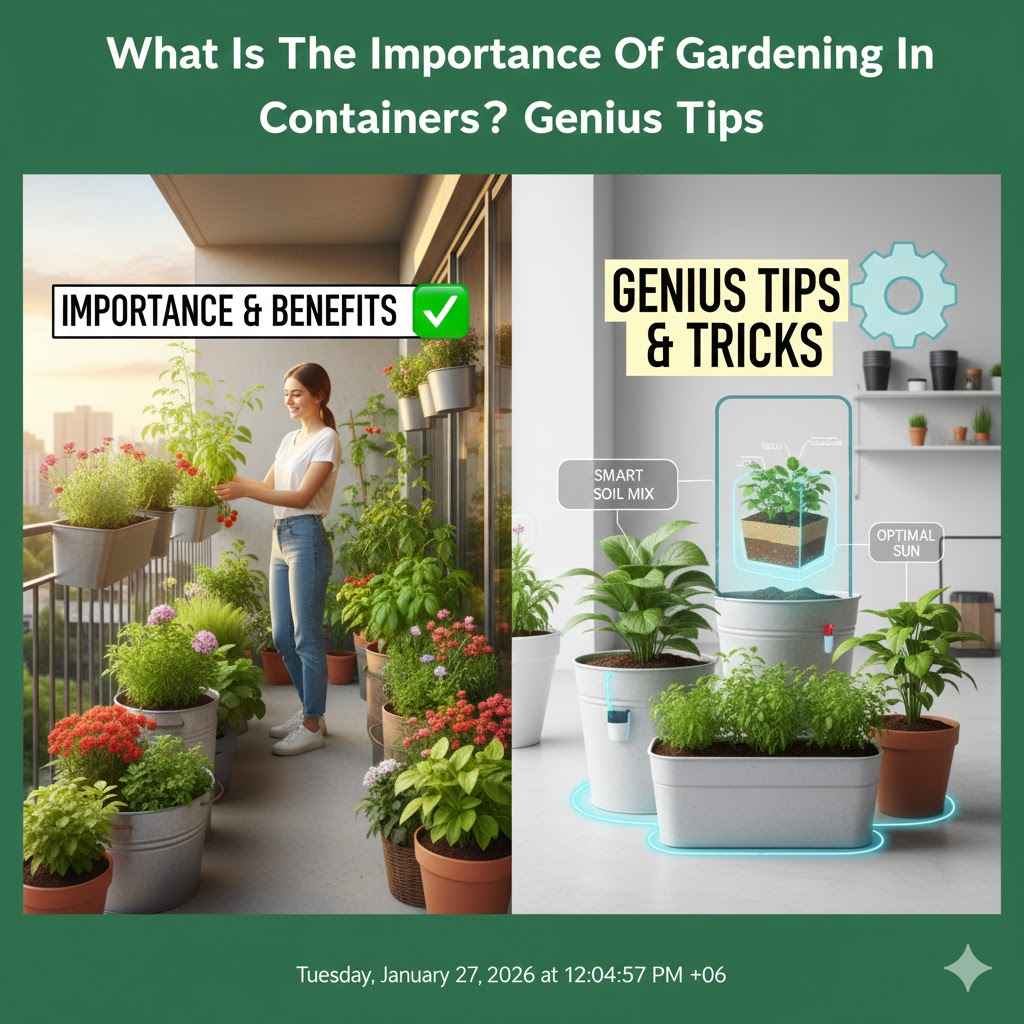
Gardening in containers is important because it makes growing plants accessible to everyone, regardless of space. It allows you to control the soil, light, and water perfectly, leading to healthier plants. This method reduces pest and disease problems and offers the flexibility to garden on balconies, patios, or even indoors.
Hello, fellow plant lovers! It’s your friend, Md Saiful Islam, here to share a gardening secret that will change the way you see your space. Do you dream of a lush garden but only have a small balcony? Maybe your backyard soil is rocky and difficult to work with. These challenges can feel frustrating, making you think a beautiful garden is out of reach.
But I have wonderful news for you! There is a simple, powerful solution that lets you grow almost anything, anywhere. It’s called container gardening. In this guide, we will explore why growing in pots is so amazing. We will walk through everything you need to know, step by step. Get ready to unlock your green thumb!
Why Container Gardening Is a Game-Changer for Everyone
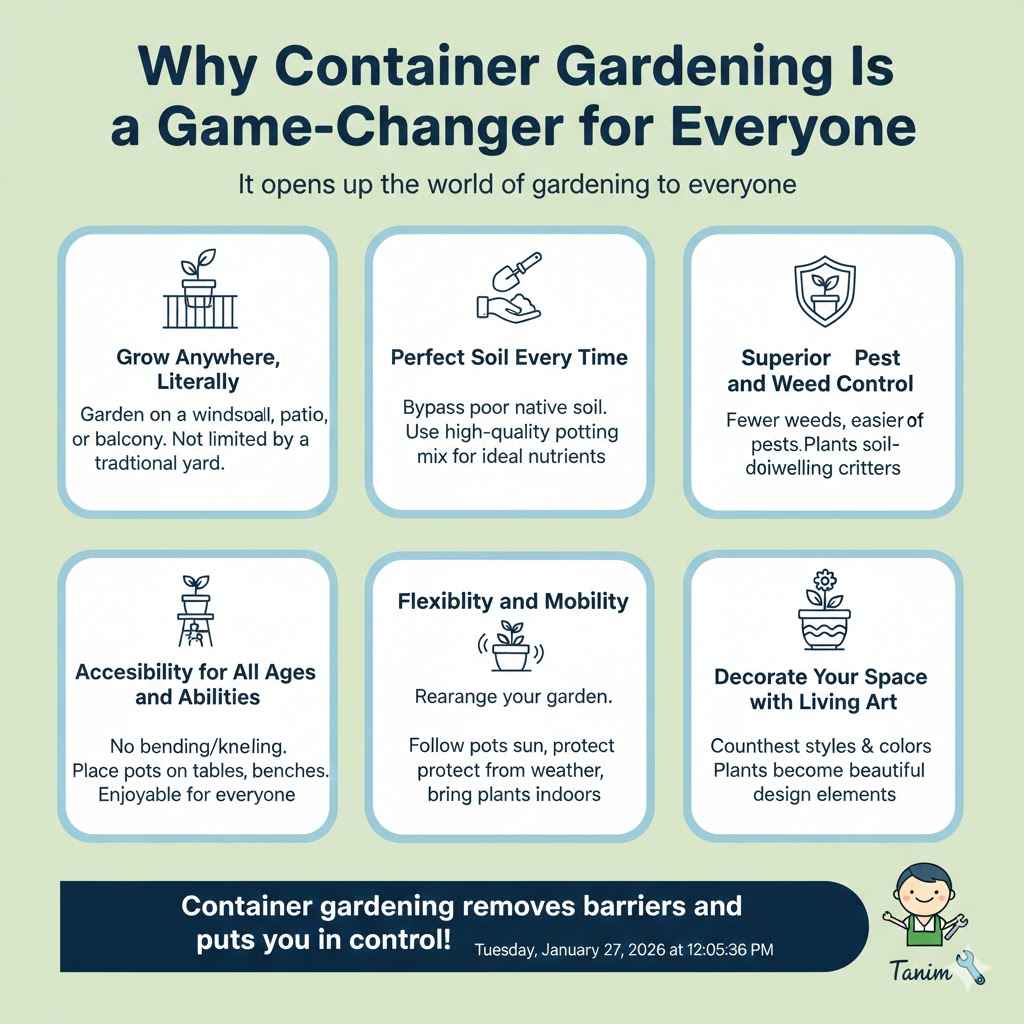
So, what is the importance of gardening in containers? The answer is simple: it opens up the world of gardening to everyone. It doesn’t matter if you live in a high-rise apartment or a house with a tiny yard. Container gardening removes the barriers and puts you in control. Let’s look at the amazing benefits.
- Grow Anywhere, Literally: The most incredible benefit is the ability to garden anywhere you have a bit of light. A sunny windowsill, a small patio, a balcony, or a front step can become a mini-garden. You are no longer limited by not having a traditional yard.
- Perfect Soil Every Time: Many gardeners struggle with poor native soil—it might be too sandy, full of clay, or lacking nutrients. With containers, you bypass this problem entirely. You create the perfect home for your plants by using high-quality potting mix, giving them the exact nutrients they need to thrive.
- Superior Pest and Weed Control: Weeds have a much harder time finding their way into a pot. It’s also easier to spot and manage pests on a container plant before they become a big issue. The raised nature of pots keeps your plants away from many soil-dwelling critters and diseases.
- Accessibility for All Ages and Abilities: Bending and kneeling in a traditional garden can be tough on the body. Containers can be placed on tables, benches, or railings, making them accessible to people with mobility challenges, seniors, and even kids. It makes gardening a comfortable and enjoyable activity for everyone.
- Flexibility and Mobility: Do you want to redecorate your outdoor space? Just move your pots! You can rearrange your garden whenever you like. This mobility is also practical. You can move plants to follow the sun, protect them from harsh weather, or bring tender plants indoors for the winter.
- Decorate Your Space with Living Art: Containers come in countless styles, colors, and materials. You can choose pots that match your home’s decor, turning your plants into beautiful design elements. A vibrant container garden can instantly brighten up a dull corner or create a welcoming entryway.
Getting Started: Your First Container Garden
Feeling inspired? I knew you would be! Starting your own container garden is fun and incredibly rewarding. Let’s break down the three key things you need to get right: the container, the soil, and the plants.
1. Choosing the Perfect Container
The pot you choose is your plant’s home, so it’s an important decision. It’s not just about looks; the material and size matter a lot for your plant’s health.
First and foremost, your container MUST have drainage holes. If water can’t escape, the soil will become waterlogged, and the plant’s roots will rot. If you fall in love with a pot that has no holes, you can often drill them yourself or use it as a decorative outer pot (a cachepot) with a smaller, functional pot inside.
Size is also critical. A pot that is too small will restrict root growth and dry out very quickly. A pot that is too large can hold too much moisture, which can also lead to root rot. A good rule of thumb is to choose a pot that is 1-2 inches larger in diameter than the plant’s current container.
Here’s a breakdown of common container materials:
| Material | Pros | Cons |
|---|---|---|
| Terracotta (Clay) | Porous, allows air and water to move through the sides, helps prevent overwatering. Classic, natural look. | Dries out quickly, especially in sun and wind. Can crack in freezing weather. Can be heavy. |
| Plastic or Resin | Lightweight, inexpensive, and comes in many colors and styles. Retains moisture well. | Can become brittle and fade in the sun over time. Less breathable than terracotta. |
| Glazed Ceramic | Beautiful designs and colors. Retains moisture well. More durable than terracotta in the cold. | Can be very heavy and expensive. Drainage holes are a must. |
| Fabric Grow Bags | Excellent drainage and aeration. Prevents roots from circling (air pruning). Lightweight and easy to store. | Dries out very quickly, requiring more frequent watering. May not be as decorative. |
2. The Right Soil Mix (This is Important!)
Please do not use soil from your garden in your pots! I see this mistake so often, and it leads to sad, struggling plants. Garden soil is heavy, compacts easily in a container, and doesn’t allow for good drainage or airflow. It can also contain weed seeds and pests.
You need to use a product specifically labeled “potting mix” or “container soil.” This is not actually soil; it’s a specially formulated soilless mix. It’s light, fluffy, and designed to hold the right balance of moisture and air for healthy roots.
A good potting mix usually contains ingredients like:
- Peat moss or coco coir: Helps retain moisture.
- Perlite or vermiculite: Small white or gold specks that create air pockets for drainage and aeration.
- Compost or aged bark fines: Provides slow-release nutrients.
Some mixes also include a slow-release fertilizer, which is a great bonus for getting your plants started on the right foot.
3. Selecting Your Plants
This is the most exciting part! You can grow almost anything in a container: flowers, herbs, vegetables, and even small trees or shrubs. The key is to match the plant to the size of the container and the amount of sunlight your space receives.
Check the plant tag for information on its light needs (“full sun,” “part shade,” etc.) and its mature size. For beginners, I recommend starting with plants that are known to be forgiving and do well in pots. Here are some fantastic options to get you started:
| Plant Type | Easy Beginner Examples | Sunlight Needs |
|---|---|---|
| Herbs | Mint, Basil, Parsley, Chives, Rosemary | Most prefer full sun (6+ hours) |
| Vegetables | Lettuce, Spinach, Radishes, Bush Beans, Cherry Tomatoes, Peppers | Most need full sun (6-8 hours) |
| Flowers (Annuals) | Petunias, Marigolds, Geraniums, Impatiens, Begonias | Varies (check the plant tag) |
| Flowers (Perennials) | Hostas, Heuchera (Coral Bells), Coneflowers, Lavender | Varies (check the plant tag) |
A fun design concept for mixed flower containers is the “Thriller, Filler, Spiller” method. You choose one tall, dramatic plant (the thriller), several mounding plants to fill the middle (the filler), and a few trailing plants to spill over the edge (the spiller). This creates a full, professional-looking arrangement.
Step-by-Step Guide to Planting Your Container
You have your pot, your soil, and your plant. Now it’s time for the magic! Follow these simple steps, and you’ll have a beautifully potted plant in no time.
- Prepare Your Container: If you are reusing an old pot, scrub it clean with soap and water to remove any old soil or potential diseases. Make sure the drainage holes are clear. You can place a piece of a broken pot or a coffee filter over the hole to prevent soil from washing out, but this is optional.
- Add Potting Mix: Fill your container with potting mix until it’s about two-thirds full. Moisten the mix slightly with water. This helps it settle and makes it easier for the plant’s roots to adjust.
- Position Your Plant: Gently remove your plant from its nursery pot. If it’s stuck, squeeze the sides of the pot or tap the bottom. Try not to pull it by the stem. Loosen the root ball gently with your fingers, especially if the roots are tightly wound in a circle.
- Set the Plant Depth: Place the plant in the center of the container. The top of its root ball should sit about an inch below the rim of the pot. This space at the top is important; it creates a reservoir for water so it doesn’t just run off the surface.
- Fill in with Soil: Add more potting mix around the plant, pressing it down gently to remove any large air pockets. Don’t pack it down too tightly! You want the soil to remain light and airy.
- Water Thoroughly: Give your newly potted plant a good, deep drink of water. Water until you see it running out of the drainage holes at the bottom. This helps settle the soil around the roots and eliminates air pockets.
And that’s it! You’ve successfully planted your first container. Place it in a location that gets the right amount of sunlight for your chosen plant and enjoy watching it grow.
Genius Tips for a Thriving Container Garden
Planting is just the beginning. The ongoing care you provide is what will make your container garden flourish. Here are my top tips for keeping your potted plants happy and healthy.
Watering Wisely
The most common challenge in container gardening is watering. Because they have a limited amount of soil, containers can dry out much faster than a garden bed, especially on hot, windy days. However, overwatering is just as dangerous as underwatering.
So, how do you know when to water? Don’t rely on a schedule. Instead, check the soil. Stick your finger about an inch or two deep into the potting mix. If it feels dry, it’s time to water. If it feels moist, wait another day and check again. As you get to know your plants, you can also judge by the weight of the pot—a well-watered pot is much heavier than a dry one. When you do water, water deeply until it flows from the drainage holes.
Feeding Your Plants
Think of fertilizer as food for your plants. The nutrients in potting mix get used up by the plant or washed out with watering over time. To keep your plants growing strong and producing flowers or fruit, you’ll need to feed them. The University of Maryland Extension provides great guidance on this. A general-purpose, water-soluble fertilizer applied every 2-4 weeks during the growing season is a great option. Always follow the directions on the product label to avoid burning your plants.
Sunlight Savvy
Sunlight is a plant’s energy source. Pay close attention to how the sun moves across your space throughout the day before you place your pots.
- Full Sun: 6 or more hours of direct, unfiltered sunlight per day. Perfect for most vegetables, herbs, and flowers like petunias and marigolds.
- Part Sun/Part Shade: 4 to 6 hours of direct sun. Many perennials and some annuals, like impatiens and begonias, prefer this.
- Shade: Less than 4 hours of direct sun. Ideal for plants like hostas, ferns, and coral bells.
Don’t be afraid to move your pots around to find the “sweet spot” where your plants seem happiest.
Grooming and Maintenance
A little regular cleanup goes a long way. Pinch off any yellowing or dead leaves to keep the plant looking tidy and prevent disease. For flowering plants, a practice called “deadheading”—removing spent blooms—will encourage the plant to produce more flowers instead of putting energy into making seeds.
Common Container Gardening Mistakes to Avoid
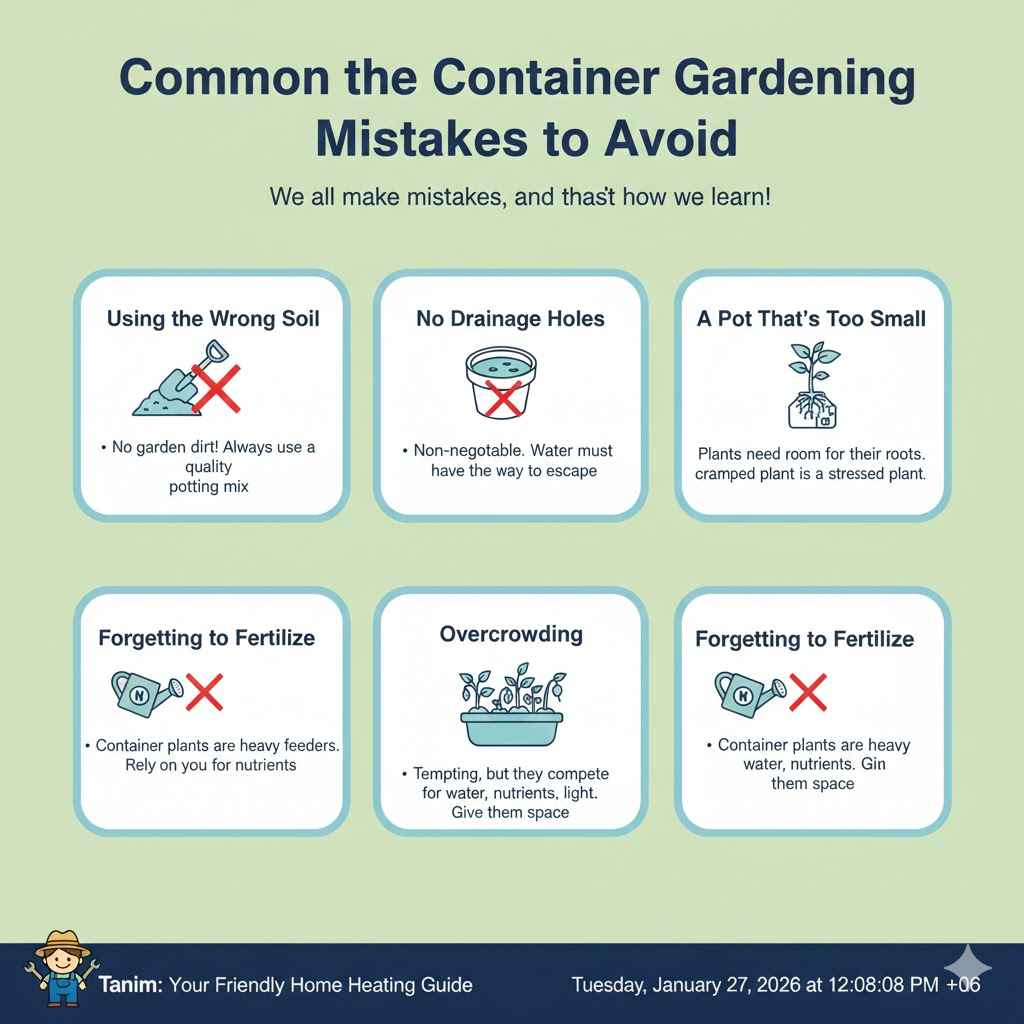
We all make mistakes, and that’s how we learn! But if I can help you avoid a few common pitfalls, your journey will be much smoother.
- Using the Wrong Soil: Remember, no garden dirt! Always use a quality potting mix.
- No Drainage Holes: This is a non-negotiable. Water must have a way to escape.
- A Pot That’s Too Small: Plants need room for their roots to grow. A cramped plant is a stressed plant.
- Forgetting to Fertilize: Container plants are heavy feeders and rely on you to provide their nutrients.
- Overcrowding: It’s tempting to put lots of plants in one pot, but they will compete for water, nutrients, and light. Give them space to grow to their mature size.
Frequently Asked Questions (FAQ)
1. What are the best vegetables to grow in containers for a beginner?
For beginners, I highly recommend starting with leafy greens like lettuce and spinach, radishes, bush beans, and herbs. Cherry tomatoes and peppers are also fantastic choices, but they will require a larger pot (at least 5 gallons) and consistent watering.
2. How often should I water my container plants?
There is no fixed schedule. It depends on the plant, pot size, weather, and time of year. The best way is to check the soil daily by sticking your finger in. If the top 1-2 inches are dry, it’s time to water. On very hot days, you may need to water daily or even twice a day.
3. Can I leave my container plants outside during the winter?
It depends on the plant and your climate. Annual plants (like marigolds or petunias) will die after the first frost. Perennial plants that are hardy in your climate zone can often survive the winter in their pots, especially if the pot is large. However, pots offer less insulation than the ground, so some plants may need protection or to be brought into a garage or shed.
4. Do I need to put rocks at the bottom of my pot for drainage?
This is a common myth, but it’s actually not recommended. According to research from institutions like the University of Illinois Extension, adding a layer of gravel or rocks at the bottom can create a waterlogged layer just above it, which can harm roots. A pot with good drainage holes and proper potting mix is all you need.
5. Why are the leaves on my plant turning yellow?
Yellow leaves can be a sign of several different things. The most common cause is overwatering or underwatering. It can also indicate a nutrient deficiency (time to fertilize!) or a lack of sunlight. Check your watering routine first, and then consider the other factors.
6. What is the difference between potting mix and potting soil?
The terms are often used interchangeably, but “potting mix” is more accurate. It’s a soilless blend of organic materials designed for containers. “Potting soil” might sometimes contain actual soil (sand, silt, clay), which can be too heavy for pots. Always look for a lightweight “mix” for best results.
Your Gardening Adventure Awaits
The importance of gardening in containers truly lies in its power to connect us with nature, no matter where we live. It’s a flexible, manageable, and deeply satisfying way to grow your own food, create a beautiful living space, and enjoy the simple therapy of caring for a plant.
You don’t need a huge yard or years of experience. All you need is a pot, some good soil, a sunny spot, and a little bit of curiosity. You have all the knowledge you need to start today. So go ahead, pick out a pot, choose a plant that makes you smile, and get your hands a little dirty. I promise you, the joy of watching something you planted grow and thrive is one of life’s greatest rewards. Happy gardening!