

The benefits of a bonsai tree extend far beyond simple decoration. They are proven to reduce stress, improve air quality, and teach patience. This living art form enhances focus, boosts creativity, and provides a deep sense of accomplishment, connecting you with nature and promoting overall well-being in your home.
Hello, fellow plant lovers! It’s Md Saiful Islam, your friendly gardening guide. Have you ever admired a tiny, perfectly formed bonsai tree and wondered what it would be like to have one? Many people think they are just beautiful decorations. But these miniature trees offer so much more.
Caring for a bonsai can seem intimidating at first. You might worry it’s too complicated or that you don’t have a green thumb. I’m here to tell you that anyone can enjoy the amazing world of bonsai. The rewards are truly incredible, touching everything from your mental peace to the air you breathe.
In this guide, I’ll walk you through all the proven benefits of welcoming a bonsai tree into your life. We will explore how this ancient art can bring calm, health, and beauty to your world. Let’s get started!
Bonsai is more than a hobby; it’s a journey. The simple act of caring for a miniature tree connects us to nature in a profound way. Let’s dive into the specific benefits you can expect when you start your own bonsai journey.
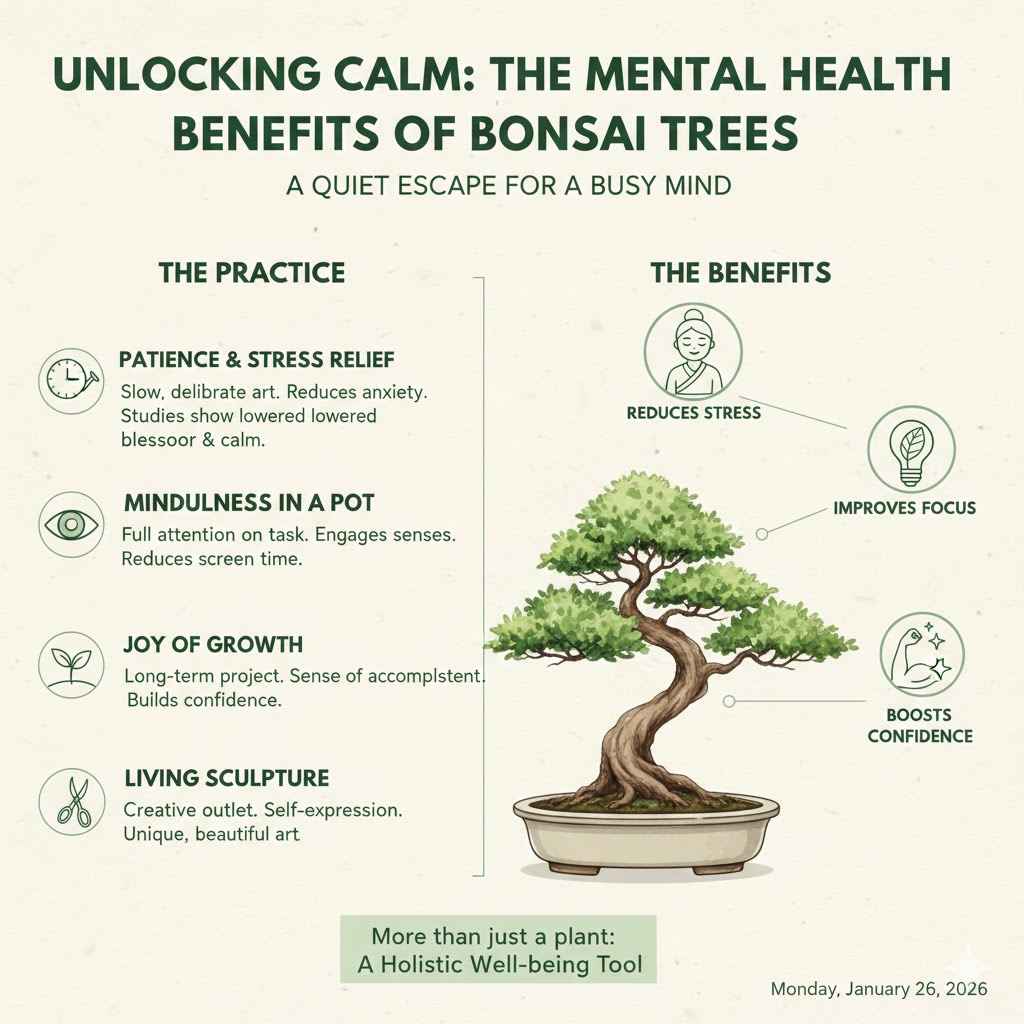
Unlocking Calm: The Mental Health Benefits of Bonsai Trees
In our busy, fast-paced world, finding moments of peace is essential. A bonsai tree can be a powerful partner in this quest, offering a quiet escape and a way to center your mind.
A Lesson in Patience and Stress Relief
One of the most significant benefits of bonsai is its ability to teach patience and reduce stress. Unlike a fast-growing houseplant, a bonsai tree changes very slowly. The process of pruning, wiring, and shaping your tree is a deliberate, gentle art.
This slow pace forces you to slow down, too. You can’t rush a bonsai. This focused, repetitive care can be incredibly meditative. Studies have shown that interacting with indoor plants can reduce psychological and physiological stress. As noted by a study published in the Journal of Physiological Anthropology, tending to plants can lower blood pressure and promote feelings of calm and comfort.
The daily ritual of checking the soil, watering, and observing your tree provides a stable, grounding routine that helps melt away the day’s anxieties.
Finding Your Focus: Mindfulness in a Pot
Caring for a bonsai tree requires your full attention. When you are trimming a tiny branch or carefully watering the soil, you are completely in the moment. Your mind isn’t wandering to work emails or your to-do list. This is the essence of mindfulness.
- Observing Details: You learn to notice small changes, like a new bud forming or the subtle shift in leaf color.
- Engaging the Senses: You feel the texture of the bark, smell the damp earth, and see the intricate structure of the branches.
- Purposeful Action: Every cut and every drop of water has a purpose, making the activity feel meaningful and focused.
This practice pulls you away from digital screens and constant notifications, giving your mind a much-needed break. It’s a wonderful way to practice mindfulness without having to sit cross-legged on a cushion.
The Joy of Growth: A Sense of Accomplishment
Keeping a delicate, living thing alive and helping it thrive is deeply rewarding. A bonsai tree is a long-term project. Seeing it flourish over months and years under your care provides a profound sense of accomplishment and pride.
This isn’t about instant gratification. It’s about dedication and nurturing. Celebrating small victories, like a successful repotting or a healthy flush of new growth, builds confidence and self-esteem. Your bonsai becomes a living testament to your care and effort.
Your Living Sculpture: A Canvas for Creativity
Bonsai is often called “living art,” and for good reason. Shaping a bonsai tree is a highly creative process. You decide how the tree will grow, which branches to keep, and the overall style you want to achieve.
You are not just a gardener; you are a sculptor. This creative outlet allows for deep self-expression. There are traditional styles to follow, but there is also plenty of room for your personal touch. This artistic process can be incredibly fulfilling, allowing you to create something truly unique and beautiful.
More Than Just a Pretty Plant: Physical Health Benefits
Beyond the mental boosts, having a bonsai tree can also contribute positively to your physical environment and health in surprising ways.
A Breath of Fresh Air: Purifying Your Home
Like all houseplants, bonsai trees contribute to better indoor air quality. Through photosynthesis, they absorb carbon dioxide and release fresh oxygen. More importantly, they can help filter common indoor air pollutants.
Research, including the famous NASA Clean Air Study, has shown that plants can remove volatile organic compounds (VOCs) like formaldehyde and benzene from the air. While a single tiny tree won’t purify your entire house, it certainly contributes to a healthier, cleaner breathing space in its immediate vicinity, like your desk or nightstand.
Connecting with Nature’s Helpers
Getting your hands dirty can actually be good for you! The soil your bonsai lives in is a rich ecosystem of microorganisms. Interacting with this soil can expose you to beneficial bacteria, which may help strengthen your immune system and improve your mood. This connection to the earth, even on a small scale, reminds us of our link to the natural world.
Gentle Movement for a Healthy Body
While it’s not a cardio workout, caring for a bonsai encourages gentle, consistent physical activity. The acts of carrying your tree to a sink for watering, carefully pruning branches, or repotting require fine motor skills and light movement. For those who are older or have limited mobility, this can be a wonderful way to stay active and engaged.
Enhancing Your Living Space: The Aesthetic Benefits
Of course, one of the most immediate benefits of a bonsai tree is its stunning beauty. It’s a sophisticated and elegant addition to any home or office.
Living Art That Tells a Story
A bonsai is not a static object. It is a living, breathing piece of art that changes with the seasons. Each tree has its own character and story, shaped by time and your careful hands. An old, gnarled Juniper can evoke the image of a windswept cliff, while a flowering Azalea brings a burst of color and life indoors. A bonsai tree is a captivating focal point that sparks conversation and inspires wonder.
Bringing the Outdoors In
In our modern lives, many of us spend most of our time indoors. Bonsai trees help bridge that gap. They are a tangible piece of nature that you can interact with every day. This connection is especially valuable for those living in apartments or urban areas with limited access to green space. Having a miniature tree in your home can reduce feelings of being cooped up and satisfy our innate human need to connect with nature.
A Symbol of Harmony and Balance
In Eastern culture, bonsai are deeply symbolic. They represent the harmony between nature, man, and the soul. They are seen as symbols of balance, simplicity, patience, and strength. Having a bonsai in your home can serve as a daily reminder of these virtues, encouraging a more balanced and thoughtful approach to life.
Choosing Your First Bonsai Tree
Ready to start? Some trees are much friendlier for beginners than others. Here is a simple table to help you choose a good starter bonsai.
| Tree Species | Light Needs | Watering Frequency | Beginner-Friendliness |
|---|---|---|---|
| Ficus (Ficus retusa) | Bright, indirect light | Moderate (when topsoil is dry) | Excellent – Very forgiving |
| Jade Plant (Crassula ovata) | Full sun to bright, indirect light | Low (allow soil to dry out) | Excellent – Very tough |
| Chinese Elm (Ulmus parvifolia) | Full sun to partial shade | Moderate to high | Good – Resilient and fast-growing |
| Dwarf Juniper (Juniperus procumbens) | Full sun (outdoors) | Moderate (do not let it dry out completely) | Good – Classic look, needs outdoor life |
Growing More Than a Tree: Personal Development Benefits
The lessons learned from caring for a bonsai tree often extend into other areas of your life. It’s a hobby that promotes personal growth and teaches valuable life skills.
Becoming a Plant Expert: Learning About Horticulture
You don’t need to be a botanist to start, but you will certainly learn a lot along the way! Caring for a bonsai is a hands-on education in horticulture. You will learn about:
- The importance of proper soil composition.
- How different light levels affect plant growth.
- The right way to water to encourage healthy roots.
- Pruning techniques to promote growth and shape.
- The signs of pests and diseases and how to treat them.
This knowledge can be applied to all your other houseplants, making you a more confident and successful gardener overall. For great foundational knowledge, check out resources from your local university extension, like this guide on caring for indoor bonsai from Penn State Extension.
A Lesson in Responsibility and Dedication
A bonsai tree is a living being that depends on you for its survival. It requires consistent, dedicated care. You can’t just water it once a month and hope for the best. This daily or weekly commitment teaches a powerful lesson in responsibility.
This dedication fosters a sense of purpose. Knowing that this beautiful little tree relies on you can be a strong motivator. It teaches you to be observant, proactive, and committed—qualities that are valuable in all aspects of life.
A Legacy That Grows with You
One of the most amazing things about bonsai trees is their longevity. With proper care, a bonsai can live for hundreds of years, far outliving its caretaker. Many bonsai are passed down through generations as cherished family heirlooms.
When you cultivate a bonsai, you are starting a project that could last for centuries. You are creating a living legacy. This long-term perspective is humbling and helps you appreciate the slow, steady passage of time.
Summary of Bonsai Tree Benefits
Let’s quickly recap the wide range of amazing benefits in one easy-to-read table.
| Benefit Category | Specific Benefits | How It Helps You |
|---|---|---|
| Mental & Emotional | Stress reduction, mindfulness, patience, creativity, sense of accomplishment. | Promotes calm, improves focus, boosts mood, and builds self-esteem. |
| Physical Health | Air purification, encourages gentle movement, exposure to beneficial microbes. | Contributes to a healthier indoor environment and keeps you active. |
| Aesthetic & Home | Living art, brings nature indoors, adds elegance and symbolism. | Beautifies your living space and creates a peaceful atmosphere. |
| Personal Growth | Teaches horticulture, fosters responsibility, creates a long-term project. | Builds valuable skills, teaches dedication, and connects you to a lasting legacy. |

Frequently Asked Questions (FAQ)
1. Are bonsai trees hard to care for?
They require more attention than a typical houseplant, but they are not necessarily “hard” to care for. The key is consistency. By choosing a beginner-friendly species like a Ficus or Jade and learning the basics of watering and light, anyone can be successful.
2. How long do bonsai trees live?
With proper care, bonsai trees can live for a very long time—often for hundreds of years! Many of the oldest bonsai in the world are over 500 years old. They can easily become a family heirloom passed down through generations.
3. Can any tree be a bonsai?
Technically, almost any tree or shrub species with a woody stem and small leaves can be trained as a bonsai. However, some species are much better suited for it due to their growth habits and resilience. Ficus, Juniper, and various Elms are popular choices.
4. Do bonsai trees need a lot of sunlight?
It depends on the species. Most bonsai species are trees that would naturally grow outdoors, so they do need good light. A spot near a bright window is often ideal for indoor bonsai. Outdoor species like Junipers and Pines need several hours of direct sun each day.
5. Is a bonsai tree a good gift?
A bonsai tree can be a wonderful and meaningful gift for someone who is interested in plants or looking for a new hobby. It symbolizes patience, harmony, and long life. It’s a good idea to include a care guide or choose a very low-maintenance variety for a beginner.
6. How often should I water my bonsai?
There is no fixed schedule. You should water your bonsai when the top layer of soil feels slightly dry to the touch. This could be every day in the summer or every few days in the winter. Overwatering is a common mistake, so always check the soil first.
Conclusion: Your Journey with a Tiny Tree
As you can see, the benefits of a bonsai tree are as deep and complex as their tiny roots. They are so much more than a plant in a pot. They are a source of calm, a creative outlet, a connection to nature, and a teacher of patience and dedication.
Welcoming a bonsai into your home is the start of a rewarding journey. It will challenge you, delight you, and bring a unique sense of peace and beauty to your everyday life. Don’t be afraid to start small. Choose a simple, hardy tree and enjoy the process of learning and growing alongside it.
I hope this guide has inspired you to explore the wonderful world of bonsai. Happy gardening!