
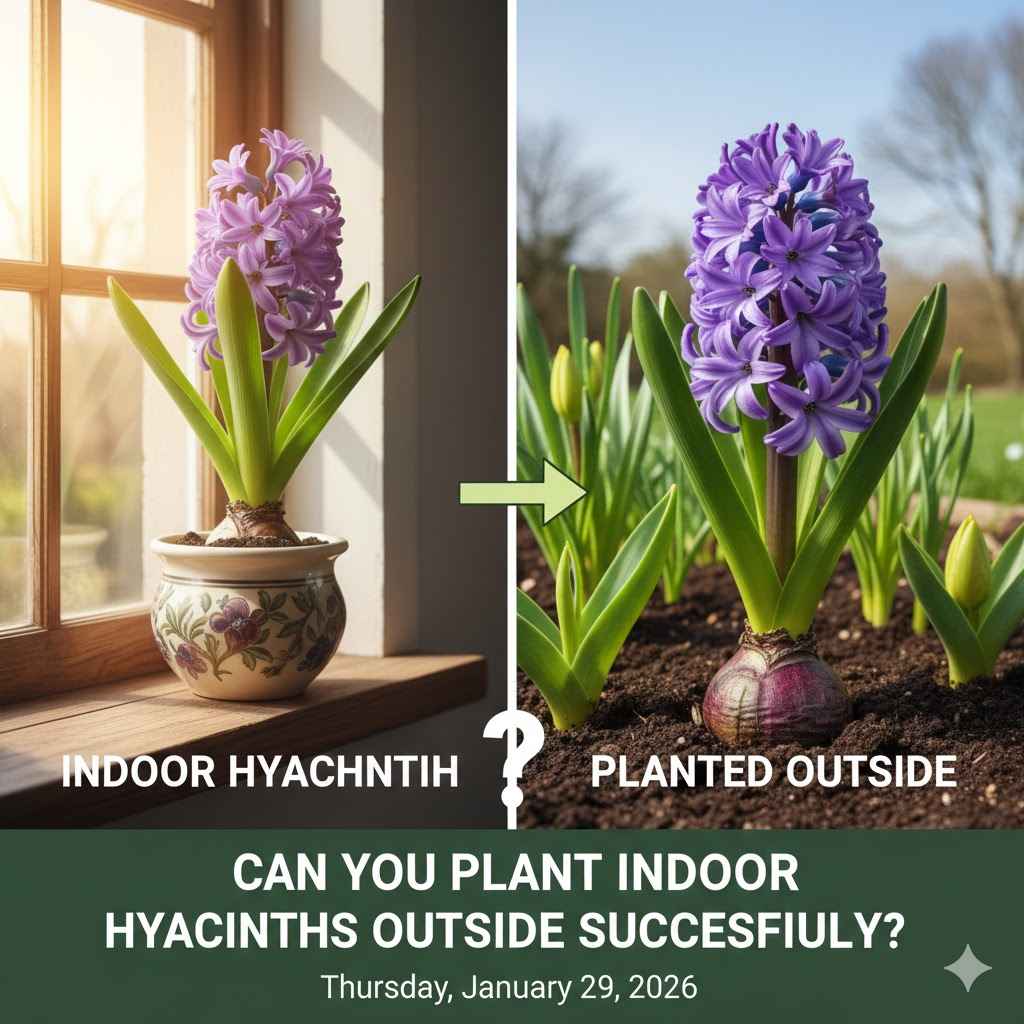
Yes, you can successfully plant indoor hyacinths outside! After blooming indoors, move the bulbs to your garden or outdoor pots in spring once foliage yellows. They often rebloom the next year (or the year after) in well-drained soil with sun, though forced bulbs may take time to recover fully.
Many beginners love the cheerful scent and color of hyacinths blooming indoors during winter. These forced hyacinths (Hyacinthus orientalis) make great gifts or holiday displays. But once the flowers fade, people often wonder: Can I give them a second life outdoors? The answer is yes—most can thrive outside with the right steps. It’s a rewarding way to extend their beauty into your garden. In this guide, I’ll show you exactly how to transition them successfully, so your bulbs can become perennial garden stars.
Why Indoor Hyacinths Can Go Outdoors
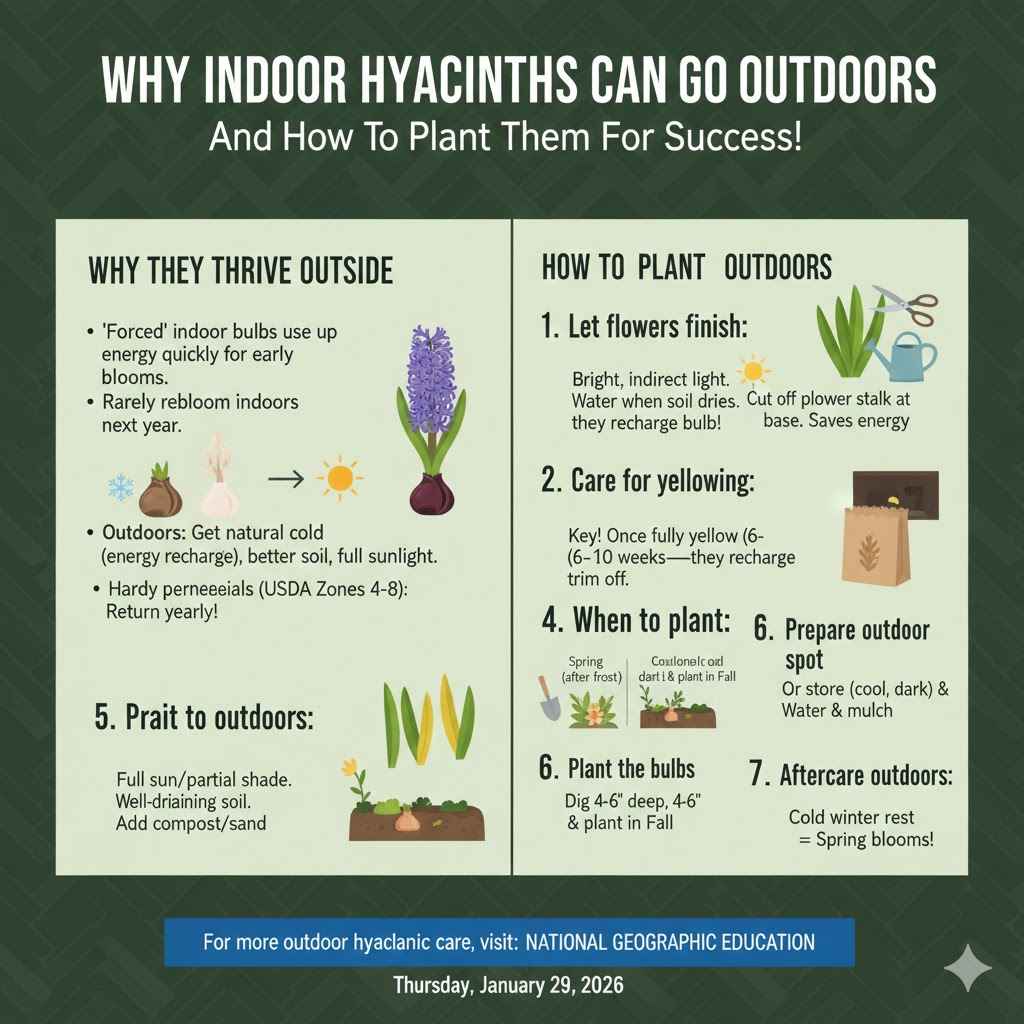
Indoor hyacinths are usually “forced” bulbs. This means growers chill them early to bloom ahead of schedule for winter. After forcing, the bulbs use up energy for quick flowers. They rarely rebloom indoors next year, but planting them outside lets nature take over. Outdoors, they get natural cold periods, better soil, and sunlight to rebuild strength.
In many climates (like USDA zones 4-8), hyacinths are hardy perennials. They return each spring with fragrant blooms for years. Success depends on care after blooming and your local conditions.
How to Plant Indoor Hyacinths Outside
Follow these easy steps for the best chance of success.
- Let the flowers finish blooming Enjoy the flowers indoors as long as they last. Once petals drop, cut the flower stalk off at the base with clean scissors. This stops the plant from making seeds and saves energy for the bulb.
- Care for the leaves Keep the plant in bright, indirect light. Water when the top inch of soil feels dry. Feed with a balanced liquid houseplant fertilizer every 2 weeks to help the leaves recharge the bulb. Never cut green leaves—they make food for next year’s bloom.
- Wait for foliage to yellow This is key! Let leaves turn yellow and die back naturally (usually 6-10 weeks after blooming). This stores energy in the bulb. Once fully yellow, trim them off at soil level.
- Decide when to plant outside
- In spring (after last frost): Move the whole pot outdoors or plant bulbs directly.
- Or store bulbs: Dry them gently, store in a cool, dark place (like a paper bag in the fridge or garage), then plant in fall (September-October). Spring planting works well in most areas—bulbs settle in during mild weather.
- Prepare the outdoor spot Choose full sun to partial shade. Soil must drain well—hyacinths hate wet feet and rot easily. Mix in compost or sand if soil is heavy clay.
- Plant the bulbs Dig holes 4-6 inches deep (about 3 times the bulb height). Place bulbs pointy end up, 4-6 inches apart. Cover with soil, water gently, and mulch lightly.
- Aftercare outdoors Water during dry spells in the first season. In fall/winter, the cold rest period helps them bloom next spring. Don’t fertilize heavily—once in spring is enough.
For more on outdoor hyacinth care, see this guide from the Royal Horticultural Society: How to grow hyacinths – RHS.
Indoor vs Outdoor Hyacinths Comparison Table
| Aspect | Indoor (Forced) | Outdoor (Garden) |
|---|---|---|
| Bloom time | Winter/early spring (forced) | Natural spring |
| Rebloom chance | Rare indoors next year | Good for 3-5+ years |
| Energy recovery | Limited (forced stress) | Natural sunlight & seasons |
| Best planting depth | Shallow pot | 4-6 inches deep |
| Drainage need | High (avoid rot) | Essential (no soggy soil) |
| Longevity | Often one season | Perennial in right zones |
Tips for Higher Success Rate
- Zones matter — Hyacinths need cold winters (zones 4-8) for best rebloom. In warmer areas (zones 9+), they may act as annuals or need chilling.
- Avoid water-forced bulbs — If grown only in water (no soil), they often lack nutrients and rarely succeed outdoors. Soil-grown ones do better.
- Protect from pests — Squirrels or rodents sometimes dig bulbs. Plant in wire baskets if needed.
- Start small — Try with one or two pots first to see how they perform in your yard.
- Be patient — First year outdoors, you may get leaves but no flowers. Full blooms often return in year 2.
Many gardeners report success—bulbs planted after indoor forcing often bloom reliably in future springs.
Common Problems and Fixes
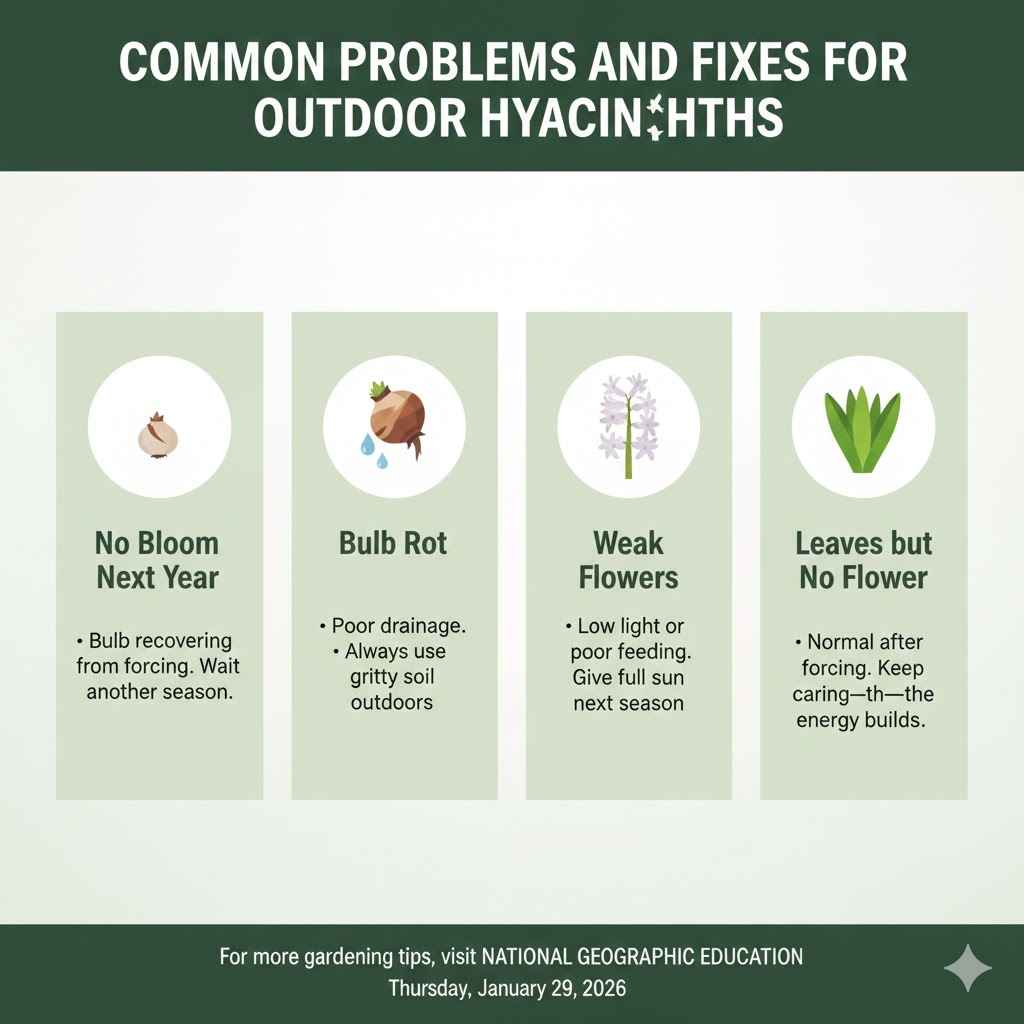
- No bloom next year — Bulb recovering from forcing. Wait another season.
- Bulb rot — Poor drainage. Always use gritty soil outdoors.
- Weak flowers — Low light or poor feeding. Give full sun next season.
- Leaves but no flower — Normal after forcing. Keep caring—the energy builds.
FAQ
Can all indoor hyacinths go outside? Yes, most can. Soil-grown forced hyacinths have the best chance. Water-forced ones may not recover well.
When is the best time to plant them outdoors? Spring after last frost (once foliage dies back), or fall for natural chilling. Spring is easier for beginners.
Will they bloom the first spring outside? Often not—many show leaves only. Expect good blooms the second spring as they recover.
Do I need to chill them again? No—outdoor winters provide natural chill in cold zones. In warm areas, you may need to fridge-chill bulbs.
What if my climate is too warm? They may not rebloom reliably. Treat as annuals or grow in pots and chill bulbs artificially.
How deep should I plant the bulbs? 4-6 inches deep, pointy end up, in well-drained soil.
Can I keep them in pots outside? Yes! Use pots with drainage. Move to sunny spot and protect from hard freezes in winter.
Conclusion
Planting your indoor hyacinths outside is a simple, joyful next step that turns a short-lived winter treat into lasting garden beauty. With good drainage, sun, and a little patience, these fragrant bulbs can surprise you year after year. It’s one of the most satisfying parts of gardening—giving plants a chance to thrive in nature. You’ve already enjoyed their blooms indoors; now let them brighten your yard. Try it with your next forced hyacinth—you’ll love watching them come back stronger. Happy gardening, and may your garden fill with that sweet hyacinth scent every spring!