
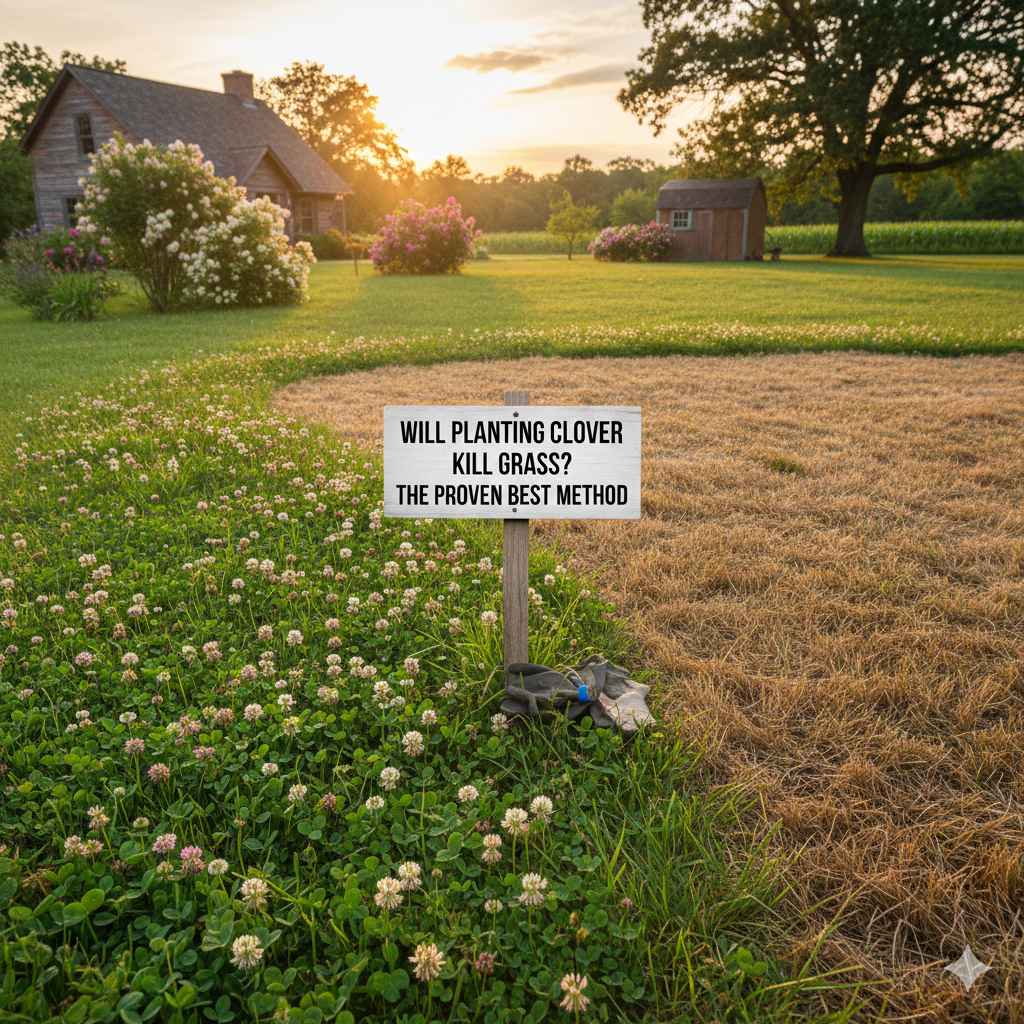
Planting clover will not kill your grass. In fact, clover and grass are excellent companions. Clover acts as a natural fertilizer by pulling nitrogen from the air and feeding it to your lawn, helping the grass grow thicker and greener. This beneficial relationship creates a healthier, more resilient, and lower-maintenance lawn.
Have you ever looked at your lawn and seen little white or pink flowers popping up among the grass blades? For many years, we were taught to see clover as a weed. But what if I told you that inviting clover into your lawn is one of the best things you can do for it? Many gardeners worry, “Will planting clover kill my grass?” It’s a fair question, but the answer might surprise you.
The truth is, clover and grass can live together in perfect harmony. In this guide, I’ll walk you through why this partnership is so beneficial. We will cover everything from the amazing benefits of a clover lawn to the proven best method for planting it. Let’s get started on creating a beautiful, sustainable, and stress-free lawn together.
The Friendly Truth: Does Clover Really Harm Grass?
Let’s clear up the biggest misconception right away: clover is not an enemy to your grass. It’s actually a helpful friend. For decades, marketing campaigns for chemical herbicides convinced homeowners that any broadleaf plant in their lawn was a “weed” that needed to be eliminated. Before that time, however, lawn seed mixes almost always included clover. It was considered an essential part of a healthy, beautiful turf.
So, what changed? The development of broadleaf herbicides in the mid-20th century. These chemicals were designed to kill plants like dandelions and plantain, but they also killed clover. To sell their products, companies had to rebrand clover from a desirable lawn component to an unwanted weed. Thankfully, we’re now rediscovering the incredible natural benefits that clover brings to a lawn ecosystem.
How Clover Helps Your Grass Thrive
The secret to clover’s power lies in a process called nitrogen fixation. Think of it as a tiny, natural fertilizer factory living right in your soil. Here’s how it works in simple terms:
- Nitrogen is Essential: Grass needs nitrogen to grow green and strong. It’s the main ingredient in most commercial lawn fertilizers.
- Drawing Nitrogen from the Air: Our air is about 78% nitrogen, but plants can’t use it in that form.
- Clover’s Special Ability: Clover, a member of the legume family, partners with special bacteria on its roots. These bacteria can pull nitrogen gas from the air and “fix” it, converting it into a form that plants can absorb as food.
- Sharing is Caring: The clover uses this nitrogen to grow, and it also releases it into the soil, providing a constant, slow-release source of free fertilizer for the surrounding grass.
Because of this amazing partnership, a lawn with clover is often much healthier than a grass-only lawn. The grass gets a steady supply of nutrients, helping it grow thicker, stay greener, and become more resilient to stress from heat or drought. Instead of competing, clover and grass work together to create a stronger, more vibrant lawn.

Why a Clover and Grass Lawn is a Smart Choice
Embracing a mixed lawn of grass and clover isn’t just about going back to old traditions; it’s about making a smart, modern choice for a more sustainable and low-maintenance yard. The benefits are numerous and can save you time, money, and effort.
The Amazing Benefits of a Mixed Lawn
- Natural Fertilization: As we discussed, clover’s nitrogen-fixing ability means you can stop buying and spreading chemical fertilizers. This saves you money and prevents harmful chemical runoff into local waterways.
- Drought Tolerance: Clover has deep roots that can access water far below the surface, allowing it to stay green even during hot, dry spells when traditional grass turns brown. Its presence helps keep the entire lawn looking better through summer stress.
- Chokes Out Weeds: A healthy, dense stand of clover and grass creates a thick mat that leaves little room for undesirable weeds like dandelions or crabgrass to take root. Clover grows in a way that fills in bare patches quickly, outcompeting weeds naturally.
- Less Mowing: Most lawn clovers have a lower growth habit than grass. This means a clover-grass lawn doesn’t need to be mowed as frequently, saving you time and fuel on weekends.
- Attracts Beneficial Insects: Clover flowers are a vital food source for pollinators like honeybees and bumblebees, which are essential for a healthy environment. A flowering clover lawn supports local biodiversity and helps these crucial insects thrive.
- Repels Pests: Clover is known to repel certain lawn pests, such as grub worms, reducing the need for chemical pesticides.
- Stays Green All Season: Clover often greens up earlier in the spring and stays green later into the fall than many types of grass, giving you a longer season of lush color.
What to Consider Before Planting Clover
While a clover-grass lawn is a fantastic option for most people, it’s good to be aware of a few considerations to make sure it’s the right fit for your lifestyle.
- Attracts Bees: The same flowers that pollinators love can be a concern if you have young children who play barefoot in the yard or family members with bee allergies. However, you can easily manage this by mowing the lawn before the clover is in full bloom.
- Lower Durability: While resilient, clover is not as tough as some grass varieties when it comes to very heavy foot traffic. For high-play areas or sports fields, a grass-dominant mix might be better. For a typical family yard, however, a clover mix holds up just fine.
- Can Stain Clothing: Clover can cause green stains on clothes more easily than grass, something to keep in mind if you have kids who love to roll around in the yard.
- It’s a Short-Lived Perennial: Most clover varieties live for about 2-3 years. A healthy clover lawn will naturally reseed itself, but you may need to overseed with fresh clover seed every few years to keep the population dense and thriving.
Choosing the Perfect Clover Companion for Your Grass
Not all clovers are created equal when it comes to building the perfect lawn. Selecting the right type is crucial for achieving that lush, green look you’re aiming for. The most popular and effective choices for lawns are White Dutch Clover and its smaller cousin, Microclover.
Here is a simple table to help you compare the best options:
| Clover Type | Best For | Height | Sun Needs | Key Features |
|---|---|---|---|---|
| White Dutch Clover | General purpose lawns, low-maintenance areas | 4-8 inches (with flowers) | Full Sun to Part Shade | Hardy, fixes nitrogen well, produces classic white flowers that bees love. |
| Microclover | Manicured lawns where a uniform look is desired | 2-4 inches | Full Sun to Part Shade | Fewer flowers, smaller leaves, blends seamlessly with grass, very low growing. |
| Strawberry Clover | Wet, salty, or clay soils where other plants struggle | Up to 12 inches | Full Sun | Extremely tolerant of poor conditions, produces pinkish, strawberry-like flowers. |
A Closer Look at Your Best Choices
White Dutch Clover (Trifolium repens)
This is the classic, all-purpose clover you probably imagine when you think of a clover lawn. It’s incredibly resilient, adaptable, and one of the best nitrogen-fixers available. Its bright green, three-leaf clusters spread via stolons (above-ground stems) to fill in bare spots and create a dense turf. The iconic white flowers are a favorite of pollinators. Because it’s so common and easy to grow, its seeds are affordable and widely available. It’s the perfect choice for someone wanting a traditional, low-maintenance, eco-friendly lawn.
Microclover (Trifolium repens ‘Pipolina’ or similar cultivars)
Microclover is a specially cultivated variety of White Dutch Clover. It has been bred to have smaller leaves and a much lower growth habit. A key feature is that it produces significantly fewer flowers than its parent plant. This makes it an excellent choice for homeowners who want the benefits of clover—like natural fertilization and drought resistance—but prefer a more uniform, grass-like appearance. When mowed regularly, microclover blends in so well with grasses like Kentucky Bluegrass or fescue that you may not even notice it’s there, aside from how green and healthy your lawn looks.
The Proven Best Method: How to Plant Clover in Your Existing Lawn
Adding clover to your lawn is a simple process called “overseeding.” You are essentially just spreading clover seeds over your existing grass. With a little preparation and the right timing, you can transform your lawn into a thriving, self-sustaining ecosystem. Follow these steps for guaranteed success.
Step 1: Timing is Everything
The best time to plant clover is in the early spring (after the last frost) or in the early fall (about 4-6 weeks before the first expected frost).
- Spring Planting: Planting in spring gives the clover an entire growing season to establish itself before winter. The key is to wait until daytime temperatures are consistently between 50-60°F (10-15°C).
- Fall Planting: Planting in the fall often has the advantage of less weed competition and more reliable moisture from rainfall. The warm soil and cool air create perfect germination conditions.
Avoid planting in the middle of summer. The intense heat and potential for drought can stress the new seedlings and make it difficult for them to survive.
Step 2: Prepare Your Lawn Canvas
To give your clover seeds the best chance of survival, you need to ensure they can make good contact with the soil. Don’t just throw them on top of thick, tall grass.
- Mow Low: Cut your grass shorter than usual, around 1-2 inches high. This allows sunlight and water to reach the soil and your new seeds. Bag the clippings to prevent them from smothering the seeds.
- Dethatch Thoroughly: Thatch is the layer of dead grass and organic matter that builds up on the soil surface. A thick layer can block seeds from reaching the soil. Use a stiff garden rake or a power dethatcher to remove this layer and expose the soil.
- Aerate if Needed: If your soil is heavily compacted (hard as a rock), aeration is a great idea. A core aerator pulls out small plugs of soil, reducing compaction and creating perfect little pockets for seeds to fall into.
Step 3: Mix Your Seeds for Success
Clover seeds are tiny, which can make spreading them evenly a challenge. To avoid getting clumps of clover in one spot and none in another, it’s best to mix them with a carrier material.
For overseeding an existing lawn, a good rate is about 2-4 ounces of clover seed per 1,000 square feet. For a new lawn or bare patches, you might use 4-8 ounces per 1,000 square feet. Mix your clover seed with fine sand, compost, or soil at a ratio of about 1 part seed to 4-5 parts carrier material. This will add bulk and make it much easier to achieve an even spread.
Step 4: Spread the Seeds Evenly
Now it’s time to sow! You can spread your seed mix in a few different ways.
- By Hand: For small areas, you can simply broadcast the seed mix by hand. Try to use a consistent, sweeping motion, just like you’re feeding chickens. To ensure even coverage, spread half the seed while walking in one direction (e.g., north to south) and the other half while walking in the opposite direction (e.g., east to west).
- With a Spreader: For larger lawns, a hand-cranked or push broadcast spreader is the most efficient tool. Set it to the smallest opening, as the seeds are tiny, and walk at a steady pace.
Step 5: The Secret to Germination: Watering
This is the most critical step. Clover seeds need consistent moisture to germinate and establish their roots. You are not trying to flood the lawn, just keep the top layer of soil damp.
For the first 1-2 weeks after planting, water the lawn lightly once or twice a day. The goal is to keep the soil surface consistently moist, like a wrung-out sponge. Avoid letting the soil dry out completely. Once you see the tiny clover seedlings sprout, you can gradually reduce watering to every other day, and then transition to your normal watering schedule as they mature.
Step 6: Caring for Your New Green Carpet
Your work is almost done! Now you just need to care for your new clover-grass mix as it grows.
- First Mow: Wait until the new clover seedlings are about 3-4 inches tall before you mow for the first time. Set your mower to its highest setting (3-4 inches) to avoid stressing the young plants.
- Avoid Herbicides: This is crucial. Never use a “weed and feed” product or any broadleaf herbicide on your lawn again. These products are designed to kill broadleaf plants, and they will kill your clover. A healthy clover-grass lawn will naturally suppress weeds on its own. The University of Maryland Extension provides excellent guidance on managing lawns organically without these chemicals.
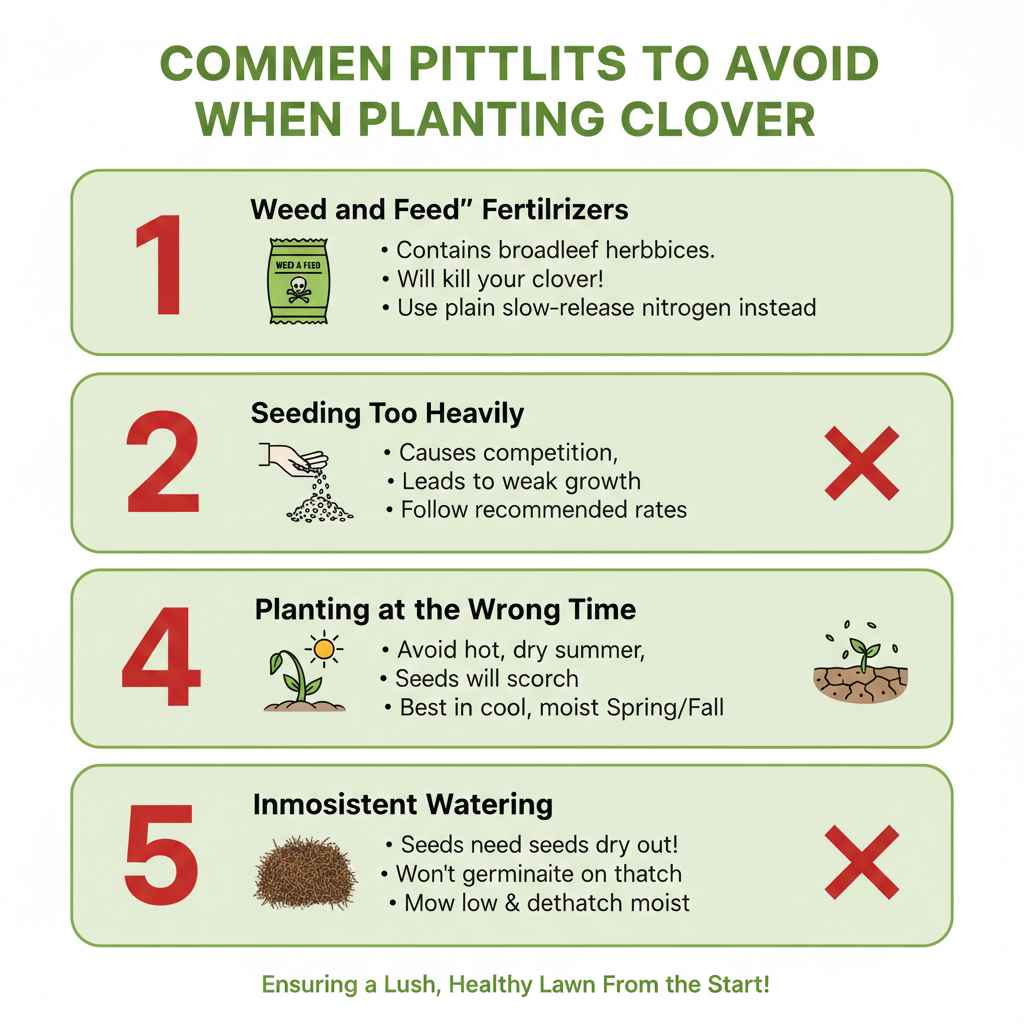
Common Pitfalls to Avoid When Planting Clover
While planting clover is straightforward, a few common mistakes can hinder your success. By being aware of these pitfalls, you can ensure your new lawn thrives from the very beginning.
- Using “Weed and Feed” Fertilizers: This is the number one mistake. These products contain broadleaf herbicides that will kill your clover. If you need to fertilize, choose a simple, slow-release nitrogen fertilizer or, better yet, just let the clover do the job for you.
- Seeding Too Heavily: More is not always better. Spreading too much clover seed can cause the seedlings to compete with each other for resources, leading to weak, spindly growth. Stick to the recommended seeding rates for the best results.
- Planting at the Wrong Time: Trying to plant clover in the middle of a hot, dry summer is a recipe for failure. The intense heat can scorch young seedlings before they have a chance to establish roots. Stick to the cooler, moister weather of spring or fall.
- Not Preparing the Soil: Simply tossing seeds onto a thick, matted lawn won’t work. The seeds must touch the soil to germinate. Taking the time to mow low and dethatch makes all the difference.
- Inconsistent Watering: Letting the seedbed dry out for even a day or two after planting can kill the germinating seeds. Consistent, light moisture is the key to getting your clover started on the right foot.
Frequently Asked Questions About Clover Lawns
Will clover take over my entire lawn?
No, clover will not aggressively take over a healthy lawn. It coexists with grass, filling in bare spots where the grass is thin. In a well-maintained lawn, the grass and clover will form a balanced, mixed stand. If your lawn becomes clover-dominant, it’s usually a sign of poor soil health (like low nitrogen), a condition that clover is better adapted to than grass.
Is clover safe for dogs and children?
Yes, clover is completely safe for both dogs and children. It is non-toxic if ingested and soft to play on. The only minor concern is that the flowers attract bees, so if you have someone with a severe bee allergy, you may want to mow before the clover blooms heavily.
How long does it take for clover to grow?
Clover germinates relatively quickly, usually within 7 to 10 days, provided the soil is kept moist and temperatures are mild. You’ll see small sprouts first, and it will begin to establish itself more fully within a few weeks.
Do I need to fertilize a clover lawn?
Generally, no. One of the biggest benefits of a clover lawn is that the clover produces its own nitrogen, fertilizing itself and the surrounding grass. You can officially cross “fertilize the lawn” off your to-do list for good.
Can I plant clover in a shady lawn?
White Dutch Clover and Microclover are quite adaptable and can tolerate partial shade. However, they perform best with at least 4-6 hours of direct sunlight per day. They will not thrive in deep, constant shade. If you have a heavily shaded area, you may need to look for a specific shade-tolerant grass mix instead.
How often should I mow a clover lawn?
You’ll likely mow a clover-grass lawn less often than a grass-only lawn. Clover has a lower growth habit. Mowing every 2-3 weeks to a height of 3-4 inches is usually sufficient to keep it looking tidy and manage flower production if you are concerned about bees.
A Greener Lawn is Just a Seed Away
So, will planting clover kill your grass? Absolutely not. As we’ve discovered, it’s quite the opposite. Clover is a powerful ally for your lawn, working tirelessly to provide free fertilizer, improve soil health, and create a lush, green carpet that is both beautiful and resilient. By embracing this time-tested, natural approach, you’re not just growing a lawn; you’re cultivating a healthy, living ecosystem in your own backyard.
Switching to a clover and grass mix is a simple, rewarding step toward a more sustainable and low-maintenance lifestyle. You’ll save time on mowing, save money on fertilizers and water, and create a safe haven for vital pollinators. With the proven method we’ve outlined, you have all the knowledge you need to get started with confidence. Go ahead and give it a try—your lawn will thank you for it.