
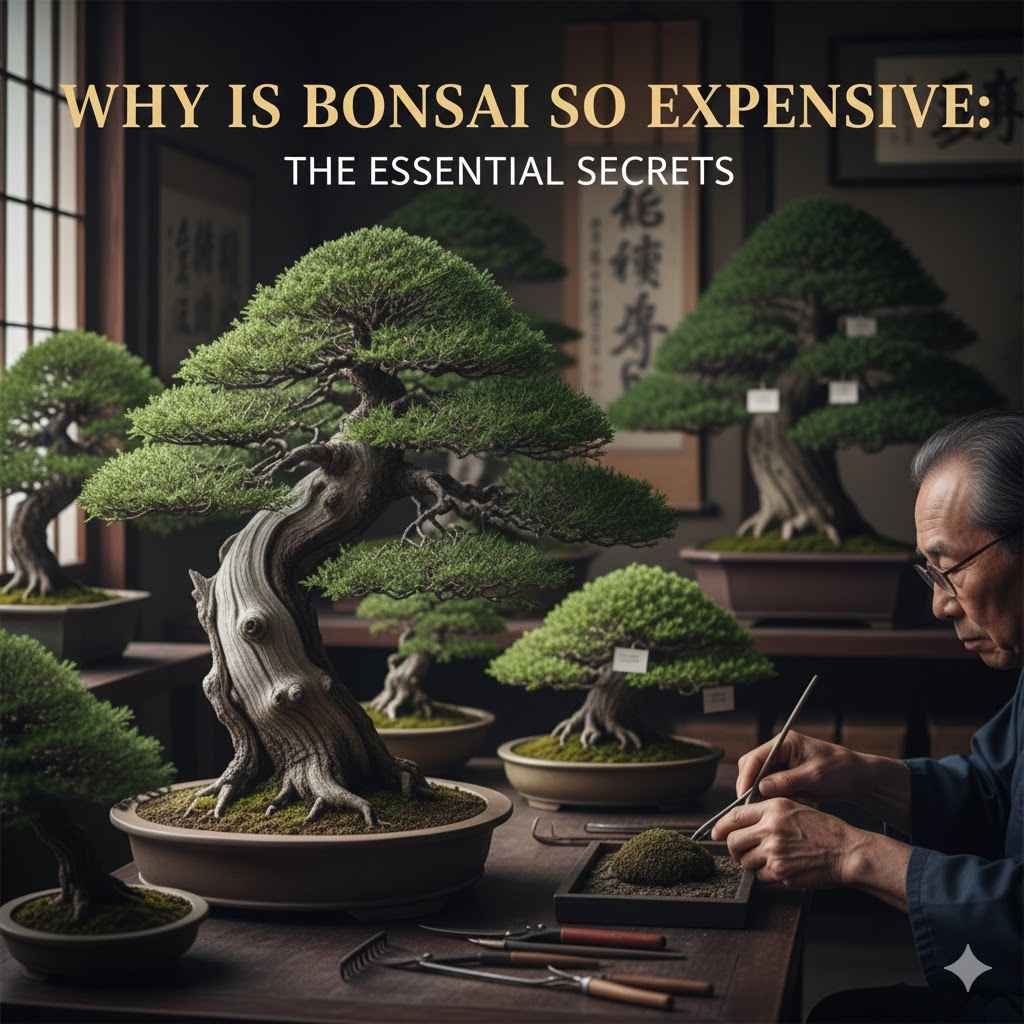
Bonsai trees are expensive because they are living art cultivated over many years, sometimes decades. The price reflects the immense time, specialized labor, artistic skill, and costly materials required to style and maintain the miniature tree. A high-quality bonsai is a long-term investment in a masterfully crafted natural sculpture.
Have you ever walked past a beautiful bonsai tree in a nursery and gasped at the price tag? You’re not alone! It’s a common surprise for many people. Seeing a tiny tree with a cost that rivals a new appliance can be confusing. It makes you wonder, “What makes this little plant so special?”
Don’t worry, the high price isn’t just a random number. There are very good reasons behind it. Think of a bonsai not just as a plant, but as a living sculpture, carefully shaped over many years. In this guide, I’ll walk you through the essential secrets behind the cost of bonsai. We will explore the time, skill, and resources that go into creating these miniature masterpieces. Let’s demystify the price together!
Understanding the value of a bonsai tree is like learning to appreciate any other form of art, like a painting or a sculpture. The final price tag is a combination of several key factors that work together. Once you see what goes on behind the scenes, the cost starts to make perfect sense. Let’s break it down, one secret at a time.
The Art of Time: Why Age is a Priceless Ingredient
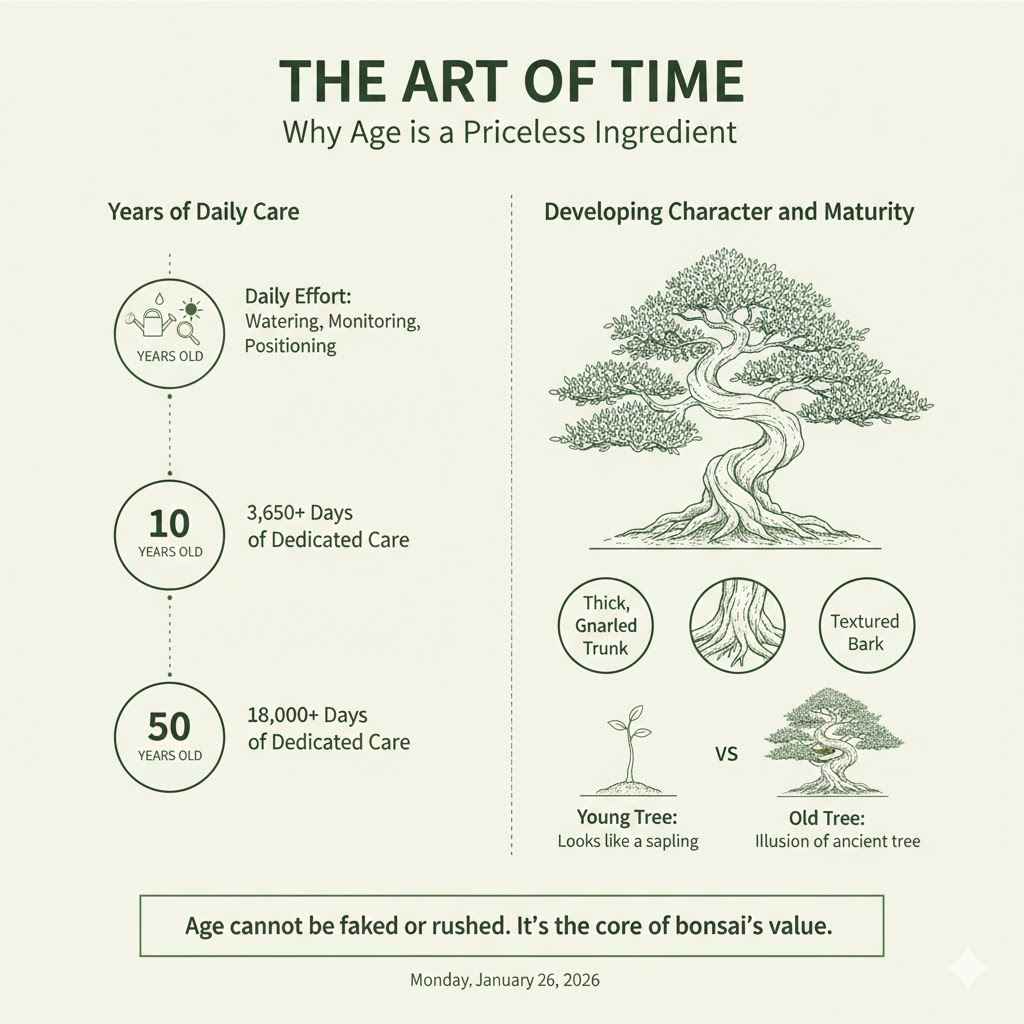
The single most significant factor in a bonsai’s cost is time. Unlike a product that can be mass-produced in a factory, a bonsai tree cannot be rushed. It requires years, often decades, of patient, consistent care to develop the appearance of a majestic, ancient tree in miniature form.
Years of Daily Care
From a young seedling or cutting, a bonsai artist invests daily effort. This includes:
- Watering: Bonsai pots are shallow, so they dry out quickly. Daily watering is often necessary.
- Monitoring: Checking for pests, diseases, and overall health is a constant task.
- Positioning: Rotating the tree for even sunlight and protecting it from harsh weather.
A ten-year-old bonsai has received over 3,650 days of dedicated care. A fifty-year-old specimen has been tended to for more than 18,000 days! This long-term commitment is a huge part of its value.
Developing Character and Maturity
Age gives a bonsai tree its most prized characteristics. A thick, gnarled trunk, textured bark, and a well-defined root base (known as “nebari”) can only develop over many years. A young tree looks like a sapling in a small pot. An old tree, however, carries the illusion of a full-sized, ancient tree that has weathered the seasons on a mountaintop. This illusion of age is the core goal of bonsai, and it simply cannot be faked or sped up.
The Master’s Touch: Skill, Artistry, and Labor
A bonsai is not just a tree left to grow in a pot; it is actively and artfully styled. This requires a deep understanding of horticulture and a keen artistic eye. The labor involved is highly specialized and intensive.
The Foundational Techniques
Bonsai artists use several core techniques to shape a tree. Each requires precision, knowledge, and practice.
- Pruning: This is more than just snipping a few leaves. It involves structural pruning to shape the main branches and refinement pruning to develop fine twigs and dense foliage pads. The artist must know how each cut will affect the tree’s future growth.
- Wiring: To guide branches into a desired shape, artists carefully wrap wire around them. This process is delicate; wire that is too tight can scar the bark, and wire that is too loose is ineffective. The wire must be monitored and removed before it damages the tree.
- Repotting: Bonsai must be repotted every 2-5 years to replenish nutrients and trim the roots. This is a stressful process for the tree and must be done correctly to ensure its survival. According to the University of Wisconsin-Madison Horticulture Division, proper root pruning during repotting is essential for maintaining the tree’s health and compact size.
The Cost of Expertise
Becoming a bonsai master takes a lifetime. Many artists spend years apprenticing under a master to learn the subtle nuances of the art form. The price of a finished bonsai reflects not only the hours spent on that specific tree but also the thousands of hours the artist invested in honing their craft. You are paying for their expertise, vision, and ability to keep the tree healthy while transforming it into a work of art.
The Tools and Materials: More Than Just a Pot and Soil
Creating and maintaining bonsai requires specialized equipment and materials that are often more expensive than general gardening supplies. These costs add up and contribute to the final price of the tree.
Specialized Bonsai Tools
Standard garden shears are too clumsy for the delicate work of bonsai. Artists use a set of specialized tools made from high-quality steel, often imported from Japan.
- Concave Cutters: These tools make clean, concave cuts that heal with minimal scarring, which is crucial for the tree’s appearance.
- Knob Cutters: Used to remove branch stubs and create a smooth finish.
- Jin Pliers: Used to create “jin” and “shari”—sections of deadwood that give the tree an aged look.
- Wire Cutters and Pliers: Designed to cut and apply wire without damaging the bark.
The Right Soil and Pot
A bonsai cannot thrive in standard potting soil, which holds too much water and lacks aeration. Artists use custom soil mixes to ensure perfect drainage and nutrient balance.
The pot is also a critical component. A bonsai pot is more than just a container; it is part of the artistic composition. High-quality bonsai pots are often handmade by ceramic artists, and their cost can range from fifty to thousands of dollars, depending on the artist, age, and craftsmanship.
Here is a quick breakdown of potential material costs for a single, medium-quality bonsai:
| Item | Description | Estimated Cost (USD) |
|---|---|---|
| Starter Bonsai Tools Kit | Basic set including concave cutters, shears, and wire cutters. | $50 – $150 |
| Bonsai Soil Mix | Pre-mixed or components like Akadama, Pumice, and Lava Rock. | $20 – $40 per bag |
| Ceramic Bonsai Pot | A decent quality, non-artist pot. | $30 – $100+ |
| Aluminum/Copper Wire | Various gauges for training. | $15 – $30 per roll |
The Tree Itself: Not All Trees Are Created Equal
The type and origin of the tree play a massive role in its final cost. Some species are more desirable or difficult to work with, and a tree’s history can make it priceless.
Species and Characteristics
Certain tree species are highly sought after in the bonsai world for their beautiful foliage, bark, or growth habits. Japanese Maples, with their delicate leaves and vibrant fall color, or ancient-looking Japanese Black Pines, are classic examples. These species often command higher prices than more common ones like Juniper or Ficus.
Desirable characteristics also increase the value:
- Thick Trunk: A substantial, tapered trunk is a hallmark of a good bonsai.
- Good Nebari: A strong, visible surface root structure that provides a sense of stability.
- Branch Placement: Well-placed branches that create a balanced and interesting design.
The Story of Yamadori
The most prized and expensive bonsai are often “Yamadori,” which are trees collected from the wild. These trees have been naturally shaped by harsh mountain environments, giving them incredible character, deadwood, and survival stories that cannot be replicated in a nursery. Collecting yamadori is a difficult and legally regulated process, requiring permits and great skill to excavate the tree without killing it. Their rarity, natural beauty, and inherent age make them the crown jewels of the bonsai world.
Understanding Bonsai Price Tiers: From Starter to Masterpiece
Not all bonsai trees cost a fortune. The market is divided into different tiers, making it accessible for beginners while also catering to serious collectors. Understanding these tiers can help you see where the value comes from.
| Bonsai Tier | Age Range | Typical Price (USD) | Key Features |
|---|---|---|---|
| Mass-Produced (“Mallsai”) | 1-3 years | $20 – $75 | Young, small, often glued to rocks. A simple introduction but lacks artistic refinement. |
| Pre-Bonsai / Starter Stock | 3-10 years | $50 – $250 | Good raw material with a developed trunk. Requires you to do the styling. Great for learning. |
| Finished Bonsai | 10-30 years | $250 – $2,000 | Well-styled by an artist with good structure and refinement. Ready to display. |
| Specimen / Masterpiece | 50-500+ years | $2,000 – $1,000,000+ | Exceptional trees, often with a long history or styled by a famous master. True works of living art. |
Is an Expensive Bonsai Worth It for a Beginner?
This is a fantastic question! While it might be tempting to buy a stunning, finished bonsai, it’s often not the best starting point for a true beginner. A large part of the joy of bonsai is the journey of learning to care for and shape the tree yourself.
The Case for Starting Small
I always recommend that new enthusiasts start with pre-bonsai or starter stock. Here’s why:
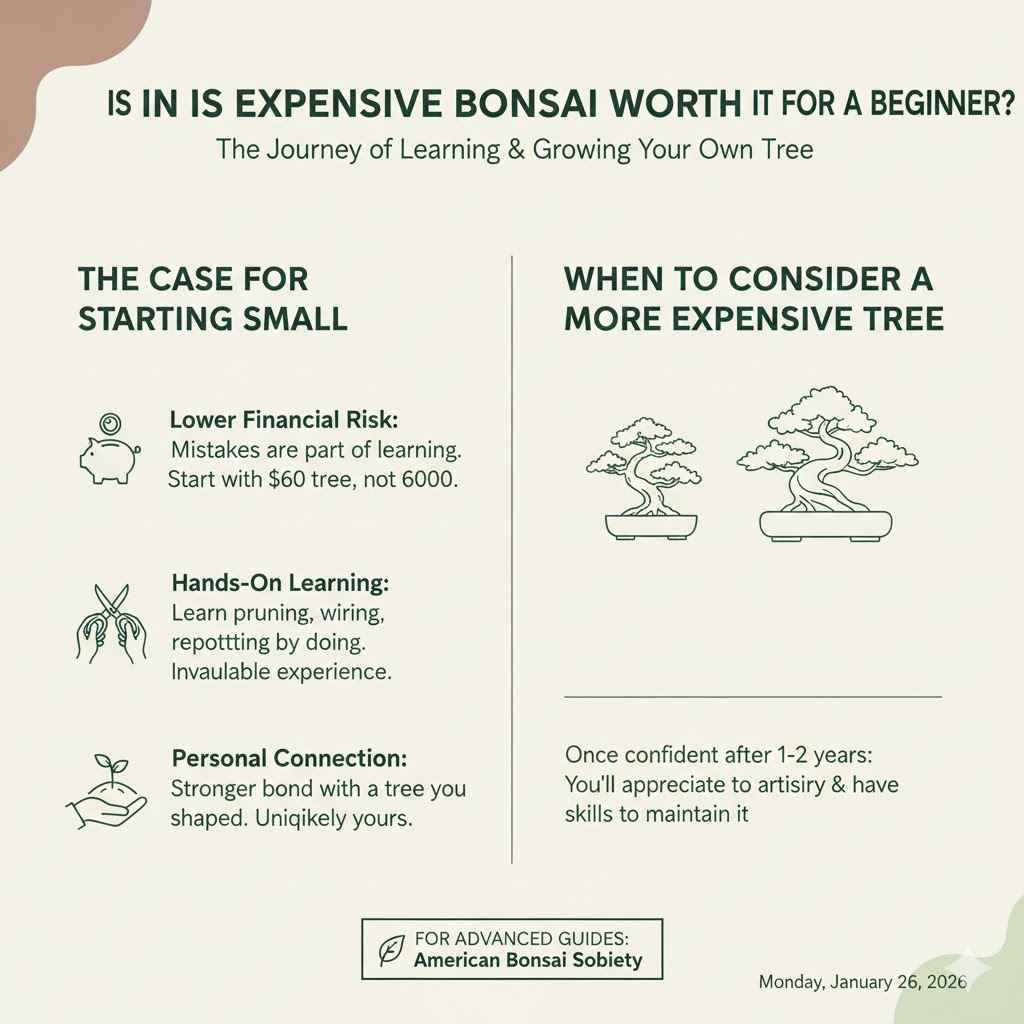
- Lower Financial Risk: Mistakes are a part of learning. It is much less heartbreaking to lose a $60 tree than a $600 one.
- Hands-On Learning: You will learn pruning, wiring, and repotting by doing it yourself. This hands-on experience is invaluable.
- Personal Connection: You will develop a much stronger bond with a tree that you have shaped and nurtured over the years. Your tree will be uniquely yours.
When to Consider a More Expensive Tree
Once you have kept a few starter trees alive and healthy for a year or two and feel confident in your skills, you might consider investing in a more developed bonsai. At that point, you will have a better appreciation for the artistry involved and the skills needed to maintain it. The resources provided by organizations like the American Bonsai Society can be incredibly helpful as you advance your skills.
FAQs: Answering Your Top Bonsai Questions
Why are some bonsai trees millions of dollars?
The most expensive bonsai are typically hundreds of years old, have been cared for by generations of masters, and are considered national treasures, especially in Japan. Their price reflects their incredible age, historical significance, and unparalleled artistic beauty.
Can I make my own bonsai for cheap?
Absolutely! You can start a bonsai from a seed, a cutting, or an inexpensive nursery plant for just a few dollars. It will take many years to develop, but the process is incredibly rewarding and is the most affordable way to get into the hobby.
What is the most expensive bonsai tree ever sold?
While private sales are often not disclosed, one of the most famous expensive bonsai is a centuries-old White Pine that sold for 1.3 million dollars at the International Bonsai Convention in Takamatsu, Japan.
Is it hard to keep a bonsai alive?
Bonsai require consistent care, but it isn’t necessarily “hard.” It just requires you to learn their specific needs for light, water, and feeding. The biggest mistake beginners make is treating them like regular houseplants. With a little research and a consistent routine, anyone can be successful.
What’s a good bonsai tree for a beginner?
Species like Ficus, Jade, and Chinese Elm are very forgiving and can tolerate indoor conditions, making them excellent choices for beginners. For outdoor bonsai, Junipers are hardy and easy to style.
Do bonsai trees stay small naturally?
No, this is a common myth. Bonsai are not a special genetic species of dwarf trees. They are normal trees kept small through a set of cultivation techniques, including pot confinement, root pruning, and branch pruning.
The True Value of a Bonsai
So, why is bonsai so expensive? As we’ve seen, the price is a reflection of time, patience, artistry, and specialized care. It’s the culmination of years, or even a lifetime, of dedicated effort to create a living masterpiece that captures the spirit of nature.
But remember, the monetary value is only one part of the story. The true value of bonsai lies in the journey. It’s found in the quiet moments spent watering your tree, the satisfaction of seeing a branch grow just as you envisioned, and the deep connection you form with a living thing you are nurturing. Whether you choose to buy a masterpiece or grow your own from a tiny sapling, the art of bonsai offers a peaceful and rewarding experience that is truly priceless.